
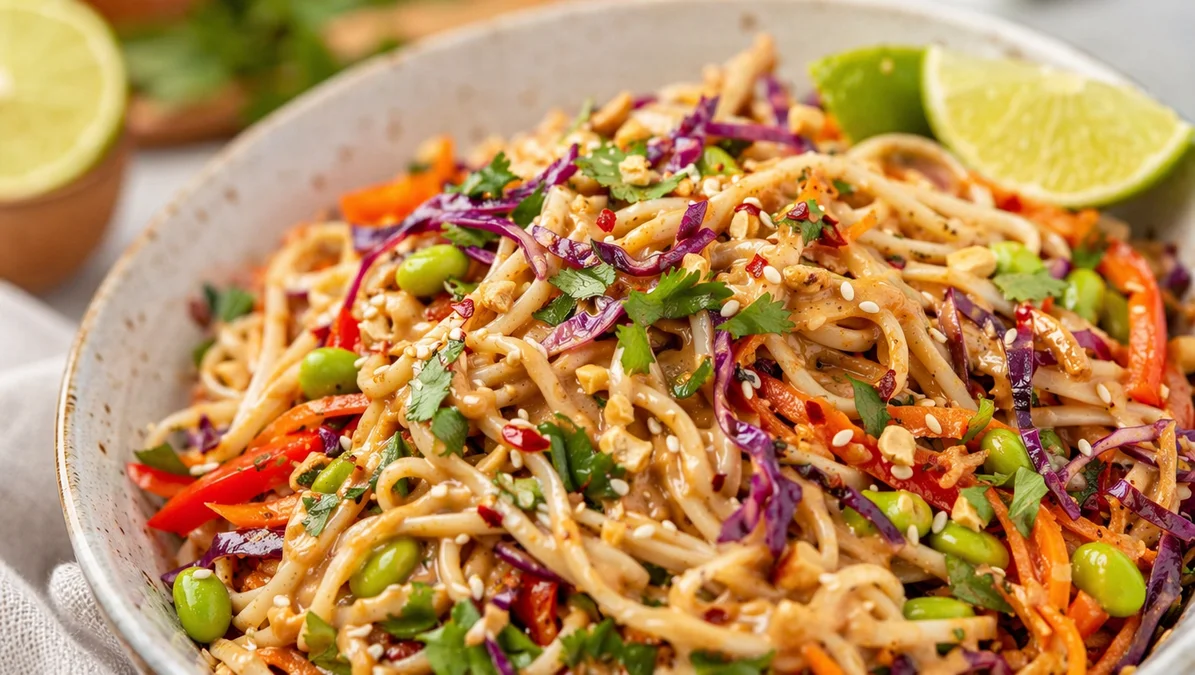
This vegan Thai peanut noodle salad is an easy dinner recipe perfect for summer parties or quick weeknight meals. Made with fresh vegetables and a creamy Thai peanut sauce, this…
Ingredients
Instructions
Begin by preparing the rice noodles according to the package directions. Most flat rice noodles require soaking in hot (not boiling) water for about 8–10 minutes until they are tender but still have a slight bite—al dente. Overcooking will make them mushy and clumpy. To achieve the perfect texture, bring a large pot of water to a boil, then remove from heat and add the noodles. Stir gently to separate, then let them soak. Check frequently: they should be opaque and pliable but not falling apart. Once done, drain immediately and rinse under cold water to stop the cooking process and remove excess starch. Drizzle with a teaspoon of sesame oil and toss to prevent sticking. Set aside.
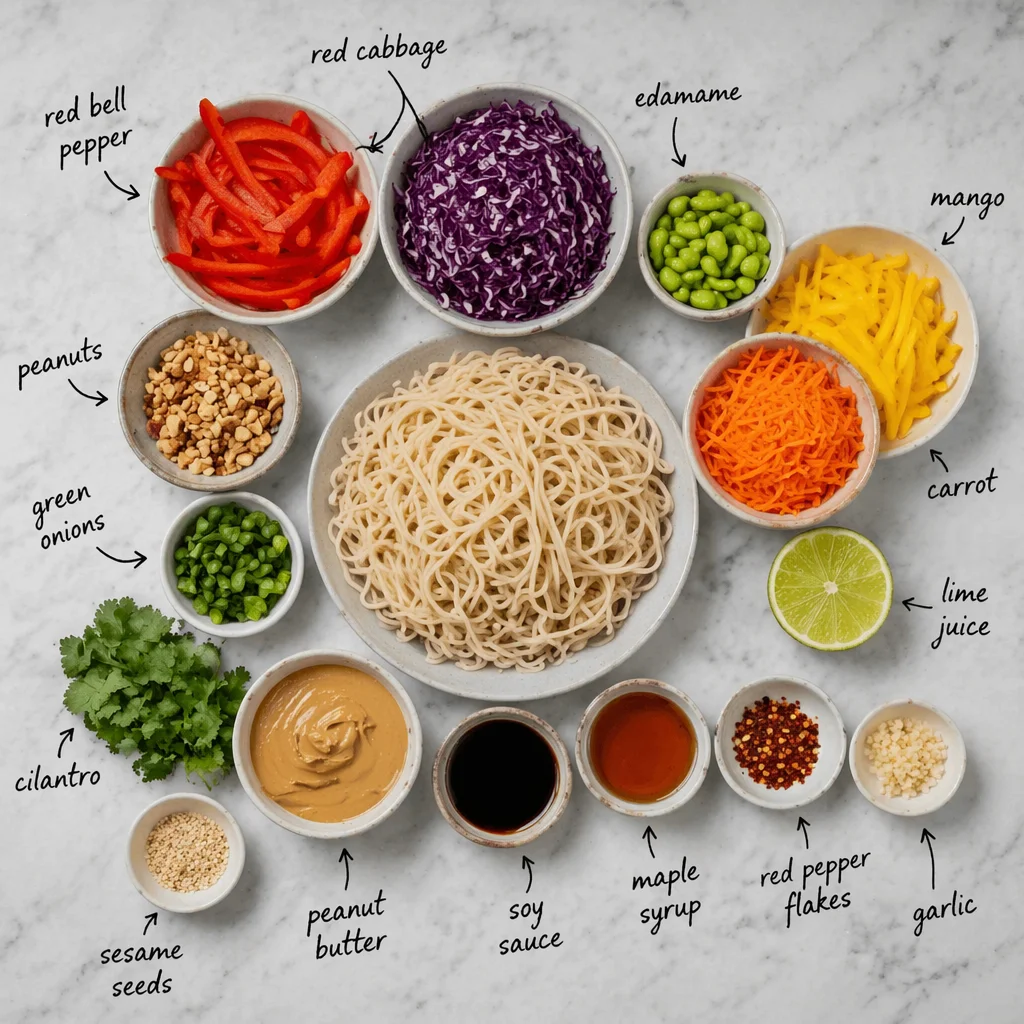
While the noodles soak, make the Thai peanut sauce. In a medium bowl, whisk together the creamy peanut butter, low-sodium soy sauce (or tamari for gluten-free), fresh lime juice, maple syrup, toasted sesame oil, minced garlic, and grated ginger. The garlic and ginger should be very finely minced or grated to ensure they blend smoothly into the sauce. Slowly drizzle in the warm water while whisking continuously. The sauce will thicken at first, then become silky and pourable. If it’s too thick, add more warm water one tablespoon at a time until it reaches a consistency similar to heavy cream—it should coat the back of a spoon. Taste and adjust: more lime for acidity, more maple for sweetness, or a pinch of salt if needed. Set aside.
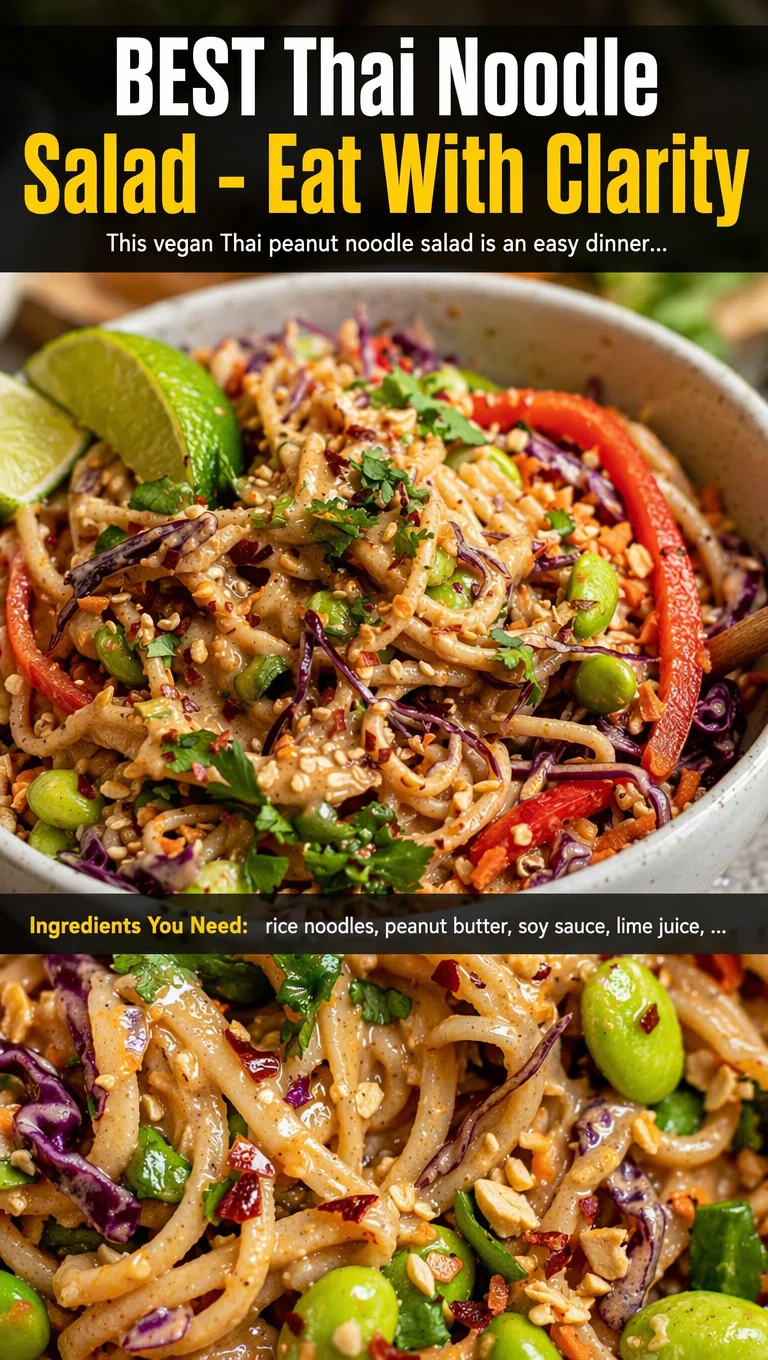
Now prep all the fresh vegetables. This is where you can get creative with color and crunch. Shred the red cabbage finely using a mandoline or sharp knife—thin shreds ensure it blends well with the noodles. Julienne the carrot into matchstick pieces; a julienne peeler makes this quick. Slice the red bell pepper into thin strips, and slice the snap peas lengthwise into thin slivers. The goal is to have all vegetables roughly the same size as the noodles for even distribution in every bite. Place all prepared veggies in a large mixing bowl.
Add the drained and cooled rice noodles to the bowl with the vegetables. Pour the Thai peanut sauce over the top. Using tongs or two large forks, gently toss everything together until the noodles and vegetables are evenly coated in the sauce. Take your time—make sure every strand of noodle is glistening with sauce. The sauce will cling to the noodles and veggies, creating a luscious coating. If the salad seems dry, add a splash of warm water or extra lime juice to loosen it up.
Transfer the salad to a serving platter or individual bowls. Garnish generously with chopped fresh cilantro, sliced green onions, chopped roasted peanuts, and a sprinkle of sesame seeds if using. The peanuts add a crucial crunch that contrasts beautifully with the tender noodles. For an extra pop of color and freshness, add a few lime wedges on the side. Serve immediately at room temperature or chilled. This salad is versatile and can be enjoyed as a main dish or a side. Leftovers keep well in an airtight container in the refrigerator for up to 3 days—the flavors meld and deepen overnight.
For best results
- Noodle Perfection: The key to perfect rice noodles is not to boil them. Boiling makes them gummy and prone to breaking. Instead, soak them in hot water (just off the boil) for the time specified on the package. After draining, rinse with cold water and toss with a little oil to prevent clumping. If you're making the salad ahead, keep the noodles separate from the sauce and veggies until just before serving to maintain the best texture.
- Peanut Sauce Consistency: The peanut sauce will thicken as it sits due to the peanut butter's natural oils. If you're prepping the sauce in advance, store it in the refrigerator and let it come to room temperature before using. To thin it out, whisk in warm water or lime juice a teaspoon at a time until it reaches a pourable consistency. For a nut-free version, substitute sunflower seed butter or tahini—the flavor will change but remain delicious.
- Vegetable Variations: Feel free to swap in whatever vegetables you have on hand. Thinly sliced cucumber, shredded kale, bean sprouts, or even roasted sweet potato cubes work wonderfully. The key is to cut everything into similar-sized pieces so each forkful has a mix of textures. For extra protein, add edamame, baked tofu, or shredded cooked chicken if not vegan.
- Make-Ahead Magic: This salad is perfect for meal prep. Prepare the noodles, vegetables, and sauce separately and store them in the refrigerator. When ready to serve, toss everything together. The salad keeps well for up to 3 days in the fridge, and the flavors actually improve as they meld. If you plan to store leftovers, consider adding the peanuts and cilantro just before serving to keep them crunchy and fresh.
- Serving Suggestions: Serve this Thai noodle salad as a main dish for a light dinner or as a side alongside grilled tofu, tempeh, or shrimp skewers. It's also fantastic at picnics and potlucks because it's served at room temperature and doesn't wilt. For a heartier meal, add a scoop of cooked quinoa or chickpeas for extra protein and fiber.
- Spice It Up: If you like heat, add a teaspoon of sriracha, sambal oelek, or chili garlic sauce to the peanut sauce. Alternatively, garnish with thinly sliced red chili peppers or a drizzle of chili oil. The heat cuts through the richness of the peanut butter and adds another layer of complexity.
Variations
- Protein-Packed Version: For a high-protein dinner, add 1 cup of cooked edamame, 1 cup of shredded baked tofu (pressed and marinated in soy sauce and sesame oil), or 2 cups of shredded rotisserie chicken (if not vegan). The protein will make the salad more satiating and turn it into a complete meal. You can also top with a soft-boiled egg for extra richness.
- Mango Thai Noodle Salad: Add 1 cup of ripe mango, cut into thin strips, for a sweet and tropical twist. The mango pairs beautifully with the spicy peanut sauce and crunchy vegetables. Use a firm but ripe mango so it holds its shape when tossed. Reduce the maple syrup in the sauce slightly if the mango is very sweet.
- Gluten-Free and Soy-Free: To make this recipe gluten-free, use tamari or coconut aminos instead of soy sauce. For a soy-free version, use coconut aminos (which are made from coconut sap and have a similar savory flavor) and ensure your peanut butter is pure and not cross-contaminated. The rest of the ingredients are naturally gluten-free.
- Cold Soba Noodle Variation: Substitute the rice noodles with 8 oz of soba (buckwheat) noodles for a different texture and a nuttier flavor. Cook soba according to package directions, then rinse under cold water and drain well. The rest of the recipe remains the same. Soba noodles are also gluten-free if they are 100% buckwheat.
- Spicy Peanut Curry Noodle Salad: Add 1 teaspoon of red curry paste to the peanut sauce for a Thai-inspired curry flavor. Whisk the curry paste into the warm water before combining with the other sauce ingredients. This variation adds warmth and depth, making it perfect for cooler days.
Nutrition
- Calories385 kcal
- Total Fat18g
- Saturated Fat3g
- Cholesterol0mg
- Sodium620mg
- Total Carbohydrates48g
- Dietary Fiber6g
- Sugars12g
- Protein12g