<

Make-Ahead Banana Oat Breakfast Muffins (Blend & Bake)

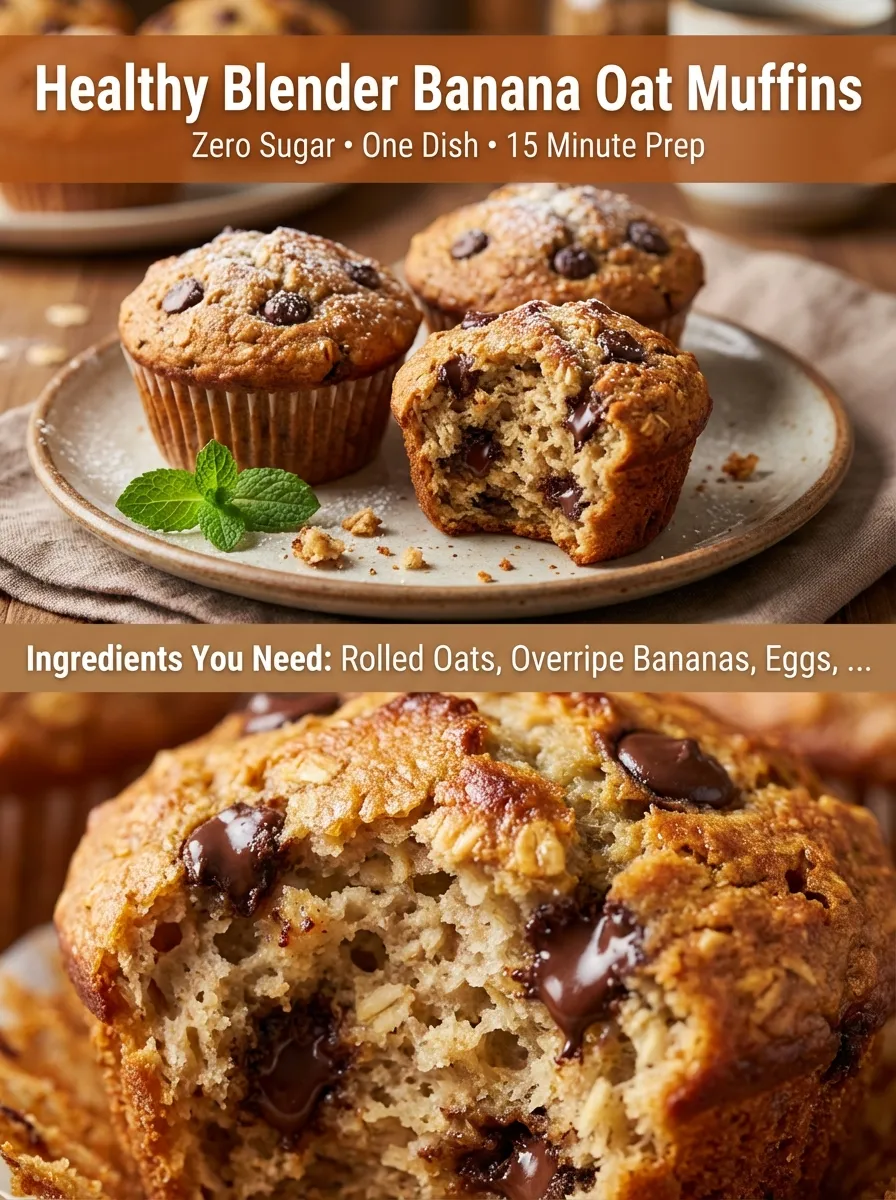
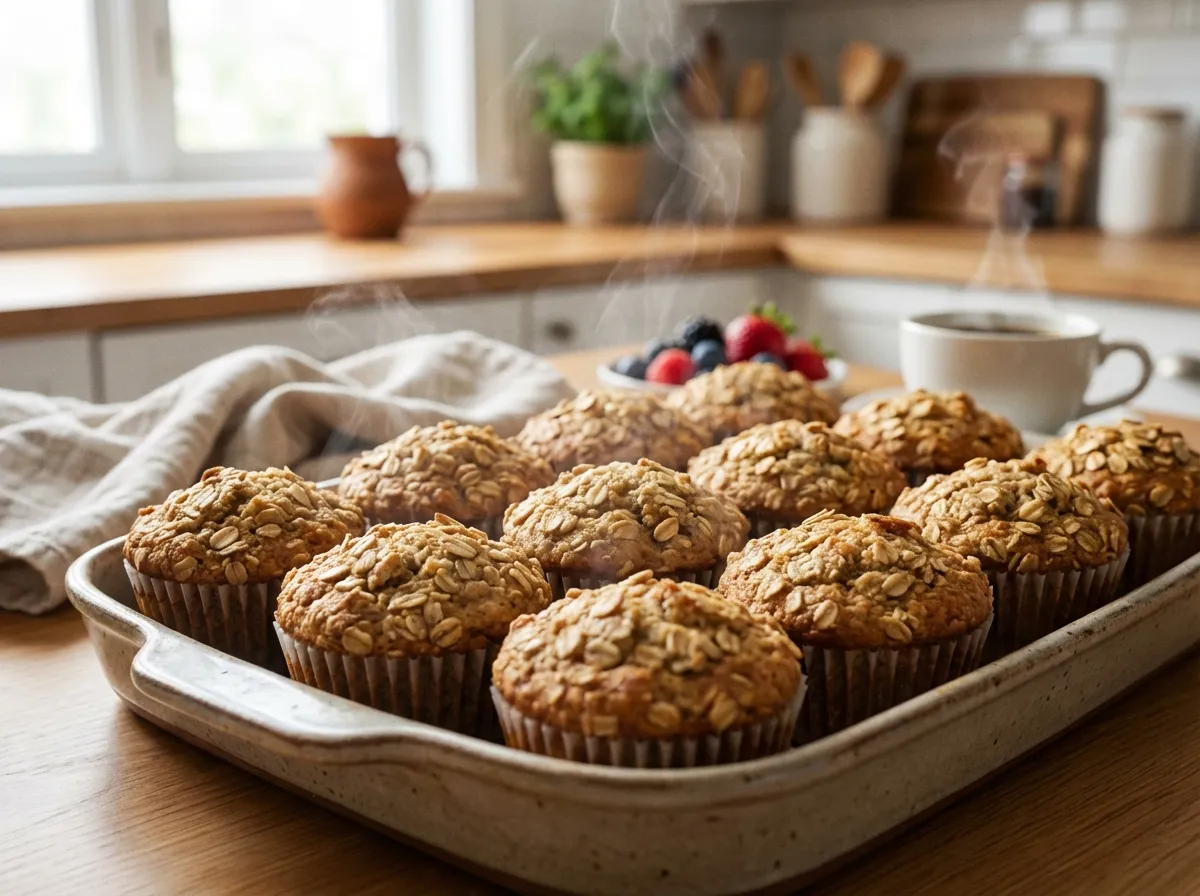
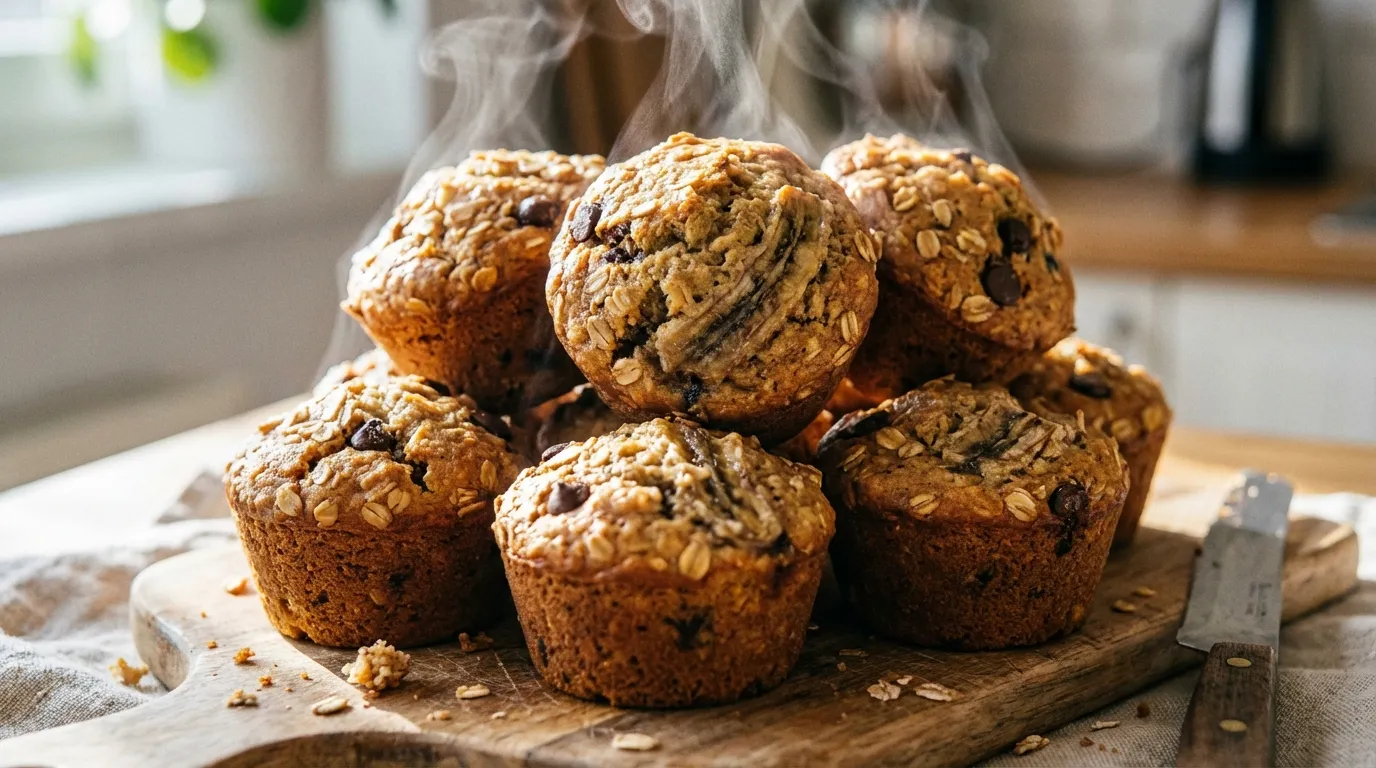
Close-up of golden-brown banana oat muffins with melted chocolate chips and a moist fiber-rich texture.

The “Blender Batter” technique is a culinary method that uses a high-speed blender to pulverize rolled oats into flour and aerate ingredients in one vessel. This process eliminates the need for multiple mixing bowls and stand mixers, allowing for a single-dish preparation of nutrient-dense, fiber-rich breakfast muffins.

The Nightmare of Baking Cleanup
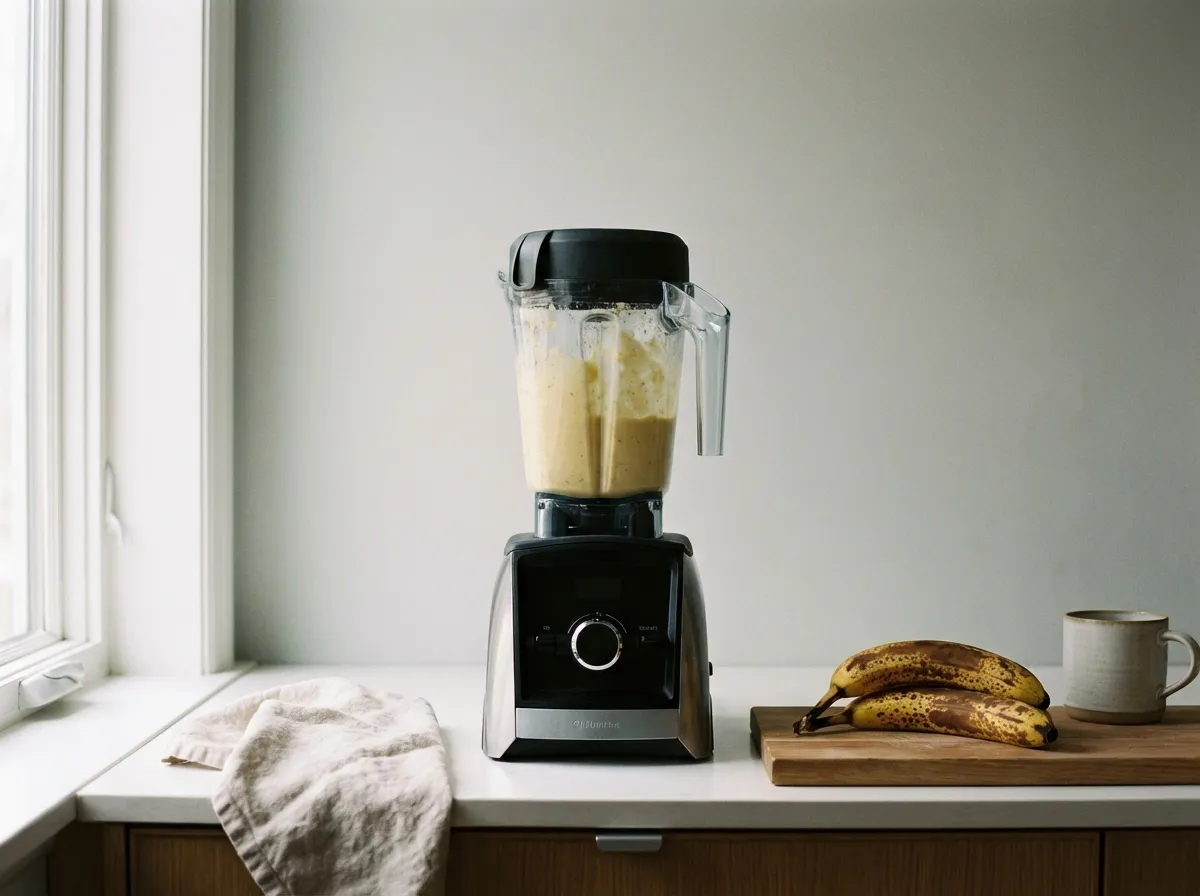
A clean kitchen counter featuring only a glass blender filled with muffin batter and two overripe bananas.

One blender, zero flour clouds: the secret to a mess-free Sunday prep.

Traditional baking creates extensive cleanup by requiring separate bowls for wet and dry ingredients and manual folding of flour. The “Blender Batter” technique solves this by utilizing the blender pitcher as both the mixing bowl and pouring vessel, reducing the entire cleanup process to rinsing one container under the sink.

The Muffin Arbitrage

Adopting a consistent Sunday kitchen prep routine allows you to bypass expensive, low-nutrient alternatives in favor of high-ROI options like those shown below.

Breakfast SourceProcessed Sugar9:30 AM CrashCost Per MuffinChef Verdict
Coffee Shop Pastry30g+Severe$4.50❌ Destroys focus and wallets
Grocery Store BoxHighHigh$1.50❌ Nutritional void
Sunday Blender BatchZeroZero$0.35✅ The ultimate morning ROI

Physiology: Oats vs. White Flour (The 9:30 AM Energy Crash)

Oats are a complex carbohydrate source that provide sustained energy through high dietary fiber content, preventing the insulin spikes caused by refined white flour. While standard muffins trigger a blood glucose crash by 9:30 AM, the slow-digesting fiber in rolled oats stabilizes energy levels and improves cognitive focus throughout the morning.

Culinary Science: Using “Trash” Bananas

“Trash” bananas are overripe fruits with blackened skins that have undergone enzymatic conversion of starches into liquid fructose. This natural ripening process provides intense sweetness and moisture, allowing the recipe to eliminate processed white cane sugar while maintaining a dessert-like flavor profile suitable for children.

The Blender Baking Hardware Toolkit
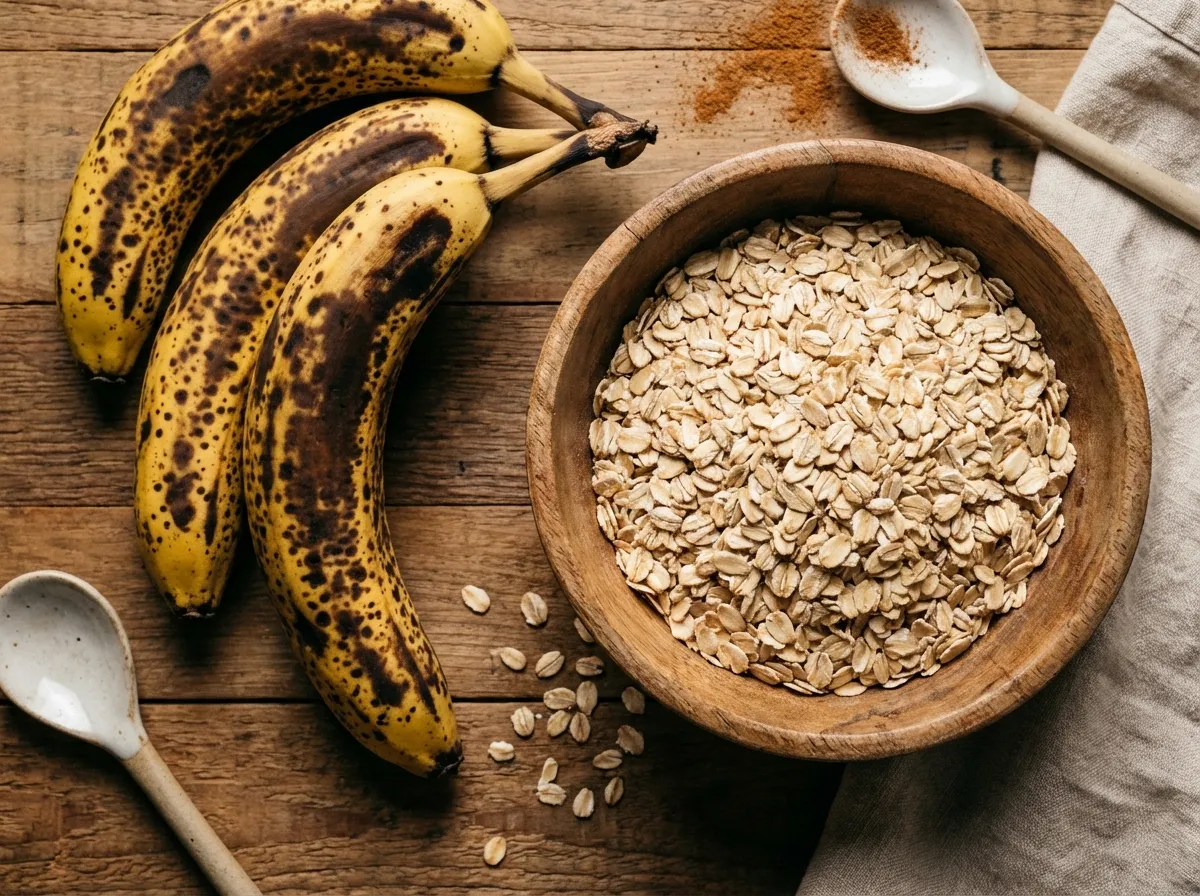
Comparison of whole rolled oats and black-spotted overripe bananas on a wooden board.

Don’t throw them away! Black-spotted bananas provide all the natural sweetness you need.

Hardware RequirementCulinary FunctionRisk if Ignored
High-Speed BlenderPulverizing whole oatsMotor burnout; large grain shards
Silicone Baking CupsFrictionless releaseBatter sticks to paper liners
Carbon Steel TinEven heat distributionBurnt bottoms; raw centers
  • High-Speed Professional Blender: A blender with sufficient torque is required to pulverize hard rolled oats into a fine powder within 15 seconds.
  • Reusable Silicone Baking Liners: Silicone provides a non-stick surface, essential for fat-free batters that bond to standard paper liners.
  • Heavy-Gauge Carbon Steel Tin: This material conducts thermal energy evenly at 375°F, preventing the warping and hot spots common with disposable aluminum pans.

Field-Tested Results: The Post-Blend Rest

The “5-Minute Hydration Rest” is a mandatory step where the batter sits undisturbed in the blender pitcher after mixing. Because oats are slow to absorb liquid, this pause allows the pulverized oat flour to fully hydrate, thickening the batter to ensure a moist, non-crumbly final muffin texture.

Recipe: Make-Ahead Banana Oat Blender Muffins
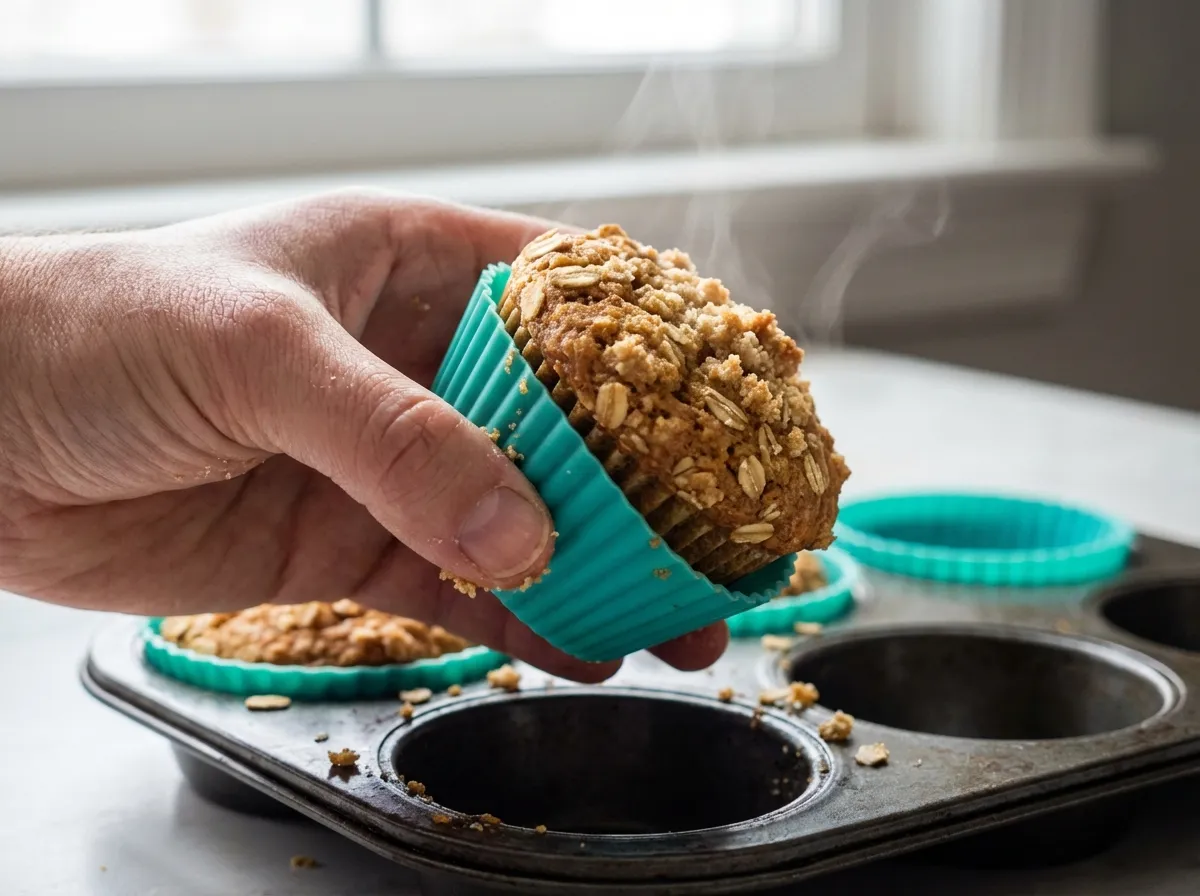
A hand pulling a perfectly intact banana oat muffin out of a bright blue silicone baking liner.

Silicone liners ensure a frictionless release for these oil-free muffins.

Ingredients (Yield: 12 muffins):
* 2 cups whole rolled oats
* 2 aggressively overripe, black bananas
* 2 large eggs
* 1/4 cup pure maple syrup
* 1/4 cup milk
* 1 teaspoon baking soda
* 1 teaspoon vanilla extract
* Optional: 1/2 cup dark chocolate chips or blueberries

Method:
1. Preheat oven to 375°F and line a carbon-steel muffin tin with 12 silicone cups.
2. Add liquid ingredients to the blender first, followed by remaining ingredients.
3. Blend on high for 60 seconds until smooth.
4. Let the batter rest for 5 minutes in the pitcher.
5. Fold in optional mix-ins by hand.
6. Pour batter into cups, filling each 3/4 full.
7. Bake at 375°F for 15 to 18 minutes.
8. Cool completely before removing from silicone cups.

Nutrition Per Serving (1 Muffin)

NutrientAmount
Calories140 kcal
Protein4g
Carbohydrates22g
Total Fat4g
Breakfast Cost$0.35

Frequently Asked Questions

Pinterest recipe pin for Blender Banana Oat Muffins with ingredients and title overlay.

Save this recipe to your Healthy Breakfast board!

Question: Can I freeze these specific oat muffins to build a massive stockpile?
Answer: Yes, the dense oat structure freezes flawlessly. When looking for freezer-friendly breakfast options, these are ideal because they maintain their texture after thawing. Once cooled to room temperature, store them in a gallon freezer bag. To serve, microwave a frozen muffin for 20 to 30 seconds until hot and aromatic.

Question: Why did my muffins sink in the middle after removing them from the oven?
Answer: You over-aerated the batter. Blending for longer than 60 seconds introduces excessive air that causes the muffin structure to collapse upon cooling. Stop blending immediately once the oats are pulverized.

Question: Do I have to use pure maple syrup, or can I substitute something else?
Answer: You can substitute equal parts natural honey or agave nectar. Do not use dry granular sugar, as it lacks the liquid volume required for the blender blades to spin the batter effectively.

Question: Can I use “Quick Oats” instead of “Old Fashioned Rolled Oats”?
Answer: Yes, quick oats work perfectly. The high-speed blender pulverizes the oats into a fine powder regardless of their initial flake size, making the starting texture of the oats irrelevant to the final result.

Once you have mastered the blender muffin, you can further streamline your mornings by implementing pre-assembled school lunch systems to ensure the entire day remains stress-free.
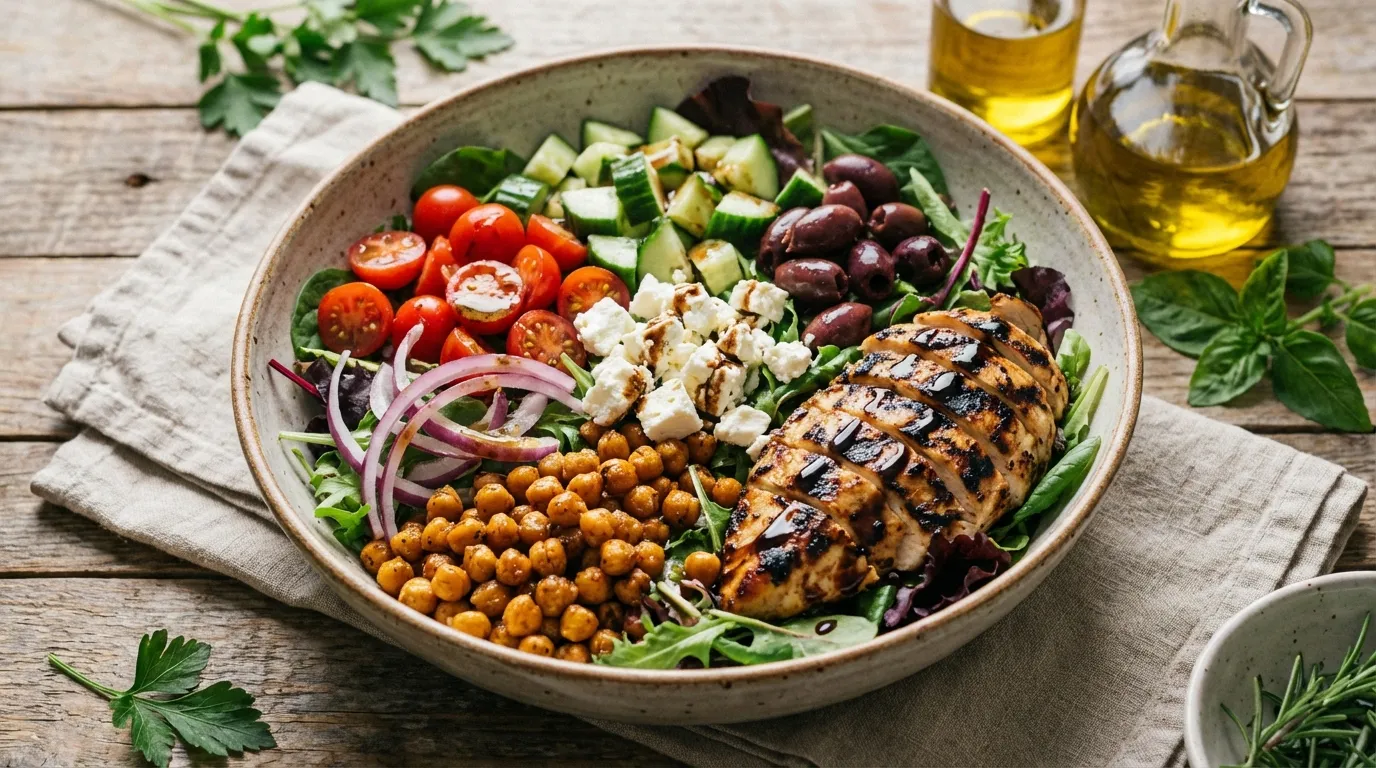
5-Day Mason Jar Salads for Mom (No More Soggy Greens)

Close-up of a fresh Mediterranean chicken salad dumped from a mason jar into a large white ceramic bowl, showing vibrant greens and dressing.

Home > 1-Hour Weekly Meal Prep > 5-Day Mason Jar Salads

Busy parents often sacrifice their own nutritional needs to manage family meals, frequently resulting in the consumption of high-sodium, low-nutrient leftovers. The “Vertical Gravity Protocol” is a meal-prep system utilizing 32oz wide-mouth glass jars to store salads for up to 5 days by sequestering acidic dressings at the base and keeping delicate greens dry at the top.

The “Mom Tax”: Stop Eating Kid Leftovers

The “Mom Tax” is the habit of consuming a toddler’s discarded food scraps, which leads to poor nutritional intake and increased stress. By integrating this into your 1-hour Sunday kitchen reset along with pre-assembled school lunchbox kits, parents can secure 5 nutrient-dense, adult-focused lunches, reclaiming dietary autonomy while significantly reducing weekly food expenditure compared to daily takeout.

The Salad Arbitrage

Lunch SourceWait TimeSodium/CaloriesCost Per LunchChef Verdict
Premium Salad Chain15 MinsVariable$16.00❌ Unsustainable
The “Mom Tax”0 MinsHigh$0.00❌ Unhealthy
Sunday Jar Factory0 MinsControlled$3.80✅ Optimal

Why Plastic Tupperware Inherently Fails

Plastic Tupperware is a shallow, wide storage container that increases surface area exposure to oxygen and forces salad greens into direct contact with acidic dressing. This combination triggers rapid oxidation and chemical breakdown, turning greens into a slimy, unappetizing consistency within 48 hours of storage.

The Vertical Gravity Protocol

Vertical Gravity Protocol is a structural layering method that organizes ingredients by density to prevent premature wilting.

  1. The Base Zone: 3 tablespoons of vinaigrette (the liquid foundation).
  2. The Shield: Raw carrots, bell peppers, chickpeas, and whole cherry tomatoes (non-porous barrier).
  3. The Sponge: Quinoa, grilled chicken, and feta cheese (protein and grain layer).
  4. The Canopy: Romaine, spinach, or kale (dry, moisture-sensitive top layer).

The Salad Hardware Toolkit

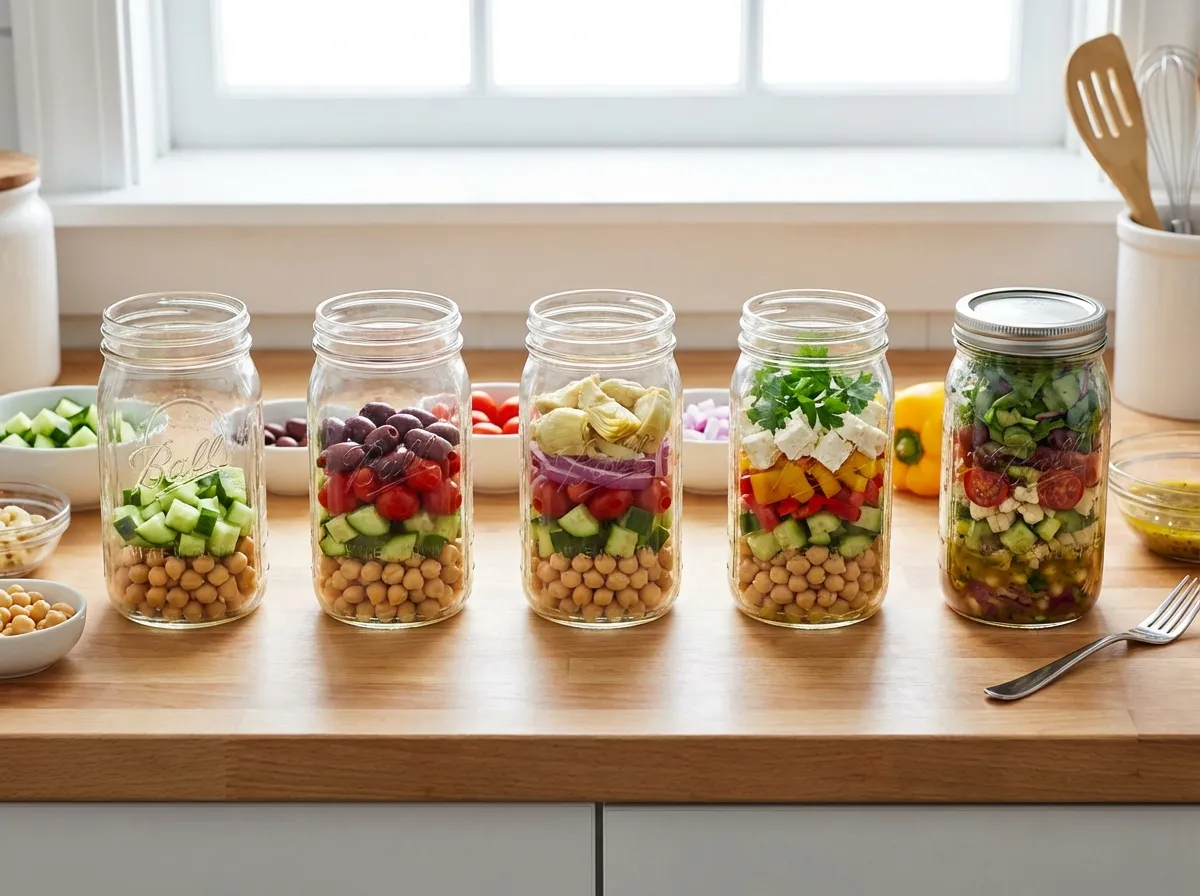
Five mason jars lined up in an assembly line on a kitchen counter being filled with colorful salad ingredients.

Batch-prepping five days of lunches in one 10-minute Sunday session.

Hardware RequirementCulinary FunctionRisk if Ignored
32oz Wide-Mouth JarsMaintains vertical strataTapered necks trap and bruise greens
Stainless Canning FunnelPrevents wall moistureSplashes dressing on upper layers
10-Inch Ceramic BowlProvides mixing surfaceImpossible to toss salad in a jar
  • Premium 32oz Wide-Mouth Glass Jars: These feature a straight vertical drop from lip to base, allowing ingredients to be layered without smearing moisture against the glass sides.
  • Wide-Mouth Stainless Steel Funnel: This tool acts as a guardrail, ensuring ingredients fall directly into the center of the jar without splashing dressing onto the upper layers.
  • Massive 10-Inch Ceramic Salad Bowls: A large bowl is required to provide the horizontal space necessary to invert the jar and mix the ingredients without losing produce over the edges.

Field-Tested Results: The Wide-Mouth Mandate

Using regular-mouth jars is a failure point because the narrowed neck physically traps ingredients, forcing the user to dig out the salad with a fork. This mechanical interference destroys the texture of the greens. The 32oz wide-mouth jar allows the entire 4-layer salad to slide out intact onto a plate when inverted.

Recipe: The Mediterranean Chicken Mason Jar

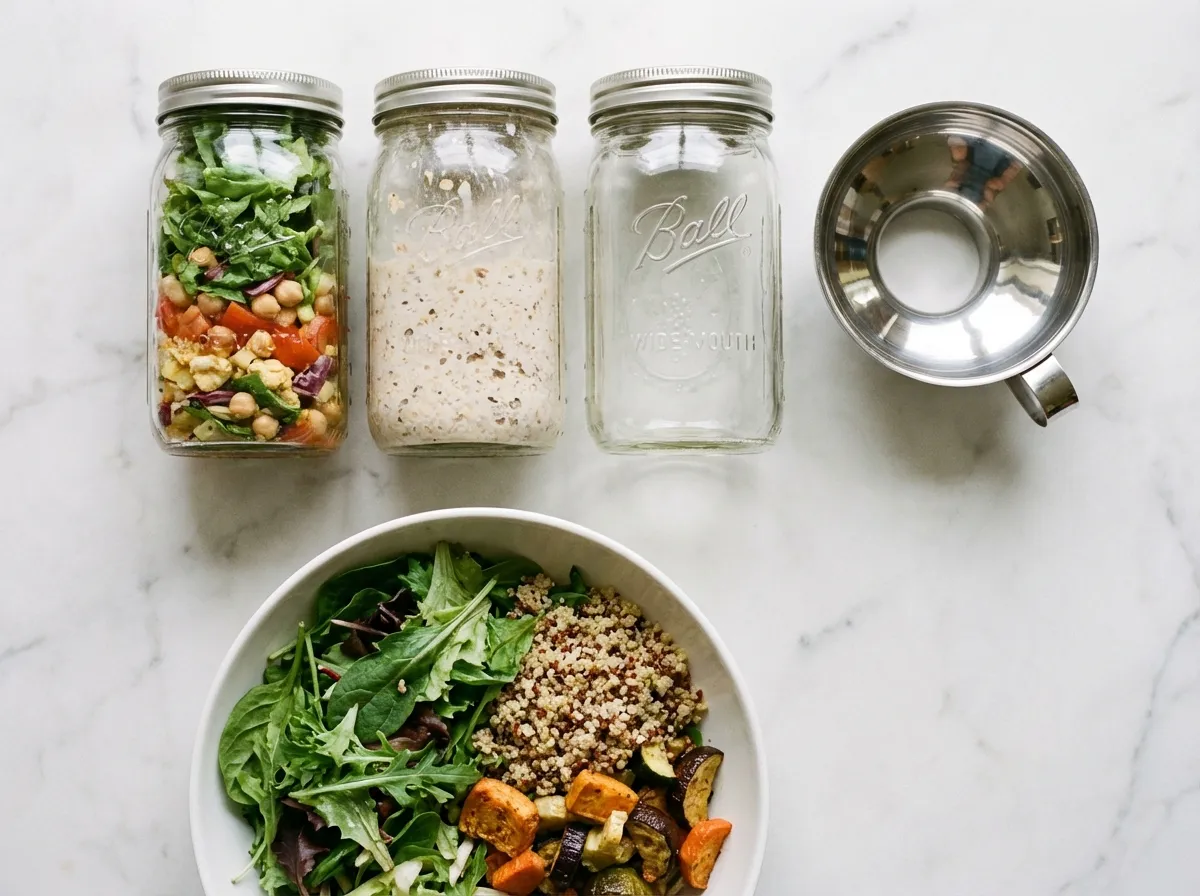
Overhead view of meal prep tools including 32oz wide-mouth jars, a stainless steel canning funnel, and a large ceramic bowl.

The right tools for the job: Wide-mouth jars and a canning funnel make assembly seamless.

Ingredients (Yield: 5 full 32oz Jars)
* 15 Tbsp Balsamic Vinaigrette
* 1 ½ cups whole cherry tomatoes
* 1 can (15 oz) firm chickpeas, rinsed and dried
* 1 large English cucumber, diced
* 1 lb boneless skinless chicken breasts, grilled, chilled, and diced
* 1 cup crumbled feta cheese
* 16 oz pre-washed dry baby spinach

Method:
1. Assembly Line: Align five 32oz wide-mouth jars.
2. Base Layer: Pour 3 Tbsp vinaigrette into each jar.
3. Barrier Shield: Add tomatoes, chickpeas, and cucumbers.
4. Sponge Layer: Add chilled chicken and feta cheese.
5. Dry Canopy: Pack the remaining space with dry spinach until it reaches the lid.
6. Seal: Close tightly and refrigerate upright.
7. Dump Protocol: Invert the jar over a 10-inch bowl to serve.

Nutrition Per Serving (1 Massive 32oz Jar)

NutrientAmount
Calories420 kcal
Protein34g
Carbohydrates16g
Total Fat24g
Lunch Cost$3.80

Frequently Asked Questions

Question: Can I eat the salad directly out of the jar?
Answer: No. The ingredients are packed too densely to mix effectively inside the jar. You must invert the jar into a 10-inch bowl to allow the dressing to coat the greens, ensuring even distribution of flavors and proper texture.

Question: Can I use creamy dressings like Ranch?
Answer: You can, but it is less efficient. Creamy dressings are thick and often adhere to the bottom of the glass. Using a thin, acidic vinaigrette is recommended because it flows easily over the barrier vegetables when the jar is inverted.

Question: What happens if I slice the cherry tomatoes?
Answer: Slicing the tomatoes ruins the barrier. A whole cherry tomato acts as a waterproof seal; once sliced, the internal moisture and acidity will leak into the protein layer and cause the greens to wilt prematurely.

Question: Should I use a paper towel?
Answer: A paper towel is an optional fail-safe. If the chicken is not perfectly chilled before assembly, it will create condensation. Placing a folded paper towel under the lid absorbs this excess moisture, keeping the greens crisp for the full 5-day duration.

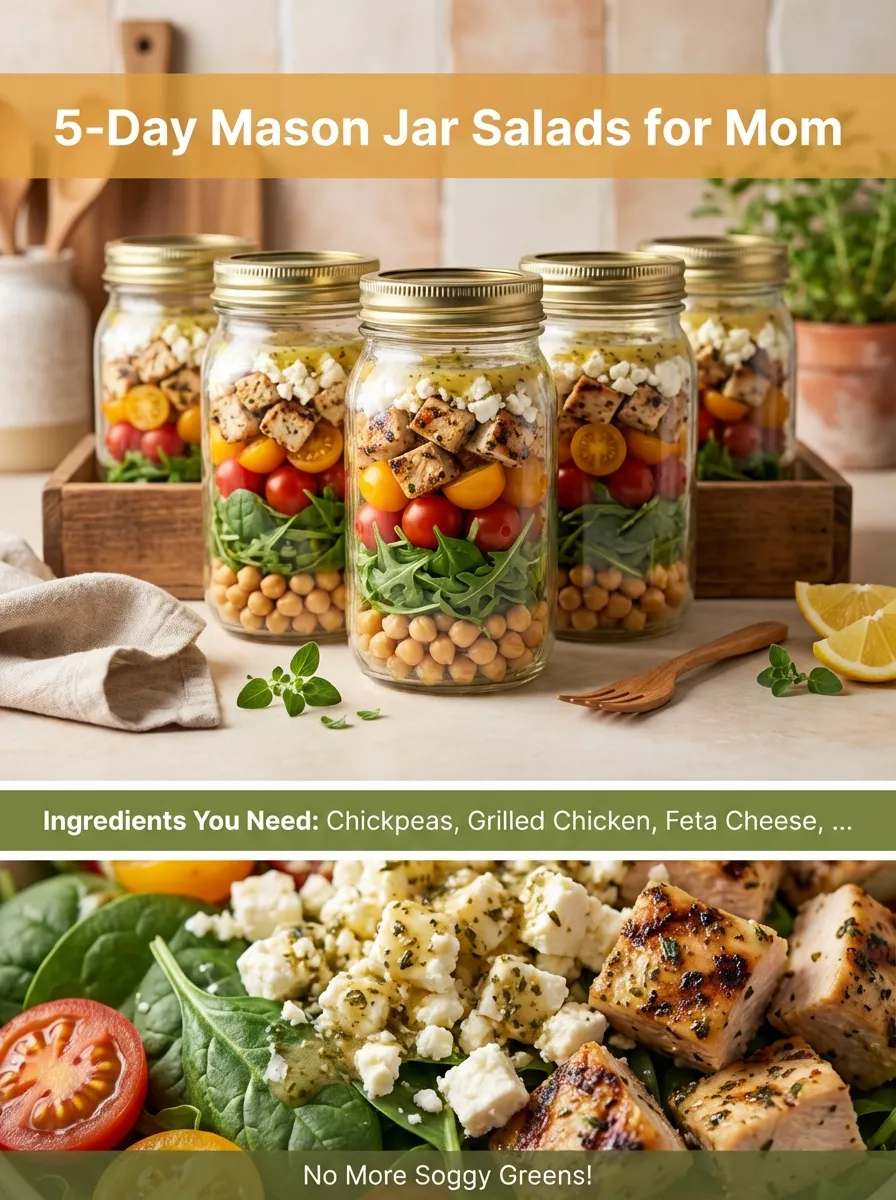
Pinterest graphic for 5-Day Mason Jar Salads featuring layered jars and a plated Mediterranean salad.

Pin this for your Sunday Meal Prep routine!

Batch-Cooked Hidden Veggie Spaghetti Sauce (The 10-Minute Dinner)

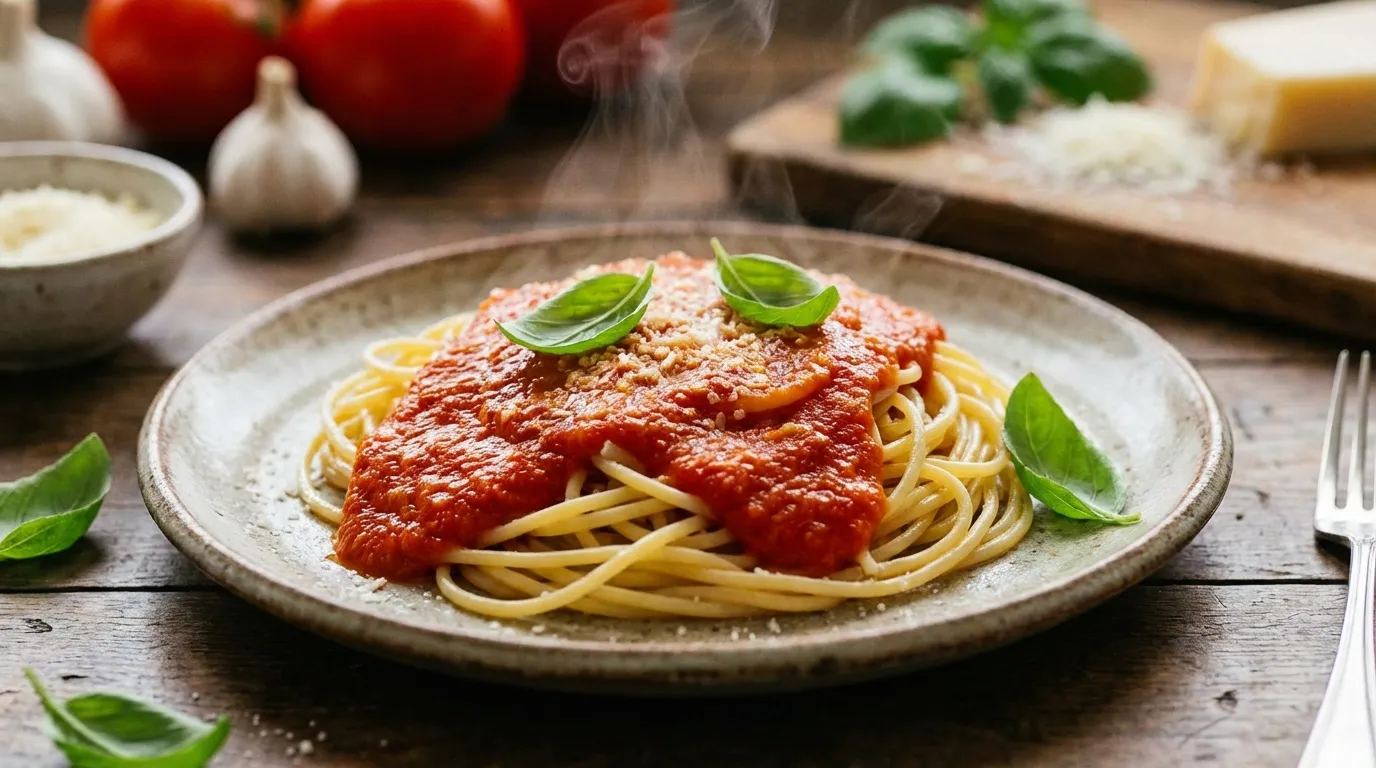
Close-up of velvety smooth hidden veggie spaghetti sauce over steaming pasta with a dusting of parmesan.

As part of a larger Sunday Kitchen Reset, this batch-cooking method uses the “Mirepoix Puree” technique to create a nutrient-dense, vegetable-packed sauce that freezes flat and thaws in 5 minutes. By roasting vegetables at 425°F and pulverizing them in a high-speed blender, parents can create a smooth, velvety sauce that eliminates visible vegetable chunks, ensuring acceptance by picky eaters.

The “Anti-Chunk” Philosophy for Picky Eaters

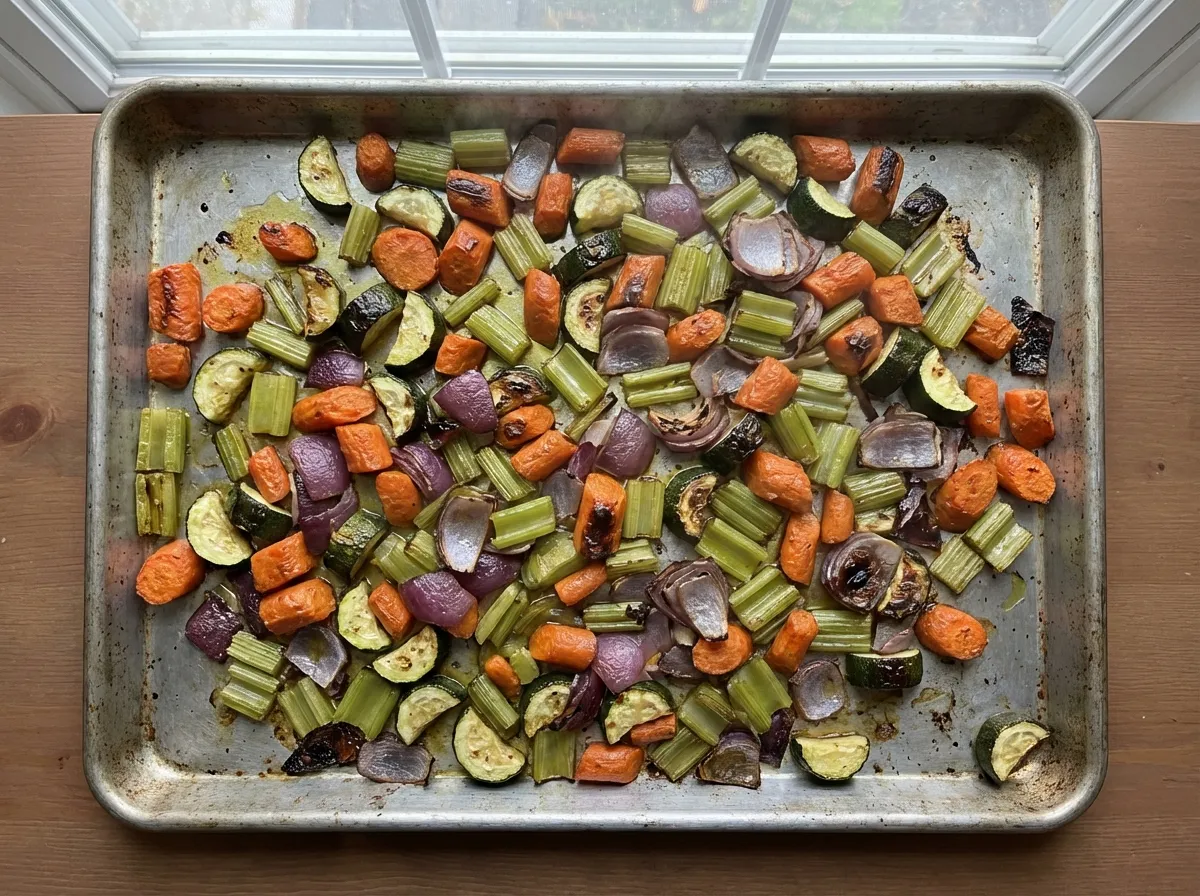
Roasted carrots, celery, onions, and zucchini on a heavy aluminum baking sheet showing caramelized edges.

The secret to flavor: roasting vegetables to trigger the Maillard reaction before blending.

The “Anti-Chunk Philosophy” is a culinary approach that uses high-torque blending to eliminate the texture of fibrous vegetables. By transforming 5 cups of vegetables into a uniform liquid, the sauce mimics the consistency of commercial jarred brands, removing the sensory barrier that causes children to reject vegetable-heavy meals.

The Sauce Arbitrage

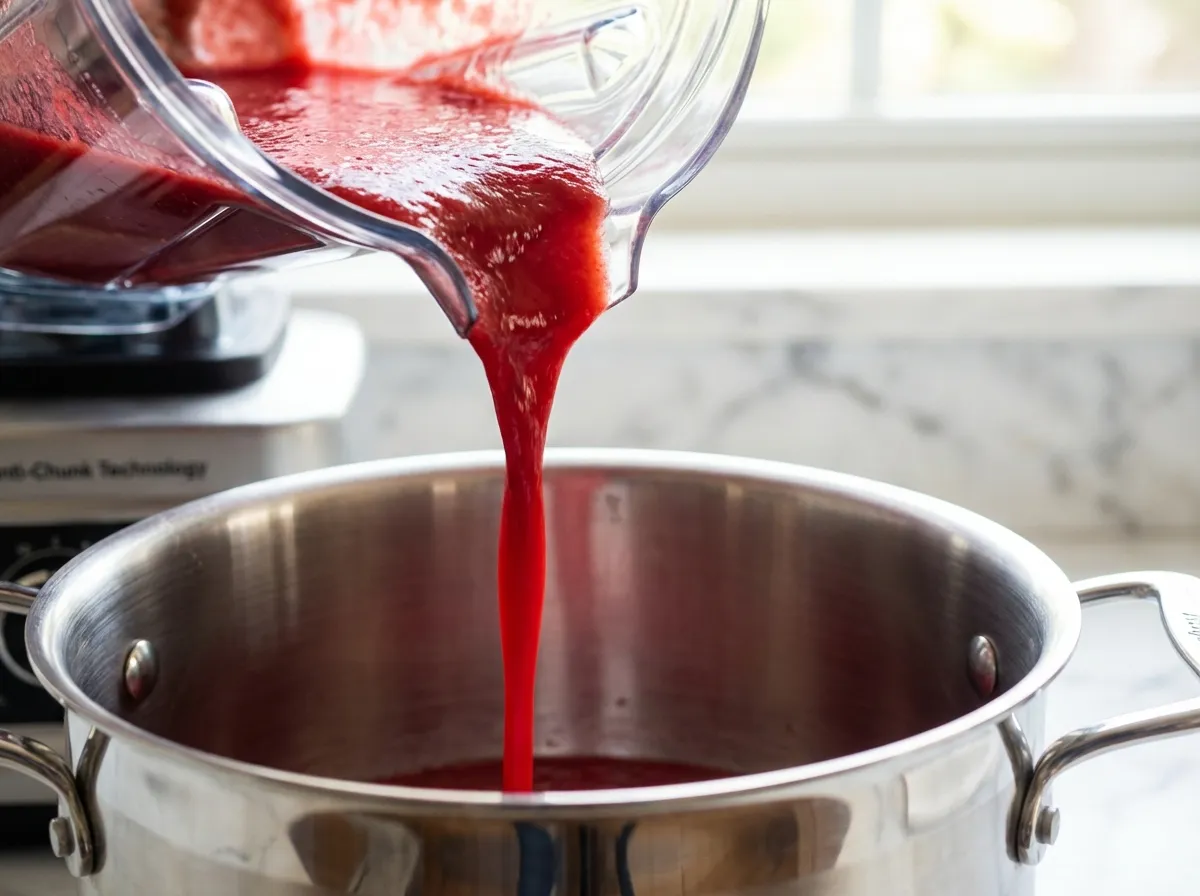
Close-up of smooth, vibrant red vegetable-packed spaghetti sauce being poured from a blender into a pot.

Complete fiber obliteration: 5 cups of vegetables transformed into a velvety red liquid.

Sauce SourceAdded SugarVegetable ContentCost Per QuartChef Verdict
Basic Jarred Brand10g+Zero$3.50❌ Nutritional wasteland
Premium “Hidden Veg” JarZeroPowdered extracts$8.00❌ Overpriced marketing
Sunday Blender BatchZero5 Cups Whole Veg$2.25✅ The ultimate dinner ROI

Why Roasting Mathematically Beats Boiling

Roasting vegetables at 425°F is a culinary process that triggers the Maillard reaction, a chemical reaction between amino acids and sugars that creates complex flavor and browning. This method caramelizes the natural botanical sugars in carrots, onions, and celery, providing a deep, savory sweetness that eliminates the need for added refined sugar.

The Sauce Factory Hardware Toolkit

Hardware RequirementCulinary FunctionRisk if Ignored
High-Speed BlenderObliterating cellular fiberGritty texture alerts kids to vegetables
Premium Slider BagsWithstanding hydraulic pressureBags rupture, causing freezer leaks
Heavy Aluminum PanCaramelizing botanical sugarsThin pans warp and steam vegetables
  • High-Speed Professional Blender: Generates the necessary torque to liquefy fibrous cell walls, creating a smooth velvet texture.
  • Heavy-Duty Gallon Slider Bags: Engineered with reinforced seals to withstand the hydraulic pressure of flat-freezing large volumes of liquid.
  • Thick Aluminum Half-Sheet Pan: Provides thermal stability at 425°F to ensure consistent dry-roasting rather than steaming.

The “Flat Freeze” Ziploc Technique

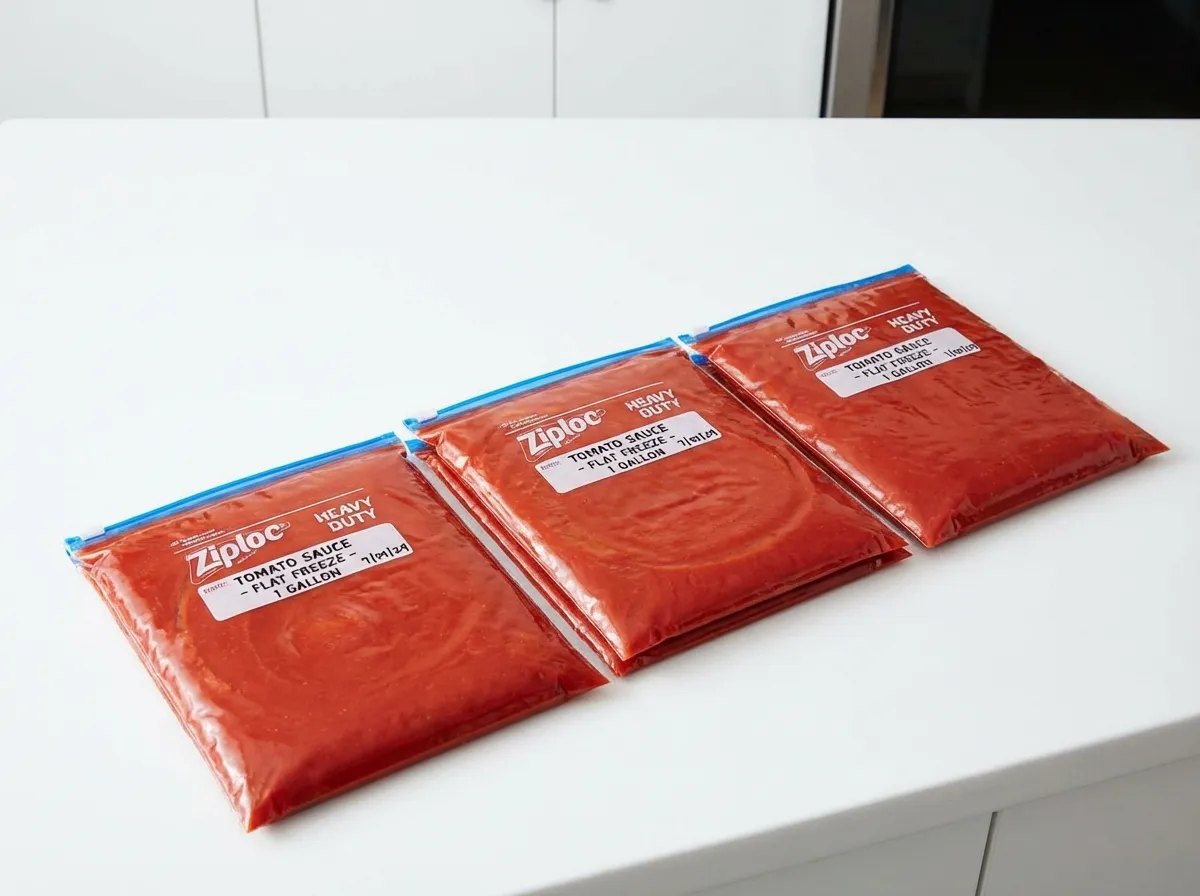
The “Flat-Freeze” is a storage method where liquid sauce is cooled, poured into gallon slider bags, and laid horizontally to freeze. This is a core pillar of efficient freezer-friendly meal prep, maximizing surface area and allowing a 4-cup block of frozen sauce to thaw in 2 minutes under warm water, compared to 24 hours for a standard plastic tub.

Field-Tested Results: The “Meat Armor” Hack

Freezing cooked ground beef inside the liquid tomato puree creates “Meat Armor,” a protective layer that isolates proteins from oxygen. This encapsulation prevents freezer burn and maintains the integrity of the meat, allowing for safe, high-quality storage for up to three months in a standard home freezer.

Recipe: Batch-Cooked Hidden Veggie Sauce

Gallon-sized freezer bags filled with red spaghetti sauce laid perfectly flat on a freezer shelf.

The Flat-Freeze Protocol: maximizing freezer space and minimizing thaw time.

Ingredients (Yield: 4 family dinners / 16 cups):
* 2 cans (28 oz each) crushed tomatoes
* 5 cups chopped raw vegetables (Carrots, Celery, Zucchini, Sweet Onion)
* 4 cloves garlic, smashed
* 3 tbsp olive oil
* 1 tbsp kosher salt
* 1 tbsp dried Italian seasoning

Method:
1. Caramelization Roast: Preheat oven to 425°F. Toss vegetables and garlic in oil and salt. Spread on a thick aluminum sheet pan. Roast for 25–30 minutes until browned.
2. Anti-Chunk Obliteration: Transfer roasted vegetables to a high-speed blender. Add 1 cup crushed tomatoes. Blend on high for 60 seconds until a smooth puree forms.
3. Simmer: Pour puree into a stockpot with remaining tomatoes and seasonings. Simmer on low for 20 minutes.
4. Flat-Freeze Protocol: Cool to room temperature. Pour 4 cups into gallon slider bags. Expel all air, seal, and lay flat in the freezer.

Nutrition Per Serving (1/4 Cup Sauce)

NutrientAmount
Calories110 kcal
Protein4g
Carbohydrates18g
Total Fat3g
Dinner Sauce Cost$2.25 per family batch

Frequently Asked Questions

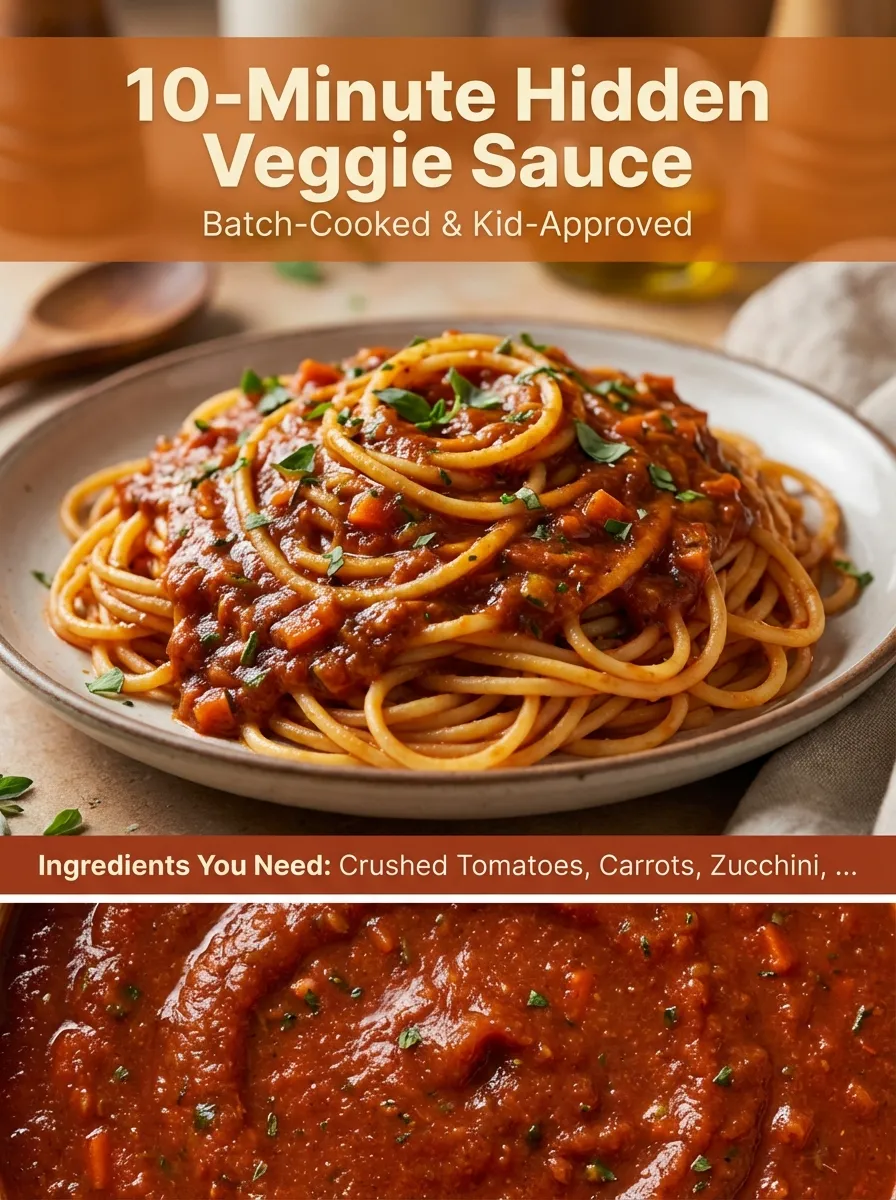
Pinterest pin for Batch-Cooked Hidden Veggie Spaghetti Sauce showing ingredients and finished meal.

Pin this 10-minute dinner hack for your next Sunday meal prep!

Question: How do I reheat the flat frozen sauce without damaging the plastic?
Answer: Run the frozen bag under warm tap water for 2 minutes to loosen the block. Open the zipper, crack the semi-frozen block in half, and drop the pieces into a saucepan on medium-low heat. It will melt into a sauce consistency in exactly 5 minutes.

Question: Which vegetables should I avoid in this pureed batch?
Answer: Avoid broccoli and kale. The high-speed blender crushes their sulfur-containing cell walls, releasing aggressive, bitter aromas into the tomato base. Stick to mild, sweet aromatics like carrots, zucchini, and celery to ensure the flavor remains neutral and appealing to children.

Question: Will the sauce look orange due to the carrots?
Answer: Using equal parts crushed tomatoes and roasted vegetables keeps the color deep red. If the sauce appears too orange, whisk in 2 tablespoons of concentrated tomato paste while simmering. This deepens the hue immediately, ensuring the appearance remains consistent with standard marinara sauce.

Question: Can I use a standard residential blender instead of a high-speed model?
Answer: Yes, but you must increase the blending time. While a professional blender requires 60 seconds, a standard residential blender should run on high for 2 to 3 minutes to physically break down tough celery strings and ensure the required velvety “Anti-Chunk” texture is achieved.

By mastering these batching techniques, you can reclaim your evenings. Pair this sauce with our pre-assembled weekly kits to ensure your entire kitchen operation is optimized for the school week.

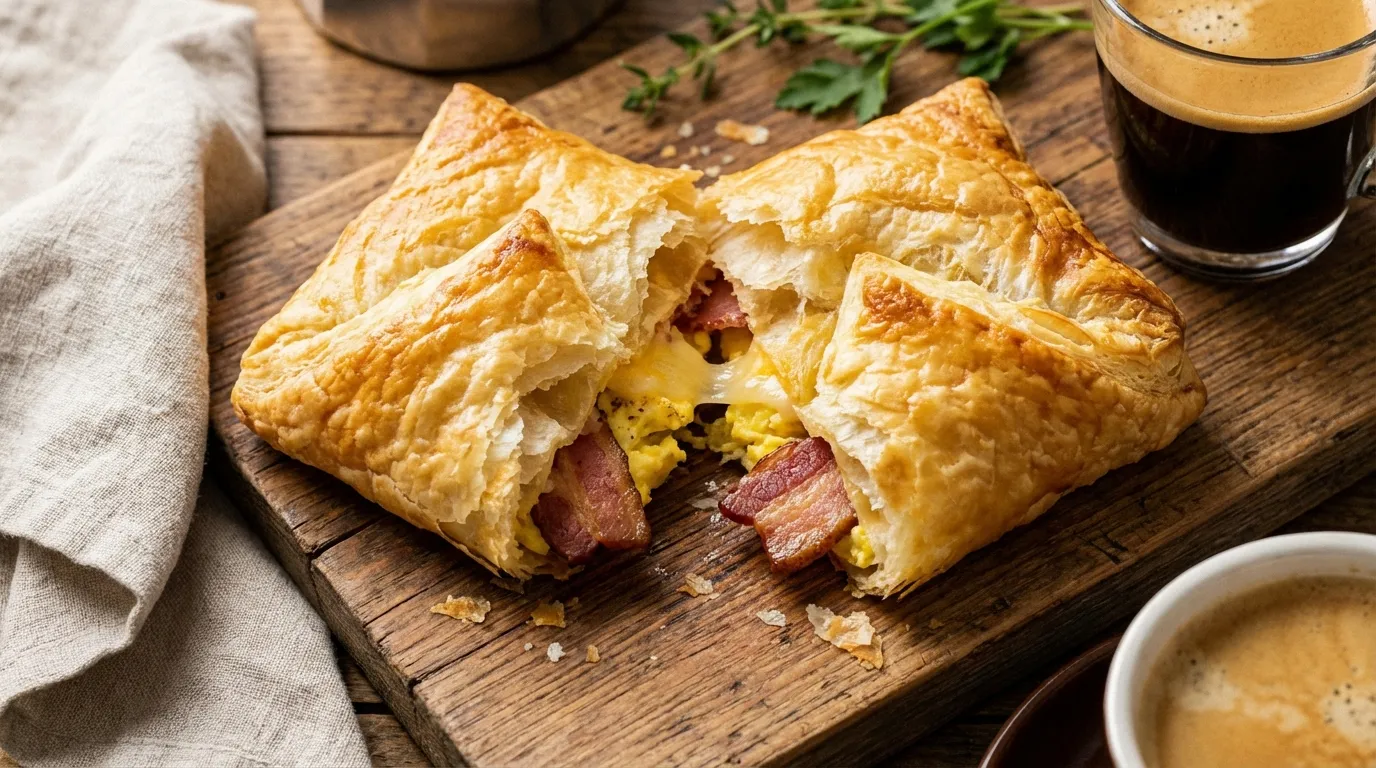
Freezer-Friendly Breakfast Pockets (The 60-Second Morning)

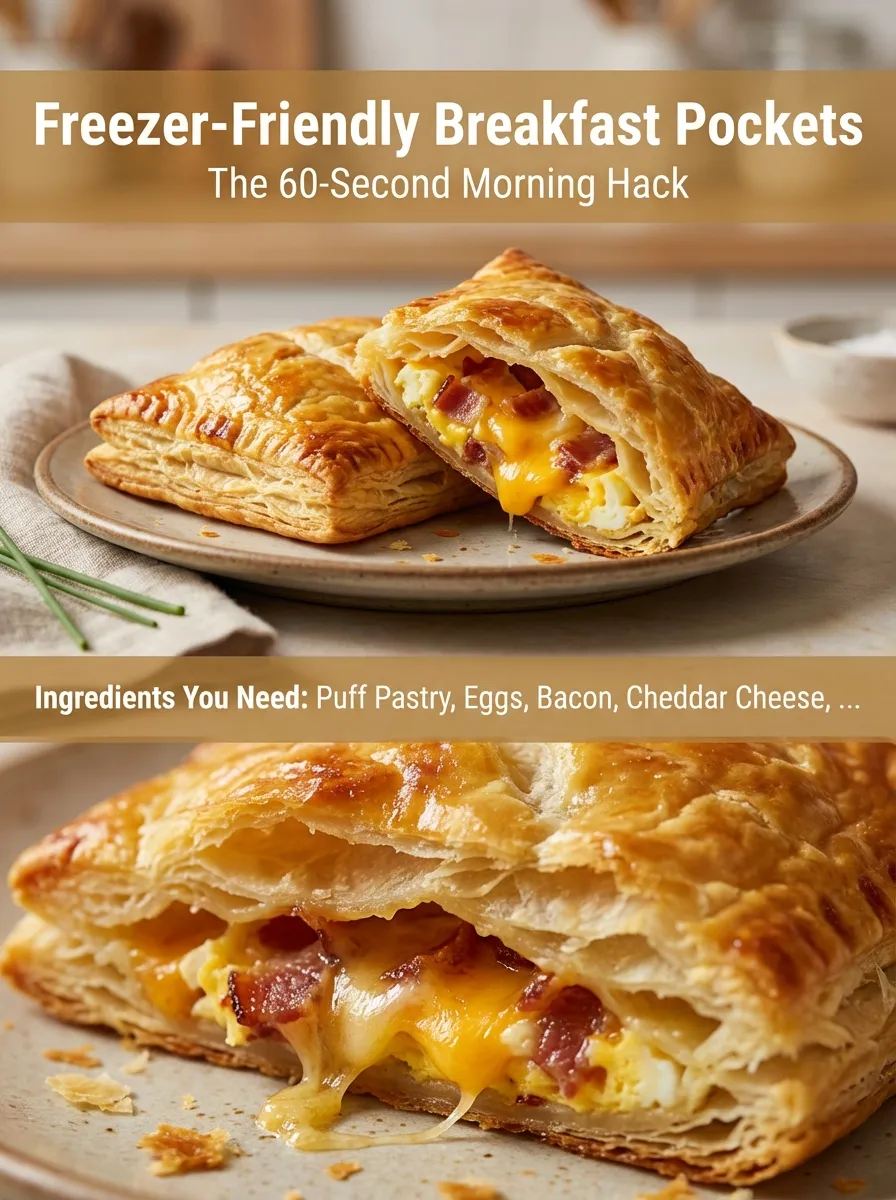
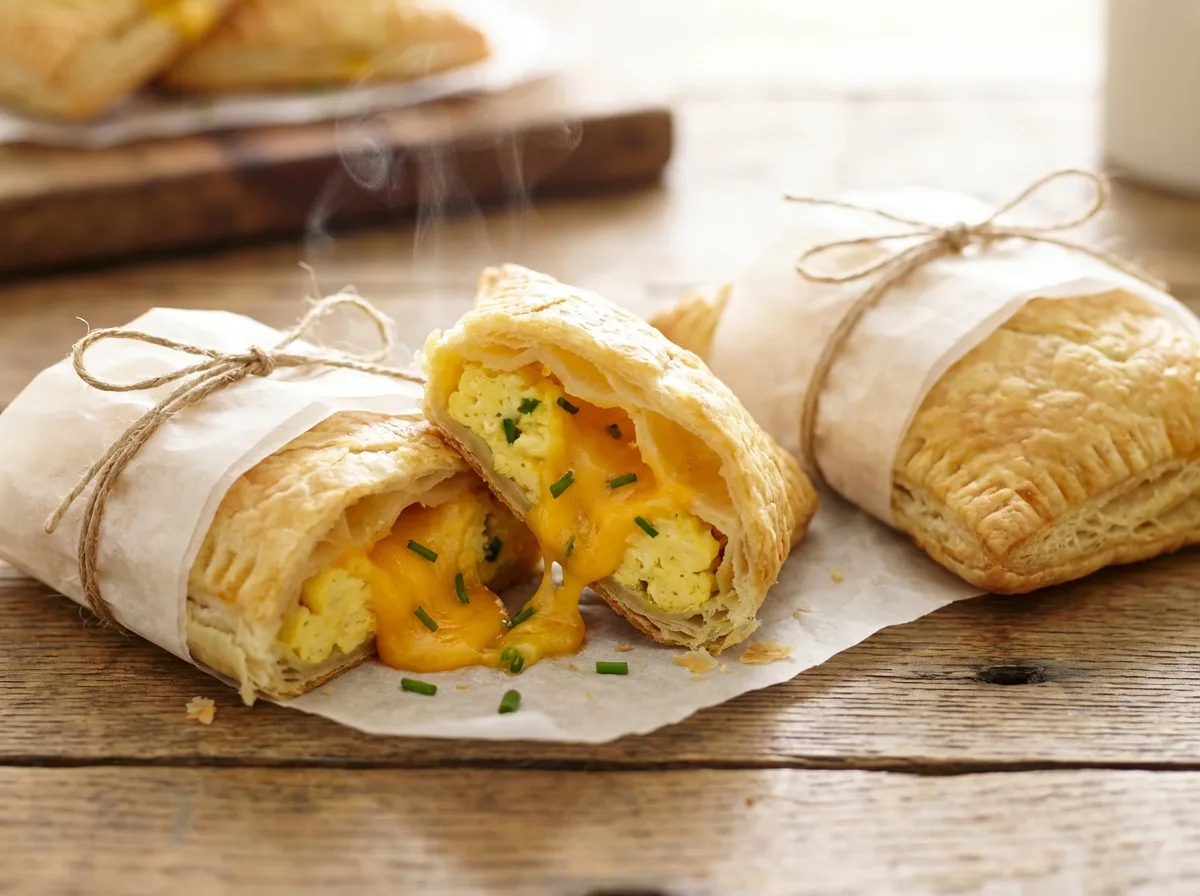
Extreme close-up of a golden flaky puff pastry breakfast pocket sliced open to reveal melted cheddar and soft scrambled eggs.

Parents managing chaotic school mornings require a hot, protein-dense breakfast that can be eaten safely with one hand. By batch-cooking scrambled eggs and bacon, sealing them in puff pastry, and freezing the units, you create a self-contained meal that reheats in exactly 60 seconds with no moisture leakage or messy cleanup.

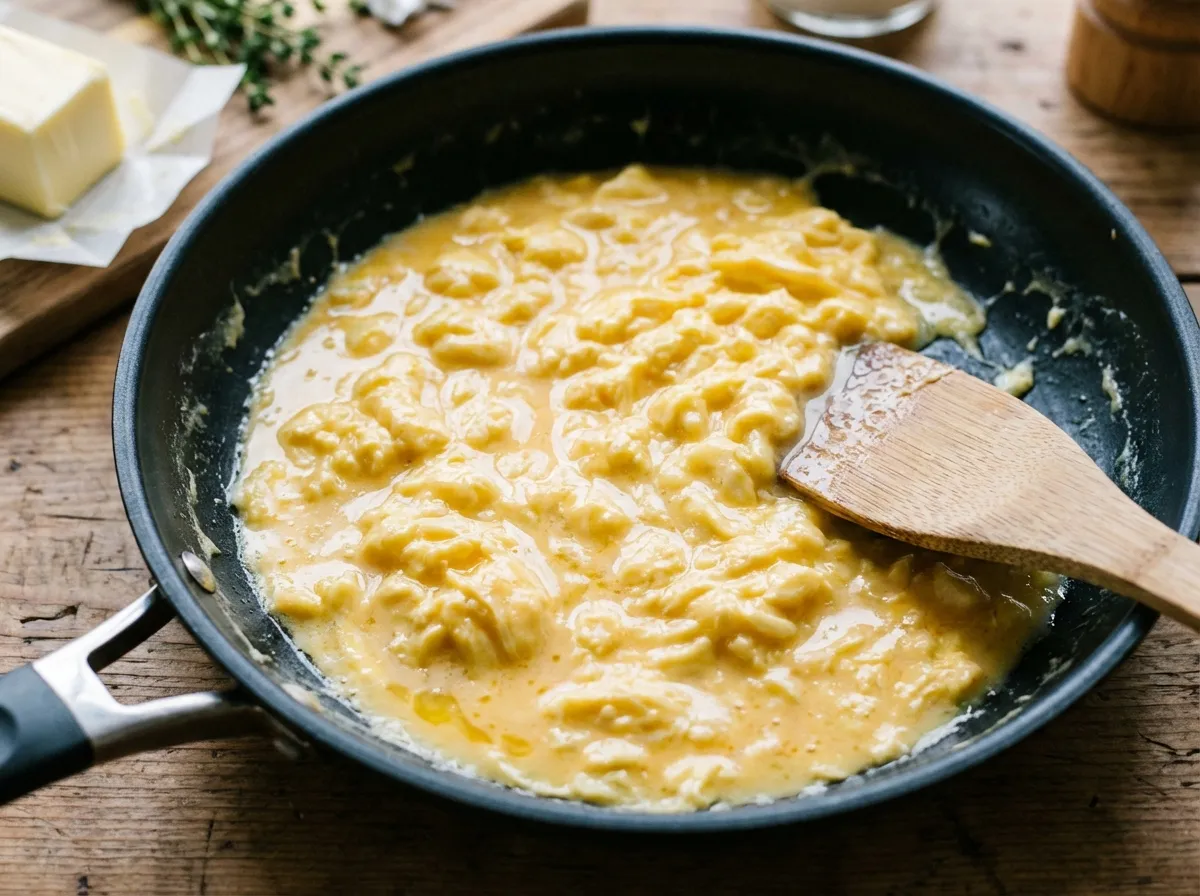
The “Overcooked Egg” Freezer Mistake

Top-down view of wet, glossy scrambled eggs in a skillet, showing the ideal 'under-cooked' texture for freezing.

Stop cooking while they’re still wet—this prevents rubbery eggs later!

Overcooked eggs occur when the internal protein structure is subjected to excessive heat during both the initial cooking and the final reheating process. To prevent a rubbery texture, you must under-scramble eggs until they are visibly wet and runny, as the subsequent oven bake and microwave reheat will provide the necessary residual energy to finish the cooking process.

Why Puff Pastry Surgically Beats Tortillas

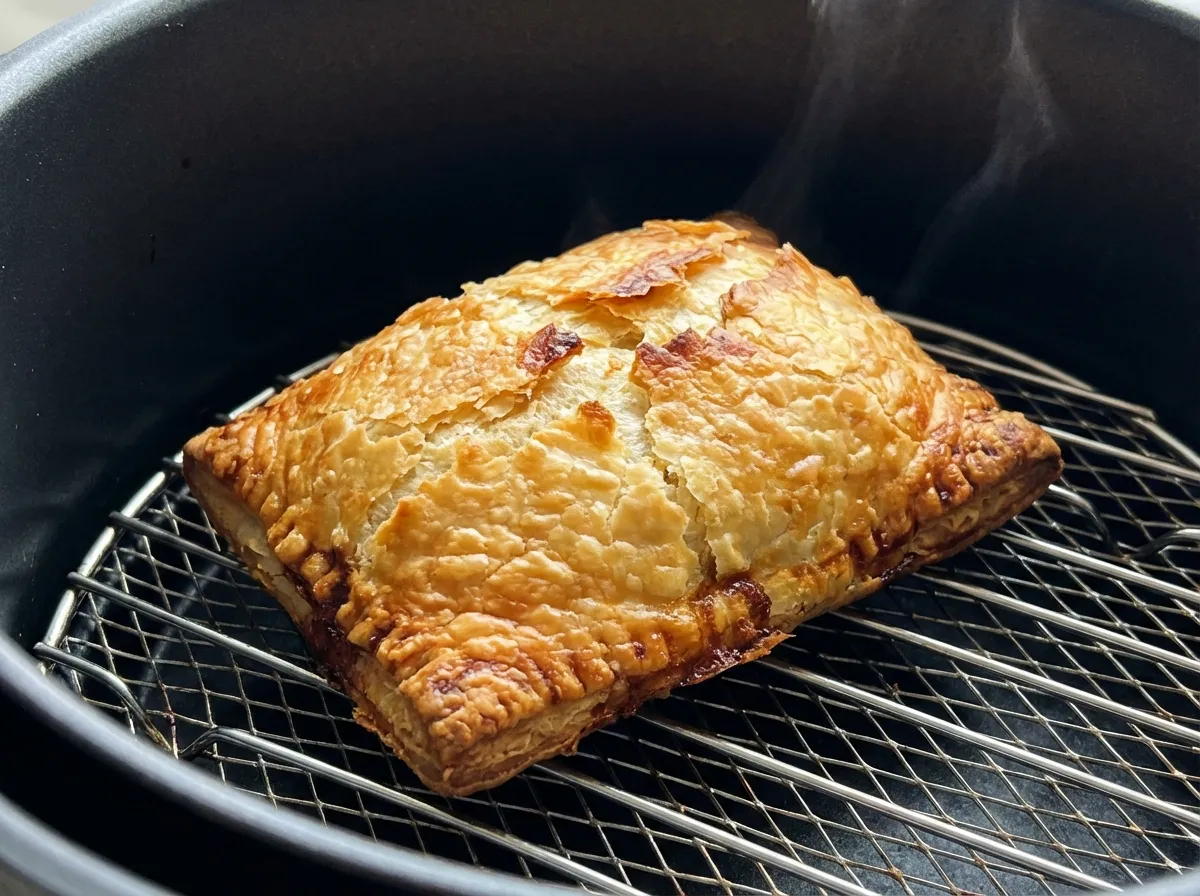
A single breakfast pocket inside an air fryer basket, looking extremely crispy and shattered with golden butter layers.

Use the air fryer hack for that signature bakery-level crunch.

Puff pastry is a laminated dough consisting of hundreds of microscopic layers of butter and flour that creates a moisture-resistant barrier. Unlike porous flour tortillas that absorb liquid and turn soggy in the freezer, the high fat content of puff pastry remains structurally sound, keeping the egg moisture locked inside while maintaining a flaky, dry exterior.

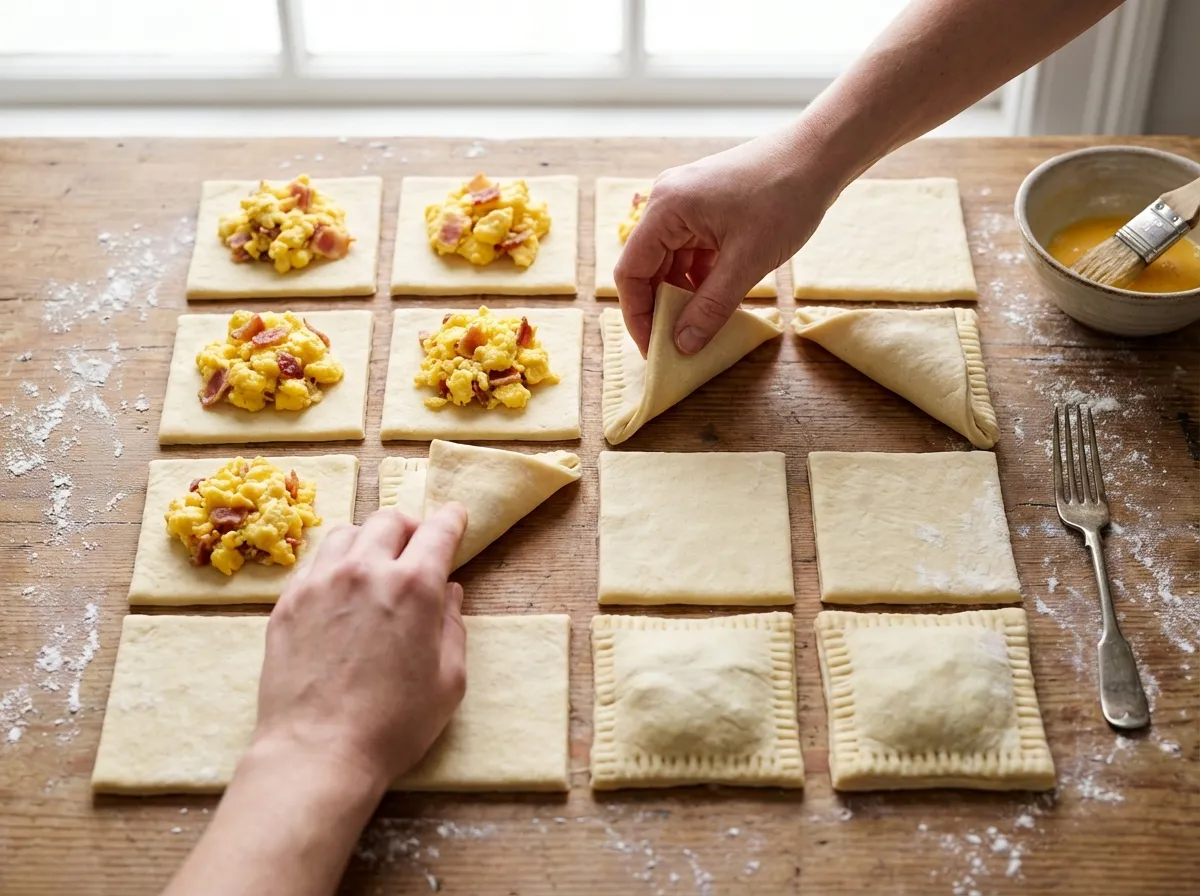
The Assembly Line Folding Technique

A clean kitchen counter showing a grid of puff pastry squares with egg filling in the center, demonstrating the assembly line method.

The assembly line method: 16 pockets prepped in just 10 minutes.

To maximize efficiency, you must establish a rhythmic, repeatable workflow to assemble 16 pockets in under 10 minutes. By laying out all pastry sheets simultaneously, cutting them into uniform squares, and applying egg wash as a bonding agent, you ensure consistent seals and minimize the time the dough spends at room temperature.

Field-Tested Results: The “Air Fryer Revival” Hack

While a 60-second microwave cycle is the fastest method, it creates a softer crust. To achieve a bakery-level crunch, microwave the frozen pocket for 45 seconds to thaw the center, then transfer it to a 400°F air fryer for 2 minutes. The high-velocity convection air dehydrates and crisps the outer butter layers for a superior texture.

Recipe: Freezer-Friendly Breakfast Pockets

Ingredients (Yield: 16 individual freezer pockets):
* 1 box (2 sheets) store-bought puff pastry, thawed but kept cold
* 12 large eggs
* 1 cup crumbled bacon, fully cooked
* 1 ½ cups sharp cheddar cheese, shredded
* 1 egg + 1 tbsp water (mixed for egg wash)
* Salt and pepper to taste

Method:
1. The Under-Scramble: Whisk 12 eggs and cook over medium-low heat. Remove from heat while the eggs remain visibly wet and runny.
2. Combine: Fold the bacon and cheddar cheese into the warm eggs.
3. Cool: Allow the mixture to reach room temperature. Hot filling will melt the pastry butter and ruin the lamination.
4. Assembly: Preheat the oven to 400°F. Cut each pastry sheet into 8 equal squares (16 total).
5. Fill: Place 2 tablespoons of filling in the center of each square.
6. Seal: Brush the edges with egg wash. Fold into triangles and crimp the edges firmly with a metal fork.
7. Bake: Bake at 400°F for 15–18 minutes until golden brown.
8. Store: Cool completely, then place in a heavy-duty freezer bag, removing all trapped air before sealing.

Frequently Asked Questions

Vertical Pinterest pin showing a stack of breakfast pockets with text overlay about 60-second mornings.

Save this to your Meal Prep board for stress-free school mornings!

Do I need to thaw these overnight in the refrigerator?
No. These pockets are designed to go directly from the freezer to the microwave. Thawing them in a refrigerator introduces humidity, which causes the pastry butter to soften and the dough to become soggy, ruining the texture before they even reach the heat source.

How do I prevent the seams from bursting and leaking cheese?
You must use an egg wash as a sealant and apply mechanical pressure. Brush the raw edges with a mixture of one beaten egg and water, then press the tines of a metal fork deeply into the edges to physically lock the dough layers together before baking.

How long do these pockets remain safe to eat in the freezer?
These pockets remain safe and high-quality for up to 3 months when stored properly. To maximize shelf life, store them in a heavy-duty, airtight freezer bag and manually press out all oxygen, which prevents freezer burn and protects the structural integrity of the puff pastry.

What to Read Next

You have automated your morning routine. Continue optimizing your kitchen workflow by exploring the 1-Hour Sunday Kitchen Reset for a stress-free school week, Pre-Assembled School Lunchbox Kits, Batch-Cooked Hidden Veggie Spaghetti Sauce, and 5-Day Mason Jar Salads for Parents.

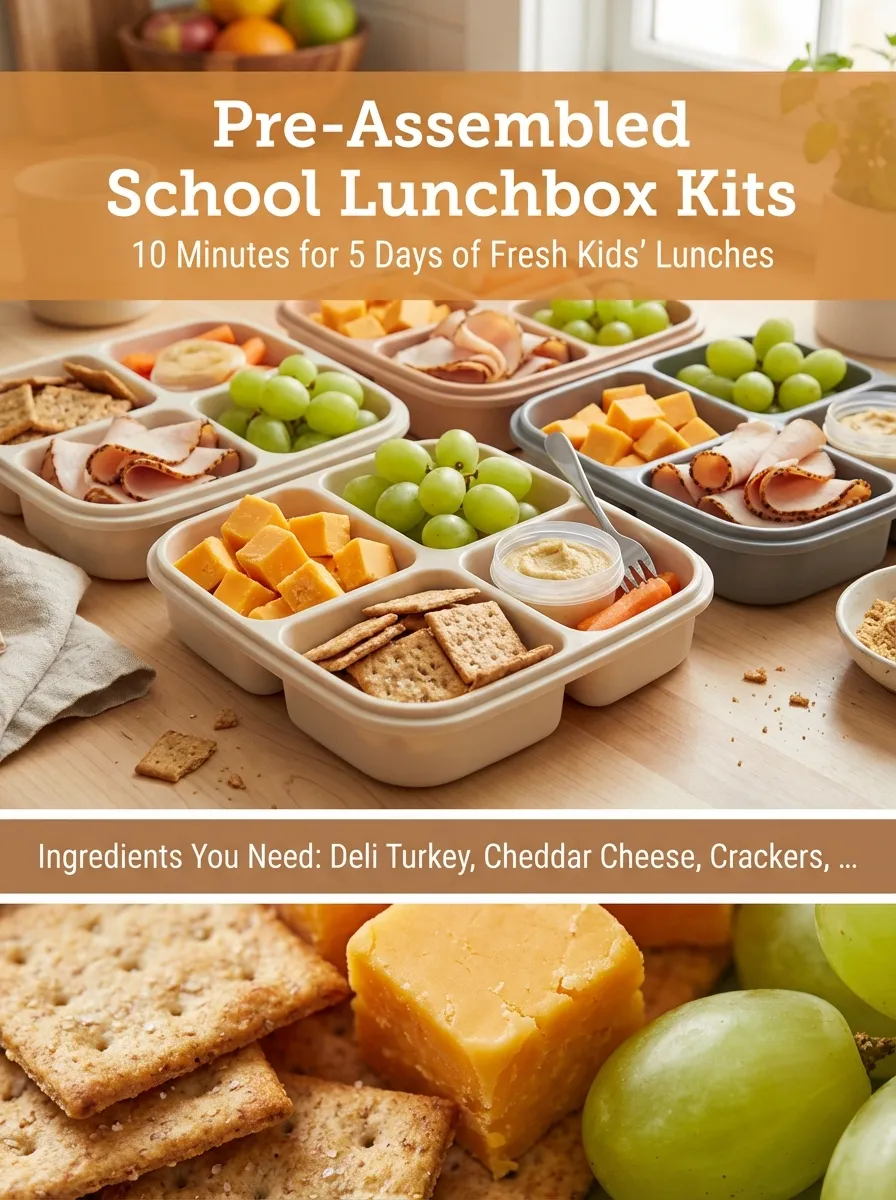
Pre-Assembled School Lunchbox Kits (10 Minutes for 5 Days)

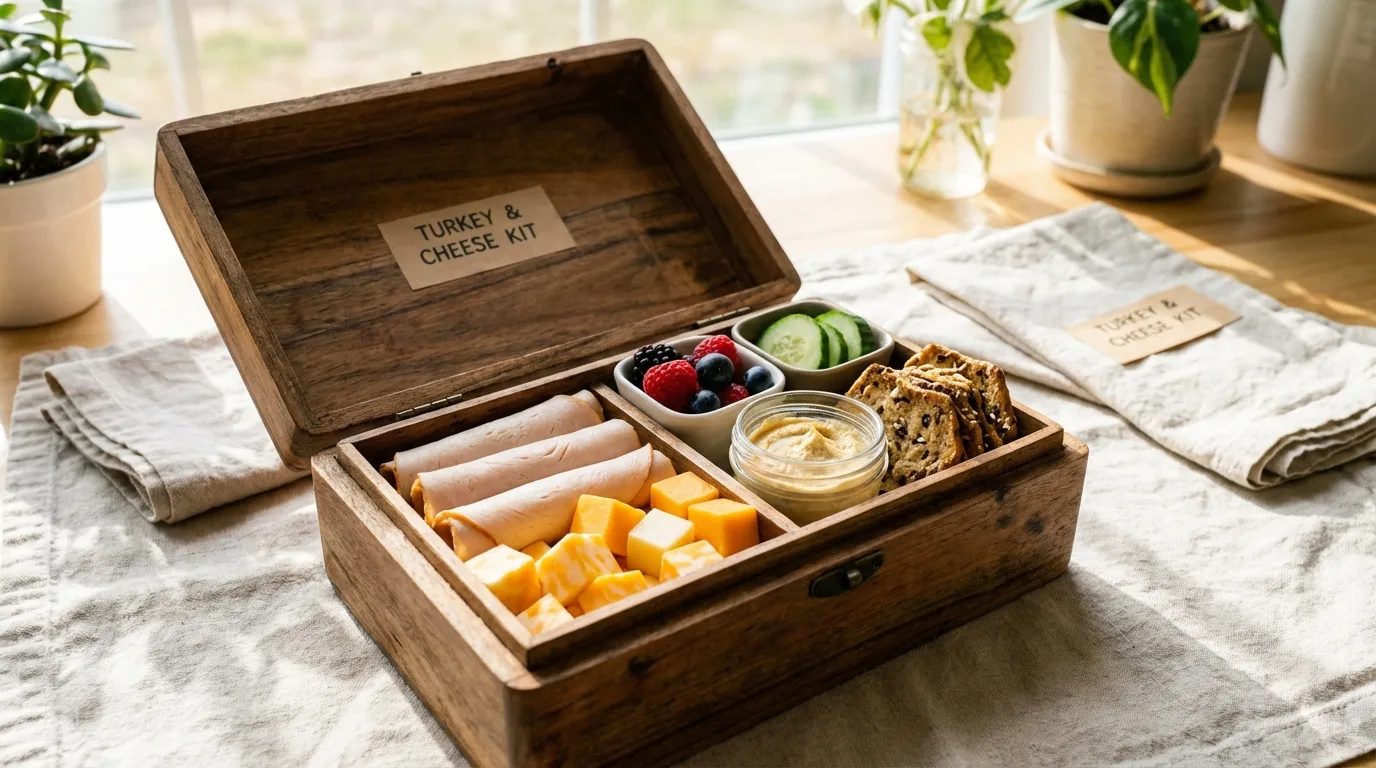
Close-up of a stainless steel bento box filled with folded turkey, cheddar cubes, crackers, and green grapes.

Busy parents can mass-produce 5 days of lunches in 10 minutes as part of a larger 1-hour Sunday kitchen reset using a “Deconstructed Bento” method and a factory-style assembly line. By isolating wet and dry ingredients in compartmentalized containers, you prevent spoilage and sogginess, ensuring meals remain fresh, crisp, and safe for consumption throughout the school week.

The Economics of DIY “Lunchables”

DIY lunch kits cost approximately $1.10 per unit, compared to $3.50 for commercial alternatives, while eliminating industrial preservatives and excess sodium. By purchasing bulk ingredients like crackers, cheddar blocks, and deli meats, you gain complete nutritional control and reduce weekly lunch expenditures by roughly 70%.

The Lunchbox Arbitrage

Lunch SourcePreservativesCustomizationCost Per BoxChef Verdict
Frozen Cafeteria MealVery HighZero$3.00❌ Processed
Name-Brand “Kits”HighZero$3.50❌ Chemical overload
Sunday “Assembly Line”ZeroInfinite$1.10✅ Superior ROI

The financial impact of this shift is significant. A family with two children saves approximately $1,000 per 40-week school year by transitioning from store-bought kits to the 10-minute Sunday assembly method.

The 10-Minute Assembly Line Workflow

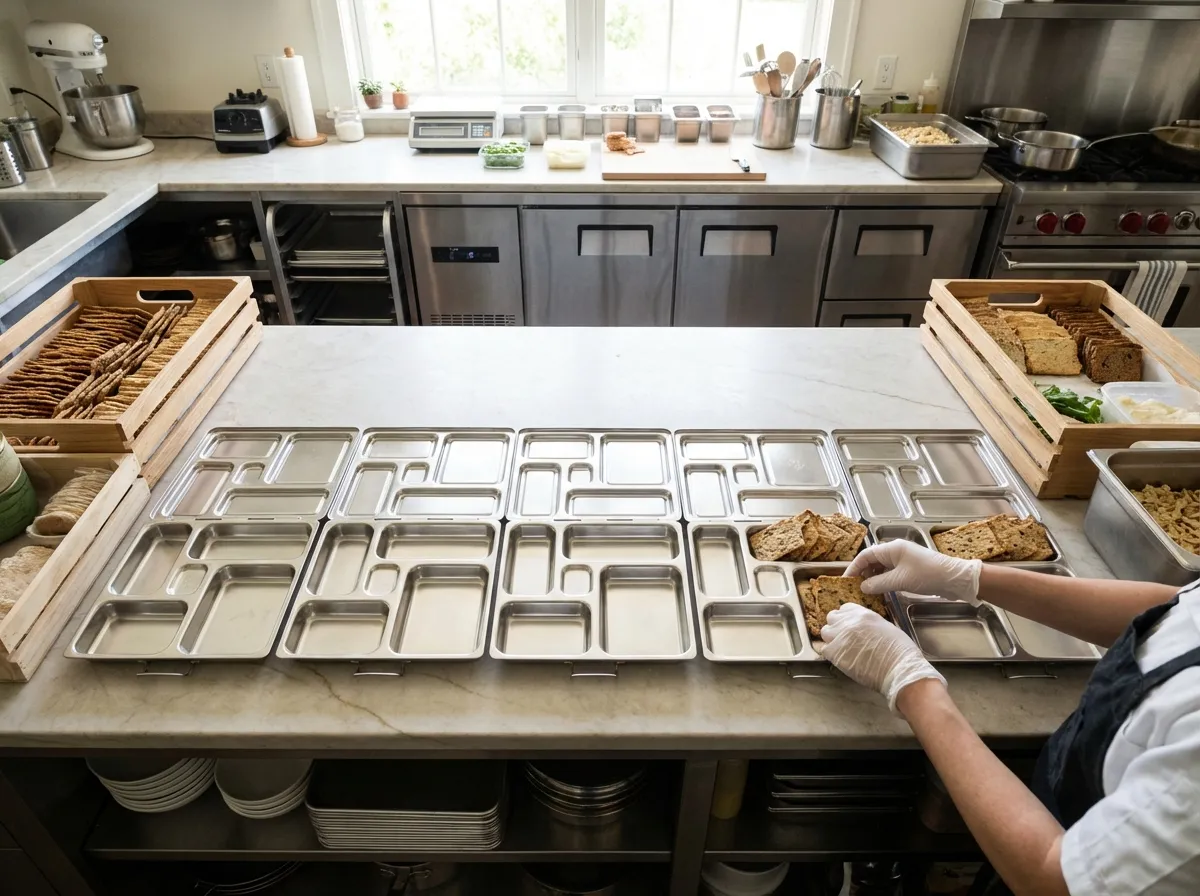
Five stainless steel bento boxes lined up on a counter being filled with crackers and turkey in an assembly line.

The Assembly Line: Fill all five boxes at once to slash your prep time by 70%.

To achieve maximum efficiency, layout all 5 containers simultaneously and perform one task across every box before moving to the next. This batch-processing model eliminates repetitive transitions and decision fatigue, allowing you to complete the entire week’s food preparation in exactly 10 minutes.

The Moisture Barrier Rule

A moisture barrier is a physical separation strategy that prevents liquid migration from wet ingredients to porous dry carbohydrates. By using silicone liners or placing fat-based barriers like cheese slices between meat and crackers, you stop the natural secretion of liquids from destroying the structural integrity of the lunch.

The Lunch Factory Hardware Toolkit

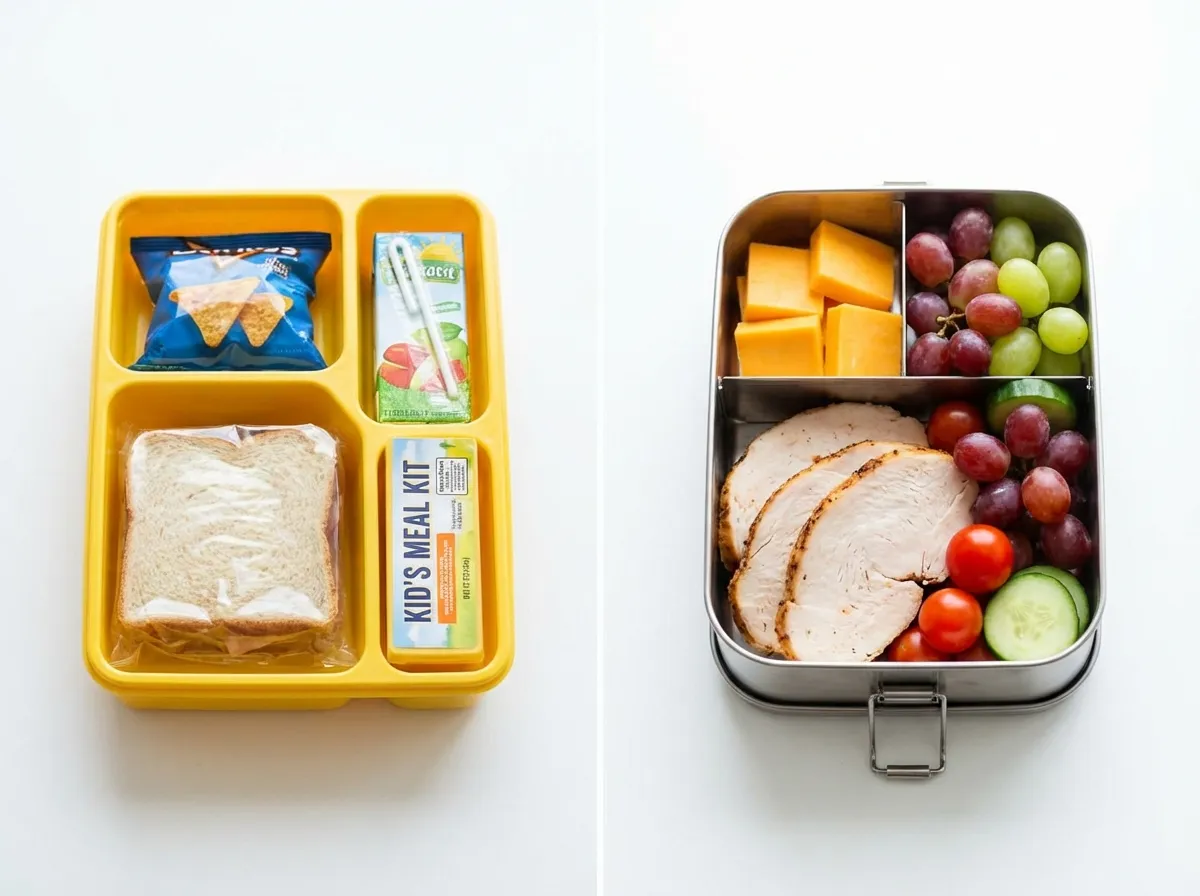
Side-by-side comparison of a processed store-bought lunch kit and a fresh stainless steel bento box.

The ‘Lunchbox Arbitrage’: Better ingredients for a fraction of the cost.

Hardware RequirementCulinary FunctionRisk if Ignored
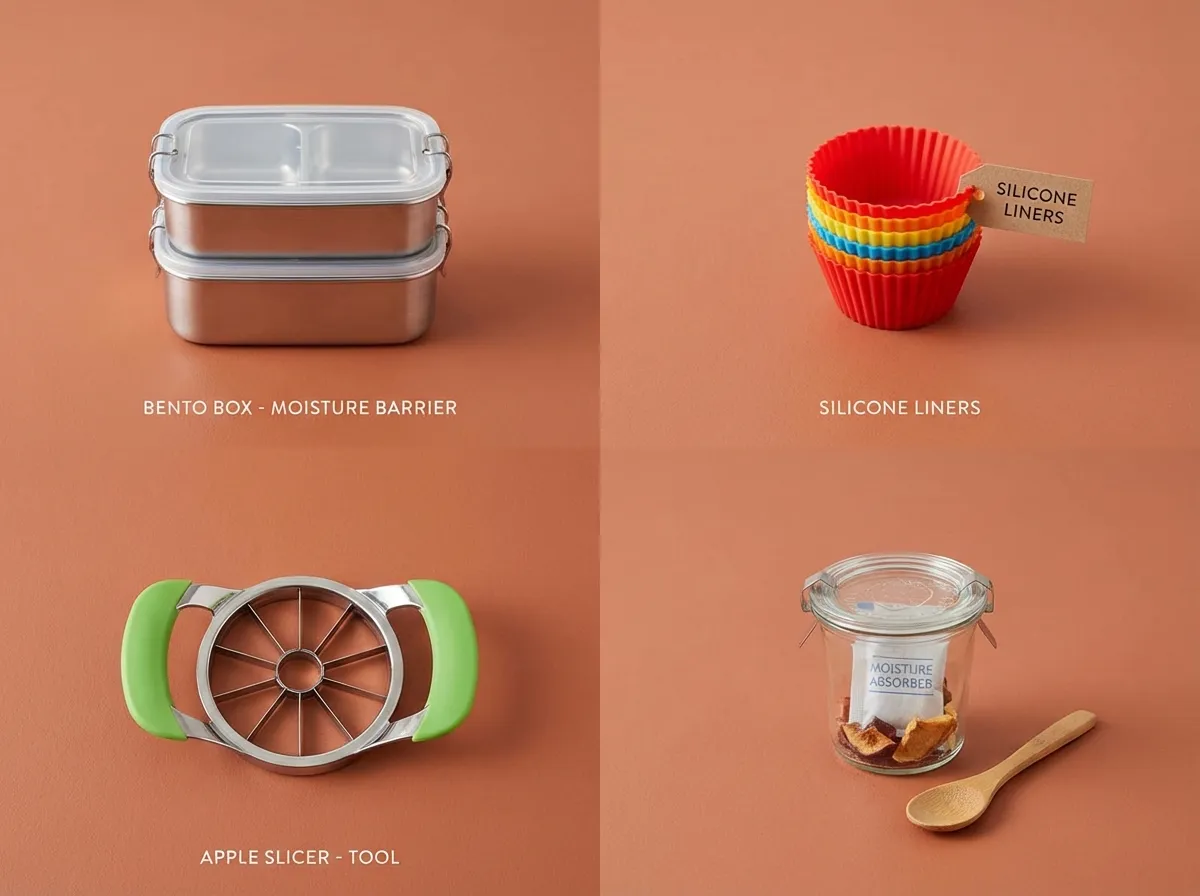
Stainless Bento BoxesCompartmental isolationFood mixing during transport
Silicone Cupcake LinersWaterproof moisture barrierPaper liners absorb liquid and leak
Mechanical Apple SlicerRapid fruit portioningExcessive manual prep time
  • Stainless Bento Boxes: Use 5-compartment stainless steel containers to ensure a rigid, leak-proof environment that keeps ingredients physically isolated regardless of backpack movement.
  • Reusable Silicone Baking Liners: Utilize rigid silicone cups as waterproof dams for sauces and wet fruits; unlike paper liners, these do not absorb liquid or transfer moisture to surrounding items.
  • Thin-Spine Mechanical Apple Slicer: Use a mechanical slicer to process whole fruit into uniform segments in 1 second, maintaining the 10-minute total prep timeline.

Field-Tested Results: The “Edible Ice Pack” Hack

The “Edible Ice Pack” is a frozen juice box used as a dual-purpose cooling element and beverage. By freezing a standard juice box for 12–24 hours and placing it against deli meats, you keep the food at food-safe temperatures below 40°F until the lunch period, at which point the juice thaws for drinking.

3 Bento Box Flavor Themes

  • The Classic Stack: Original Triscuits, folded thick-cut deli turkey, sharp cheddar cubes, and firm green grapes.
  • The Mini Pizza Kit: Halved English muffins, a red silicone cup of marinara sauce, a blue silicone cup of shredded mozzarella, and mini pepperonis.
  • The Dipper Box: Pretzel rods, tightly rolled deli ham spears, a silicone cup of garlic hummus, and baby carrots.

Frequently Asked Questions

If I cut and assemble apples on Sunday, will they brown by Thursday?
Yes, raw apples oxidize quickly. You can prevent this by tossing freshly sliced apples in a mixture of cold water and 1 teaspoon of lemon juice before packing. The citric acid lowers the pH level, chemically inhibiting the oxidation process for up to 5 days.

Can I put wet yogurt directly into a bento compartment?
Do not place liquid yogurt in a compartment unless the container has a leak-proof, silicone-sealed lid specifically designed for that section. Standard flat plastic lids will leak during transit, causing liquid to migrate into dry foods, ruining the texture of crackers and bread.

Can I use plastic baggies instead of silicone cups to save money?
While possible, plastic baggies are inefficient for children to handle. Silicone baking cups cost approximately $5 for a multi-pack, are infinitely reusable, stand upright for easier access, and are significantly more durable than thin plastic bags, making them the superior choice for consistent, daily use.

What is a high-protein, dry substitute for deli meat?
Roasted edamame or hard-boiled eggs are excellent high-protein alternatives; you can also pair these lunches with freezer-friendly breakfast pockets to cover the entire morning rush. A hard-boiled egg remains fresh for 6 days in a sealed refrigerator container. Keep the shell on until mealtime to act as a natural, biological freshness barrier that protects the egg from contamination.

Essential lunchbox hardware including stainless bento boxes, colorful silicone liners, and an apple slicer.

The right hardware, like silicone liners, creates a permanent moisture barrier for crisp crackers.

Vertical Pinterest graphic for Pre-Assembled School Lunchbox Kits with 10-minute prep instructions.

Save this 10-minute lunch hack to your school meal prep board!

The 1-Hour Sunday Kitchen Reset for a Stress-Free School Week

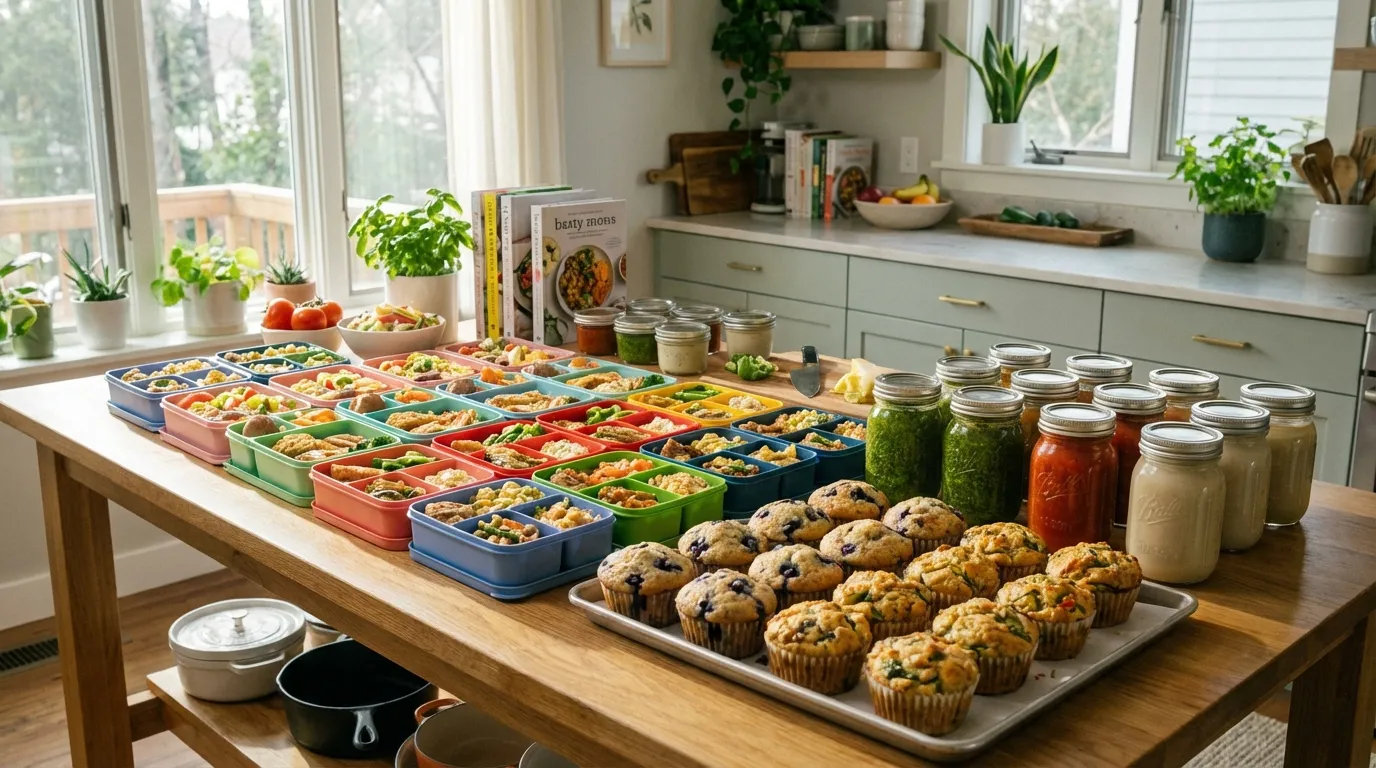
A vibrant spread of prepped school lunches, golden oat muffins, and mason jar salads on a clean kitchen counter.

Home > The 1-Hour Sunday Kitchen Reset

Weekday morning stress, specifically the 7:00 AM rush, is caused by decision fatigue and manual meal assembly. By reallocating 60 minutes of labor to Sunday at 4:00 PM, families can front-load all school lunches and breakfasts. This strategy replaces frantic daily chopping with a streamlined, industrial assembly line process.

The “Assembly Line” Lunchbox Factory

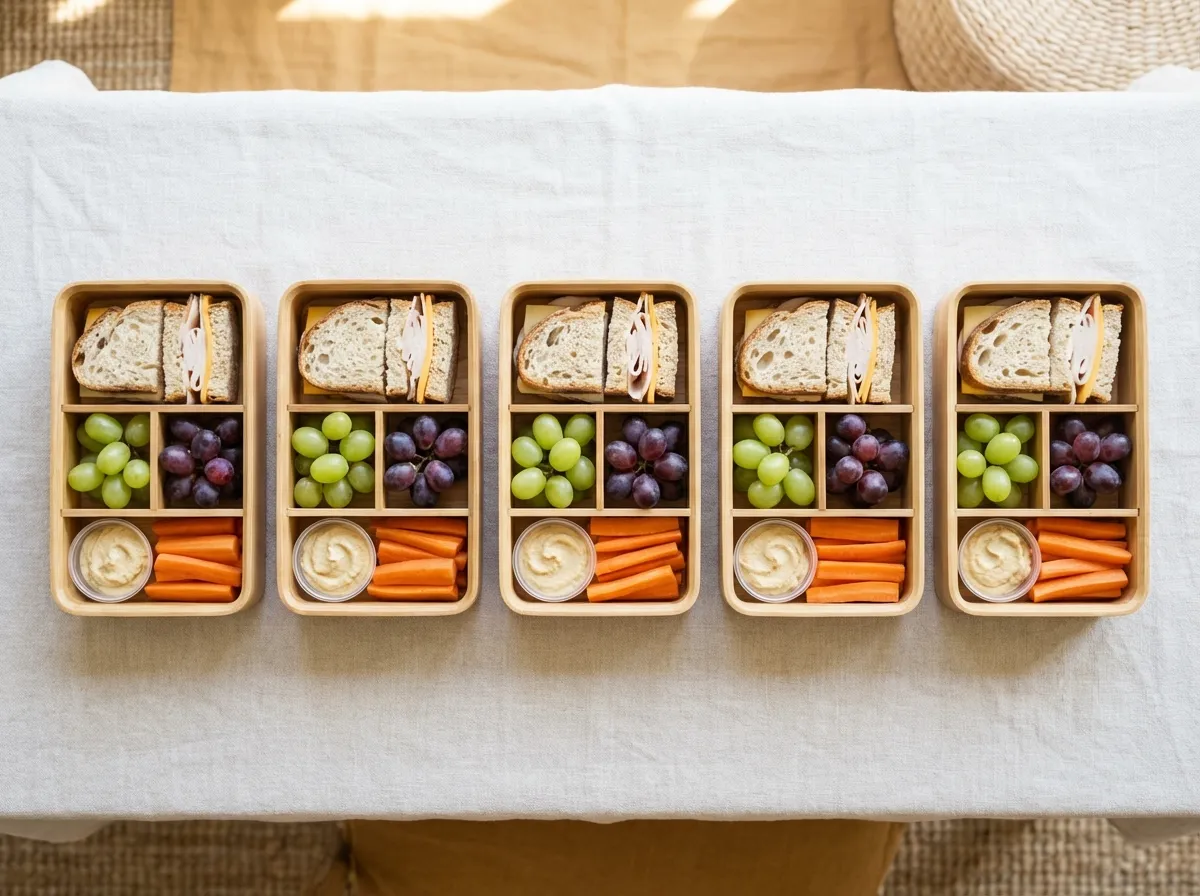
Five identical bento boxes lined up on a counter being filled with turkey sandwiches and fruit in an assembly line fashion.

The Assembly Line method: prepping 5 lunches simultaneously to eliminate repetitive motion.

The Assembly Line is a production method where 5 bento boxes are prepared simultaneously rather than individually. By lining up containers and performing one repetitive action—such as placing bread or protein—across all 5 units at once, you eliminate redundant motion and save approximately 20 minutes of transition time per week.

Steps for the Assembly Line:

  1. Place 5 empty bento boxes on a clean counter.
  2. Add the base bread or grain to all 5 containers sequentially.
  3. Layer protein (e.g., turkey) across all 5 containers.
  4. Distribute pre-washed fruit or sides into all 5 compartments.
  5. Seal and refrigerate vertically.

Field-Tested Results: The Grab-and-Go Morning Rule

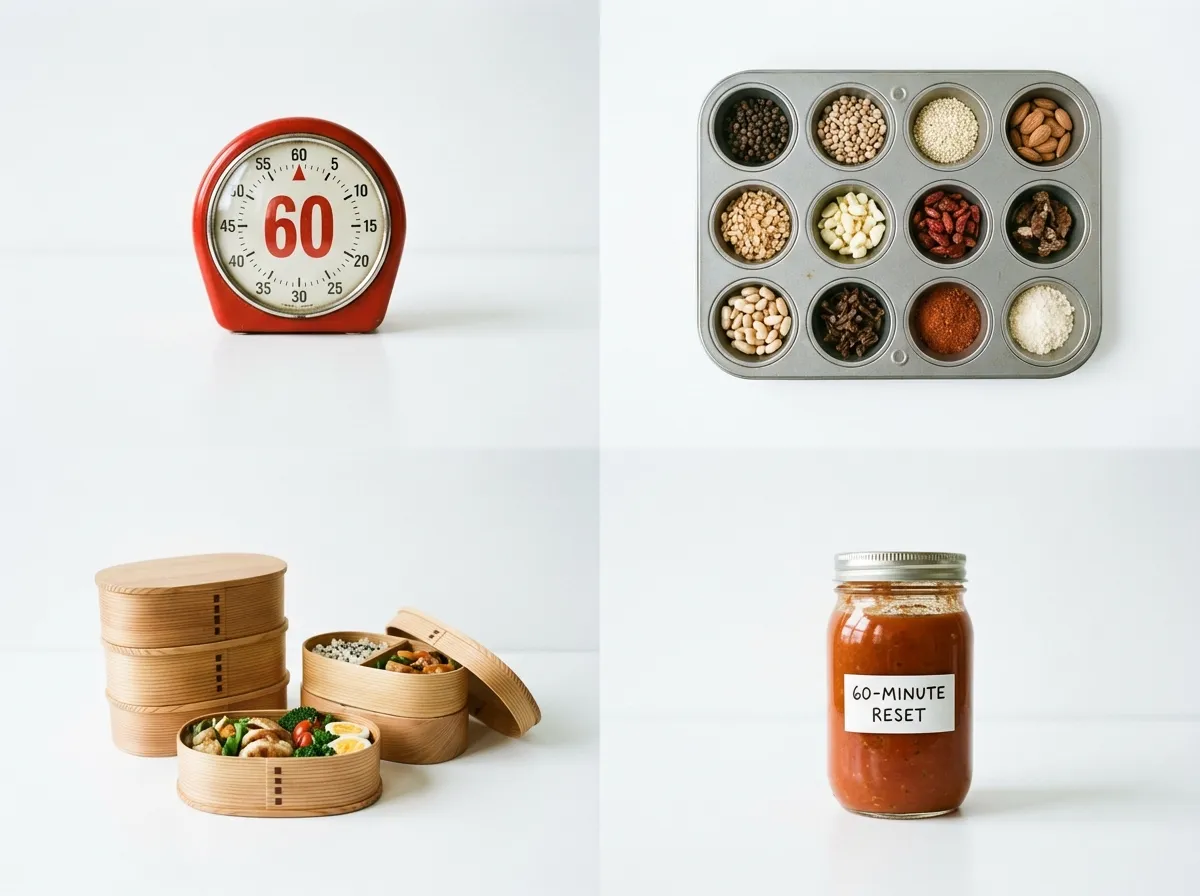
A conceptual overhead shot showing a kitchen timer, a mixing bowl, bento boxes, and a simmering pot to represent the 60-minute workflow.

Parallel cooking: how to manage three major prep tasks in a single hour.

The 60-Second Grab-and-Go Morning Rule is a benchmark requiring that breakfast preparation takes no longer than 60 seconds of active time. By baking dense oat muffins or freezing breakfast burrito pockets on Sunday, you eliminate the need for skillets and spatulas, resulting in zero morning dishes and consistent nutritional intake.

The 60-Minute Workflow Map

Close-up of a tray of freshly baked golden-brown oat muffins sitting on a wire cooling rack.

Nutritious oat muffins: the secret to a 60-second grab-and-go morning.

To complete three distinct prep tasks within 60 minutes, you must overlap tasks by utilizing oven and stovetop time simultaneously. Follow this timeline:

  • Minute 0–10: Mix muffin batter and place the tin in a 400°F oven.
  • Minute 10–30: While muffins bake, execute the 5-box Lunchbox Assembly Line. Refrigerate boxes.
  • Minute 30–50: Remove muffins. Move to the stovetop to simmer the hidden-veggie spaghetti sauce.
  • Minute 50–60: Package muffins, cool the sauce, and clean the kitchen surfaces.

5 Family Preps to Do This Sunday

Executing this structured menu every Sunday eliminates weekday meal-prep stress.

  1. The Assembly Line Lunchboxes: Construct 5 turkey bento boxes using pre-assembled school lunchbox kits.

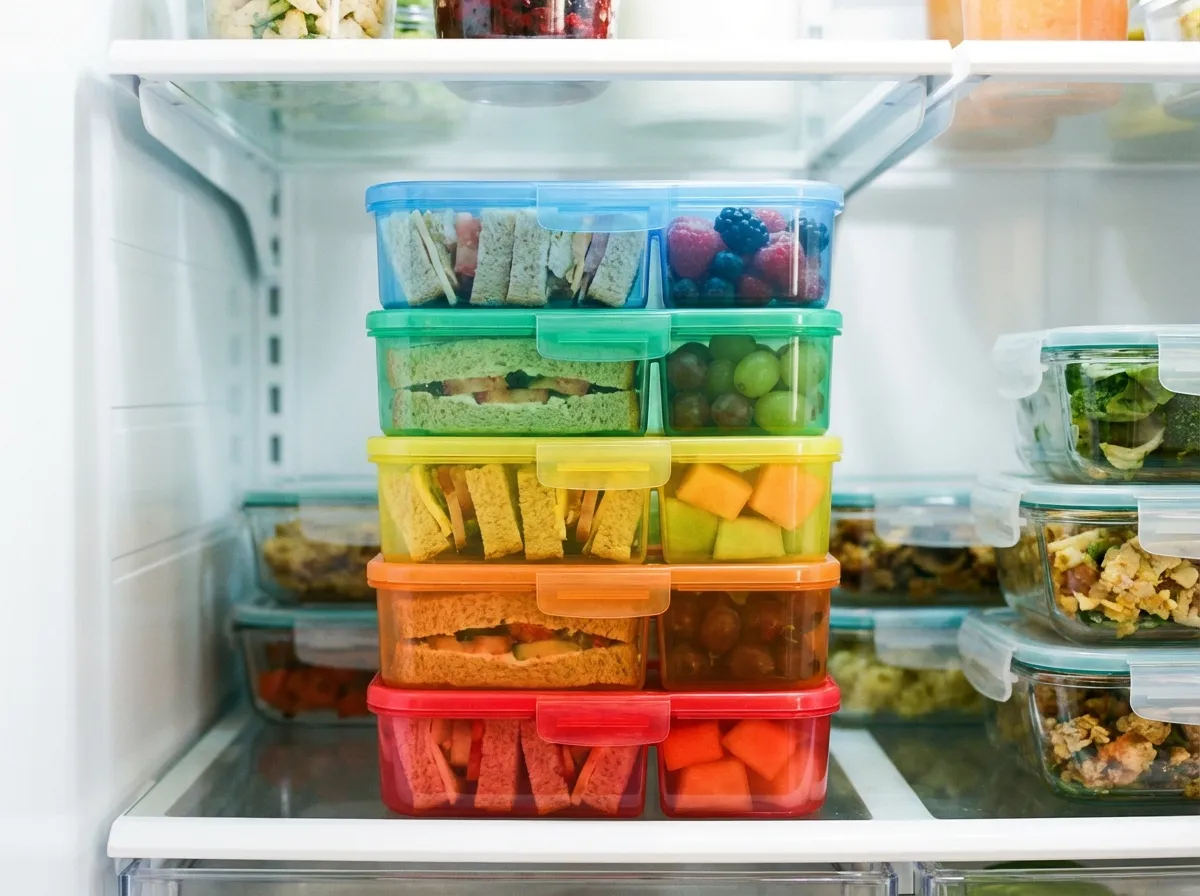
A stack of five closed, colorful bento boxes ready to be placed in the refrigerator.

Five days of lunches, finished and ready for the fridge in 20 minutes.

  1. The Make-Ahead Muffins: Bake high-protein, zero-sugar oat muffins.
  2. The Breakfast Pockets: Batch-freeze 20 scrambled egg and cheese flour pockets.

A stack of wrapped breakfast burrito pockets showing a cross-section of egg and cheese.

Bulk-frozen breakfast pockets ensure a hot meal with zero morning dishes.

  1. The Mason Jar Salads: Prepare 5-day mason jar salads for work with dressing on the bottom.
  2. The Hidden-Veggie Sauce: Simmer a batch of pasta sauce for a 10-minute Wednesday dinner.
    {{IMG:the-1-hour-sunday-kitchen-reset-for-a-stress-free-school-week-img6-p4.webp}}

Frequently Asked Questions

Question: If I assemble the lunch on Sunday, won’t the sliced apples turn brown by Thursday?
Answer: Apples oxidize when exposed to air. To prevent this, toss sliced apples in a mixture of cold water and 1 teaspoon of lemon juice before packing. The citric acid in the lemon juice chemically inhibits the enzymes responsible for browning, keeping fruit fresh for up to 5 days.

Question: How do I stop the bottom piece of bread from getting soggy by midweek?
Answer: Moisture migration occurs when wet ingredients touch bread. Create a moisture barrier by placing a layer of fat, such as a slice of cheddar cheese, or a dry layer of lettuce directly against the bread. This prevents juices from the meat or condiments from soaking into the crumb.

Question: Should I let the kids help with the Sunday assembly line?
Answer: Yes, involving children increases meal consumption rates due to psychological ownership. While it may add 5–10 minutes to the total prep time, children are significantly less likely to discard or trade lunches they helped construct, justifying the slight reduction in assembly speed for better nutritional outcomes.

{{IMG:the-1-hour-sunday-kitchen-reset-for-a-stress-free-school-week-pinterest-p4.webp}}

What to Read Next