
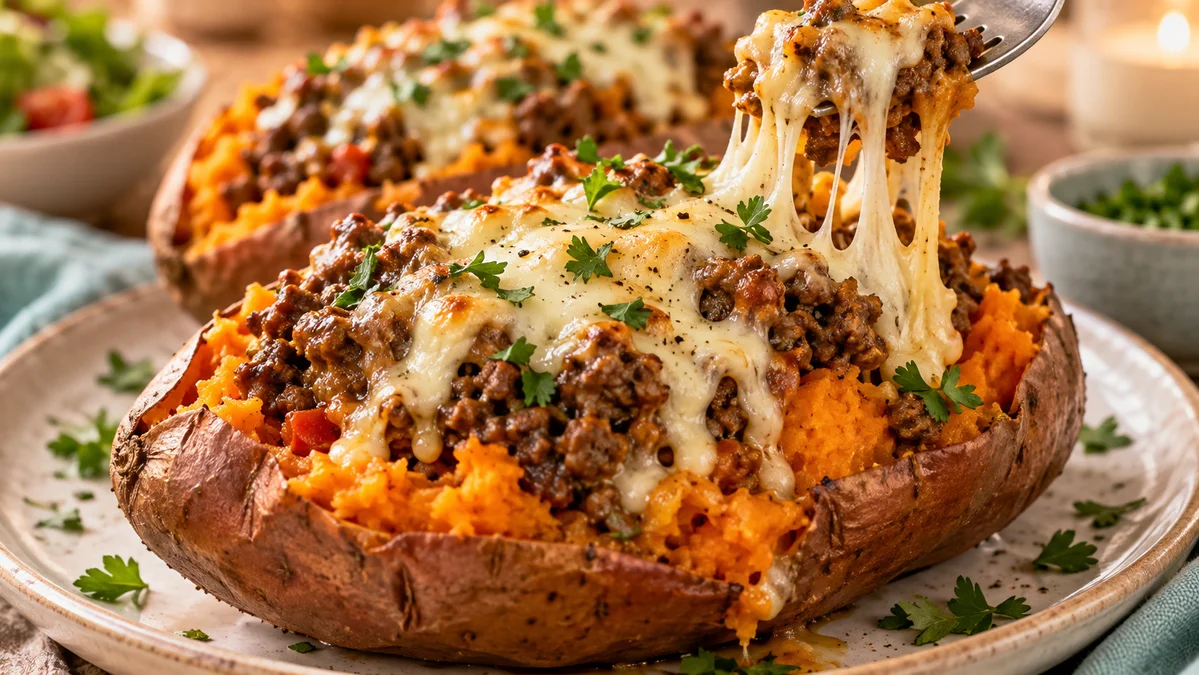
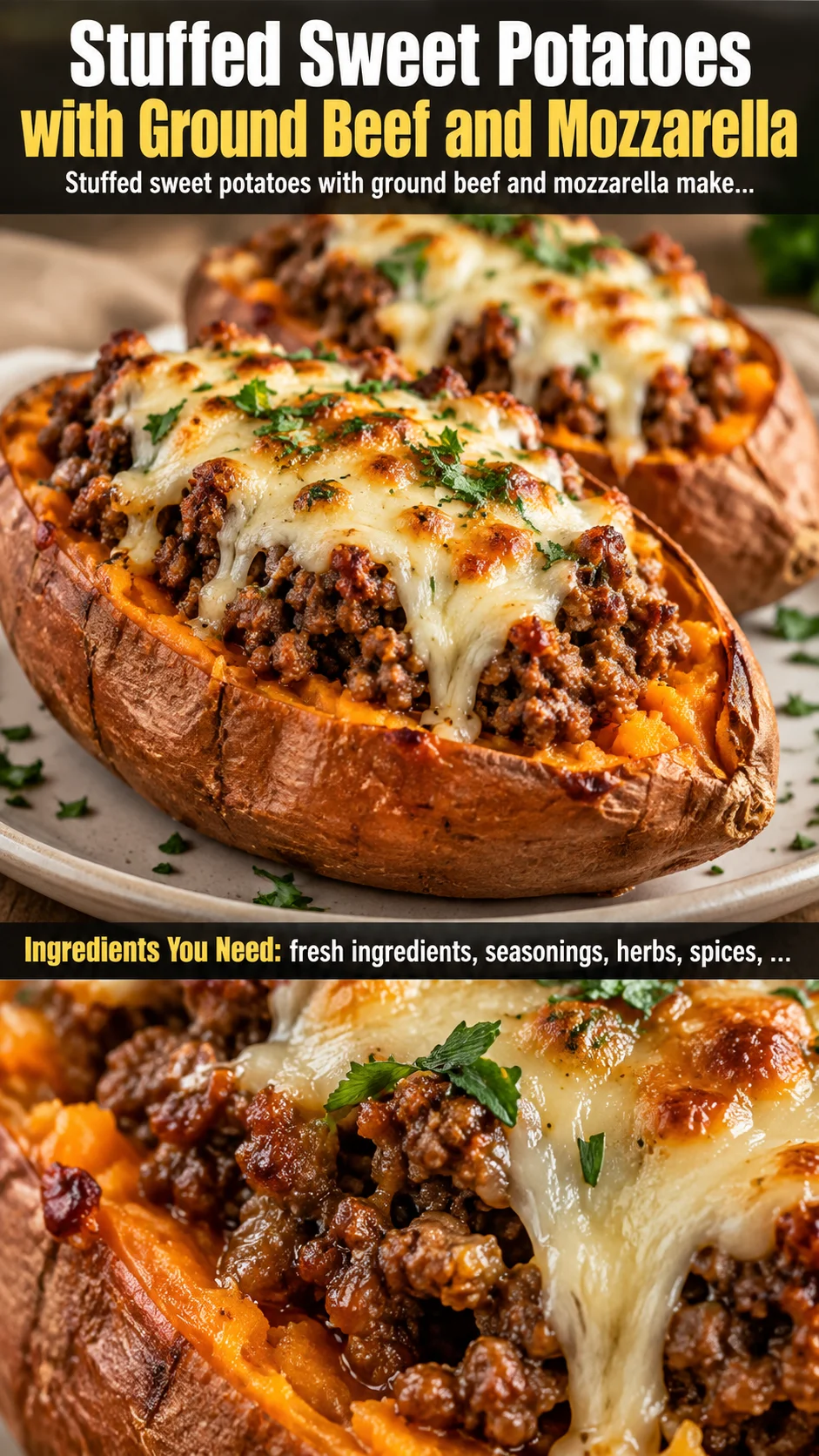
Stuffed sweet potatoes with ground beef and mozzarella are a hearty, high-protein 30-minute dinner. Fluffy baked sweet potatoes loaded with seasoned beef and melty cheese!
Ingredients
Instructions
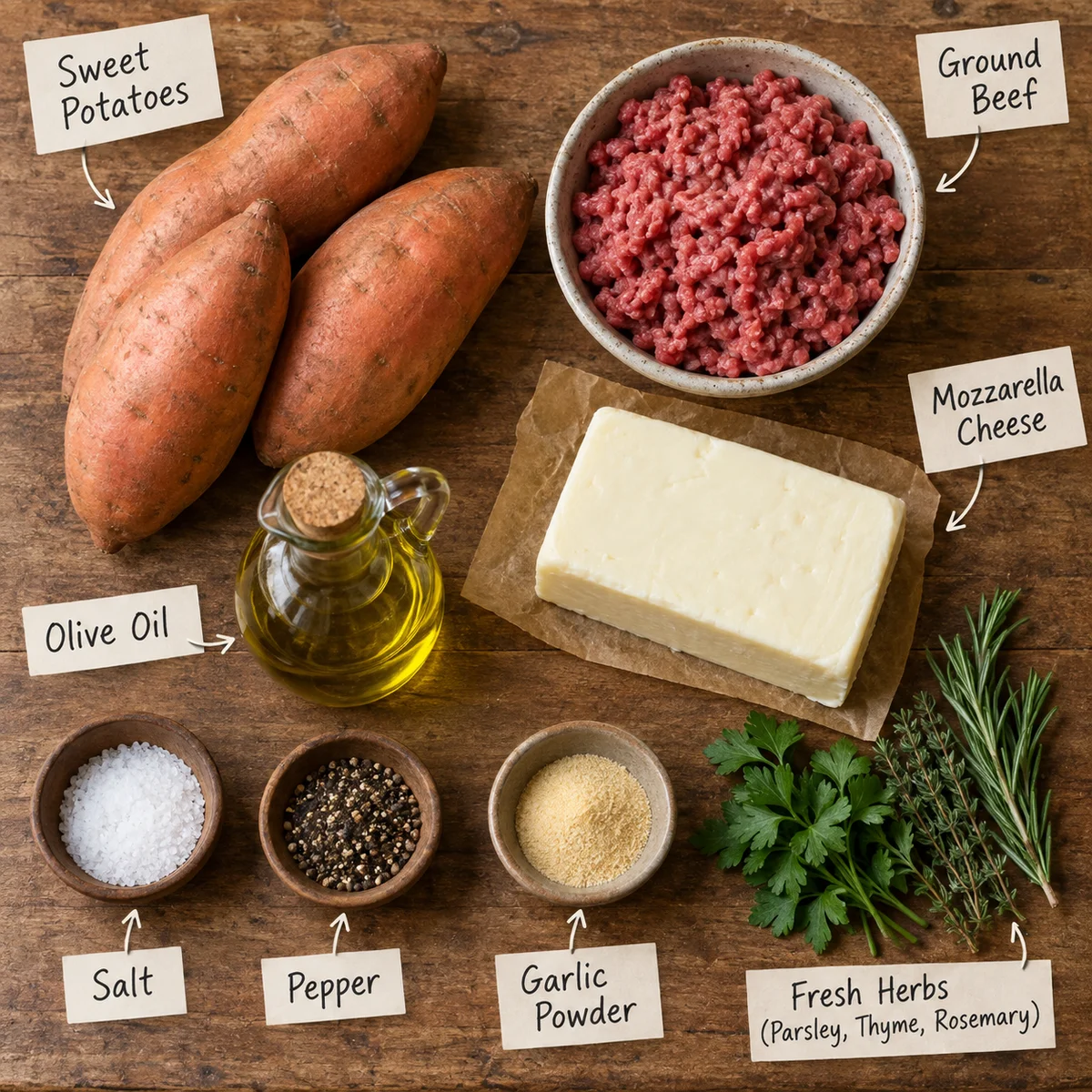
Start by prepping your sweet potatoes, because they are the longest-lead item in this recipe and everything else revolves around their timing. Scrub 4 medium sweet potatoes (10–12 oz each) under cool running water with a vegetable brush to remove every trace of grit, then dry them thoroughly with a clean kitchen towel — dry skin is what lets the olive oil cling and the skin crisp instead of steam. Prick each potato 6–8 times all over with the tines of a fork, spacing the holes evenly. This is not optional busywork: those tiny vents let steam escape so the potatoes bake fluffy instead of turning dense and waterlogged, and they prevent the potatoes from bursting in the microwave. Rub each one with a thin film of olive oil and season the outsides lightly with kosher salt. If you are using the oven method, preheat to 425°F (220°C) and line a sheet pan with parchment or foil. If you are in a hurry, this is also the moment to gather every remaining ingredient — the ground beef, onion, garlic, tomato paste, spices, broth, Worcestershire, mozzarella, and garnishes — so that once the beef hits the pan you never have to stop and hunt for anything.
Cook the sweet potatoes using whichever method fits your night, and pay attention to the sensory cues rather than the clock alone. Fast method: microwave the potatoes on a microwave-safe plate for 5 minutes on high, flip them, then microwave in 3-minute bursts until a paring knife slides in with zero resistance and the potatoes feel soft when squeezed with a toweled hand — usually 8–12 minutes total depending on size and microwave wattage. For the crispiest skin, transfer those microwaved potatoes to a 425°F (220°C) oven for 10 minutes to firm up and caramelize the exterior. Classic oven method: bake directly on the rack or on a sheet pan at 425°F (220°C) for 40–55 minutes, until the skin is wrinkled, glossy, and slightly blistered and a knife glides through the center like warm butter. You will know they are done when they smell sweet and toasty and give under gentle pressure. Set them aside on a cutting board to rest for at least 5 minutes — resting lets the interior starch settle so the flesh stays fluffy when you split it instead of collapsing into mush.
While the potatoes cook, heat 1 tablespoon of olive oil in a large skillet over medium-high heat until it shimmers and moves like water across the pan, which signals it is hot enough to sear rather than steam. Add 1 cup of finely diced yellow onion and cook for 3–4 minutes, stirring occasionally, until the pieces turn translucent and just begin to pick up golden edges. Add 3 cloves of minced garlic and 1 tablespoon of tomato paste and cook for 60 seconds, mashing the paste into the onions with the back of your spoon. That minute of cooking is what transforms raw, tinny tomato paste into a sweet, concentrated flavor base — skip it and the filling tastes flat. The kitchen should smell sweet, savory, and deeply aromatic at this point, which is your cue that the aromatics are ready for the beef.
Add 1 lb of lean ground beef to the skillet and break it into small, even crumbles with a wooden spoon or spatula. Resist the urge to stir constantly: let the beef sit undisturbed for 2–3 minutes so it develops a deep brown crust (the Maillard reaction), then break it up and continue cooking for another 4–5 minutes until no pink remains and the crumbles are juicy but no longer releasing puddles of liquid. If your beef was 85/15 or fattier, tilt the pan and spoon off excess fat now so the finished filling is rich, not greasy. Season as you go, not just at the end — layering salt into the meat at this stage seasons it from the inside out.
Sprinkle the dry seasoning blend evenly over the browned beef: 1 teaspoon garlic powder, 1 teaspoon onion powder, 1 teaspoon smoked paprika, 1/2 teaspoon ground cumin, 1/2 teaspoon dried oregano, 1/2 teaspoon kosher salt, and 1/2 teaspoon freshly cracked black pepper. Stir for 30 seconds until every crumble is coated and the spices smell toasted and fragrant — smoked paprika and cumin bloom instantly in the hot fat, and that short toast is worth a surprising amount of flavor. Pour in 1 tablespoon Worcestershire sauce and 1/4 cup low-sodium beef broth, scraping up the browned bits stuck to the bottom of the pan. Those stuck-on bits are pure concentrated flavor, and the liquid turns them into a glossy pan sauce. Simmer for 2–3 minutes until the mixture is saucy but not soupy — it should hold together on a spoon without running off.
Taste the filling and adjust: it should be savory, slightly smoky, and well seasoned but not salty, because the mozzarella will add its own salinity. If it tastes flat, a pinch more salt or a few drops of Worcestershire will wake it up; if it tastes sharp, a tiny pinch of sugar balances the tomato paste. Turn off the heat and stir in 1/2 cup of the shredded mozzarella so it melts into the beef and acts as a binder, making the filling scoopable and extra rich. Let the filling rest in the pan while you finish the potatoes — this brief rest lets the cheese fully melt and the sauce thicken to the perfect stuffing consistency.
Split each rested sweet potato lengthwise down the middle with a small knife, cutting about three-quarters of the way through but leaving the bottom intact so it forms a sturdy ‘boat.’ Using a fork, gently fluff the bright orange flesh inside each potato, pulling it slightly away from the skin and creating a little well. This fluffing step is the difference between a dense, gummy potato and one that tastes like a cloud of buttery sweetness. Season the insides lightly with a pinch of salt, and if you like, a small smear of butter or a spoonful of sour cream. Nestle the potatoes into a baking dish or onto a sheet pan so they stand upright and stay stable while you load them.
Spoon the seasoned beef filling generously into each potato, mounding it high and pressing it gently into the fluffed flesh so the filling and potato become one cohesive bite rather than two separate layers. Divide the filling evenly — each potato should hold roughly a heaping half-cup. Top each one with the remaining 1 cup of shredded mozzarella, spreading it to the edges so it drapes over the filling and creates those irresistible crispy cheese edges where it meets the hot skillet or pan. Do not skimp on the cheese here; it is the textural crown of the whole dish and the reason this recipe feels indulgent while still being packed with protein.
Finish the stuffed potatoes under the broiler. Set your oven rack about 6 inches from the heating element and broil on high for 3–5 minutes, watching them the entire time — broilers go from golden to burnt in seconds, and ovens vary wildly in intensity. You are looking for mozzarella that is fully melted, glossy, and bubbling, with a few bronzed spots across the surface. The moment you smell toasted cheese and see bubbles popping, pull them out. If you prefer not to use the broiler, return the stuffed potatoes to a 400°F (200°C) oven for 8–10 minutes, or simply cover the pan for 2 minutes so the residual heat melts the cheese.
Serve immediately while the cheese is still stretchy and molten. Plate each potato and top with a dollop of sour cream or plain Greek yogurt, a shower of chopped fresh parsley or cilantro, and a pinch of flaky sea salt. If you like heat, sliced pickled jalapeños, a drizzle of hot sauce, or a few dashes of chili crisp are fantastic. These are a complete meal on their own, but they also love a simple side of steamed broccoli, a crisp green salad with lemon vinaigrette, or a scoop of charred corn. Any leftovers should be cooled within 2 hours, stored in an airtight container in the refrigerator for up to 4 days, and reheated in a 350°F (175°C) oven, covered, for 12–15 minutes so the potato reheats gently without drying out — the microwave works in a pinch but softens the skin.
For best results
- Choose sweet potatoes that are roughly the same size and shape, ideally 10–12 ounces each with a slender, uniform profile. Even sizing is the single biggest factor in getting all four potatoes perfectly cooked at the same time — a 6-ounce potato next to a 16-ounce potato means one turns to mush while the other stays raw in the center. Look for firm, unblemished skin with no soft spots, sprouts, or dark bruises. For the fluffiest interior, choose the orange-fleshed varieties like Beauregard or Jewel over the pale, drier white-fleshed ones, which can taste starchy here.
- Season the beef in layers for restaurant-level depth. Salt added at the start seasons the meat from within, spices bloomed in hot fat taste sweeter and rounder, and a finishing splash of Worcestershire or a teaspoon of soy sauce adds umami that makes the filling taste like it simmered for hours. Avoid dumping all the seasoning in at once at the end — the difference in flavor between layered and last-minute seasoning is genuinely dramatic, and it costs you nothing but a few seconds of attention.
- Control moisture or your potatoes will go soggy. Sweet potato flesh holds a lot of water, and if you pile wet filling on top of a steamy potato, the bottom turns soupy. Two fixes: rest the baked potatoes for 5 minutes so steam escapes, and reduce the beef filling until it is glossy and thick rather than saucy. If your filling looks loose, simmer it uncovered an extra 2–3 minutes before stuffing. A thin layer of mozzarella between the potato and the beef also acts as a moisture barrier and keeps the crumb structure intact.
- Do not skip the broiler — but never walk away from it. The broiler is what transforms a good stuffed potato into a great one, creating blistered, bronzed cheese with crispy edges in under 5 minutes. Every broiler is different, so stay in front of the oven. If your broiler runs extremely hot, lower the rack to 8 inches; if it is weak, move it up to 4–5 inches. You are chasing bubbling, golden-brown cheese, not a charred top, so pull the pan the second it looks right.
- Make the beef filling ahead and store it separately from the potatoes. The filling keeps beautifully in the refrigerator for up to 4 days and freezes for up to 3 months in a zip-top bag pressed flat for quick thawing. On a busy night, microwave a baked sweet potato, split it, and top it with reheated filling and fresh cheese, then broil for 2–3 minutes. This 'component' approach turns this 30-minute recipe into a genuine 8-minute dinner and makes excellent use of Sunday meal-prep time.
- Upgrade the cheese for a flavor twist without changing the method. Low-moisture mozzarella melts beautifully and stretches, but you can blend it half-and-half with sharp cheddar for tang, smoked gouda for a campfire note, or pepper jack for gentle heat. If you want a golden top, a light dusting of grated Parmesan over the mozzarella browns faster and adds a savory, nutty crust. Avoid fresh mozzarella here — its high water content will pool and make the filling soggy.
- Salt your potatoes from the inside out. Sweet potatoes are naturally sweet and benefit enormously from a pinch of salt in the fluffed flesh before the filling goes in. A small amount of fat — butter, sour cream, or a drizzle of olive oil — also helps carry the fat-soluble flavor compounds in the spices. If you are watching sodium, use a salt-free seasoning blend in the beef and rely on the Worcestershire plus a squeeze of lime at the end for brightness.
- If you are feeding a crowd or planning leftovers, scale the recipe up but cook the beef in batches. Overcrowding the skillet steams the meat instead of browning it, and pale, steamed ground beef tastes noticeably flatter than deeply browned crumbles. Use two pans or brown the beef in two rounds, then return everything to the pan with the aromatics. The potatoes can bake in a single layer on a large sheet pan, and any extras make an outstanding lunch the next day.
Variations
- Make it a Tex-Mex bowl instead of a stuffed potato. Swap the oregano and Worcestershire for 1 teaspoon of chili powder and a pinch of cayenne, stir a can of drained black beans and a cup of fire-roasted corn into the beef, and finish with cotija or a blend of mozzarella and pepper jack. Top with avocado, pico de gallo, cilantro, and a squeeze of lime. You can even skip the potato skin entirely and serve the fluffed sweet potato flesh in a bowl with the topping piled on — perfect for anyone who finds the skin too chewy.
- Turn it into a lighter, dairy-free version that still feels indulgent. Replace the mozzarella with a generous drizzle of tahini or a cashew-based 'cheese' sauce, and use nutritional yeast in the beef for a savory, cheesy note. Coconut aminos stand in beautifully for Worcestershire, and a spoonful of tomato paste keeps the umami. The result is naturally gluten-free and dairy-free while still delivering a creamy, satisfying topping that clings to the beef.
- Swap the protein for ground turkey, chicken, or lamb. Ground turkey (93/7) works well but needs a little extra fat or oil because it is leaner — add an extra half tablespoon of olive oil and avoid overcooking it, since turkey dries out quickly. Ground lamb is spectacular here: its natural richness plays beautifully with cumin, cinnamon, and smoked paprika, giving the dish a Mediterranean or Middle Eastern character. For a plant-based option, use a good-quality meatless crumble or cooked lentils with an extra teaspoon of tomato paste and a splash of soy sauce for depth.
- Riff on the flavor profile with global twists. Go Korean-inspired by stirring in 1 tablespoon gochujang and a teaspoon of sesame oil, then topping with mozzarella and scallions. Head to the Mediterranean with ground lamb, cinnamon, cumin, a handful of spinach wilted into the beef, and crumbled feta instead of mozzarella. Or make it a loaded 'baked potato bar' by setting out the fluffed sweet potatoes and letting everyone build their own with beef, cheese, sour cream, jalapeños, pickled onions, and herbs.
- Add vegetables to stretch the filling and boost nutrition. Finely diced bell pepper, zucchini, or mushrooms can be sautéed with the onion and folded into the seasoned beef. Mushrooms in particular add a meaty, savory quality that lets you use less beef without anyone noticing. Grated carrot sweetens the filling naturally, and a handful of baby spinach stirred in at the end of cooking wilts in seconds with zero extra effort.
Nutrition
- Calories520 kcal
- Total Fat28g
- Saturated Fat11g
- Cholesterol95mg
- Sodium620mg
- Total Carbohydrates38g
- Dietary Fiber6g
- Sugars12g
- Protein32g