
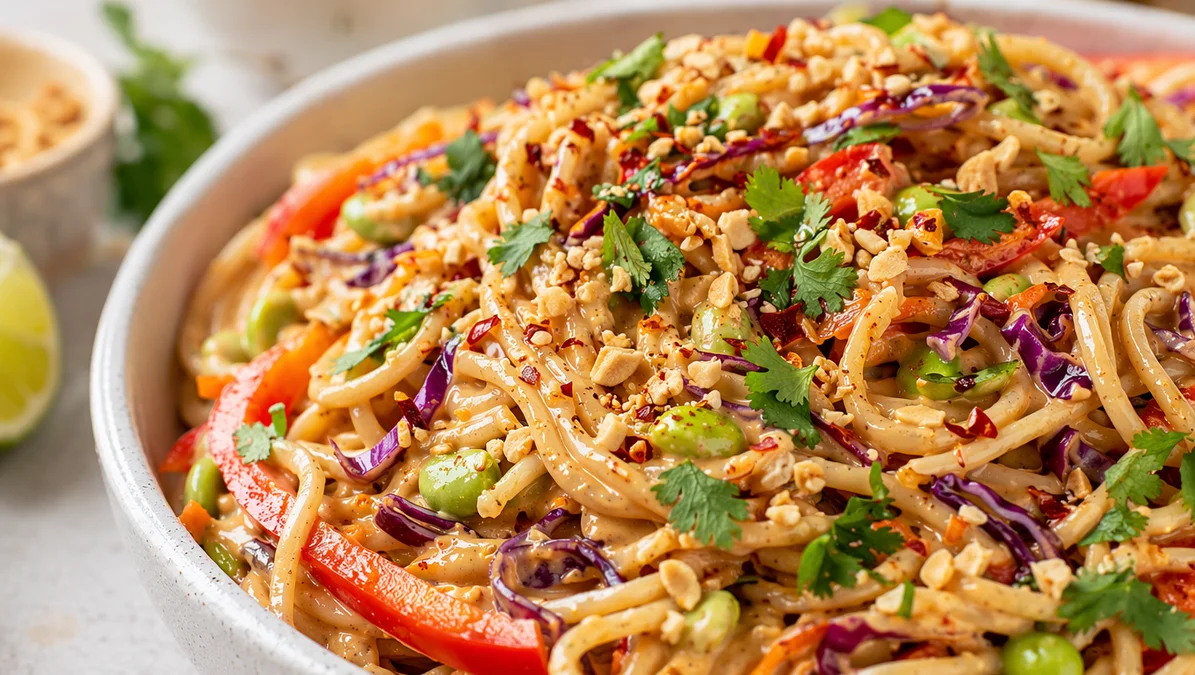
This Thai peanut noodle salad is a quick dinner idea featuring tender rice noodles, crisp vegetables, and a savory peanut sauce. Vegan, gluten-free, and budget-friendly.
Ingredients
Instructions
Begin by cooking the rice noodles according to package directions. Typically, you’ll bring a large pot of water to a rolling boil, then add the noodles and cook for 4-6 minutes until they are tender but still have a slight bite (al dente). Rice noodles can quickly turn mushy if overcooked, so start checking at the 4-minute mark. Once done, drain them in a colander and rinse under cold running water to stop the cooking process and remove excess starch. This also helps prevent the noodles from sticking together. Shake off as much water as possible and set aside. If you’re not using the noodles immediately, toss them with a tiny drizzle of sesame oil to keep them slippery.
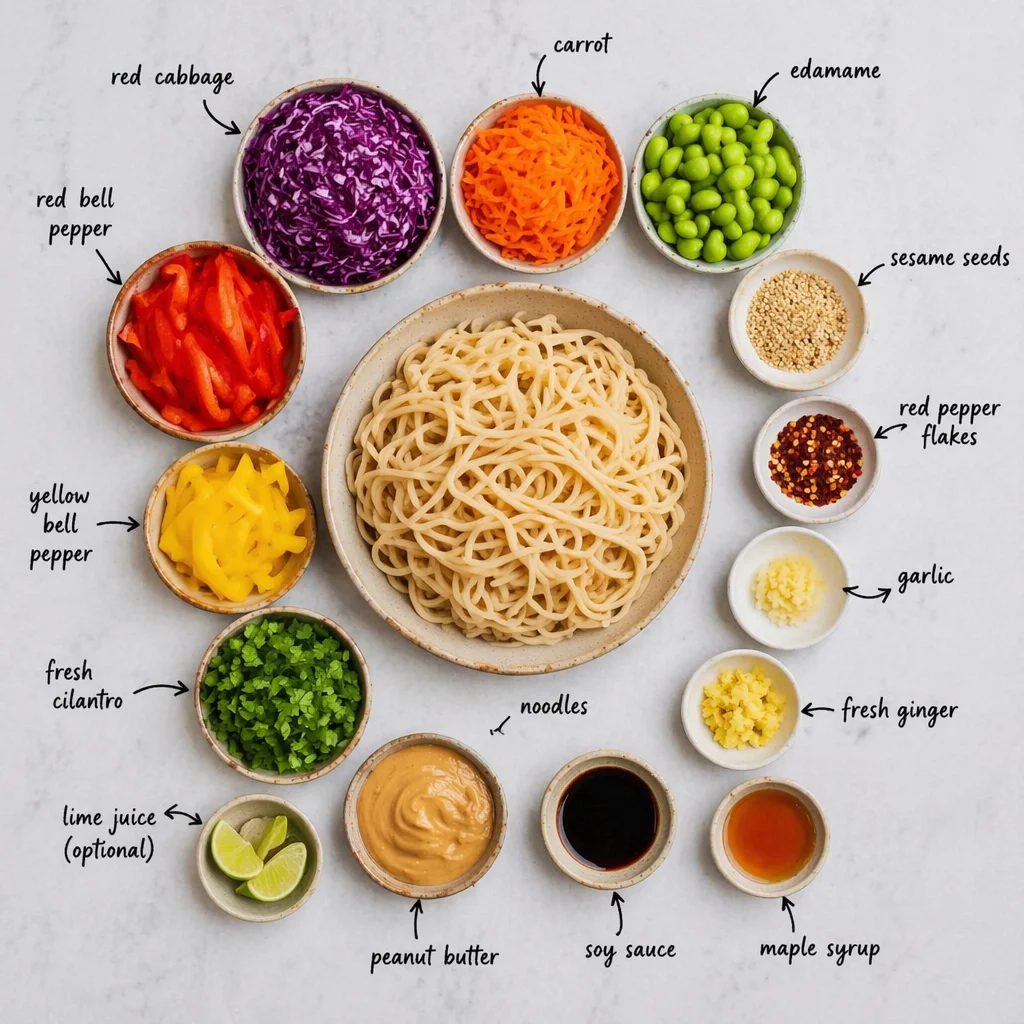
While the noodles cook, prepare the peanut dressing. In a medium bowl, whisk together the creamy peanut butter, soy sauce (or tamari for gluten-free), lime juice, maple syrup, sesame oil (if using), minced garlic, and grated ginger. The mixture will be thick at first. Gradually add the warm water, one tablespoon at a time, whisking continuously until the dressing reaches a smooth, pourable consistency. You want it to be thick enough to coat the back of a spoon but thin enough to drizzle easily. Taste and adjust the balance: more lime for acidity, more maple for sweetness, or a pinch of salt if needed. The dressing should be savory, tangy, and slightly sweet with a hint of warmth from the ginger and garlic.
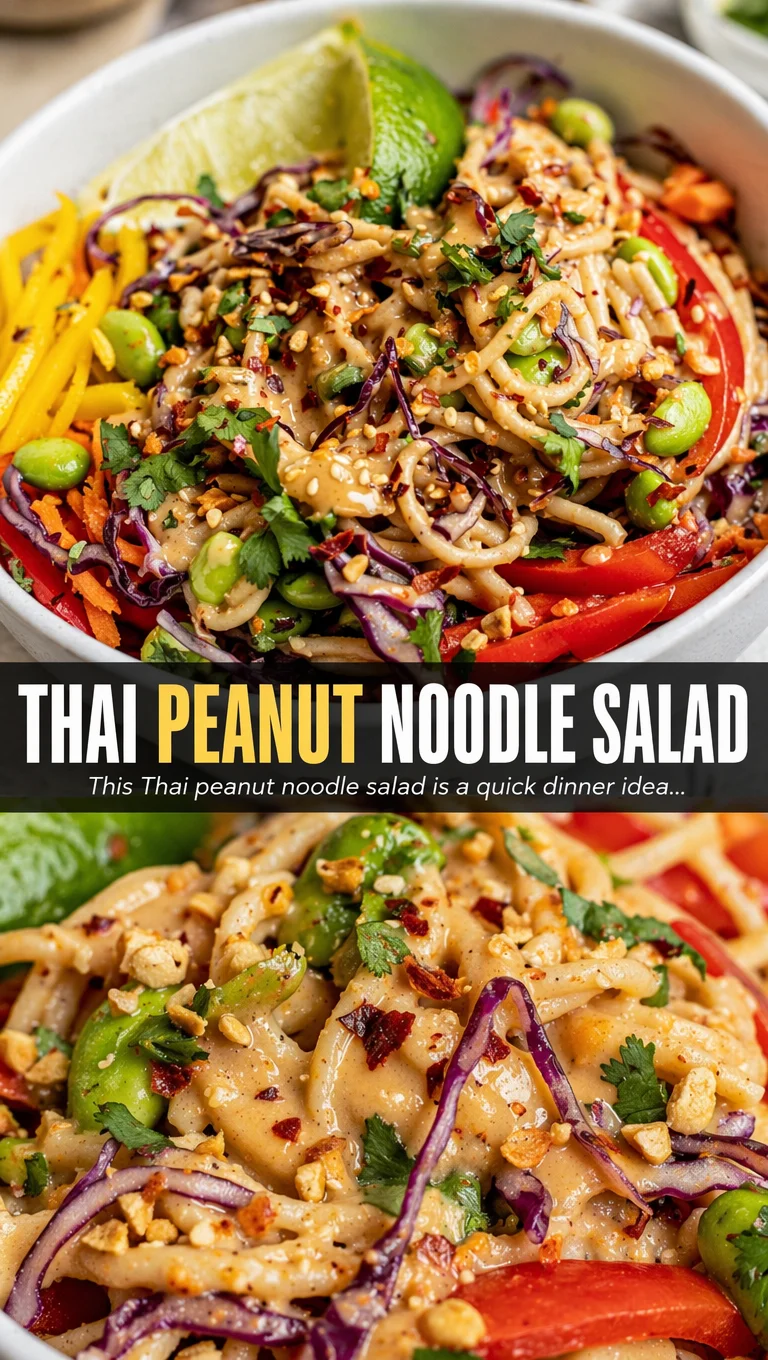
Prepare the vegetables. Thinly slice the red bell pepper into strips about 2 inches long. Julienne the carrot into thin matchsticks using a julienne peeler or a box grater. Slice the green onions on the diagonal for a pretty presentation. Chop the cilantro roughly, including some tender stems for extra flavor. If you’re adding edamame, cook frozen edamame according to package directions (usually 2-3 minutes in boiling water) and let cool. For chicken, use pre-cooked shredded rotisserie chicken or quickly pan-sear a breast and shred it.
In a large mixing bowl, combine the cooled noodles, sliced bell pepper, julienned carrot, green onions, and most of the cilantro (reserve a little for garnish). Pour the peanut dressing over the top and toss everything together using tongs or two large spoons. Make sure every strand of noodle and every vegetable piece is evenly coated in the dressing. The sauce will cling to the noodles and vegetables, creating a glossy, flavorful coating. If the salad seems dry, add an extra splash of warm water or lime juice to loosen it up.
Transfer the salad to a serving platter or individual bowls. Sprinkle with crushed peanuts and the reserved cilantro. For an extra pop of color and flavor, you can also add a few lime wedges on the side. Serve immediately at room temperature or chilled. This salad is incredibly versatile and can be enjoyed as a main dish or a side. The flavors meld beautifully after sitting for 15-20 minutes, making it a great make-ahead option for meal prep.
For best results
- Noodle texture is key: Rice noodles are delicate and can become gummy if overcooked. Always cook them al dente and rinse with cold water immediately. If you plan to meal prep, slightly undercook the noodles by 30 seconds, as they will continue to absorb moisture from the dressing. Toss the drained noodles with a teaspoon of toasted sesame oil to prevent clumping and add a subtle nutty flavor.
- Customize your protein: This salad is vegan as written, but you can easily add protein to make it a more substantial meal. Edamame adds plant-based protein and a pop of green. For non-vegans, shredded rotisserie chicken, grilled shrimp, or sliced steak work beautifully. If using chicken, toss it in a little soy sauce and lime juice before adding to the salad to keep it flavorful.
- Perfect the peanut dressing: The dressing is the heart of this dish. Use natural peanut butter (no added sugar or oil) for the best flavor and texture. If your peanut butter is very thick, microwave it for 10-15 seconds to soften before whisking. Adjust the consistency with warm water gradually—you can always add more, but you can't take it out. For a spicy kick, add 1/2 teaspoon of sriracha or red pepper flakes.
- Vegetable prep shortcuts: To save time, use a mandoline or a food processor with a shredding disc to julienne the carrot and slice the bell pepper. You can also buy pre-shredded coleslaw mix (without dressing) and use it as a base—just add the bell pepper and cilantro. This cuts prep time down to 5 minutes.
- Make it ahead: This salad keeps well in the refrigerator for up to 2 days. However, the noodles will absorb some of the dressing, so you may need to refresh it with a splash of lime juice or a bit of water before serving. Store the dressing separately if you plan to eat it over multiple days, and toss just before serving to maintain the best texture.
- Serving suggestions: Serve this salad as a main dish with a side of spring rolls or a simple cucumber salad. It also pairs wonderfully with grilled tofu or fish. For a heartier meal, add a scoop of cooked quinoa or brown rice underneath the noodles. The salad is delicious both at room temperature and cold, making it perfect for picnics or packed lunches.
Variations
- Spicy Thai Noodle Salad: Add 1-2 teaspoons of sriracha or sambal oelek to the peanut dressing for a fiery kick. You can also top the salad with thinly sliced fresh red chili (like bird's eye) for an extra burst of heat. For a milder warmth, use a pinch of cayenne pepper.
- Mango Thai Noodle Salad: Add 1 cup of ripe mango, julienned or diced, to the vegetables. The sweetness of the mango complements the savory peanut sauce beautifully. Reduce the maple syrup in the dressing to 1 teaspoon to balance the added sweetness from the fruit.
- Cucumber and Herb Version: Replace the bell pepper and carrot with 1 large English cucumber, seeded and julienned, and add 1/2 cup each of fresh mint and Thai basil. This version is extra refreshing and perfect for hot summer days. Use a light hand with the dressing to keep it crisp.
- Protein-Packed Edamame Bowl: Double the edamame to 2 cups and add 1/2 cup of shelled hemp seeds or chopped almonds for extra protein and healthy fats. This variation is great for post-workout meals and keeps you full for hours.
- Gluten-Free Soy-Free Option: Substitute soy sauce with coconut aminos or tamari (which is gluten-free but not soy-free). For a completely soy-free version, use coconut aminos and ensure your peanut butter is pure peanuts. The flavor will be slightly different but still delicious.
- Low-Carb Zoodle Version: Replace rice noodles with spiralized zucchini (zoodles) or a blend of zucchini and carrot noodles. Do not cook the zoodles—just toss them raw with the dressing. This reduces carbs significantly and adds extra nutrients. Note that the salad will be more watery, so serve immediately.
Nutrition
- Calories385 kcal
- Total Fat16g
- Saturated Fat3g
- Cholesterol0mg
- Sodium620mg
- Total Carbohydrates49g
- Dietary Fiber5g
- Sugars12g
- Protein12g