
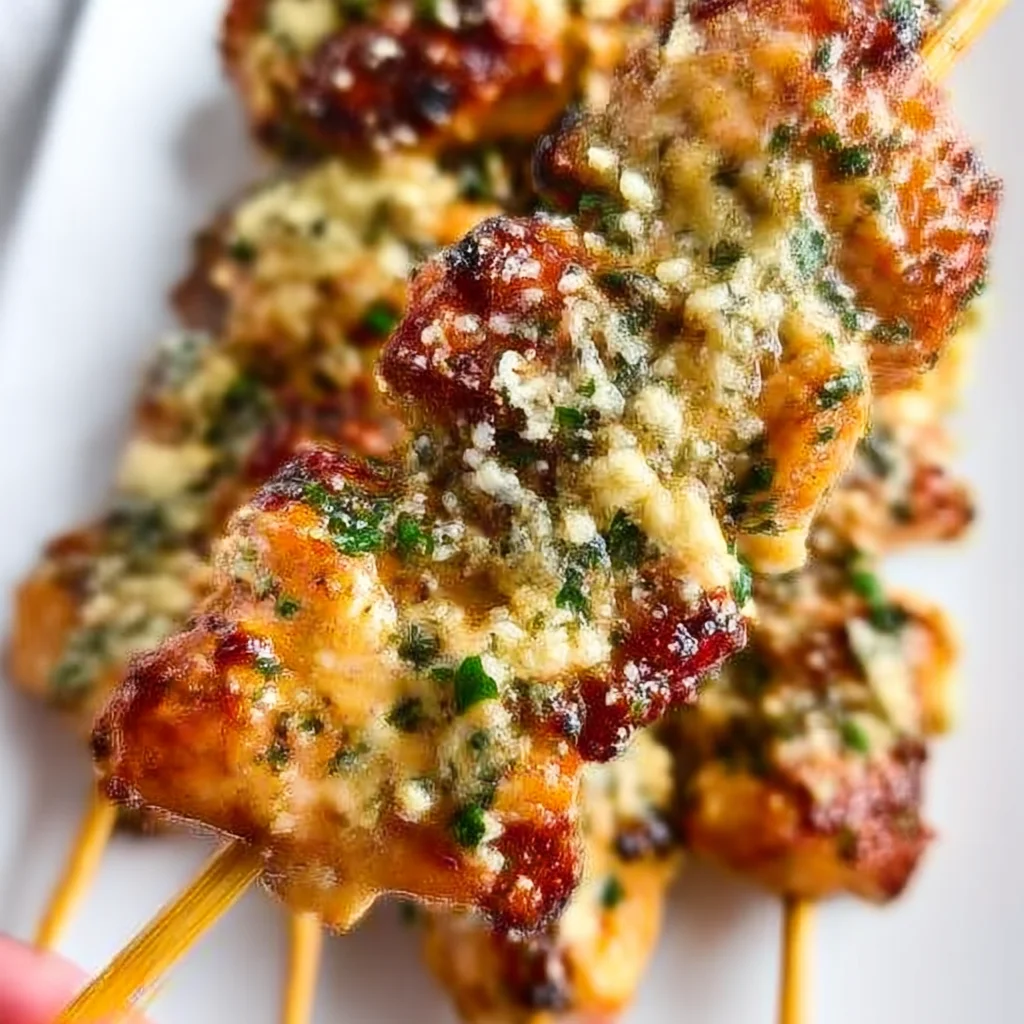
Juicy Garlic Parmesan Chicken Skewers are the ultimate easy dinner recipe. Ready in just 30 minutes, high-protein, perfect for weeknight grilling.
Ingredients
Instructions
Before you begin, set out all your ingredients and equipment. If you are using wooden skewers, place them in a shallow dish of warm water for at least 30 minutes; this is a non-negotiable step because wood fibers ignite on a hot grill and can cause burned, broken skewers. While the skewers soak, pat the chicken breasts dry with paper towels. Removing surface moisture is essential because excess moisture creates steam and prevents the Maillard reaction—the browning that gives grilled meat its deep flavor. Cut the chicken into uniform 1-inch cubes. Uniform size ensures they all finish cooking at the same time; irregular pieces will turn some cubes dry and leave others slightly undercooked. Mince the garlic by crushing each clove with the flat side of your knife before chopping, which releases more allicin for a more aromatic paste. Grate the Parmesan cheese finely using the small holes of a box grater; finely grated cheese will melt more quickly and evenly into the glaze. Squeeze the lemon fresh and pick parsley leaves. Arrange everything in small bowls so the last 10 minutes of cooking feel effortless.
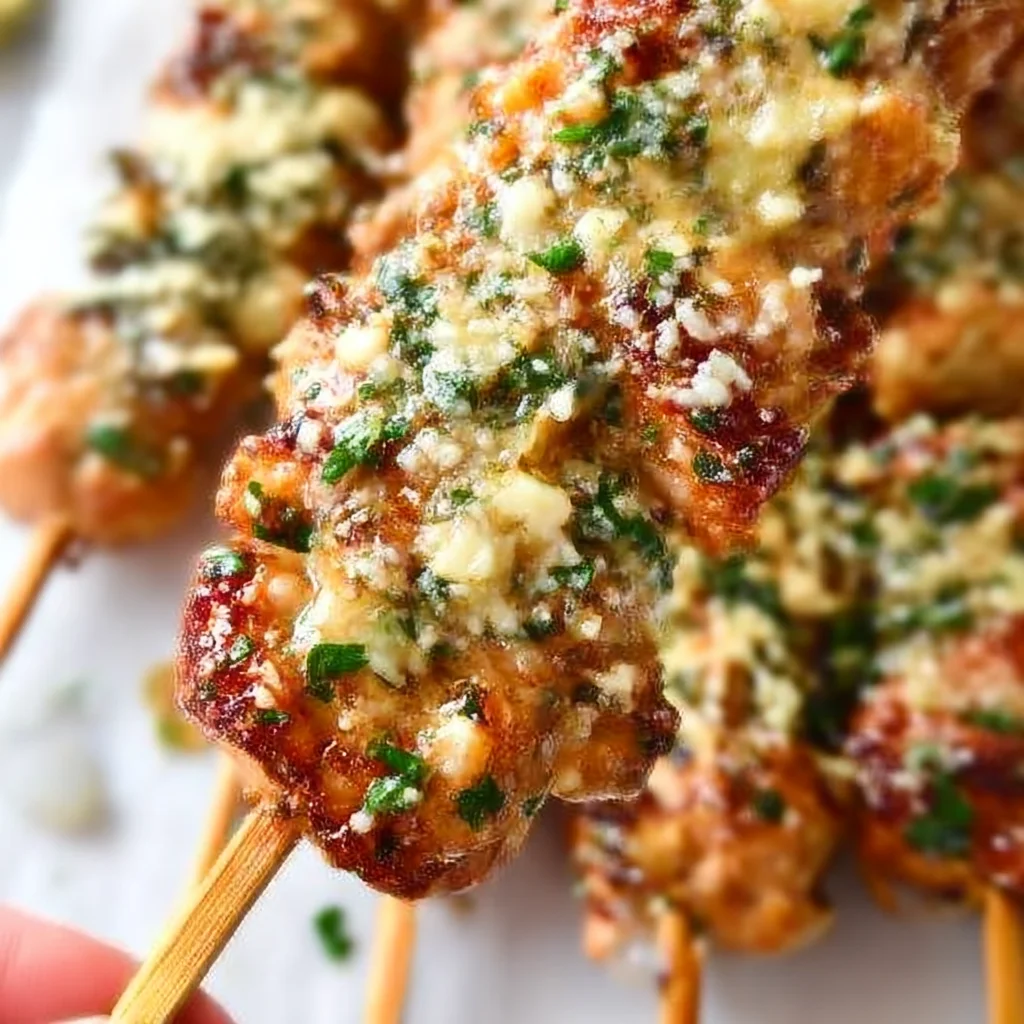
In a large mixing bowl, whisk together the olive oil, half of the freshly grated Parmesan, minced garlic, lemon juice, Italian seasoning, smoked paprika, kosher salt, and black pepper. You should have a thick, fragrant, almost paste-like marinade. The Parmesan in the marinade is not just for flavor—it also contains glutamate molecules, which enhance umami and help tenderize the surface of the meat. Add the chicken cubes and toss thoroughly with your hands, rubbing the marinade into every side of each cube. Be generous; the garlic and spices will transfer to the grill and become part of the crust. Let the chicken sit at room temperature for 10 to 15 minutes, just enough time for the acid from the lemon to gently break down the muscle fibers without turning the meat mushy. If you have extra time, you can cover and refrigerate for up to 4 hours, but do not exceed 12 hours because the lemon and salt can alter the texture.

Thread the marinated chicken cubes onto the soaked wooden skewers or metal skewers. Leave a small 1/8-inch gap between each cube, or you can press them gently together depending on how you like to eat them. The gap allows hot air and flames to touch more surface area, creating that appealing charred crust on all sides. If using wooden skewers, consider using two parallel skewers for each portion, about 1/2 inch apart. Two skewers make the chicken dramatically easier to flip and prevents the meat from rotating when you turn them with tongs. Aim for 6 to 7 cubes per skewer, leaving the pointed end exposed as a handle. If you are cooking for children, use smaller cubes and slightly fewer pieces per skewer. Alternatively, use flat metal skewers, which conduct heat from the inside, reducing cooking time and ensuring even doneness.
Preheat your gas or charcoal grill to medium-high heat, around 425°F to 450°F (218°C to 232°C). A properly heated grill is key: if it is not hot enough, the chicken will stick and release raw juices; if it is too hot, the exterior will char before the interior cooks. While the grill preheats, clean the grates with a sturdy grill brush. After cleaning, dip a folded paper towel in a little vegetable oil, grab it with long-handled tongs, and run it over the grates. This both cleans any remaining debris and creates a non-stick surface. For a grill pan or cast-iron skillet, heat it over high until it smokes slightly, then brush the pan with oil. If you are using a broiler, move the oven rack to the top position and preheat the broiler to high.
Place the skewers directly over the hot zone of the grill. Let the chicken cook undisturbed for 2 minutes; this allows a golden crust to form and naturally releases from the grates. Using tongs, flip the skewers and rotate them 90 degrees before setting back down if you want beautiful crosshatch grill marks. Continue grilling, turning every 2 minutes to ensure even browning and to prevent hot spots. The total cooking time for 1-inch chicken cubes is about 8 to 10 minutes. Start checking for doneness at 8 minutes by inserting an instant-read thermometer horizontally into the thickest cube. Chicken is safe to eat at 165°F (74°C), but because the cooking temperature is high and cubes are small, pull them off at 160°F to 162°F; the carryover heat will push them to safe temp while keeping them juicy. If you do not have a thermometer, slash the thickest cube and look for clear juices and no pink at the center.
While the chicken is grilling, melt the unsalted butter in a small saucepan on a corner of the grill or in the microwave. Stir in the remaining Parmesan, a teaspoon of minced garlic, and a pinch of red pepper flakes if desired. During the last 2 minutes of grilling, brush the glaze onto the skewers on all sides. The Parmesan will sputter and form a golden, nutty crust while the butter adds shine and keeps the meat from drying out. Do not brush the glaze on too early or the garlic will burn and turn bitter. Watch for the glaze to bubble and become deeply golden but not blackened. Remove the skewers from the grill as soon as the glaze is set and caramelized. The smell of toasted garlic and Parmesan is the final cue that they are ready.
Immediately transfer the skewers to a clean cutting board or platter and tent them loosely with aluminum foil. Resting is a crucial, often-skipped step; it allows the protein fibers to relax and redistributes juices trapped at the center, so every bite is equally moist and seasoned. Five minutes is all you need. After resting, sprinkle generously with chopped fresh parsley and a final snowfall of Parmesan, if you like. Serve the skewers hot, with lemon wedges for squeezing, and perhaps a side of roasted vegetables, crusty bread, or a simple green salad. For family-style dining, slide the chicken cubes off the skewers onto a large platter and let everyone use forks. These skewers also fit beautifully over rice, in a wrap, or on a Caesar salad as a protein salad topping. Store any leftovers in an airtight container in the refrigerator for up to 4 days.
For best results
- Choose the right cut. Boneless, skinless chicken thighs are more forgiving on the grill because they have more fat and connective tissue, which stays succulent even if the internal temperature reaches 170°F. Breasts, if used, need precise temperature. Try a hybrid: use a combination of cubed breast and thighs to please everyone. If time allows, brine cubed chicken in a 5% saltwater solution for 20 minutes before marinating; this locks in moisture and seasons the interior.
- Skewers matter more than you think. Wooden skewers need a 30-minute room-temperature water soak; metal skewers are easier and reusable. For flat metal skewers, they conduct heat and help cook the inside. Double skewering prevents spinning. If using two small skewers per serving, make sure the two skewers are parallel and inserted through all cubes, like a double-barbed spear.
- Don't overcrowd or overload skewers. Chicken cubes should have small gaps or be spaced to allow heat to circulate. Pushing all cubes together creates a patchy gray color and raw center. Also do not leave long empty stretches of wood on a hot grill; that part can char and break. Trim or soak the skewers and use the exposed handle as a handle.
- Invest in an instant-read thermometer. The single biggest mistake in grilling chicken is overcooking it due to fear of undercooking. A cheap digital thermometer gives an instant reading in 2 seconds. Pull the skewers at 160°F in the center; the temperature will rise 5-7 degrees during resting. For thighs, lean toward 170-175°F, which is ideal for thigh texture.
- Make the glaze a two-territory event. The marinade is a wet, garlic-parmesan mixture. The final butter-brush glaze should be slightly thicker: include melted butter, extra Parmesan, and a pinch of garlic. This ensures the garlic flavor is fresh and the cheese crust stays crisp. Don't let the raw marinade brush onto the finished chicken; use a fresh brush for the glaze to avoid cross-contamination.
Variations
- Lemon-Herb Chicken Skewers: Increase fresh lemon juice to 2 tablespoons and add 1 tablespoon lemon zest and 2 tablespoons chopped fresh thyme or rosemary to the marinade. Finish with extra lemon slices on the grill.
- Spicy Buffalo Parmesan: Stir 2 to 3 tablespoons hot sauce (like Frank's RedHot) into the marinade and reduce olive oil to 2 tablespoons. At the last minute, brush with a mixture of melted butter and hot sauce, then crumble blue cheese over the finished skewers. Serve with celery sticks.
- Creamy Ranch Chicken Skewers: Whisk 1/4 cup buttermilk or ranch dressing into the marinade. Omit lemon juice to avoid curdling. The dairy adds a tangy tang and creates a golden-brown crust. Add ranch powder to the Parmesan glaze.
- Keto/Low-Carb: Use boneless skinless thighs, skip brown sugar, and increase smoked paprika. Replace the final glaze with extra melted butter mixed with grated Parmesan and garlic. Serve alongside grilled zucchini and cauliflower rice.
- Mediterranean/Tzatziki: Use oregano instead of Italian seasoning, add 1 teaspoon ground cumin and 1/2 teaspoon grated lemon zest. Serve with a dollop of tzatziki and warm pita.
Nutrition
- Calories320 kcal
- Total Fat16g
- Saturated Fat6g
- Cholesterol95mg
- Sodium520mg
- Total Carbohydrates4g
- Dietary Fiber0g
- Sugars1g
- Protein37g