
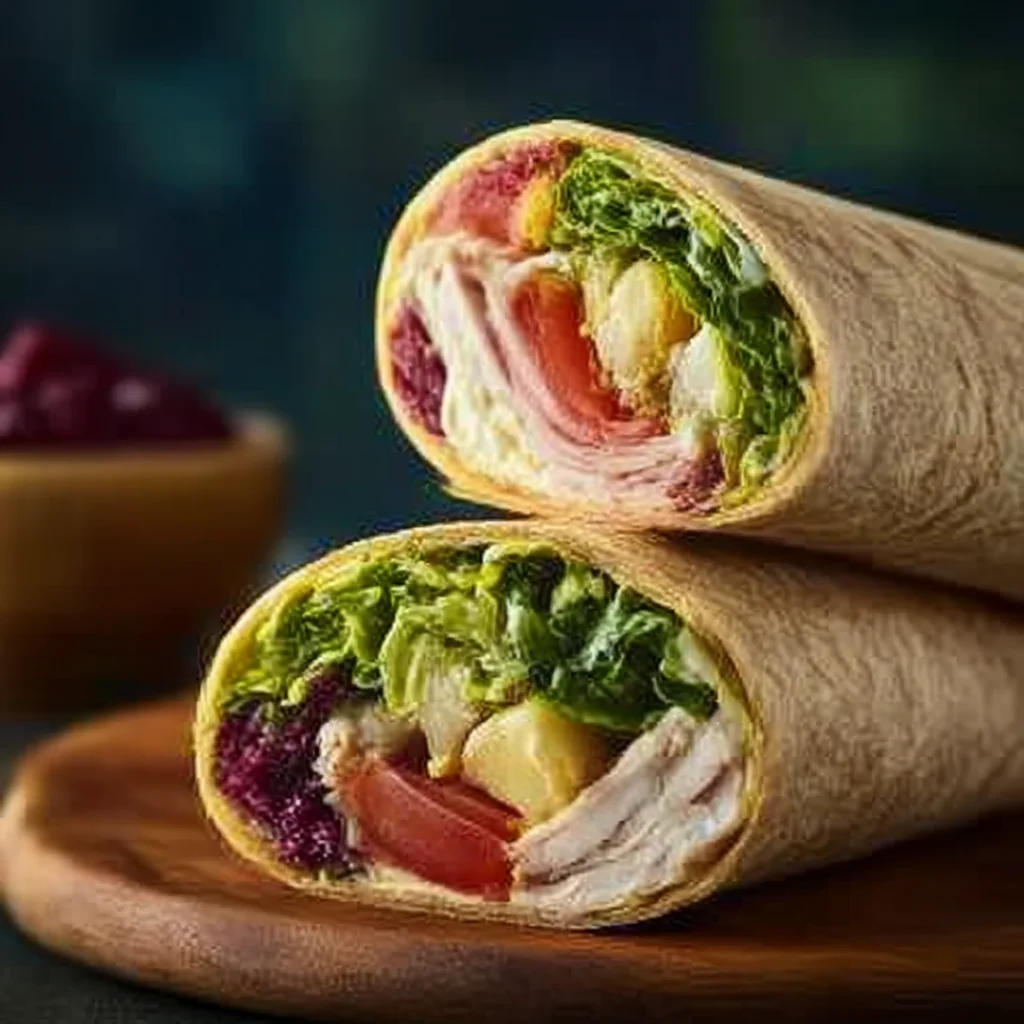
This best turkey wrap recipe is a quick 30-minute dinner loaded with juicy turkey, crisp lettuce, and fresh tomato. Perfect for weeknights and back-to-school lunches!
Ingredients
Instructions
Before you start, set up your workstation. Take your 4 large flour tortillas out of the fridge and let them come to room temperature for about 10 minutes; cold tortillas crack and tear when rolled. Pat the turkey slices dry with a paper towel if they look watery, and wash the lettuce and tomatoes thoroughly. A clean, organized counter makes this 30-minute recipe feel effortless. Shred the lettuce into thin ribbons—use a sharp knife and discard any thick ribs. Slice the tomatoes into even 1/4-inch rounds, then lay everything out in the order you’ll be building: tortillas, turkey, lettuce, tomato, mayo, and seasoning. This mise-en-place approach keeps the flow smooth and prevents scrambling while your hands are busy assembling.
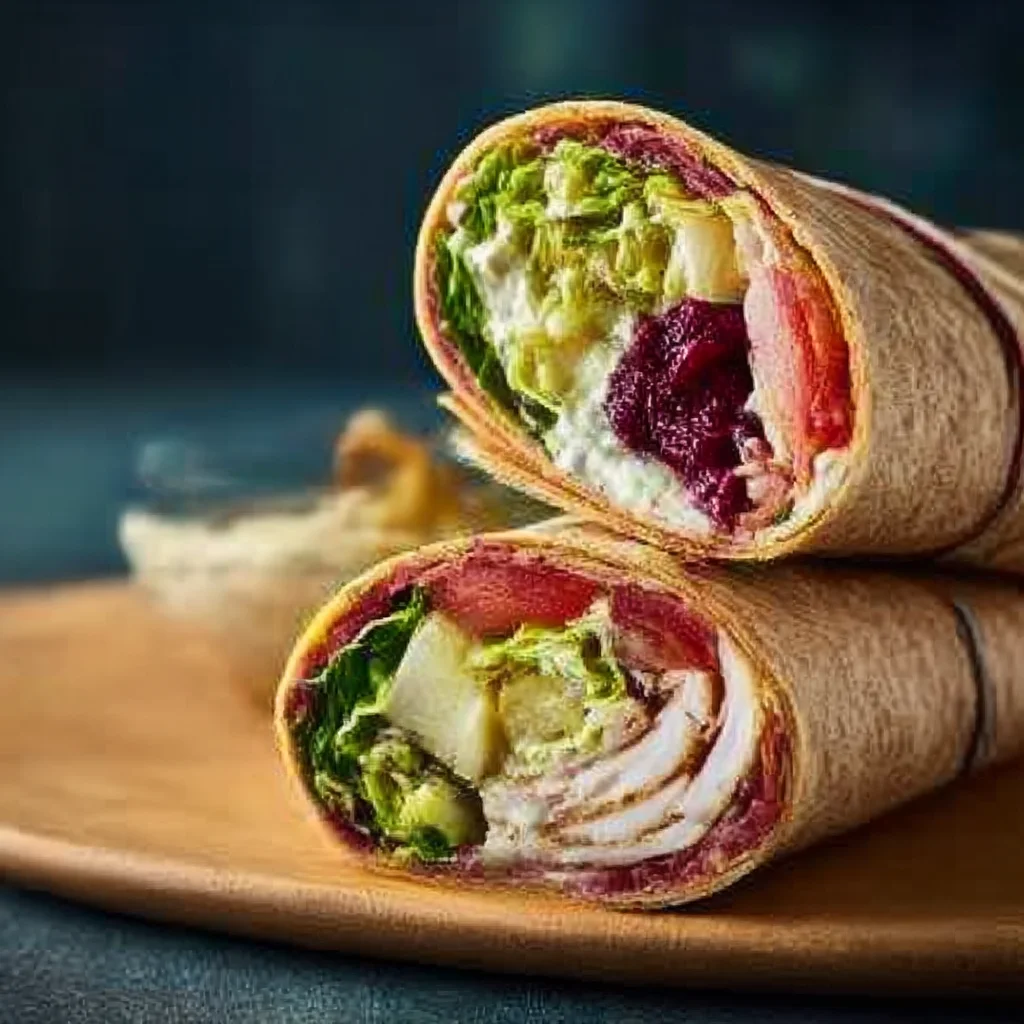
Warming tortillas is the secret to pliable wraps. Heat a dry cast-iron or nonstick skillet over medium-high heat for about 1 minute, then warm each tortilla for 30 seconds per side until it’s soft and puffy with light golden spots. Alternatively, microwave the stack between damp paper towels for 30 to 45 seconds. This not only prevents cracking but also enhances the toasty, buttery flavor of the flour. Keep the warmed tortillas covered with a clean kitchen towel while you work so they stay flexible. If you plan to serve the wraps cold, you can skip this step, but warm tortillas make the wrap significantly easier to roll and far more delicious.
Place a warm tortilla flat on a cutting board and spread 2 tablespoons of mayonnaise over the surface, leaving a 1-inch border around the edges. You can also mix the mayo with a squeeze of lemon or a pinch of black pepper for extra brightness. Lay about 3 ounces of turkey slices in an even layer over the lower two-thirds of the tortilla, slightly overlapping and leaving the top third bare—this is the key to a tight, beautiful spiral when you roll. For maximum juiciness, fold some of the turkey slices so you get thick, meaty bites in every mouthful. The mayonnaise acts not just as a flavor booster but also as a moisture barrier that keeps the turkey juicy and the wrap from becoming dry.
Now pile on the crisp lettuce ribbons on top of the turkey. Add a handful—about 1/2 cup per wrap—and don’t overstuff or the wrap will burst. Arrange the tomato slices in a single row just below the center of the filling, not too close to the edges. Sprinkle with a pinch of kosher salt and a few turns of freshly ground black pepper. If you like an extra kick, add a few pickle slices or a dash of hot sauce, but for the classic best turkey wrap, keep it simple and let the fresh ingredients shine. The contrast of cold, crunchy lettuce and juicy, tender tomato against the savory turkey is what makes each bite memorable.
To wrap like a pro, fold the left and right sides of the tortilla inward toward the center, overlapping slightly. Then, using your thumbs, lift the bottom edge of the tortilla up and over the filling, tucking it firmly under the roll. Continue rolling upward with snug pressure, making sure not to squeeze the filling out the sides. The seam should now be on the bottom. Let the wrap rest seam-side down for a minute; this helps it seal. If you’re packing this for lunch, you can double-wrap it in foil or parchment and refrigerate. Rolling tightly is the most important step for a uniform spiral that holds together when you cut it, so take your time.
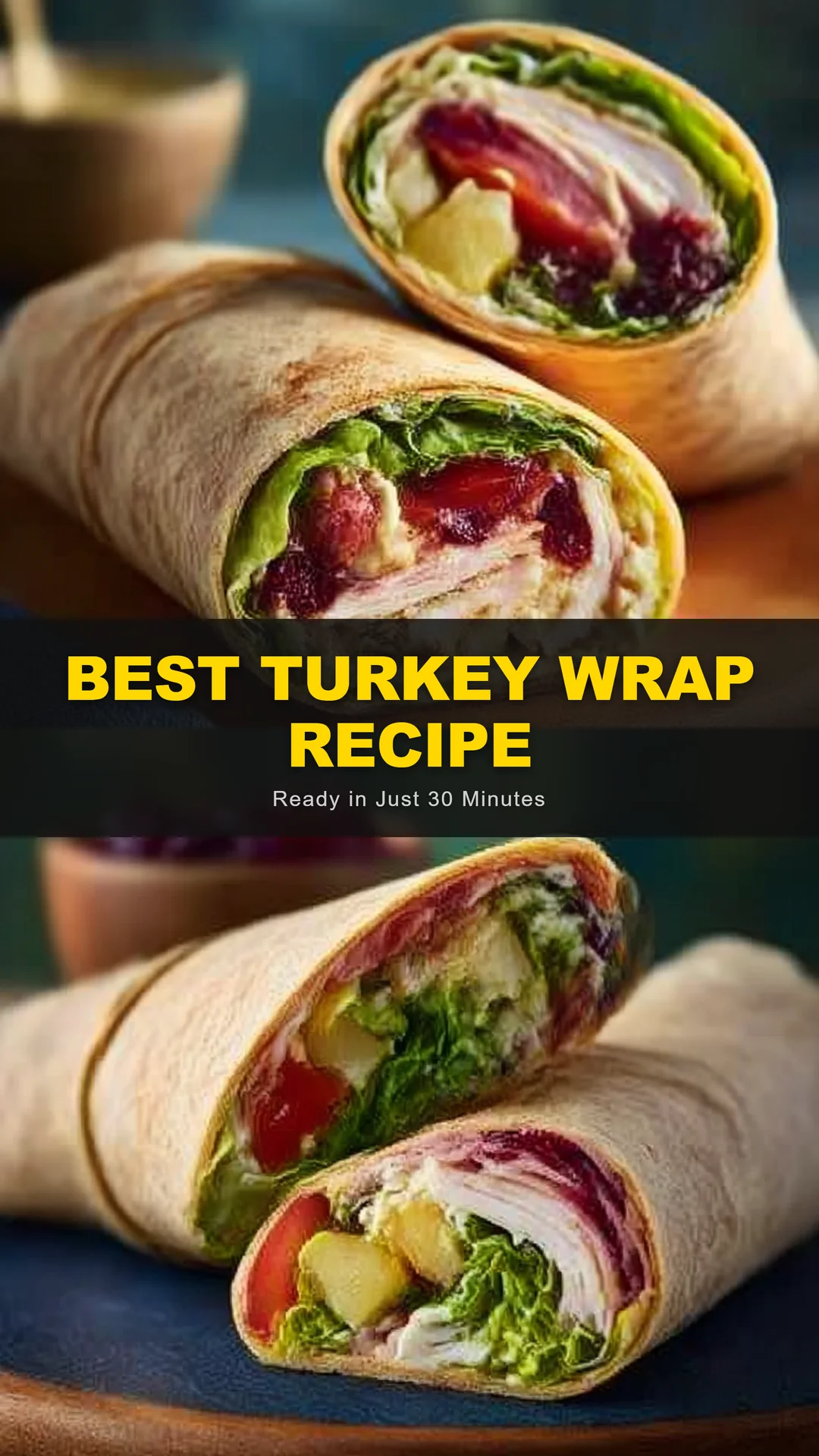
Place the finished wrap seam-side down on a cutting board. Using a sharp serrated knife, slice it in half on a gentle diagonal to expose the beautiful layers of turkey, lettuce, and tomato—this makes it look as delicious as it tastes. Serve immediately with extra mayo for dipping, a handful of chips, or a simple side salad. For meal prep, store wrapped sandwiches in the fridge for up to 2 days. To keep the lettuce from wilting, pack the tomatoes and lettuce separately and assemble just before eating if you’re planning to pack ahead. The diagonal cut also makes the wrap easier to handle for lunchboxes and adds that professional deli-style presentation.
For best results
- Choose the right tortilla. Using a 10-inch burrito-size flour tortilla is non-negotiable for a wrap that holds together. Small taco-size tortillas will overstretch and tear. If you prefer a whole-wheat or spinach tortilla, make sure it's labeled 'burrito size' and is soft enough to bend without cracking. You can also use lavash bread or large lettuce leaves for a low-carb option, but the rolling technique changes. Check the date on the tortilla package—fresher tortillas are more pliable. If your tortillas are a bit stale, warm them thoroughly and they will soften beautifully.
- Dry your ingredients thoroughly. Moisture is the enemy of a soggy wrap. After washing lettuce, spin it in a salad spinner and pat it dry with a clean kitchen towel. Blot tomato slices with paper towels before assembling. Wet veggies create steam and make tortillas gummy within minutes. For meal prep, consider storing wet components separately and assembling in the morning. Even the mayonnaise layer helps create a barrier between the tortilla and the moist toppings, so don't skimp on it. If you're using pre-shredded lettuce, look for a bag with large, dry pieces rather than fine shreds that release more water.
- Never skip the warming step. Warm tortillas are more pliable and less likely to crack, and they also bloom with the flavor of toasted flour. If you're using a skillet, don't use oil unless you want crispy fried wraps; a dry pan is all you need. For a party, you can stack tortillas in foil and warm them in a 180°C (350°F) oven for 5–7 minutes. If you're in a rush, wrap the whole stack in a clean kitchen towel and microwave on high for 30 seconds—just make sure they're still warm when you roll, because they stiffen as they cool.
- Roll tight but not too tight. The art of wrapping is balance. Pull the tortilla over the filling and tuck it with just enough tension to keep everything snug, then roll while applying gentle pressure. Too loose and the filling falls out; too tight and you'll squeeze the mayo out the sides. Watch the ends—fold them in first and then roll to keep every bit of good stuff inside. The first two wraps might be imperfect, but you'll quickly get the feel. If the tortilla tears, just press it back together; the filling will hold it.
- Use freshly sliced turkey from the deli counter. Ask your deli counter to slice the turkey breast about 1/8-inch thick—thin enough to fold, thick enough to taste. Buy it fresh rather than pre-packaged, which can be watery and rubbery. You'll need about 12 ounces for four wraps, which comes to roughly 3 ounces per person. Leftover roast turkey also works beautifully: slice it thinly against the grain. If you want a smoky flavor, try a peppered turkey or rosemary-seasoned turkey breast from the deli. The quality of the turkey makes a huge difference.
- Prep ahead for busy weeks. This turkey wrap is perfect for meal prep, but you have to be strategic. Store the wraps whole (not sliced) in parchment or foil for up to 24 hours, then slice just before serving. Keep them in the fridge on a flat shelf—leaning them can squish the filling. If you're packing lunches for school or work, include a small ice pack and keep the wrap in the coolest part of the bag. You can also assemble the dry ingredients and the wet ingredients separately in containers, then wrap everything in the morning for the freshest result.
- Season in layers. Many people season only the outside of the sandwich, but the best turkey wraps get salt and pepper at every stage. Lightly season the lettuce, the tomato slices, and even the mayonnaise if you like. A pinch of salt on tomatoes releases their natural juices and makes them taste sweeter. Freshly ground black pepper adds a subtle heat that complements the turkey. If you're using a flavored wrap or herbed mayo, adjust the seasoning so the wrap doesn't taste overwhelming. Taste a small piece of turkey and a tomato slice before building to calibrate your seasoning.
Variations
- Spicy Southwest Turkey Wrap: Transform this classic into a bold, southwestern meal by adding sliced avocado, a few strips of crispy bacon, pepper jack cheese, and a spoonful of chipotle mayo. Swap the iceberg lettuce for fresh spinach or cilantro-lime slaw. The creamy avocado and smoky chipotle pair wonderfully with the turkey, and you can add roasted corn or black beans for extra texture. This version is still ready in under 30 minutes and feels like a sit-down dinner from a restaurant.
- Low-Carb Turkey Lettuce Wrap: For a gluten-free or low-carb alternative, skip the tortilla entirely and use large, sturdy lettuce leaves such as butter lettuce or romaine hearts. Choose leaves that are wide enough to hold the filling, and layer two leaves together for extra strength. Spread the mayonnaise directly on the lettuce, then add the turkey and vegetables. Roll gently and secure with a toothpick. These wraps are super fresh and crunchy, though they do not last long once assembled, so eat them immediately or pack the filling separately.
- Mediterranean Turkey Wrap: Give the turkey a trip to the Mediterranean by spreading a generous layer of hummus instead of mayonnaise, then add crumbled feta cheese, sliced cucumber, red onion, and Kalamata olives. Use fresh spinach or arugula instead of iceberg lettuce, and consider using a whole-wheat or rosemary tortilla. Squeeze a little lemon juice over the filling before rolling. The tangy feta and creamy hummus create a rich, savory wrap that's perfect for summer picnics or a lunchtime indulgence.
- Kids' Lunchbox Pinwheels: If you're packing for school lunch, turn these wraps into fun, bite-sized pinwheels. Spread a thin layer of mayonnaise and add very thinly sliced turkey, a few leaves of lettuce, and thin strips of tomato (remove the seeds to avoid sogginess). Roll the wrap extra tightly, then slice it into 1-inch rounds with a sharp serrated knife. Kids love the colorful spirals, and they're easier for small hands to eat. You can include a small container of ranch dressing or ketchup for dipping.
Nutrition
- Calories440 kcal
- Total Fat24g
- Saturated Fat5g
- Cholesterol60mg
- Sodium980mg
- Total Carbohydrates35g
- Dietary Fiber3g
- Sugars5g
- Protein29g