
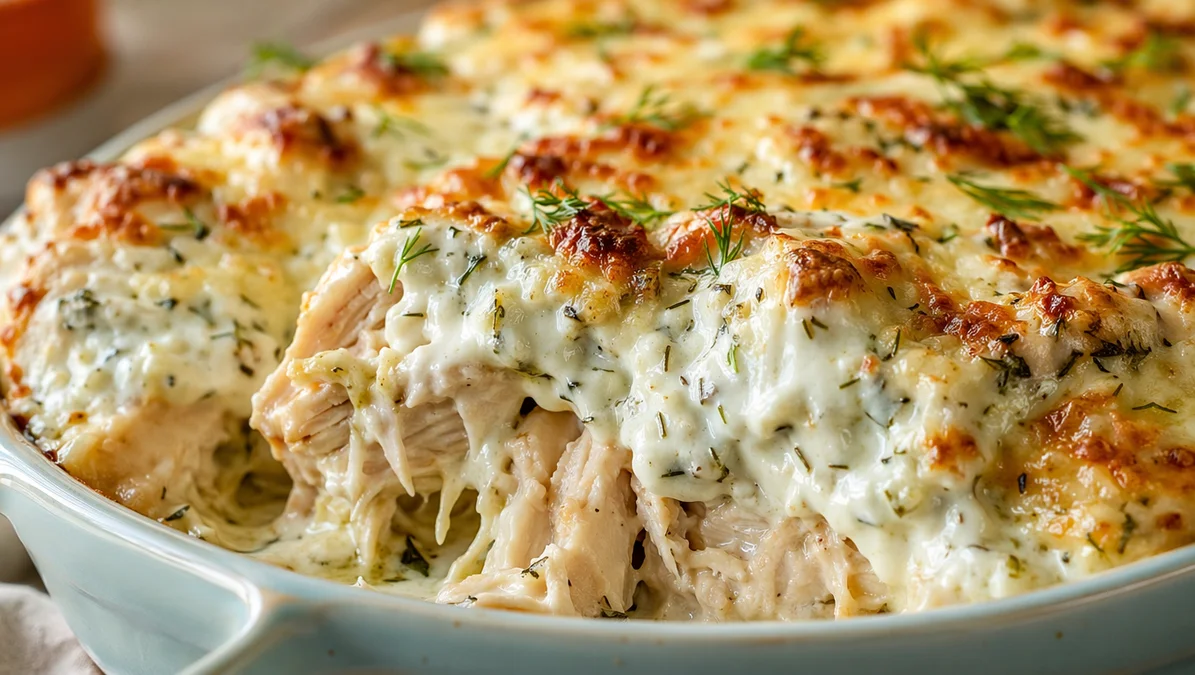
This tzatziki chicken bake is a quick dinner idea that transforms simple ingredients into a creamy, protein-packed meal. With Greek yogurt, cucumber, and tender chicken baked to perfection, it's one…
Ingredients
Instructions
Preheat your oven to 375°F (190°C). While the oven heats, prepare the cucumber: Grate the cucumber using the large holes of a box grater. Place the grated cucumber in a clean kitchen towel or cheesecloth and squeeze firmly over the sink to remove as much liquid as possible. This step is crucial because excess water will make the tzatziki sauce watery and prevent the casserole from achieving a creamy, thick consistency. You should end up with about 1/2 to 3/4 cup of squeezed, dry cucumber. Set aside.
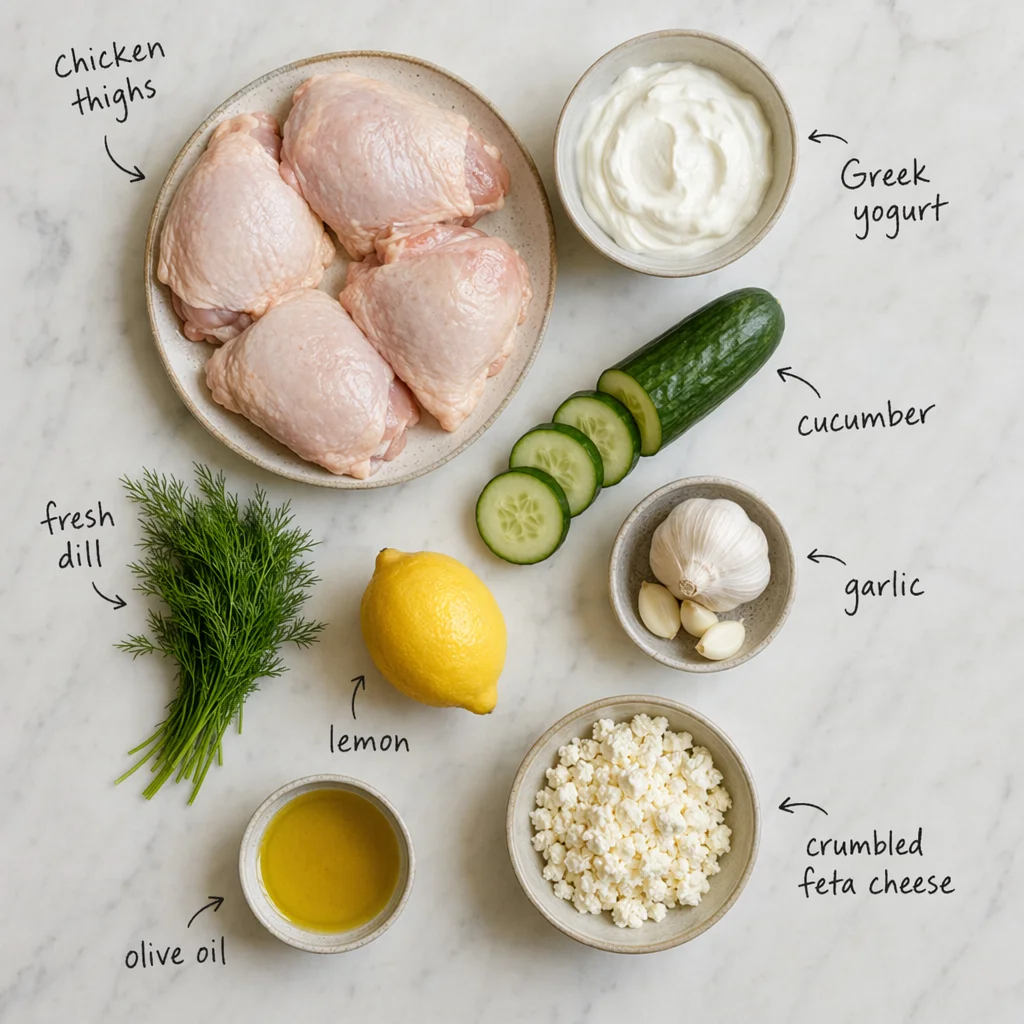
In a large mixing bowl, combine the Greek yogurt, milk, minced garlic, fresh dill (or dried), lemon juice, olive oil, salt, pepper, onion powder, and dried oregano. Whisk until smooth and well incorporated. The mixture should be thick but pourable. Taste and adjust seasoning if needed—it should be tangy, herby, and well-seasoned. Fold in the squeezed cucumber and half of the crumbled feta cheese. This will become the creamy tzatziki sauce that coats the chicken.

Place the chicken thighs in a single layer in a 9×13-inch baking dish. If using chicken breasts, consider cutting them into uniform pieces to ensure even cooking. Pour the prepared tzatziki mixture evenly over the chicken, making sure each piece is fully coated. Use a spatula to spread the sauce if necessary. The chicken should be mostly submerged; if not, add a splash of milk or water to thin the sauce slightly.
Cover the baking dish tightly with aluminum foil. Bake in the preheated oven for 25 minutes. The foil traps steam, which helps the chicken cook gently and stay moist. After 25 minutes, carefully remove the foil (watch out for hot steam). At this point, the chicken should be nearly cooked through and the sauce will have thickened slightly. If using mozzarella, sprinkle it over the top along with the remaining feta cheese. Return the dish to the oven, uncovered, and bake for an additional 10-15 minutes, or until the chicken reaches an internal temperature of 165°F (74°C) and the cheese is golden and bubbly. For a deeper golden crust, you can switch the oven to broil for the last 2-3 minutes, but watch closely to avoid burning.
Remove the casserole from the oven and let it rest for 5 minutes. This resting period allows the sauce to thicken further and the flavors to meld. Garnish with additional fresh dill and a squeeze of lemon if desired. Serve warm over rice, quinoa, or with crusty bread to soak up the creamy sauce. Leftovers can be stored in an airtight container in the refrigerator for up to 4 days.
For best results
- Squeezing the cucumber dry is non-negotiable. Cucumbers are over 95% water, and if you skip this step, your casserole will be watery and the sauce will separate. Use a nut milk bag or a clean kitchen towel to wring out every drop. For best results, salt the grated cucumber and let it sit for 10 minutes before squeezing—this draws out even more moisture.
- For maximum flavor, use full-fat Greek yogurt. Low-fat or nonfat yogurt can work, but they may curdle slightly at high heat and produce a thinner sauce. Full-fat yogurt is more stable and yields a creamier, richer result. If you must use low-fat, add 1 tablespoon of cornstarch to the yogurt mixture to help stabilize it.
- Chicken thighs are ideal because they stay juicy and tender even with longer baking. Chicken breasts are leaner and can dry out; if using breasts, reduce the covered baking time to 20 minutes and check temperature early. You can also pound breasts to even thickness for more reliable cooking.
- This casserole is a fantastic meal prep option. Assemble the entire dish (without the final cheese topping) up to 24 hours in advance, cover, and refrigerate. When ready to bake, add the cheese and increase the uncovered baking time by 5-10 minutes since the dish starts cold. You can also freeze the unbaked casserole for up to 3 months; thaw overnight in the fridge before baking.
- To add a crunchy element, top the casserole with toasted panko breadcrumbs mixed with a little olive oil and dried oregano before the final bake. This creates a golden, crispy crust that contrasts beautifully with the creamy sauce. Alternatively, sprinkle with pine nuts or slivered almonds for extra texture and healthy fats.
Variations
- Make it vegetarian by substituting the chicken with 2 cans of drained chickpeas or 3 cups of cauliflower florets. For chickpeas, reduce the covered baking time to 15 minutes and skip the final broil. For cauliflower, roast the florets separately at 400°F for 20 minutes before adding to the sauce to prevent sogginess. Both options are protein-rich and satisfying.
- Go low-carb by serving the casserole over zucchini noodles or cauliflower rice. The creamy tzatziki sauce pairs beautifully with these lighter bases. You can also add spinach or kale to the casserole during the last 10 minutes of baking for extra nutrients—simply stir in 3 cups of fresh spinach until wilted.
- Turn up the heat with a spicy twist: add 1/2 teaspoon of red pepper flakes or a minced serrano pepper to the yogurt sauce. For a smoky flavor, use smoked paprika instead of oregano. You can also drizzle with harissa paste before serving for a North African-inspired kick.
- Swap the protein: use boneless pork chops, turkey cutlets, or even firm tofu (pressed and cubed). Adjust cooking times accordingly—pork and turkey should reach 165°F, while tofu only needs 20 minutes total. The tzatziki sauce is versatile and complements many proteins.
Nutrition
- Calories385 kcal
- Total Fat22g
- Saturated Fat9g
- Cholesterol145mg
- Sodium720mg
- Total Carbohydrates8g
- Dietary Fiber1g
- Sugars5g
- Protein38g