
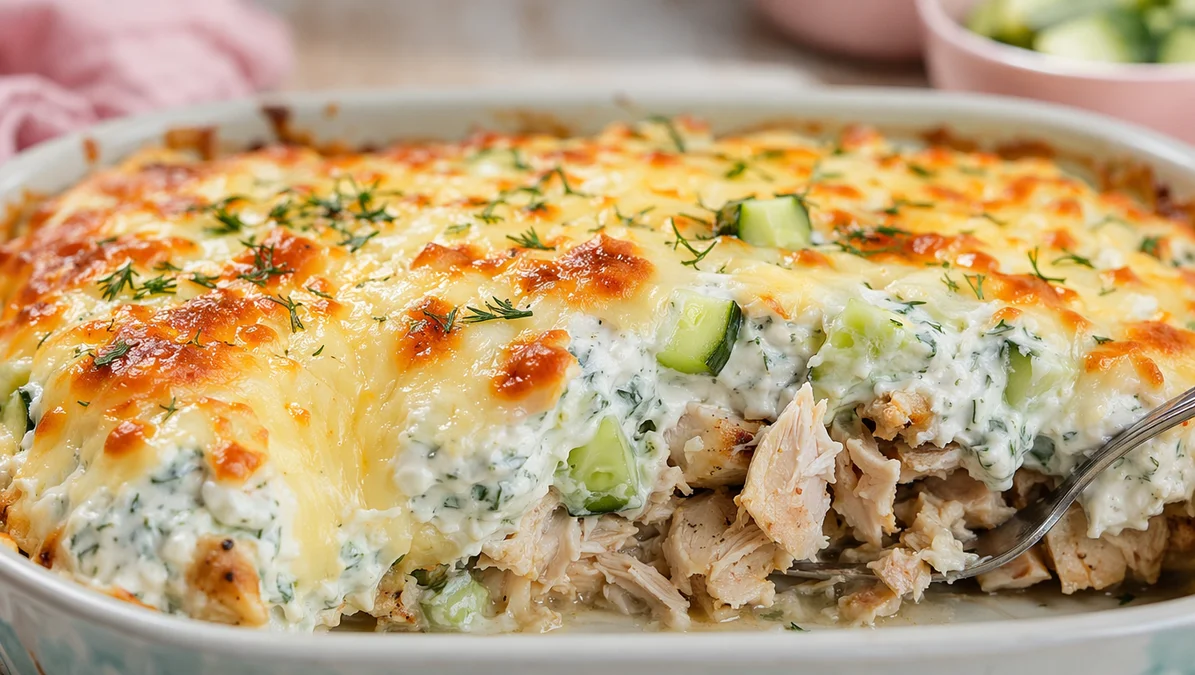
This easy Greek chicken casserole is a high-protein dinner that comes together with just a handful of ingredients like Greek yogurt, cucumber, and tender chicken. Perfect for busy nights, it's…
Ingredients
Instructions
Preheat your oven to 375°F (190°C). While the oven heats, prepare your baking dish — a 9×13-inch or similar 3-quart casserole dish works perfectly. Lightly grease it with a drizzle of olive oil or nonstick spray to prevent sticking and ensure easy cleanup. This initial step is crucial because it creates a non-stick surface and helps the casserole develop a beautiful golden crust on the bottom. The choice of dish matters: glass or ceramic dishes retain heat evenly, while metal pans may cook faster. Adjust your baking time slightly if using a metal pan.
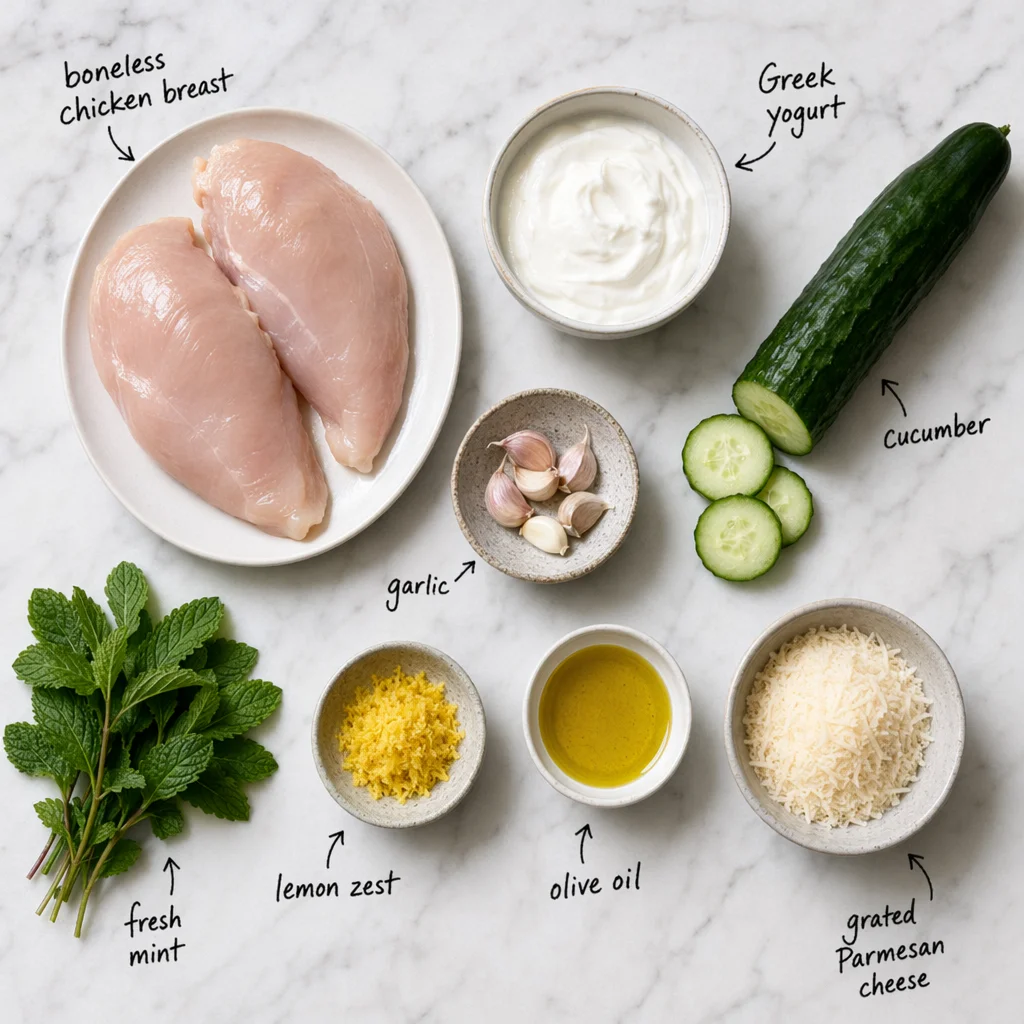
In a large mixing bowl, combine the Greek yogurt, minced garlic, lemon juice, lemon zest, chopped dill, chopped mint, salt, pepper, and dried oregano. Whisk until smooth and well-blended. The yogurt mixture is the heart of this casserole — it mimics a thick tzatziki sauce that will coat every piece of chicken and infuse it with creamy, tangy, herbaceous flavor. Greek yogurt is key here because it has a much higher protein content and thicker consistency than regular yogurt, which means it won’t curdle or separate during baking. If you can, use full-fat Greek yogurt for the richest taste and creamiest texture, but 2% works well too. The lemon zest adds a bright, aromatic note that cuts through the richness, while the fresh herbs provide that unmistakable Mediterranean freshness. Dried herbs can be substituted in a pinch, but fresh truly elevates the dish.
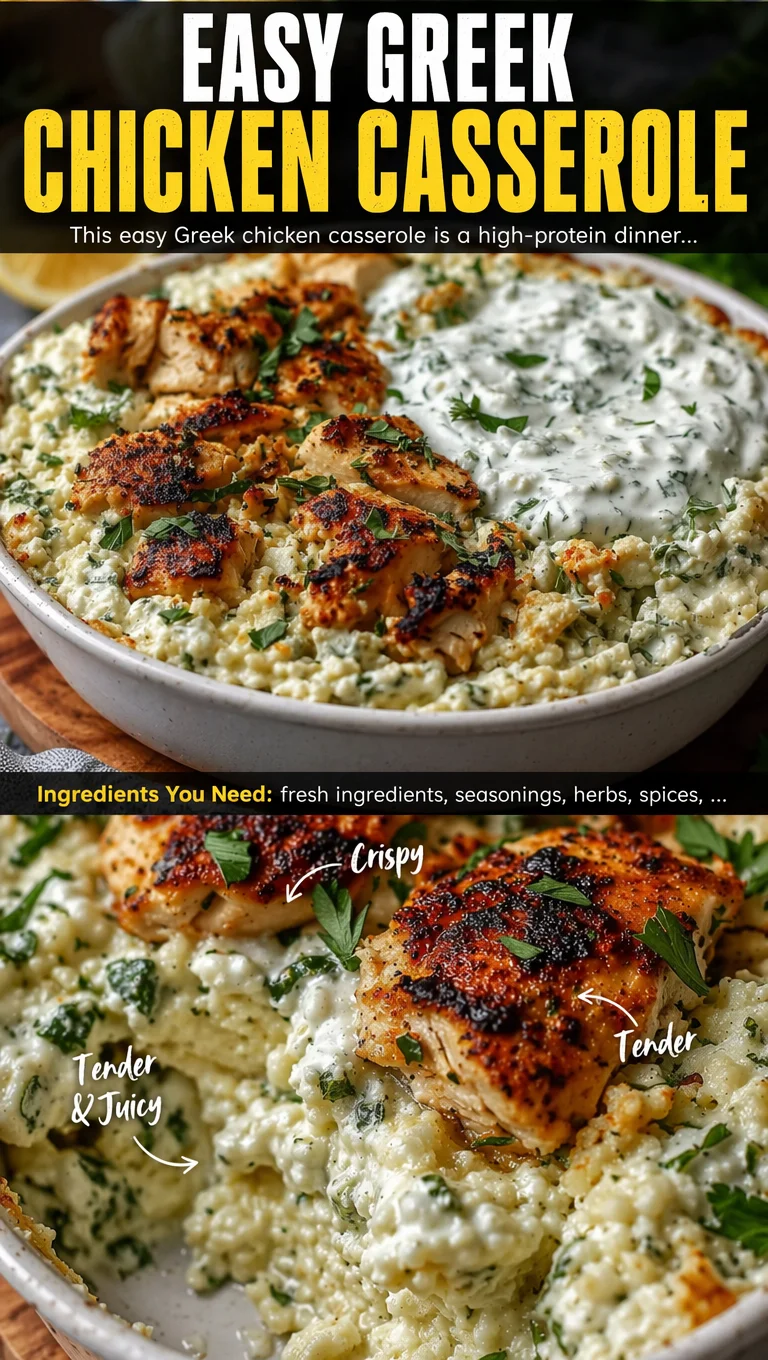
Add the cubed chicken breasts to the bowl with the yogurt mixture. Using a spatula or your hands (with gloves), toss gently until every piece is evenly coated. This is a ‘dump and bake’ recipe, so you don’t need to marinate — just coat and go. However, if you have an extra 30 minutes, letting the chicken sit in the yogurt mixture at room temperature will allow the enzymes in the yogurt to tenderize the meat slightly, resulting in even juicier chicken. The yogurt acts as a natural tenderizer thanks to its lactic acid, which gently breaks down proteins without making the chicken mushy. Make sure each cube is well-covered; any exposed chicken will dry out during baking.
Transfer the coated chicken and all the yogurt sauce into the prepared baking dish. Spread it into an even layer using the spatula. Sprinkle the diced cucumber evenly over the top. The cucumber adds a refreshing crunch and hydrating contrast to the rich yogurt sauce. English cucumbers are ideal because they have thin skins and fewer seeds, so you don’t need to peel them — just dice them into bite-sized pieces. If you use regular cucumbers, you may want to peel and seed them to avoid bitterness and excess moisture. The cucumber will release some water during baking, which helps create a light, saucy consistency, but too much water can make the casserole watery, so don’t skip seeding.
Drizzle the olive oil over the casserole, then sprinkle the grated Parmesan cheese evenly across the top. Parmesan adds a salty, nutty, umami-rich crust that browns beautifully in the oven. Follow with the crumbled feta cheese, distributing it evenly. Feta provides tangy, salty bursts that complement the creamy yogurt and tender chicken. For the best texture, use a block of feta that you crumble yourself rather than pre-crumbled feta, which often contains anti-caking agents that prevent melting. If you prefer a milder flavor, you can reduce the feta or substitute with mozzarella.
Bake the casserole uncovered for 30-35 minutes, until the chicken is cooked through (internal temperature of 165°F / 74°C) and the top is golden and bubbly. The cheese should be melted and lightly browned in spots, and the edges of the casserole will be bubbly and slightly caramelized. Do not overbake, as the yogurt sauce can separate if cooked too long. If you notice the top browning too quickly, you can tent the dish with foil for the last 10 minutes. Let the casserole rest for 5 minutes after removing it from the oven. This resting period allows the juices to redistribute and the sauce to thicken slightly, making it easier to serve.
Serve the casserole warm, garnished with additional fresh dill or mint if desired. Scoop onto plates or into bowls, making sure to get some of the creamy sauce from the bottom. This dish pairs wonderfully with a side of warm pita bread, rice, or a simple Greek salad. For a low-carb option, serve over cauliflower rice or zucchini noodles. Store any leftovers in an airtight container in the refrigerator for up to 4 days. Reheat gently in the microwave or oven, adding a splash of water or lemon juice to revive the sauce.
For best results
- For the juiciest chicken, avoid overbaking. Use an instant-read thermometer to check for doneness at 165°F (74°C). Chicken breasts can dry out quickly, so if you prefer extra insurance, you can use chicken thighs instead — they are more forgiving and stay moist even if baked a few minutes too long. Just increase the baking time by about 5-10 minutes since thighs are thicker.
- English cucumbers are the best choice for this casserole because they have a thin, edible skin and minimal seeds. If you only have regular cucumbers, peel them, cut them in half lengthwise, and scoop out the seeds with a spoon before dicing. This prevents the casserole from becoming watery and ensures a pleasant texture. Also, salt the diced cucumber and let it sit for 10 minutes, then pat dry to remove excess moisture.
- Greek yogurt is essential for the sauce — do not substitute with regular yogurt, sour cream, or mayonnaise, as they have different fat and water contents that will affect the texture and may curdle. For a dairy-free option, use a thick coconut yogurt (unsweetened) and omit the feta or use a vegan feta alternative. The sauce will be slightly less tangy but still delicious.
- To make this casserole even more flavorful, consider marinating the chicken in the yogurt mixture for 2-4 hours in the refrigerator. The lactic acid in the yogurt tenderizes the meat and allows the herbs and garlic to penetrate deeper. If you're short on time, the dump-and-bake method works perfectly, but the extra marination takes it to the next level.
- Leftovers can be repurposed in creative ways. Shred the leftover chicken and use it as a filling for Greek wraps or pitas, add it to a grain bowl with quinoa and roasted vegetables, or mix it into pasta for a creamy Mediterranean pasta bake. The flavors meld even more overnight, making leftovers a treat.
Variations
- Make it vegetarian by substituting the chicken with 2 cans of drained chickpeas or 3 cups of cubed halloumi cheese. Chickpeas add a hearty texture and pair beautifully with the tzatziki sauce. Halloumi, a firm, salty cheese that doesn't melt, becomes golden and crispy on the edges while staying soft inside. If using halloumi, reduce the salt in the recipe since the cheese is already salty.
- Add vegetables for extra nutrition and color. Stir in 2 cups of chopped spinach, 1 cup of halved cherry tomatoes, or 1 cup of sliced bell peppers along with the cucumber. Spinach will wilt into the sauce, tomatoes burst with sweetness, and peppers add crunch. You can also layer thinly sliced red onion or artichoke hearts for a more complex Mediterranean profile.
- For a spicy twist, add 1/2 teaspoon of red pepper flakes or a diced jalapeño to the yogurt mixture. The heat contrasts nicely with the cool, creamy tzatziki. Alternatively, use a spicy cheese like pepper jack instead of Parmesan for a different kind of kick.
- Swap the chicken for 1.5 lbs of boneless, skinless salmon fillets cut into chunks. Salmon pairs wonderfully with dill and lemon, and the yogurt sauce keeps it moist. Bake for 20-25 minutes, as salmon cooks faster than chicken. This variation is rich in omega-3 fatty acids and makes for an elegant dinner.
- Turn this casserole into a one-dish meal by adding 2 cups of cooked orzo, rice, or quinoa to the baking dish before adding the chicken. Stir the grains into the yogurt mixture so they absorb the flavors as they bake. You may need to add an extra 1/2 cup of chicken broth to ensure the grains cook properly. This makes the casserole heartier and eliminates the need for a side dish.
Nutrition
- Calories385 kcal
- Total Fat18g
- Saturated Fat8g
- Cholesterol115mg
- Sodium820mg
- Total Carbohydrates8g
- Dietary Fiber1g
- Sugars5g
- Protein48g