
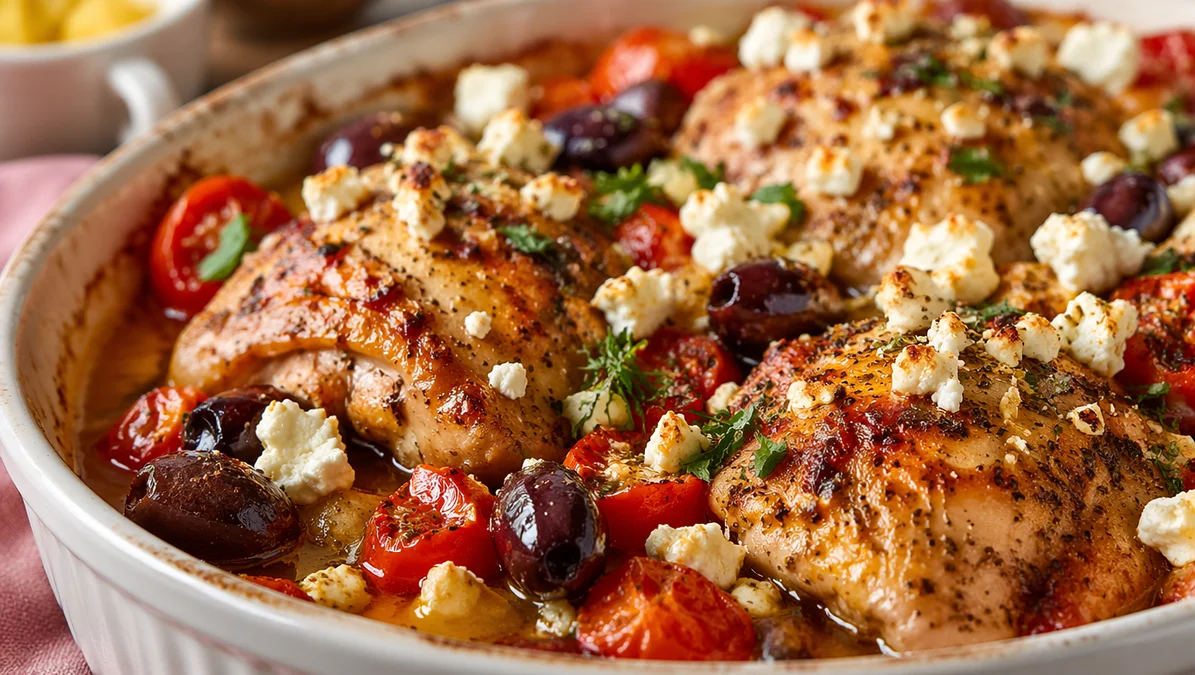
This quick Greek chicken bake brings Mediterranean flavor to your table in just 30 minutes. Juicy chicken, tangy feta, and briny kalamata olives create a simple yet satisfying weeknight dinner.
Ingredients
Instructions
Preheat your oven to 400°F (200°C). While the oven heats, prepare the chicken: pat the chicken thighs dry with paper towels. Removing excess moisture is crucial for achieving a crispy, golden-brown skin. Season both sides generously with salt, pepper, dried oregano, and dried thyme. The oregano and thyme are the backbone of Mediterranean flavor—oregano adds a slightly peppery, earthy note while thyme brings a subtle floral and minty undertone. Let the chicken sit at room temperature for about 5 minutes to allow the seasoning to adhere.

In a large oven-safe skillet or a 9×13-inch baking dish, arrange the chicken thighs skin-side up. Drizzle with 1 tablespoon of olive oil, rubbing it into the skin to promote browning. Scatter the halved cherry tomatoes, kalamata olives, and minced garlic around the chicken. The tomatoes will burst during roasting, creating a sweet and tangy juice that mingles with the olive brine and feta. Drizzle the remaining 1 tablespoon of olive oil over the tomatoes and olives. Give everything a gentle toss to coat, but keep the chicken skin exposed.
Roast the dish in the preheated oven for 15 minutes. After 15 minutes, remove the skillet and sprinkle the crumbled feta cheese evenly over the chicken and tomatoes. The feta should be added later to prevent it from melting away completely; it will soften and become creamy while retaining its distinct tangy character. Return the dish to the oven and continue roasting for another 5–10 minutes, or until the chicken reaches an internal temperature of 165°F (74°C) and the skin is crispy and golden. The tomatoes should be blistered and releasing their juices. If you prefer extra-crispy skin, you can switch the oven to broil for the last 1–2 minutes, watching carefully to avoid burning.
Remove from the oven and let the casserole rest for 5 minutes. This resting period allows the juices to redistribute within the chicken, ensuring each bite is moist and flavorful. Garnish generously with fresh chopped parsley for a pop of color and freshness. Serve the chicken thighs with a generous spoonful of the roasted tomatoes, olives, and melted feta from the pan. Squeeze fresh lemon juice over each serving to brighten the dish—the acidity cuts through the richness of the chicken and feta, tying all the flavors together. This dish pairs beautifully with crusty bread, rice, or a simple Greek salad.
For best results
- Choosing the right chicken: Bone-in, skin-on chicken thighs are ideal for this recipe because they remain juicy and flavorful during the short roasting time. The bone conducts heat evenly and the skin crisps up beautifully. If you prefer chicken breasts, opt for boneless, skinless breasts and reduce the cooking time to about 15–18 minutes total. However, be aware that breasts can dry out more easily, so check for doneness at 15 minutes. For the best results, always pat the chicken dry before seasoning to ensure maximum crispiness.
- Feta cheese selection: Not all feta is created equal. For this Greek-inspired dish, look for feta made from sheep's milk or a sheep-goat milk blend, which has a creamy texture and a tangy, salty flavor that holds up well to heat. Avoid pre-crumbled feta, which often contains anti-caking agents that prevent it from melting smoothly. Instead, buy a block of feta and crumble it yourself just before using. This will give you a creamier, more authentic result. If you want a milder flavor, you can use a cow's milk feta, but the taste will be less pronounced.
- Preventing soggy skin: The enemy of crispy chicken skin is moisture. Make sure to thoroughly pat the chicken dry with paper towels before seasoning. Also, avoid overcrowding the pan—if the chicken thighs are too close together, they will steam rather than roast. Use a large enough skillet or baking dish so that there is at least an inch of space between each piece. If you notice the tomatoes releasing a lot of liquid during roasting, you can tilt the pan and spoon some of the juice over the chicken for flavor, but do not submerge the skin.
- Make it a complete meal: To turn this casserole into a one-dish dinner, add some chopped bell peppers, red onion wedges, or zucchini along with the tomatoes. These vegetables roast beautifully in the same time frame and absorb the Mediterranean flavors. You can also toss in some chickpeas for extra protein and fiber. Just make sure to cut the vegetables into uniform sizes so they cook evenly. If adding chickpeas, rinse and drain them first, then toss with a little olive oil and oregano before adding to the pan.
- Storing and reheating leftovers: This Greek chicken bake keeps well in the refrigerator for up to 3 days. Store it in an airtight container. To reheat, place the chicken and vegetables in a 350°F (175°C) oven for about 10 minutes, or until heated through. Avoid using the microwave, as it will make the skin soggy. If you are meal prepping, you can portion the dish into individual containers and reheat in a toaster oven for best results. The flavors actually deepen overnight, making leftovers even more delicious.
- Serving suggestions: While this dish is fantastic on its own, you can serve it over a bed of fluffy couscous, quinoa, or orzo to soak up the flavorful juices. A simple Greek salad with cucumber, tomato, red onion, and a lemon-oregano vinaigrette makes a refreshing side. Warm pita bread or crusty sourdough is perfect for mopping up every last drop of the tomato-feta sauce. For a low-carb option, serve with roasted cauliflower or a side of steamed greens.
Variations
- Vegetarian version: Omit the chicken and replace it with thick slices of eggplant, zucchini, or portobello mushrooms. Arrange the vegetables in the baking dish and follow the same roasting instructions. For extra protein, add a can of drained chickpeas or crumbled tofu tossed in olive oil and oregano. The feta and olives still provide plenty of flavor, and the roasted vegetables become tender and caramelized. You may need to reduce the cooking time by 5 minutes since vegetables cook faster than chicken.
- Spicy twist: If you enjoy heat, add 1/2 teaspoon of red pepper flakes or a chopped fresh chili (such as serrano or Fresno) along with the garlic. You can also use a spicy feta—some brands offer feta infused with chili or herbs. The heat pairs beautifully with the briny olives and tangy tomatoes. For an extra kick, drizzle with a little harissa paste before serving. This variation is great for those who want to spice up their weeknight dinner routine.
- Lemon-herb variation: Increase the lemon flavor by adding thin lemon slices (about 1 lemon) to the baking dish along with the tomatoes. You can also zest the lemon and mix the zest with the feta before sprinkling. Fresh herbs like rosemary or basil can be used instead of or in addition to the oregano and thyme. Tuck a few sprigs of rosemary under the chicken skin for an aromatic infusion. This variation brightens the dish and makes it feel even more Mediterranean.
- Protein swap: This recipe works wonderfully with other proteins. Try using bone-in, skin-on chicken drumsticks or a whole chicken cut into pieces. For a seafood twist, use large shrimp or firm white fish like cod or halibut. If using shrimp, add them during the last 5 minutes of cooking to avoid overcooking. For fish, place fillets skin-side down and cook for about 12–15 minutes, or until flaky. Adjust cooking times accordingly and always check for doneness.
- Dairy-free adaptation: To make this recipe dairy-free, simply omit the feta cheese or replace it with a dairy-free feta alternative made from tofu or almonds. You can also use a sprinkle of nutritional yeast for a cheesy flavor, or add extra olives and capers for saltiness and umami. The dish will still be delicious and satisfying without the cheese. For a vegan version, follow the vegetarian variation and use vegan feta.
Nutrition
- Calories485 kcal
- Total Fat32g
- Saturated Fat9g
- Cholesterol145mg
- Sodium820mg
- Total Carbohydrates8g
- Dietary Fiber2g
- Sugars4g
- Protein38g