
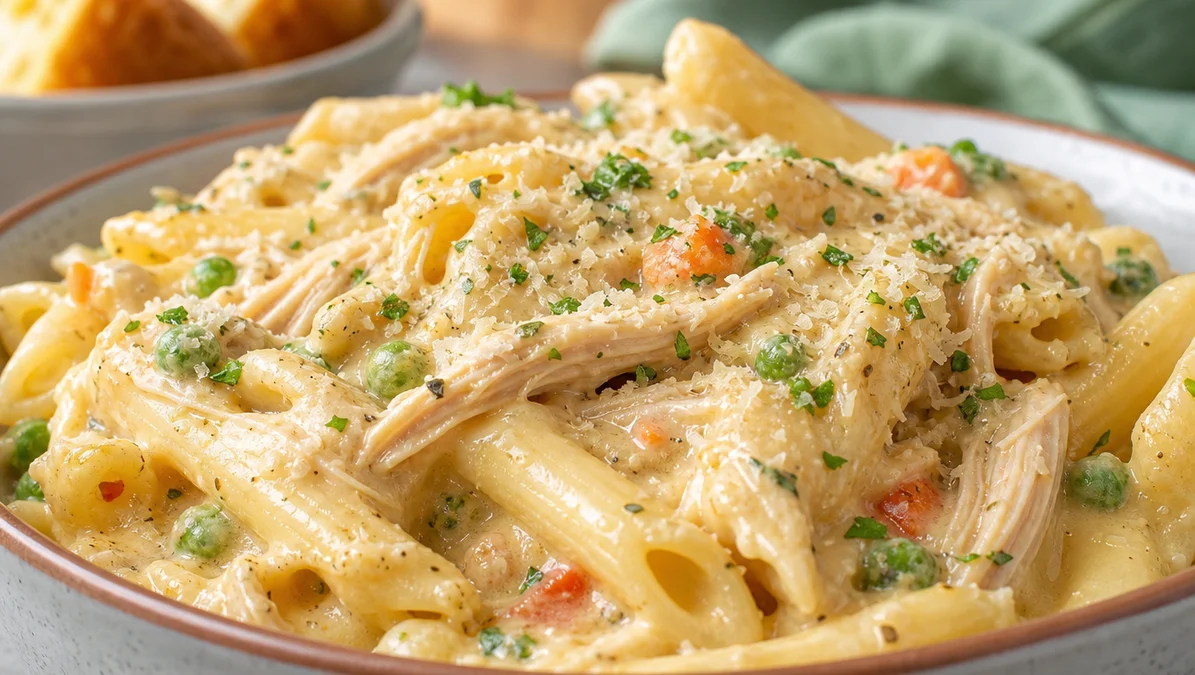
This creamy Slow Cooker Chicken Pasta is the ultimate easy dinner recipe. Tender chicken, pasta, and mixed vegetables in a rich sauce, perfect for busy weeknights.
Ingredients
Instructions
Start by preparing your chicken. Pat the chicken breasts or thighs dry with paper towels to remove excess moisture. This step is crucial because dry chicken will sear better, developing a golden-brown crust that adds depth of flavor to the final dish. Season generously on both sides with salt, pepper, and a pinch of paprika. Heat the olive oil in a large skillet over medium-high heat until shimmering. Carefully place the chicken in the hot skillet, being mindful not to overcrowd the pan (work in batches if needed). Let the chicken cook undisturbed for 4-5 minutes per side, until deeply golden and a crust forms. The internal temperature should reach 165°F (74°C) for breasts or 175°F (80°C) for thighs. Transfer the seared chicken to a plate and set aside. Do not wash the skillet—the browned bits left behind are packed with flavor and will be used to build the sauce.
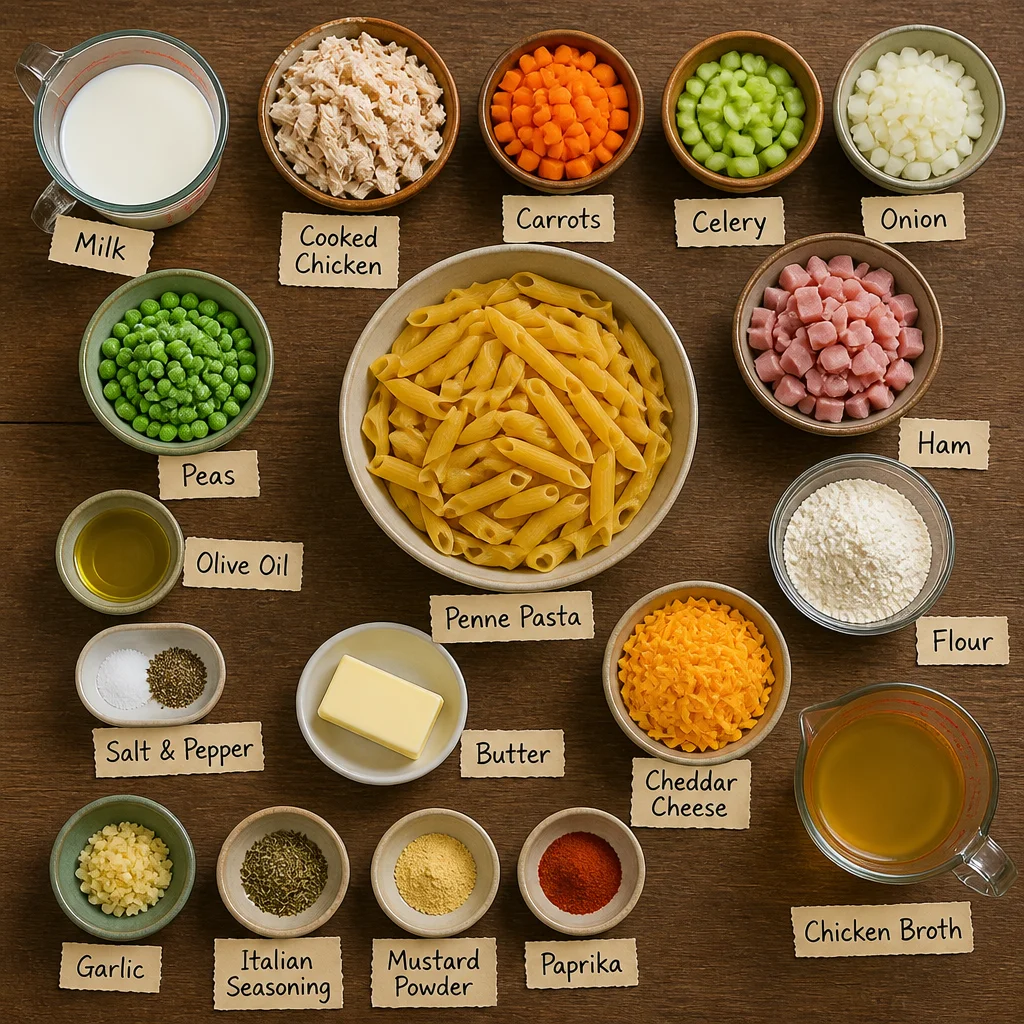
In the same skillet, reduce the heat to medium and add the diced onion. Sauté for 3-4 minutes, stirring occasionally, until the onions become translucent and start to soften. The moisture from the onions will help lift the browned bits from the bottom of the pan—a technique called deglazing. Add the minced garlic and cook for another 30 seconds until fragrant, being careful not to burn the garlic as it can turn bitter. Sprinkle the flour over the onions and garlic, stirring constantly for 1 minute. This cooks out the raw flour taste and creates a roux that will thicken the sauce later. Slowly pour in the chicken broth while whisking vigorously to dissolve the flour and incorporate all the browned bits. Add the heavy cream, dried thyme, dried rosemary, paprika, and black pepper. Whisk until smooth and bring the mixture to a gentle simmer. Let it cook for 2-3 minutes until it thickens slightly. Taste and adjust salt if needed.
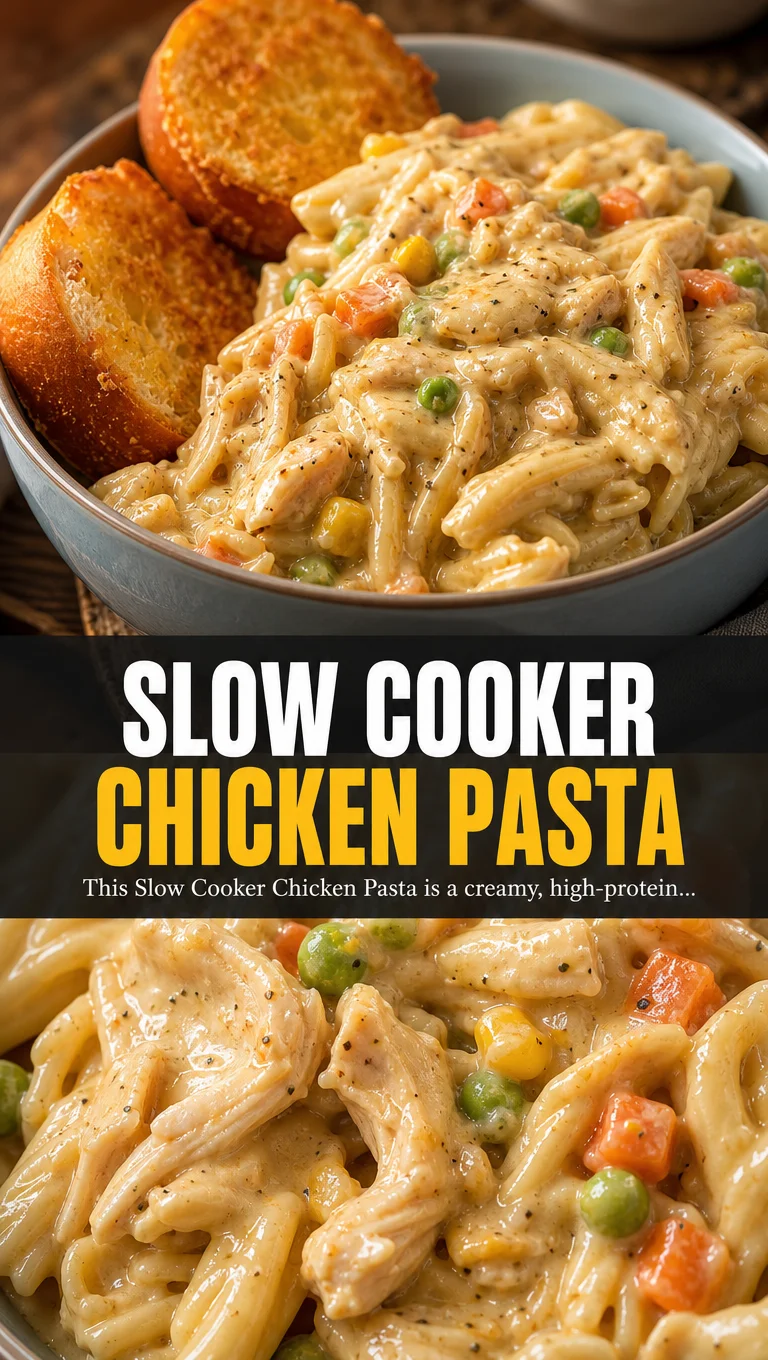
Transfer the creamy sauce to the slow cooker. Nestle the seared chicken pieces into the sauce, ensuring they are mostly submerged. Add the frozen mixed vegetables directly on top—no need to thaw them first. Cover the slow cooker with the lid and cook on LOW for 4 hours or on HIGH for 2-3 hours. The low-and-slow method ensures the chicken becomes incredibly tender and shreds easily. Avoid opening the lid during cooking as it releases heat and extends cooking time. After the cooking time is up, carefully remove the chicken to a cutting board and let it rest for 5 minutes. Use two forks to shred the chicken into bite-sized pieces. Return the shredded chicken to the slow cooker and stir to combine with the sauce and vegetables.
While the chicken is resting, cook the pasta according to package directions in a large pot of salted boiling water, but reduce the cooking time by 1-2 minutes so the pasta is al dente and slightly firm. The pasta will continue to cook and absorb sauce when added to the slow cooker, so undercooking prevents it from becoming mushy. Drain the pasta well and toss with a small pat of butter to prevent sticking. Add the cooked pasta and the remaining butter to the slow cooker along with the grated Parmesan cheese. Stir gently until the pasta is evenly coated in the creamy sauce and the cheese is melted. If the sauce seems too thick, add a splash of warm chicken broth or milk to reach desired consistency. Let everything sit for 5 minutes to allow the flavors to meld.
Taste and adjust seasonings one final time. Serve the slow cooker chicken pasta in warm bowls, garnished with fresh parsley if desired. For an extra touch, sprinkle additional Parmesan cheese and a crack of black pepper on top. This dish is best served immediately while hot and creamy. Leftovers can be stored in an airtight container in the refrigerator for up to 4 days. To reheat, add a splash of milk or broth and warm gently on the stovetop or microwave, stirring occasionally to prevent the pasta from drying out.
For best results
- For the most tender chicken, always sear it before adding to the slow cooker. This step is non-negotiable for flavor development. The Maillard reaction creates hundreds of flavor compounds that deepen the savory profile of the dish. If you skip searing, you'll miss out on that rich, caramelized taste that makes this recipe stand out. Additionally, patting the chicken dry ensures a good sear, as moisture is the enemy of browning. Use a heavy skillet like cast iron for even heat distribution and a better crust.
- To prevent your pasta from turning into mush, cook it al dente (firm to the bite) and add it only during the last 10-15 minutes of cooking, or even after the slow cooker is turned off. The residual heat will finish cooking the pasta as it absorbs the sauce. Alternatively, you can cook the pasta separately and stir it in just before serving. This method gives you perfect control over the texture and avoids overcooking. If you plan to have leftovers, consider storing the pasta separately and combining when reheating to maintain the best texture.
- Choose the right cut of chicken: boneless, skinless thighs are more forgiving and stay juicier than breasts due to their higher fat content. If using breasts, be careful not to overcook them. The slow cooker's low heat for 4 hours is ideal, but check the internal temperature at the 3-hour mark. For a richer flavor, you can use bone-in, skin-on chicken thighs, but remove the skin before searing (the skin won't crisp in the slow cooker). Shred the meat off the bones after cooking.
- Customize your vegetables based on what you have on hand. Frozen mixed vegetables are convenient, but fresh vegetables like diced carrots, celery, and green beans work beautifully. Sauté fresh vegetables along with the onions for extra flavor. For a more traditional pot pie feel, add diced potatoes (parboiled first) or even sweet potatoes. Mushrooms add an earthy umami note—slice and sauté them with the onions. Just be mindful of the moisture content; if using fresh vegetables, you may need to reduce the broth slightly.
- To make this recipe gluten-free, substitute the all-purpose flour with an equal amount of cornstarch or arrowroot powder. Mix the cornstarch with a small amount of cold broth to create a slurry before adding it to the sauce. This prevents clumping. Also, use gluten-free pasta (rice, corn, or legume-based) and cook it according to package directions. Note that gluten-free pasta can become gummy if overcooked, so undercook it by 1-2 minutes as well. Check labels on chicken broth and other ingredients to ensure they are certified gluten-free.
Variations
- For a lower-carb or keto-friendly version, replace the pasta with zucchini noodles (zoodles) or cauliflower florets. Add the zoodles at the very end, just until heated through, to avoid them releasing too much water. You can also serve the creamy chicken and vegetables over steamed cauliflower rice or spaghetti squash. The sauce can be thickened with cream cheese or xanthan gum instead of flour to keep it low-carb. This variation reduces the net carbs significantly while maintaining the creamy, comforting texture.
- To make this recipe dairy-free, substitute the heavy cream with full-fat coconut milk or a dairy-free cream alternative like oat cream. Use a dairy-free butter (such as vegan butter sticks) and omit the Parmesan cheese or use a dairy-free Parmesan substitute. For thickening, use cornstarch or a gluten-free flour blend. The coconut milk will add a subtle tropical note that pairs surprisingly well with the herbs and chicken. For a richer flavor, add a tablespoon of nutritional yeast to mimic the cheesy taste.
- Transform this dish into a classic chicken pot pie by transferring the creamy chicken and vegetable mixture to a baking dish, topping with a sheet of puff pastry or a drop biscuit topping, and baking at 400°F (200°C) for 15-20 minutes until golden and bubbly. This variation turns the pasta dish into a hearty casserole perfect for colder months. Alternatively, you can serve the mixture over mashed potatoes or inside a pie crust for a true pot pie experience. The slow cooker does the heavy lifting, and the oven finishes it off with a crispy top.
- Spice things up with a Tex-Mex twist: add 1 can of drained and rinsed black beans, 1 cup of frozen corn, and 1 teaspoon of cumin and chili powder to the sauce. Use cilantro instead of parsley for garnish. Top with shredded cheddar cheese and sliced jalapeños before serving. You can also swap the chicken for shredded beef or pork. This variation gives a Southwestern flair that's perfect for a crowd. Serve with tortilla chips or over rice for a complete meal.
Nutrition
- Calories485 kcal
- Total Fat22g
- Saturated Fat11g
- Cholesterol115mg
- Sodium780mg
- Total Carbohydrates38g
- Dietary Fiber4g
- Sugars6g
- Protein35g