
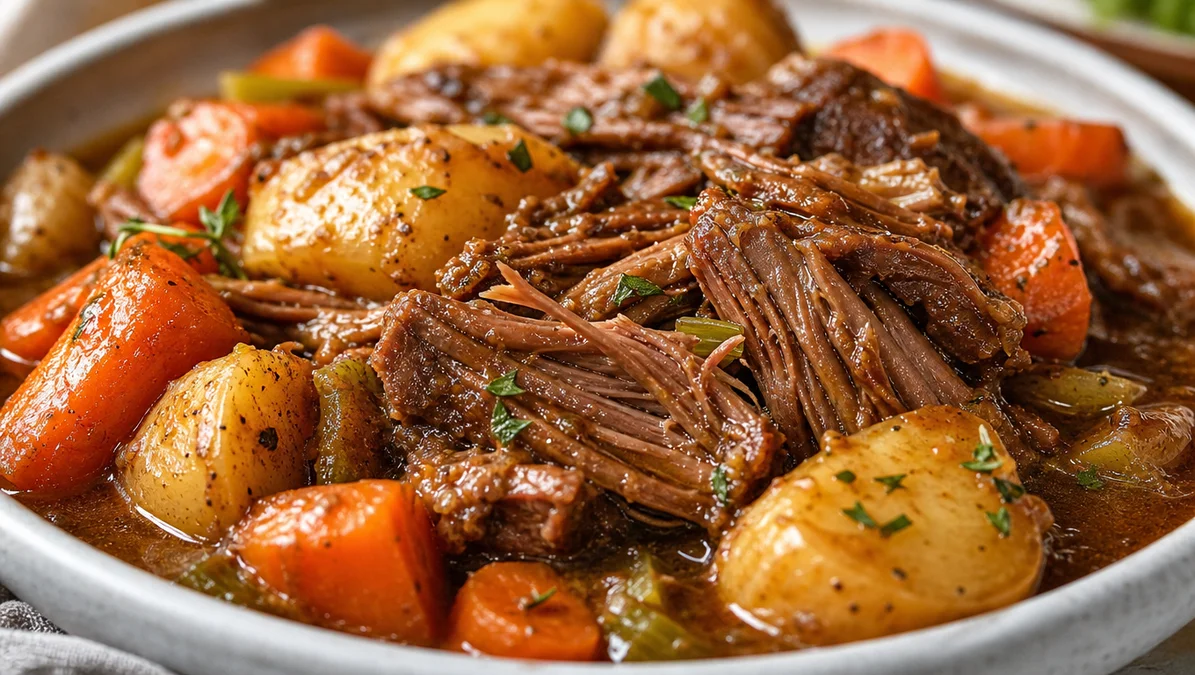
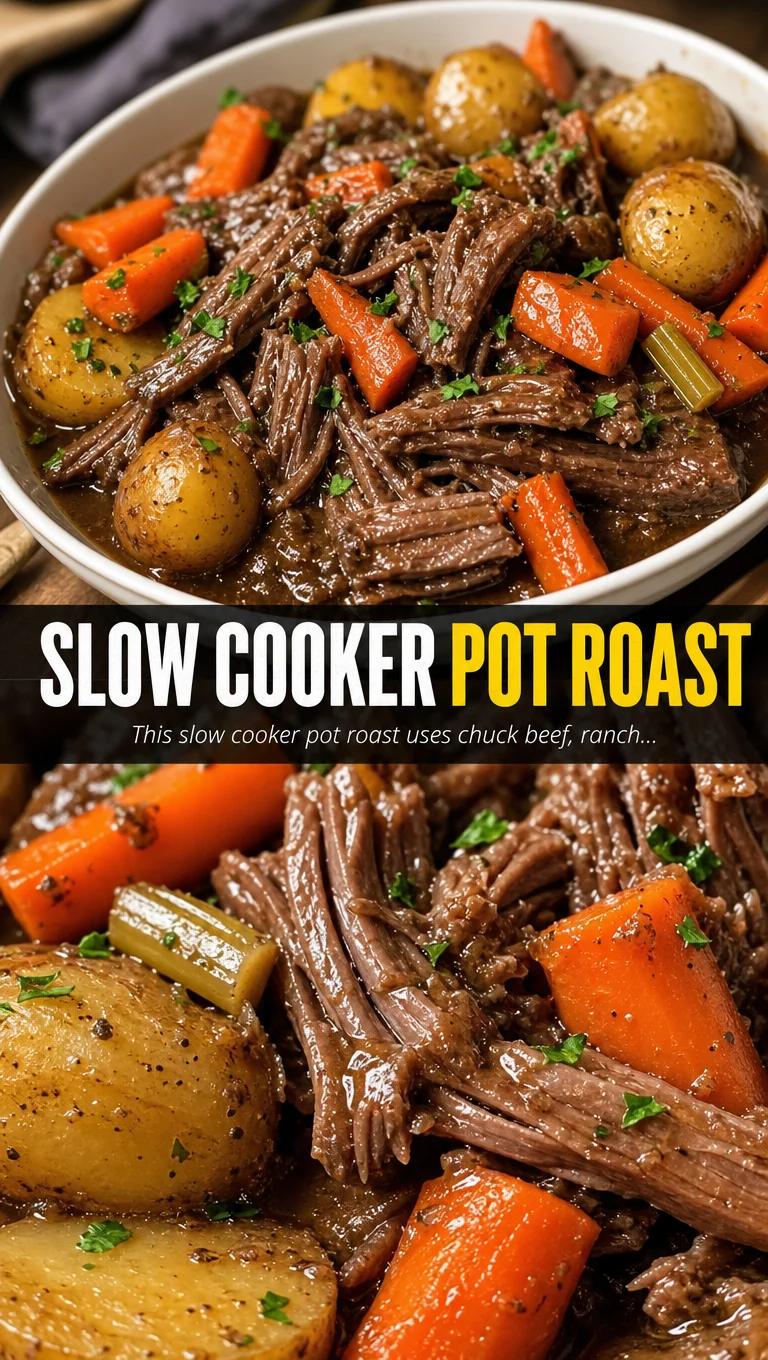
This incredibly tender slow cooker pot roast uses chuck beef, ranch seasoning, and brown gravy mix. Add potatoes, carrots, and celery for an easy weeknight dinner.
Ingredients
Instructions
Pat the chuck beef roast dry with paper towels. This step is crucial because moisture on the surface will steam the meat instead of searing it, preventing the development of the rich, deep flavors from the Maillard reaction. Season the roast generously on all sides with salt and black pepper. Heat 2 tablespoons of olive oil in a large heavy-bottomed skillet or Dutch oven over medium-high heat until it shimmers. Carefully place the roast in the hot oil and sear for 3-4 minutes per side, without moving it, until a deep brown crust forms. Use tongs to turn the roast, searing all sides including the ends. The crust locks in juices and adds incredible savory depth to the final gravy. Transfer the seared roast to a plate and set aside.
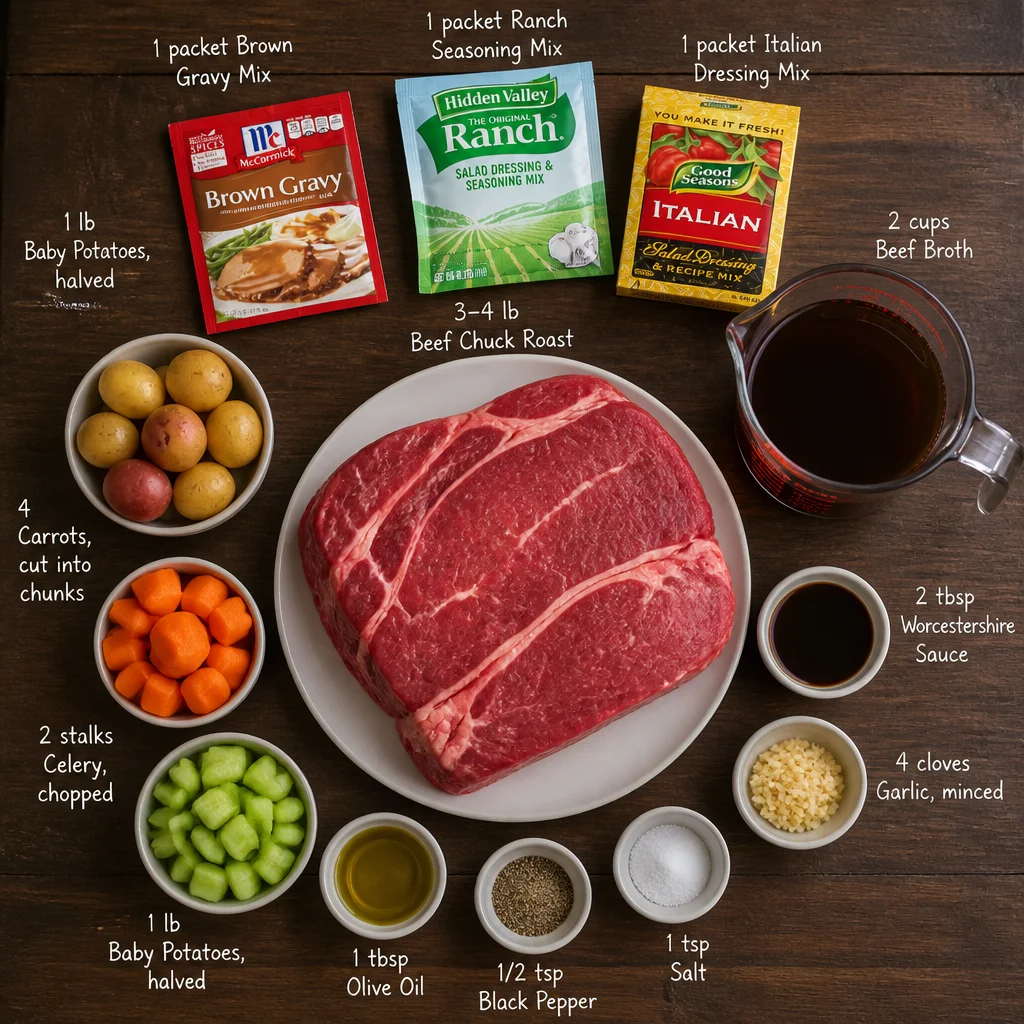
In a small bowl, combine the ranch seasoning mix, brown gravy mix, and dry Italian salad dressing mix. Whisk together until evenly blended. These three packets are the magic behind the ultra-flavorful, savory gravy that makes this pot roast so addictive. The ranch adds tangy buttermilk notes and herbs, the gravy mix provides rich beefy depth and thickening, and the Italian dressing brings a subtle zing of vinegar and garlic. Sprinkle about half of this seasoning mixture over the seared roast, pressing it into the crust. Reserve the remaining half for the cooking liquid.
Place the baby potatoes (halved if larger than golf ball), carrot chunks, and celery pieces into the bottom of a 6-quart or larger slow cooker. The vegetables create a natural rack for the roast to sit on, preventing it from stewing in the liquid and allowing even heat circulation. They also absorb the savory drippings and become incredibly tender. Pour the beef broth (or water) into the slow cooker, then sprinkle the remaining seasoning mixture over the vegetables and broth. Stir gently to combine.

Nestle the seasoned chuck roast on top of the vegetables, fat side up if possible. The fat cap will render slowly during cooking, basting the meat and adding moisture and flavor. Place the lid securely on the slow cooker. Cook on LOW for 8-9 hours or on HIGH for 5-6 hours. Low and slow is highly recommended for the most tender, fork-shreddable results. The roast is done when it pulls apart easily with two forks and the internal temperature reaches at least 195°F (90°C) for optimal collagen breakdown. Avoid opening the lid during cooking to maintain a steady temperature.
Once cooked, carefully remove the roast and vegetables to a serving platter using a slotted spoon. Let the roast rest for 10-15 minutes loosely tented with foil. Meanwhile, skim any excess fat from the surface of the cooking liquid in the slow cooker. If you prefer a thicker gravy, transfer the liquid to a saucepan and bring to a simmer. Whisk in a slurry of 2 tablespoons cornstarch mixed with 2 tablespoons cold water, and cook for 2-3 minutes until thickened. Shred the roast into large chunks or slice against the grain. Serve the beef and vegetables drizzled with the rich, savory gravy. Garnish with fresh chopped parsley if desired.
For best results
- Choosing the right cut of beef is paramount for a successful pot roast. Chuck roast is the gold standard because it comes from the shoulder area, which contains a good amount of connective tissue and marbling. When cooked low and slow, the collagen breaks down into gelatin, creating that melt-in-your-mouth texture and enriching the gravy. Avoid lean cuts like sirloin or round, as they will dry out and become tough. Look for a roast with visible fat marbling throughout, ideally 3-4 pounds for a 6-quart slow cooker. If your roast has a thick fat cap, leave it on during cooking but trim any hard, yellow fat.
- Do not skip the searing step! While it adds extra time, searing is essential for developing deep, complex flavors through the Maillard reaction. This browning creates hundreds of flavor compounds that cannot be achieved by slow cooking alone. For the best sear, pat the meat extremely dry, use a heavy pan (cast iron is ideal), and don't crowd the pan. If you're short on time, you can use a kitchen torch to brown the surface, but pan-searing yields the best crust. The fond (browned bits) left in the pan can be deglazed with a splash of broth and added to the slow cooker for even more flavor.
- Layer your ingredients strategically in the slow cooker. Place root vegetables like potatoes, carrots, and celery at the bottom, as they take longer to cook and benefit from being submerged in the liquid. The roast sits on top, allowing the fat to render down over the vegetables. This arrangement also prevents the meat from becoming waterlogged. If you add softer vegetables like mushrooms or peas, do so during the last 30 minutes of cooking to keep them from turning mushy. For the best texture, cut all vegetables into uniform, bite-sized pieces.
- To achieve a thick, restaurant-quality gravy without using cornstarch, you can rely on the natural starches from the potatoes. As the potatoes cook, they release some starch into the liquid, which naturally thickens it. If you prefer a clear, glossy gravy, skip the cornstarch slurry and instead mash a few of the cooked potato chunks directly into the liquid, then whisk until smooth. This adds body and a subtle earthy sweetness. For a silky finish, strain the gravy through a fine-mesh sieve before serving.
- Leftover pot roast is a gift that keeps on giving. The flavors meld and deepen overnight, making it even more delicious the next day. Store leftovers in an airtight container in the refrigerator for up to 4 days. The congealed fat can be easily removed from the top before reheating. To reheat, place the beef and vegetables in a covered baking dish with a splash of broth and warm in a 300°F (150°C) oven for 20-30 minutes, or gently reheat on the stovetop in a saucepan over low heat. The meat can also be shredded and used in tacos, sandwiches, or over rice.
- For a richer, more complex flavor profile, consider adding aromatics beyond the seasoning packets. A quartered onion, a few cloves of garlic (smashed), a sprig of fresh rosemary, and a couple of bay leaves placed in the slow cooker will infuse the meat and gravy with herbal notes. You can also add a tablespoon of Worcestershire sauce or balsamic vinegar to the broth for extra umami and acidity that balances the richness. If you enjoy a bit of heat, add a pinch of red pepper flakes or a chopped chipotle pepper in adobo sauce.
- If you need to speed up the cooking process, you can cook on HIGH for 5-6 hours, but the meat will be slightly less tender than if cooked on LOW. The low setting allows the collagen to break down more gradually, resulting in a more succulent texture. If you're using a frozen roast, do not place it directly into the slow cooker, as it will take too long to reach a safe temperature and may result in uneven cooking. Instead, thaw it completely in the refrigerator before searing and cooking.
Variations
- For a classic pot roast with a red wine twist, replace 1/2 cup of the beef broth with a dry red wine like Cabernet Sauvignon or Merlot. The wine adds acidity and depth that complements the beef beautifully. Add 2 tablespoons of tomato paste along with the seasoning packets for an even richer, more robust gravy. Follow the same cooking instructions, but note that the alcohol will cook off during the long simmer, leaving only the concentrated flavor. This variation pairs wonderfully with creamy mashed potatoes or crusty bread for dipping.
- Make this recipe gluten-free by using certified gluten-free ranch seasoning, brown gravy mix, and Italian dressing mix. Many brands offer gluten-free versions, or you can make your own blends using herbs and spices. Ensure the beef broth is also gluten-free. The cooking method remains exactly the same, and the result is just as tender and flavorful. Serve with roasted or mashed potatoes to keep the meal entirely gluten-free and satisfying.
- For a lighter, healthier version, use a leaner cut like bottom round or rump roast, though the meat will be less tender. To compensate, add 1 tablespoon of unflavored gelatin to the broth—this mimics the collagen from a fattier cut and improves texture. Reduce the olive oil used for searing to 1 teaspoon, and skip the gravy packet to lower sodium. Increase the vegetables, adding bell peppers, zucchini, or green beans during the last hour of cooking. This variation is perfect for those watching their calorie or fat intake without sacrificing flavor.
- Transform this pot roast into a Mexican-inspired dish by swapping the Italian dressing mix for a packet of taco seasoning. Add a can of diced tomatoes with green chiles (Rotel) and a handful of chopped cilantro. Serve the shredded beef over rice, in warm tortillas, or as a filling for burrito bowls. Top with avocado, sour cream, and shredded cheese for a complete fiesta. The cooking time remains the same, and the result is a zesty, crowd-pleasing twist on the classic.
- For an herby, French-inspired version, omit the ranch and Italian dressing packets. Instead, season the roast with salt, pepper, and herbes de Provence (or a mix of thyme, rosemary, and oregano). Add 2 cloves of minced garlic, 2 bay leaves, and a cup of beef broth. After cooking, stir in a tablespoon of Dijon mustard and a splash of heavy cream to the gravy for a luxurious finish. Serve with crusty baguette slices and a green salad for an elegant yet easy dinner.
Nutrition
- Calories385 kcal
- Total Fat18g
- Saturated Fat7g
- Cholesterol95mg
- Sodium980mg
- Total Carbohydrates22g
- Dietary Fiber4g
- Sugars5g
- Protein34g