
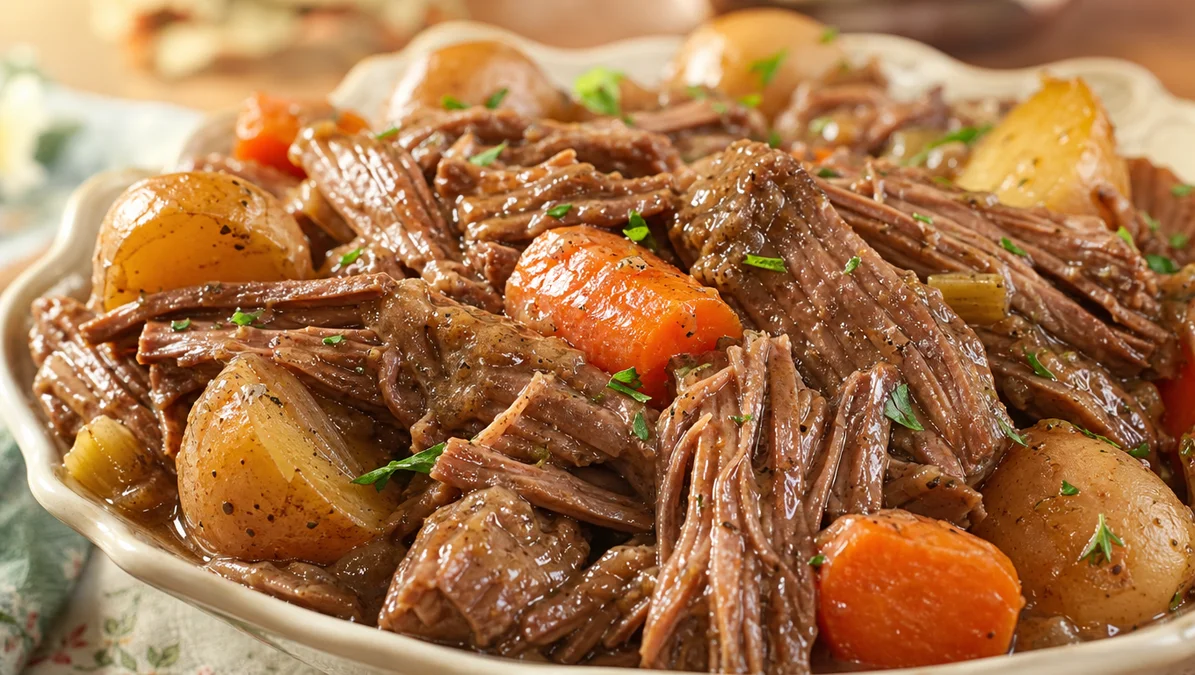
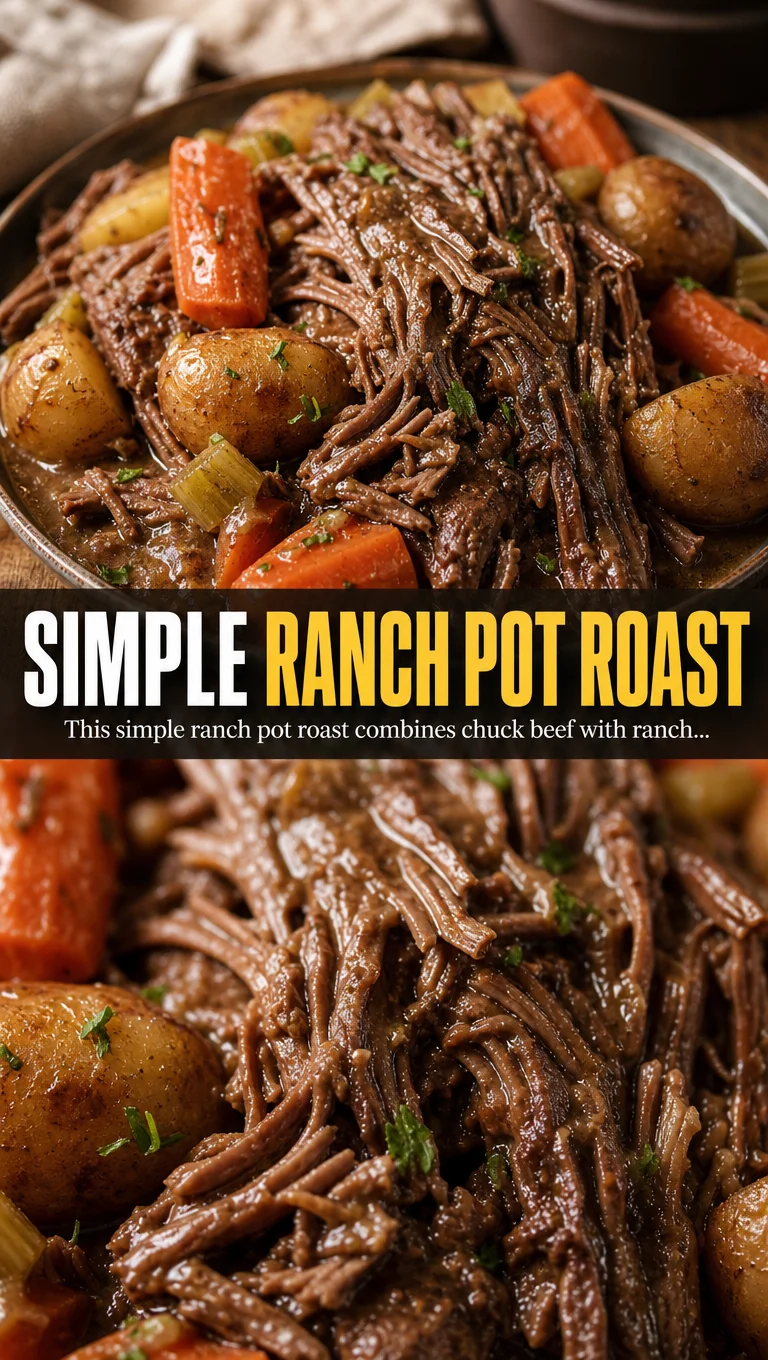
This simple ranch pot roast combines chuck beef with ranch seasoning, brown gravy mix, and Italian dressing for effortless flavor. Add potatoes, carrots, and celery to your crockpot for a…
Ingredients
Instructions
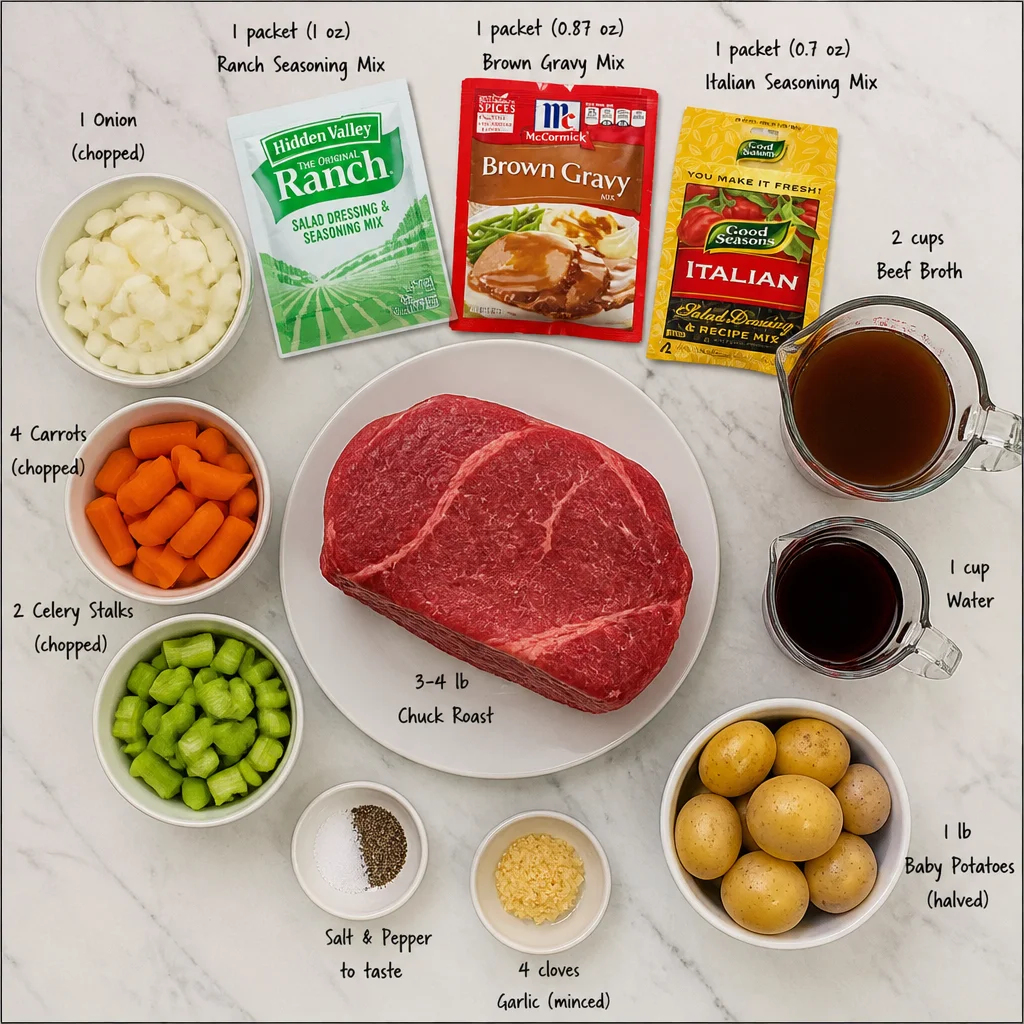
First, gather all your ingredients and equipment. You will need a large slow cooker (at least 6-quart capacity), a heavy skillet or Dutch oven for searing, tongs, a sharp knife, and a cutting board. Pat the chuck roast dry with paper towels—this is crucial because moisture on the surface will steam rather than sear, preventing that deep brown crust that builds flavor. Season the roast generously on all sides with salt and black pepper. The salt not only seasons but also helps draw moisture to the surface, which then evaporates during searing, creating a better crust. Let the roast sit at room temperature for 15-20 minutes while you prepare the vegetables.
Now it’s time to sear the roast. Heat 2 tablespoons of olive oil in a heavy skillet over medium-high heat until the oil shimmers and just begins to smoke. Carefully place the seasoned roast in the hot oil—you should hear a loud sizzle. Do not move the roast for 3-4 minutes per side; let it develop a deep mahogany crust. Use tongs to turn the roast, searing all sides including the ends. The crust adds incredible depth of flavor through the Maillard reaction—a chemical reaction between amino acids and sugars that creates hundreds of savory compounds. This step is non-negotiable for a rich, beefy pot roast. Once seared, transfer the roast to a plate and set aside. Do not clean the skillet—the browned bits (fond) stuck to the bottom are pure flavor gold.
In a small bowl, combine the ranch seasoning mix, brown gravy mix, and dry Italian salad dressing mix. Stir to blend thoroughly. These three packets create a powerhouse of savory, tangy, and herbaceous flavors that will infuse the meat and vegetables as they slow cook. The ranch provides buttermilk and herb notes, the gravy mix adds a savory umami base and helps thicken the cooking liquid, and the Italian dressing brings a bright acidity that balances the richness of the beef.
Arrange the halved baby potatoes, carrot chunks, and celery pieces in an even layer at the bottom of your slow cooker. This vegetable bed serves two purposes: it elevates the roast above the direct heat of the cooker’s bottom, preventing it from overcooking, and it absorbs the delicious drippings as they cook. The vegetables will become tender and infused with beefy flavor. Sprinkle about half of the seasoning mixture over the vegetables and toss gently to coat.
Place the seared chuck roast on top of the vegetables in the slow cooker. Sprinkle the remaining seasoning mixture evenly over the top of the roast. Pour 1 cup of low-sodium beef broth around the roast—do not pour it directly over the seasoning, as that would wash it off. The broth will mix with the seasonings and the natural juices from the meat as it cooks, creating a rich, savory gravy. Cover the slow cooker with its lid and set to LOW heat. Cook for 8 hours, or on HIGH for 5-6 hours. Low and slow is preferable for tougher cuts like chuck because it allows the collagen in the connective tissue to break down into gelatin, resulting in fork-tender, melt-in-your-mouth meat. Avoid opening the lid during cooking—each time you do, heat escapes and adds 20-30 minutes to the cook time.
After 8 hours on LOW, the roast should be fork-tender—you should be able to easily pull it apart with two forks. The vegetables should be soft but not mushy. Carefully remove the roast and vegetables to a serving platter using tongs and a slotted spoon. Tent loosely with foil to keep warm. To make the gravy, skim any excess fat from the surface of the cooking liquid. If you prefer a thicker gravy, whisk 2 tablespoons of cornstarch with 2 tablespoons of cold water to make a slurry, then stir it into the hot liquid in the slow cooker. Turn the heat to HIGH and let it simmer uncovered for 10-15 minutes until thickened. Taste and adjust seasoning with salt and pepper if needed. The gravy will be rich, savory, and packed with flavor from the seasonings and beef drippings.
To serve, shred the beef into large chunks or slice it against the grain into thick pieces. Arrange the shredded beef and vegetables on plates, then ladle the gravy generously over the top. Garnish with fresh chopped parsley for a pop of color and freshness. This pot roast pairs beautifully with crusty bread, egg noodles, or mashed potatoes to soak up every last drop of gravy. Leftovers can be stored in an airtight container in the refrigerator for up to 4 days, and they actually taste even better the next day as the flavors continue to meld.
For best results
- Choosing the right cut of beef is essential for a tender pot roast. Chuck roast is ideal because it comes from the shoulder area, which gets a lot of exercise and thus has abundant connective tissue. When cooked low and slow, that collagen breaks down into gelatin, giving the meat a luscious, moist texture. Look for a roast with good marbling—thin streaks of fat running through the meat—as this adds flavor and prevents dryness. If chuck isn't available, bottom round or brisket can work, but they may be leaner and slightly less tender.
- Searing the roast is a step you should never skip. While it adds 10-15 minutes to prep time, the flavor payoff is enormous. The browned crust creates a depth of savory, almost caramelized taste that cannot be achieved by simply dumping raw meat into the slow cooker. For the best sear, make sure the pan is hot enough—the oil should be shimmering and nearly smoking. Pat the meat very dry before seasoning, as any moisture will cause steam and prevent browning. Use a heavy pan like cast iron or stainless steel for even heat distribution.
- The three-packet seasoning blend is the secret to this recipe's ease and flavor. However, be mindful of the sodium content—each packet contains salt, so you may not need to add extra salt to the dish. To control sodium, look for low-sodium or reduced-sodium versions of the mixes. You can also make your own ranch seasoning blend using dried buttermilk, parsley, dill, garlic powder, onion powder, and salt. Homemade versions allow you to adjust the salt and avoid preservatives.
- Don't overcrowd the slow cooker. For even cooking, the roast should have some space around it, and the vegetables should be in a single layer at the bottom. If you need to double the recipe, use two slow cookers or a larger 8-quart model. Overcrowding can lead to uneven cooking and a soupy consistency because the ingredients release moisture that has nowhere to evaporate. Also, resist the urge to add extra liquid—the meat and vegetables will release their own juices, and too much liquid will result in a thin, watery gravy.
- To make the gravy extra rich, you can deglaze the searing pan after removing the roast. Pour a splash of beef broth or red wine into the hot skillet and scrape up all the browned bits with a wooden spoon. Add this liquid to the slow cooker at the beginning of cooking. Those browned bits are packed with concentrated beef flavor that will deepen the overall taste of the gravy. If using wine, choose a dry red like Cabernet Sauvignon or Merlot—it adds complexity and a subtle fruity note that pairs beautifully with the ranch seasoning.
- Pot roast leftovers are incredibly versatile. Shred the leftover beef and use it in tacos, sandwiches, or over salads. The vegetables can be mashed into a rustic side dish or pureed into a soup with some broth. The gravy can be frozen in ice cube trays and used to flavor soups, stews, or pasta sauces. Store leftovers in airtight containers and refrigerate for up to 4 days, or freeze for up to 3 months. When reheating, add a splash of broth to restore moisture and heat gently on the stovetop or in the microwave.
- If you prefer a thicker gravy without cornstarch, you can remove the lid during the last 30 minutes of cooking and turn the heat to HIGH. This allows some of the liquid to evaporate, naturally concentrating the flavors and thickening the sauce. Alternatively, you can mash a few of the cooked potatoes and stir them into the liquid to act as a natural thickener. This adds body and a subtle potato flavor that complements the dish.
Variations
- For a low-carb or keto-friendly version, omit the potatoes and increase the amount of low-carb vegetables such as cauliflower florets, turnips, or radishes. Cauliflower absorbs the gravy beautifully and becomes tender without the starch. You can also add mushrooms, which add an earthy umami flavor that pairs well with the ranch seasoning. Serve the pot roast over cauliflower mash or zucchini noodles for a complete low-carb meal.
- To give this pot roast a Mediterranean twist, replace the ranch seasoning with a blend of dried oregano, basil, rosemary, and garlic powder. Add a can of diced tomatoes (drained) and a handful of pitted Kalamata olives during the last hour of cooking. The tomatoes add acidity and the olives bring a briny, salty contrast. Serve with crusty bread or over couscous to soak up the Mediterranean-infused juices.
- For a spicy version, add a diced jalapeño or serrano pepper along with the vegetables. You can also stir in 1-2 teaspoons of chipotle powder or smoked paprika to the seasoning mix. The smokiness of chipotle complements the beef and adds a gentle heat. Garnish with fresh cilantro and a squeeze of lime juice before serving. This variation works well in tacos or burrito bowls.
- If you want to use a different protein, boneless beef short ribs are an excellent substitute for chuck roast. They are even more marbled and become incredibly tender. Alternatively, pork shoulder or pork butt can be used for a pulled pork-style pot roast—just reduce the cook time to 6-8 hours on LOW. The seasoning blend works beautifully with pork, creating a savory, tangy flavor profile. You can also use a whole chicken (about 4-5 lbs) for a lighter version; cook on LOW for 6-7 hours until the chicken is fall-apart tender.
- To make this recipe dairy-free, ensure that the ranch seasoning mix you use is dairy-free (some contain buttermilk powder). You can make your own dairy-free ranch by combining dried dill, parsley, garlic powder, onion powder, salt, and pepper. The brown gravy mix typically contains wheat flour but no dairy, but check the label. The Italian dressing mix is usually dairy-free. Serve with dairy-free sides like roasted vegetables or a salad.
- For a more traditional pot roast flavor, replace the Italian dressing mix with a packet of onion soup mix. This combination of ranch, gravy, and onion soup creates a classic French onion-inspired pot roast. Add a splash of Worcestershire sauce and a few sprigs of fresh thyme for extra depth. The result is a deeply savory, aromatic dish that tastes like it simmered all day in a French bistro kitchen.
Nutrition
- Calories450 kcal
- Total Fat22g
- Saturated Fat8g
- Cholesterol120mg
- Sodium980mg
- Total Carbohydrates28g
- Dietary Fiber4g
- Sugars6g
- Protein38g