
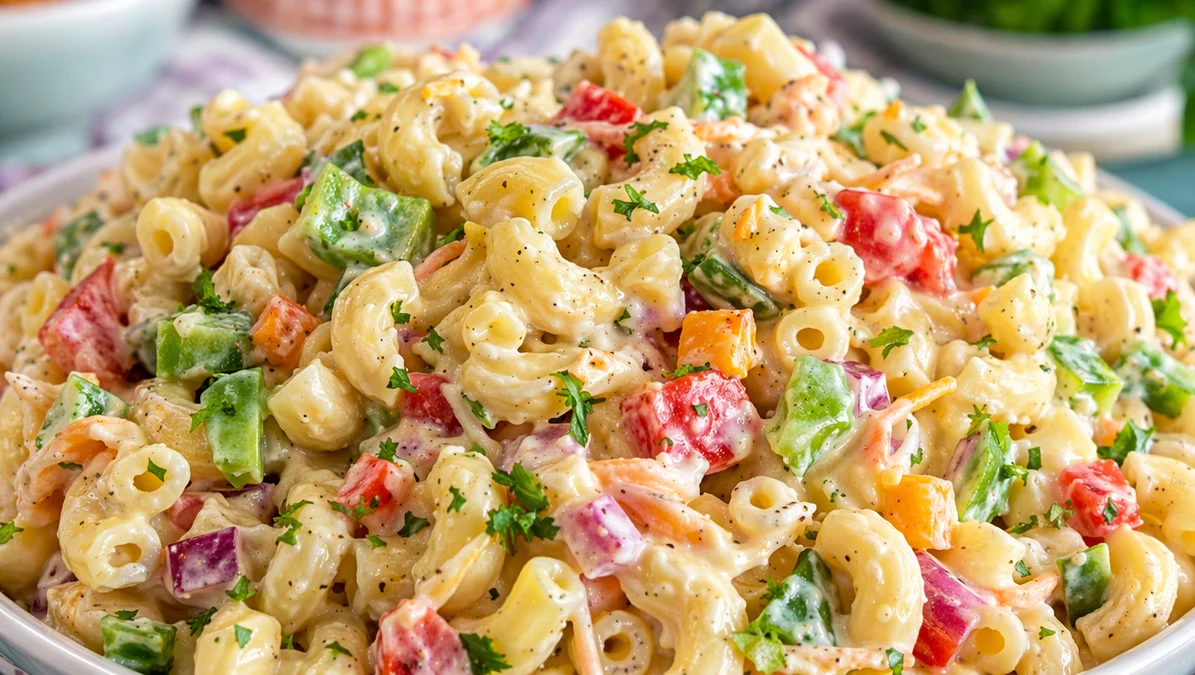
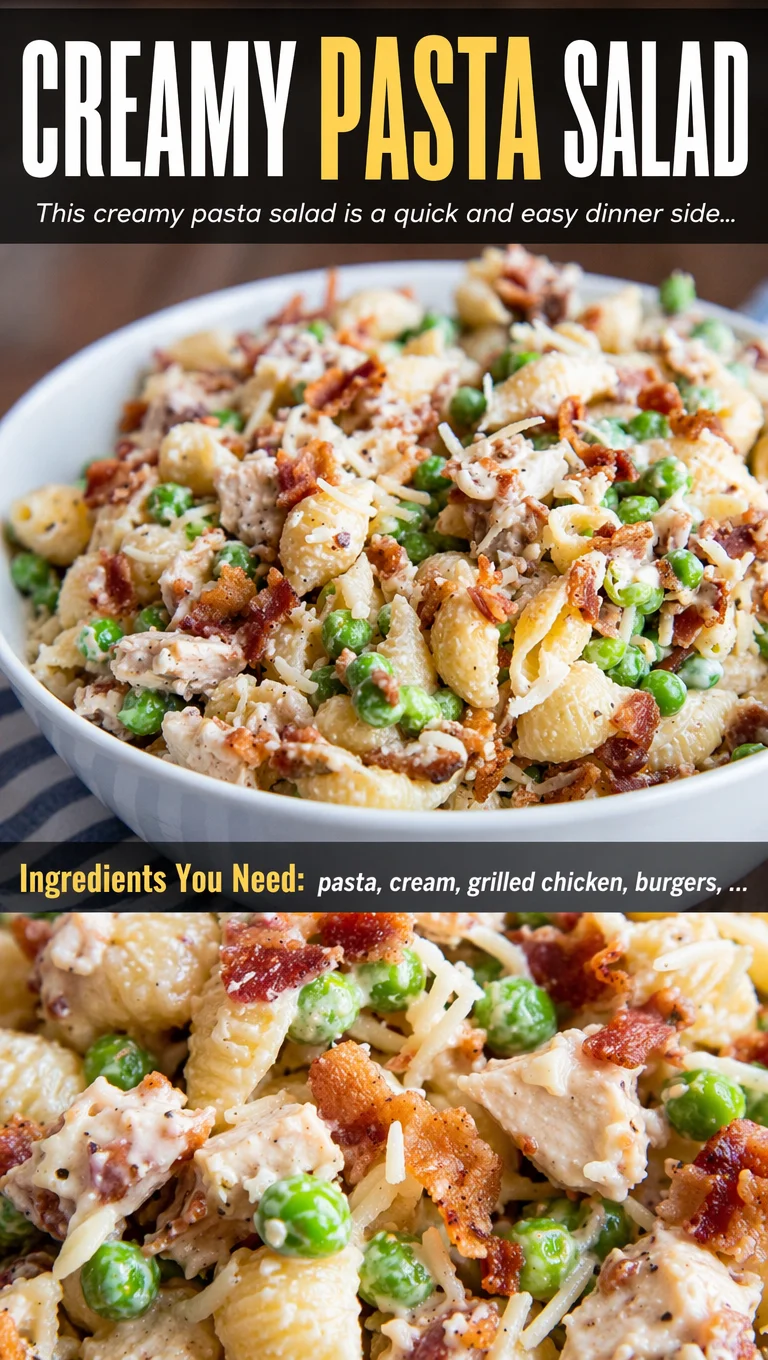
This creamy pasta salad is a quick and easy dinner side dish perfect for weeknight meals. Made with a simple creamy dressing, tender pasta, and crunchy vegetables, it's a budget-friendly…
Ingredients
Instructions
Bring a large pot of generously salted water to a rolling boil. The water should taste like the sea—this is your only chance to season the pasta from within. Add 8 ounces of elbow macaroni and cook according to package directions until al dente, typically 7-9 minutes. Al dente means the pasta is tender but still has a slight bite at the center; this is crucial because the pasta will continue to soften slightly as it absorbs the creamy dressing later. Overcooking leads to mushy salad. Stir occasionally to prevent sticking. Once done, drain the pasta in a colander and rinse immediately under cold running water to stop the cooking process and remove excess starch. Shake the colander well to remove as much water as possible. Drizzle with a teaspoon of olive oil and toss gently to prevent the noodles from clumping together while they cool.
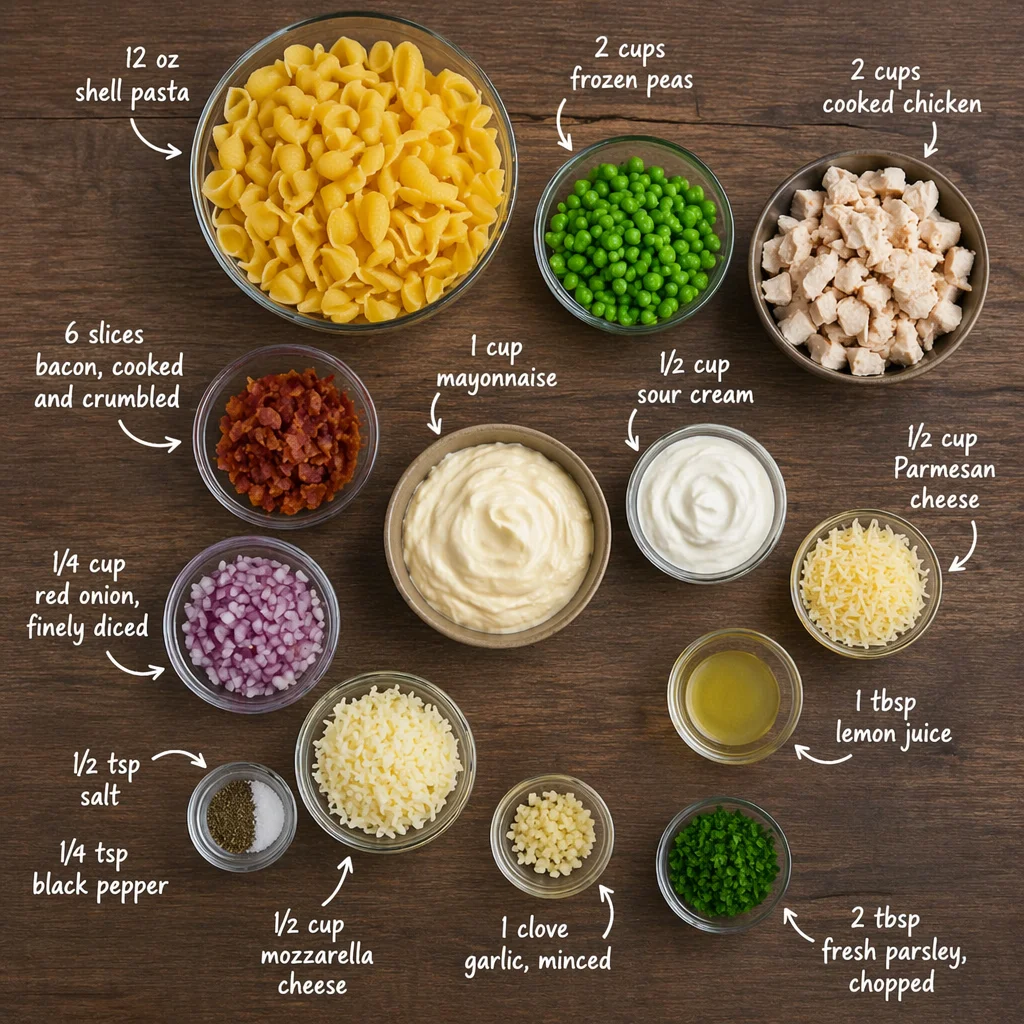
While the pasta cools, prepare the creamy dressing. In a medium mixing bowl, whisk together 1/2 cup heavy cream, 1/4 cup mayonnaise, 2 tablespoons apple cider vinegar, 1 tablespoon Dijon mustard, 1 teaspoon granulated sugar, 1/2 teaspoon salt, and 1/4 teaspoon black pepper. Whisk vigorously until the mixture is smooth, pale, and slightly thickened. The combination of cream and mayonnaise gives a rich, velvety base that clings beautifully to the pasta. The vinegar adds brightness and cuts through the richness, while the mustard provides a subtle tang and helps emulsify the dressing. Taste the dressing and adjust seasoning—it should be slightly more salty and tangy than you think, because it will mellow when mixed with the pasta and veggies. If you prefer a thinner dressing, add a tablespoon of milk; for a thicker, more decadent texture, add an extra tablespoon of mayonnaise.
Now it’s time to chop your vegetables. Dice 1/2 cup red bell pepper and 1/2 cup green bell pepper into small, uniform pieces about 1/4 inch in size. Uniformity ensures even distribution and a pleasant crunch in every bite. For the cucumber, halve it lengthwise, scoop out the watery seeds with a spoon (this prevents the salad from becoming watery), then dice into similar-sized pieces. Finely chop 1/4 cup red onion—if you find raw onion too pungent, soak the chopped onion in a bowl of ice water for 5 minutes, then drain; this tames the bite while keeping the crunch. Chop 2 tablespoons fresh parsley, stems removed. If you’re adding optional grilled chicken, dice it into bite-sized cubes. The chicken adds protein and turns this side dish into a satisfying main course.
In a large mixing bowl, combine the cooled pasta, all the chopped vegetables, and the optional chicken or cheese if using. Pour the creamy dressing over the top. Using a rubber spatula or large spoon, gently fold everything together until every piece of pasta and vegetable is evenly coated. Be careful not to mash the pasta—fold rather than stir vigorously. The dressing should cling to the pasta, not pool at the bottom. If the salad looks dry, add a splash of milk or extra mayonnaise. Cover the bowl with plastic wrap and refrigerate for at least 30 minutes before serving. This chilling time allows the flavors to meld and the pasta to absorb the dressing, resulting in a more cohesive and flavorful salad.
Before serving, give the pasta salad a good stir and taste for seasoning. You may want to add a pinch more salt or a squeeze of lemon juice to brighten it up. Transfer to a serving bowl and garnish with a sprinkle of fresh parsley and a few extra bell pepper dice for color. Serve chilled or at room temperature. This creamy pasta salad pairs beautifully with grilled chicken, burgers, or as a standalone light meal. Enjoy!
For best results
- Choosing the right pasta shape matters more than you think. While elbow macaroni is classic, rotini, fusilli, or farfalle are excellent choices because their ridges and curves trap the creamy dressing, ensuring every bite is flavorful. Avoid long, thin pastas like spaghetti or angel hair, as they tend to clump and don't hold the dressing well. Cook the pasta to al dente—firm to the bite—because it will continue to soften as it sits in the dressing. Overcooked pasta becomes mushy and can break apart when stirred. Remember to rinse the pasta with cold water after draining to stop the cooking and remove surface starch, which prevents the salad from becoming gummy.
- The key to a not-watery pasta salad is managing moisture from vegetables. Cucumbers, in particular, release a lot of water as they sit. To avoid a soggy salad, always remove the seeds from the cucumber by halving it lengthwise and scraping out the center with a spoon. Then dice the flesh and let it sit on a paper towel for a few minutes to absorb excess moisture. Similarly, if using tomatoes, remove the seeds and pulp before dicing. For bell peppers, there's no need to remove seeds beyond the core, but ensure they are dry. Also, make sure the pasta is thoroughly drained and cooled before mixing—any residual water will dilute the dressing.
- Let the salad rest in the refrigerator for at least 30 minutes, but ideally 2 hours or even overnight. This resting period is crucial for flavor development. The pasta absorbs some of the dressing, becoming more flavorful, and the vegetables meld with the creamy base. However, if you plan to make this ahead, consider reserving a little dressing to stir in just before serving, as the pasta may absorb more than you'd like overnight. Also, keep in mind that the saltiness can intensify over time, so you may want to season lightly at first and adjust before serving.
- For a dairy-free version, substitute the heavy cream with full-fat coconut milk (the canned kind, not the beverage) and use a vegan mayonnaise. The coconut milk adds a subtle sweetness that pairs surprisingly well with the tangy vinegar and mustard. If you're avoiding eggs, look for a vegan mayo made from aquafaba or avocado oil. The texture will still be creamy and satisfying. You can also use a dairy-free yogurt like plain coconut or soy yogurt for a lighter dressing. Just be aware that yogurt-based dressings tend to be thinner and may need a longer chilling time to thicken.
- To add a protein boost and turn this side into a main dish, grilled chicken is a classic choice. But don't stop there—cooked shrimp, crumbled bacon, diced ham, or even canned tuna (drained and flaked) work wonderfully. For a vegetarian protein, add a can of drained chickpeas or white beans. If you're adding meat, make sure it's fully cooked and cooled before mixing to avoid warming the salad and promoting bacterial growth. The salad should remain chilled or at cool room temperature when served.
- Storage and food safety: This creamy pasta salad can be stored in an airtight container in the refrigerator for up to 3 days. Because it contains dairy and mayonnaise, it should not be left at room temperature for more than 2 hours (1 hour if the ambient temperature is above 90°F). If you're taking it to a picnic or potluck, keep it in a cooler with ice packs. Do not freeze this salad—the dairy will separate and the texture will become grainy upon thawing. If you want to make it even more budget-friendly, use dried herbs instead of fresh, and substitute the heavy cream with whole milk plus a tablespoon of melted butter (though the texture will be less rich).
Variations
- Mediterranean Twist: Replace the creamy dressing with a Greek yogurt-based dressing (1 cup plain Greek yogurt, 2 tablespoons lemon juice, 1 tablespoon olive oil, 1 clove minced garlic, salt, and pepper). Swap the bell peppers and cucumber for chopped Kalamata olives, sun-dried tomatoes, artichoke hearts, and crumbled feta cheese. Add a handful of fresh spinach or arugula for a peppery kick. This variation is lighter, higher in protein, and bursting with Mediterranean flavors. Serve it alongside grilled lamb or fish for a complete meal.
- Southwest Fiesta: Transform the salad with a smoky, spicy twist. Use a dressing made from 1/2 cup sour cream, 1/4 cup mayonnaise, 2 tablespoons lime juice, 1 teaspoon chili powder, 1/2 teaspoon cumin, and a pinch of cayenne. Replace the bell peppers with fire-roasted corn (fresh or canned), black beans (rinsed), diced avocado, and chopped cilantro. Top with crushed tortilla chips for crunch. This version pairs perfectly with tacos, fajitas, or grilled chicken. It's also excellent as a filling for stuffed bell peppers.
- Caprese-Inspired: For a fresh, Italian-style salad, use a simple vinaigrette instead of creamy dressing: 1/4 cup olive oil, 2 tablespoons balsamic vinegar, 1 teaspoon Dijon mustard, salt, and pepper. Add halved cherry tomatoes, fresh mozzarella pearls (or diced fresh mozzarella), and fresh basil leaves torn into pieces. Omit the bell peppers and cucumber. This variation is best served at room temperature and is a fantastic side for grilled meats or as a light lunch on its own. The balsamic glaze drizzled on top adds a beautiful sweet-tart finish.
- Vegan Creamy Pasta Salad: Create a completely plant-based version by using vegan mayonnaise (or blending soaked cashews with water, lemon juice, and apple cider vinegar for a homemade cream). Use a plant-based cream alternative like oat cream or coconut cream. Add colorful vegetables like shredded carrots, snow peas, and cherry tomatoes. For extra protein, toss in some edamame or tofu cubes. This version is just as creamy and satisfying as the original, and it's perfect for vegan gatherings or those with dairy sensitivities.
- Protein-Packed Power Salad: Boost the protein content significantly by using high-protein pasta (like chickpea or lentil pasta) and adding 1 cup of cooked quinoa or farro. Include a variety of protein sources: diced grilled chicken, hard-boiled eggs, and chickpeas. The dressing can be made with Greek yogurt and a scoop of unflavored protein powder (optional). This hearty salad will keep you full for hours and is ideal for post-workout meals or busy weeknight dinners. Serve it in a large bowl with a side of whole-grain bread.
Nutrition
- Calories215 kcal
- Total Fat12g
- Saturated Fat7g
- Cholesterol45mg
- Sodium180mg
- Total Carbohydrates26g
- Dietary Fiber1g
- Sugars17g
- Protein3g