
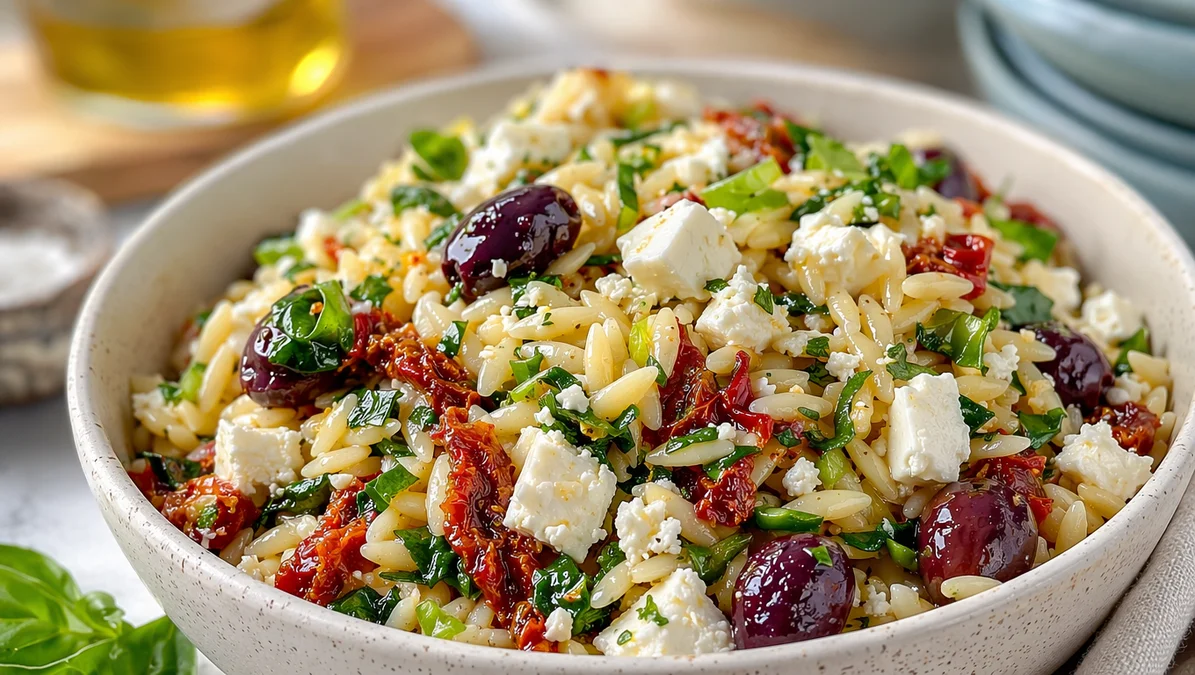
This Light Orzo Pasta Salad is a quick and easy dinner idea that feels fresh and satisfying. Made with tender orzo, creamy feta, and sun dried tomatoes, it's a perfect…
Ingredients
Instructions
Begin by bringing a large pot of salted water to a rolling boil. The water should taste like the sea—this is your only chance to season the pasta from within. Add the orzo and cook according to package directions until al dente, typically about 8-10 minutes. Stir occasionally to prevent sticking. Orzo is a small rice-shaped pasta that can clump, so keep an eye on it. Once tender but still firm to the bite, drain it in a fine-mesh sieve and rinse briefly under cold running water to stop the cooking process. Shake off excess water and transfer to a large mixing bowl. Drizzle with a teaspoon of olive oil and toss gently to coat—this prevents the orzo from sticking together as it cools. Allow it to cool to room temperature, about 10 minutes, before adding the other ingredients. If you’re in a hurry, spread the orzo on a baking sheet to cool faster.
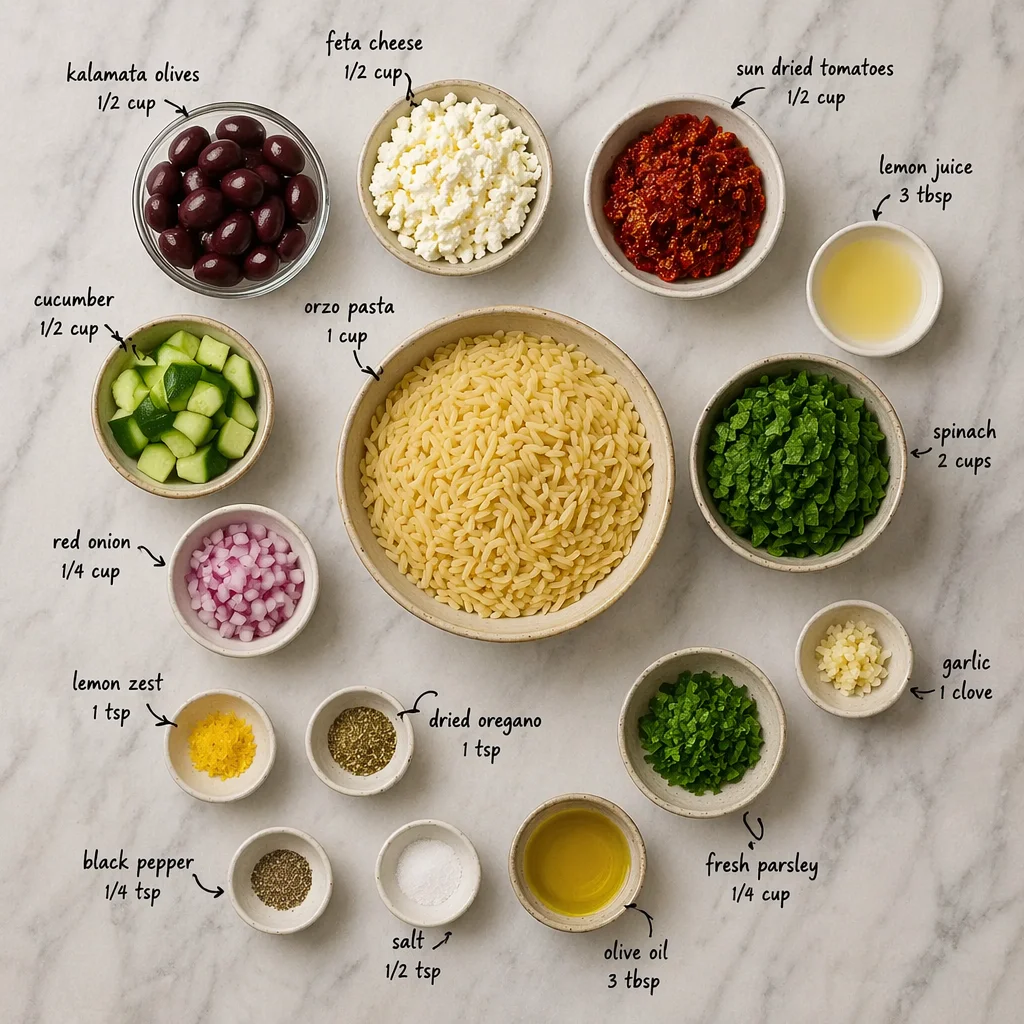
While the orzo cools, prepare the dressing. In a small bowl, whisk together the extra virgin olive oil and fresh lemon juice until emulsified. The oil and lemon will separate if left standing, so whisk just before using. Season with a pinch of salt and a few cracks of black pepper. For a more intense flavor, you can add a minced garlic clove or a teaspoon of Dijon mustard, but the simple vinaigrette lets the feta and sun dried tomatoes shine. Set aside.
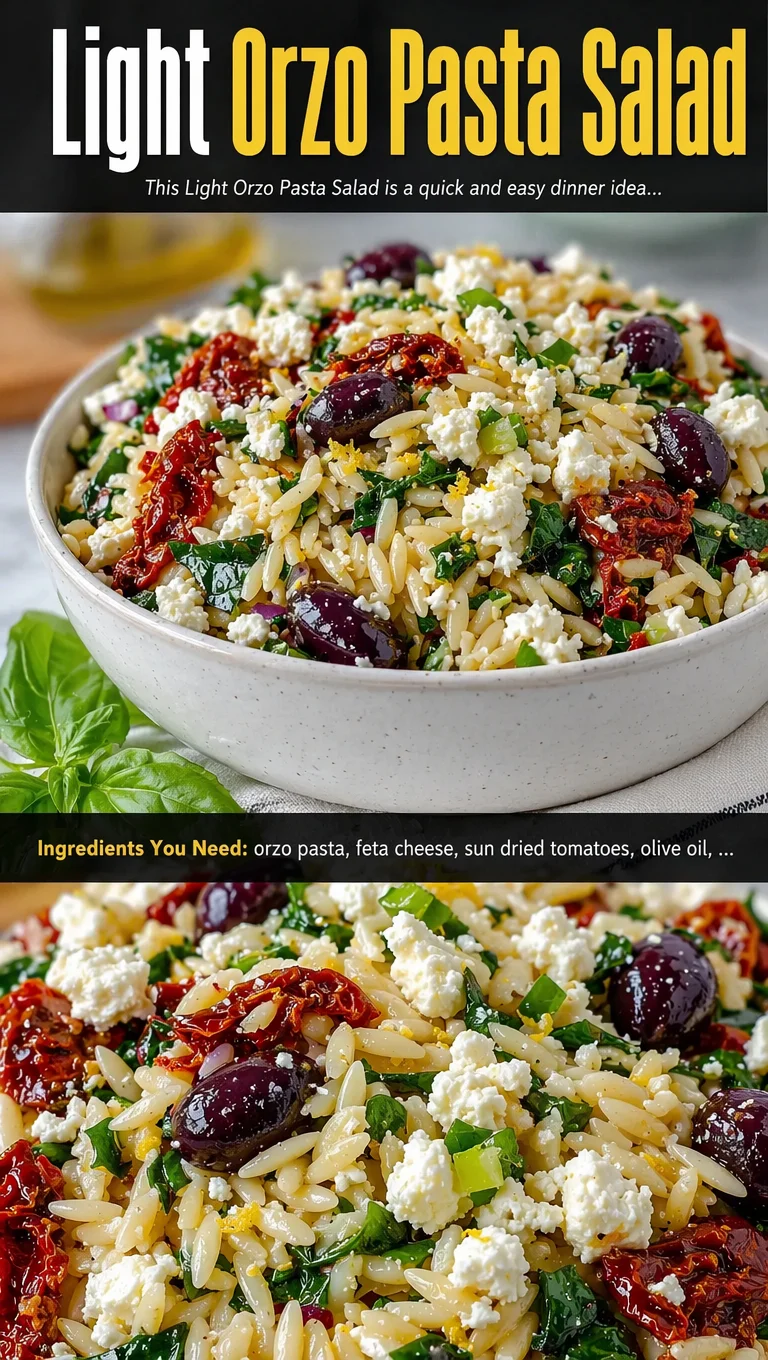
Now assemble the salad. To the cooled orzo, add the crumbled feta cheese and chopped sun dried tomatoes. If your sun dried tomatoes are packed in oil, you can pat them dry to reduce extra oil, or leave them as is for added richness. Pour the dressing over the mixture and toss gently with a rubber spatula or wooden spoon until everything is evenly coated. Be careful not to overmix, as the feta can break down into smaller crumbs—though that’s not a bad thing, as it distributes the salty flavor throughout.
Add the fresh basil and parsley, and toss once more. The herbs should be added last to preserve their bright color and fresh aroma. Taste and adjust seasoning—you may not need much salt because feta is naturally salty. If the salad seems dry, add another tablespoon of olive oil or a splash of the sun dried tomato oil. For a pop of brightness, squeeze a little extra lemon juice on top.
Serve immediately at room temperature, or cover and refrigerate for at least 30 minutes to let the flavors meld. This salad tastes even better after an hour in the fridge as the orzo absorbs the dressing. If serving chilled, let it sit at room temperature for 10 minutes before serving to take the chill off. Garnish with additional feta crumbles and a sprig of basil for a beautiful presentation. This salad is perfect as a light main course or a side dish alongside grilled chicken or fish.
For best results
- For the best texture, cook the orzo just until al dente—it will continue to soften slightly as it absorbs the dressing. Overcooked orzo becomes mushy and loses its pleasant bite. To test, taste a piece a minute before the package time; it should be tender but with a slight resistance at the center. Rinsing with cold water not only stops cooking but also removes excess starch, keeping the salad light and not gummy.
- Use high-quality feta cheese in brine, not the pre-crumbled dry kind. Feta in brine is creamier, tangier, and holds its shape better when tossed. If you can find sheep's milk feta, its rich, grassy flavor is unmatched. Crumble it by hand just before adding to the salad to preserve its texture. For a milder flavor, you can substitute with goat cheese or even fresh mozzarella pearls.
- Sun dried tomatoes come in two varieties: dry-packed (chewy, need rehydrating) and oil-packed (soft, ready to use). For this salad, oil-packed are ideal because they're already tender and flavorful. If using dry-packed, soak them in hot water for 10 minutes until pliable, then drain and chop. Reserve the soaking liquid or oil to add extra flavor to the dressing.
- Letting the salad rest in the refrigerator for at least 30 minutes is key to developing the flavors. The orzo absorbs the lemony vinaigrette, and the feta infuses the entire dish with its salty tang. However, don't let it sit overnight if you want the herbs to stay vibrant—the basil will darken. For meal prep, keep the herbs separate and add just before serving.
- This salad is incredibly versatile. You can bulk it up with protein like grilled chicken, shrimp, or chickpeas for a complete meal. Add a handful of arugula or spinach for extra greens, or toss in some Kalamata olives for a briny kick. Toasted pine nuts or walnuts add a lovely crunch. The possibilities are endless, so feel free to adapt based on what's in your pantry.
Variations
- Make it vegan by omitting the feta and adding a plant-based alternative like crumbled tofu marinated in lemon and nutritional yeast, or use a store-bought vegan feta. Sun dried tomatoes provide plenty of umami, so you won't miss the cheese. You can also add a tablespoon of capers for a briny pop.
- For a Greek-inspired twist, add chopped cucumber, red onion, and Kalamata olives. Swap the basil for fresh oregano or mint. This version pairs beautifully with grilled lamb or chicken souvlaki. The cucumber adds crunch and freshness, balancing the rich feta and tomatoes.
- Turn it into a grain bowl by substituting orzo with cooked quinoa, farro, or couscous. Each grain brings a different texture: quinoa is fluffy and protein-rich, farro is chewy and nutty, and couscous is light and quick-cooking. Adjust cooking times accordingly and follow the same assembly steps.
- If you prefer a creamier dressing, mix the olive oil and lemon juice with a tablespoon of Greek yogurt or mayonnaise. This creates a tangy, creamy coating that clings to the orzo. It's especially good if you're serving the salad as a main dish and want it to be more substantial.
- Add a protein boost with canned chickpeas (rinsed and drained), grilled chicken strips, or flaked tuna. For a vegetarian protein, try edamame or cubed extra-firm tofu. The orzo salad becomes a filling one-bowl meal perfect for lunch or dinner.
Nutrition
- Calories320 kcal
- Total Fat18g
- Saturated Fat6g
- Cholesterol25mg
- Sodium450mg
- Total Carbohydrates32g
- Dietary Fiber2g
- Sugars4g
- Protein8g