
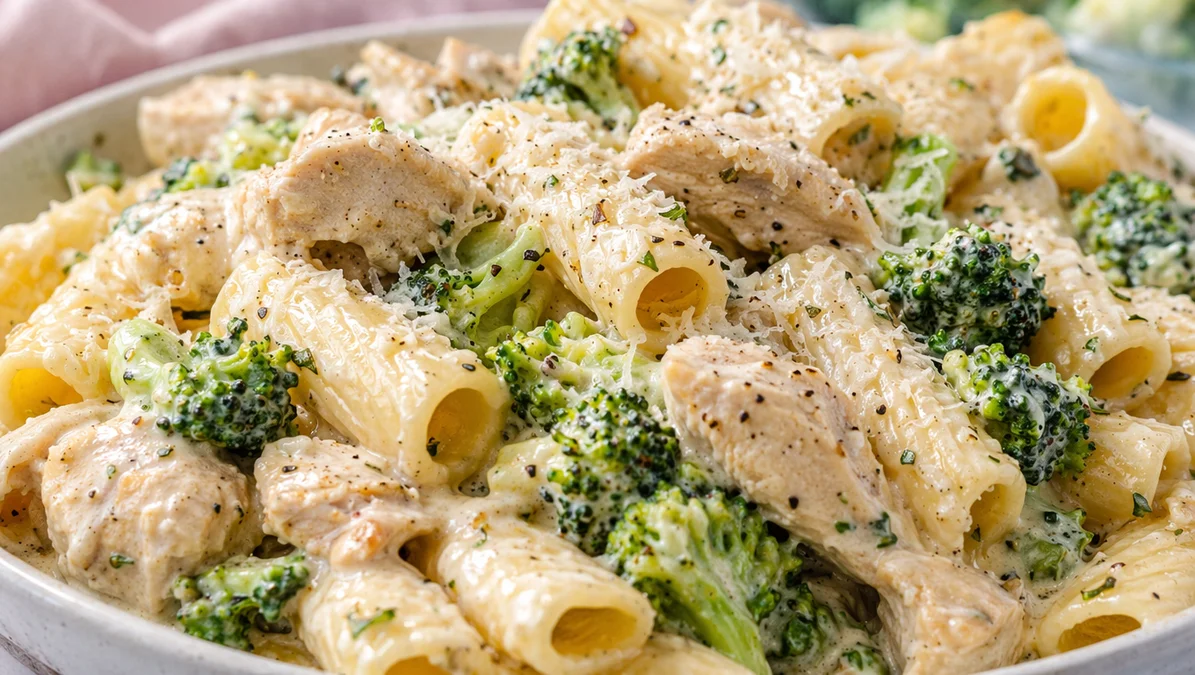
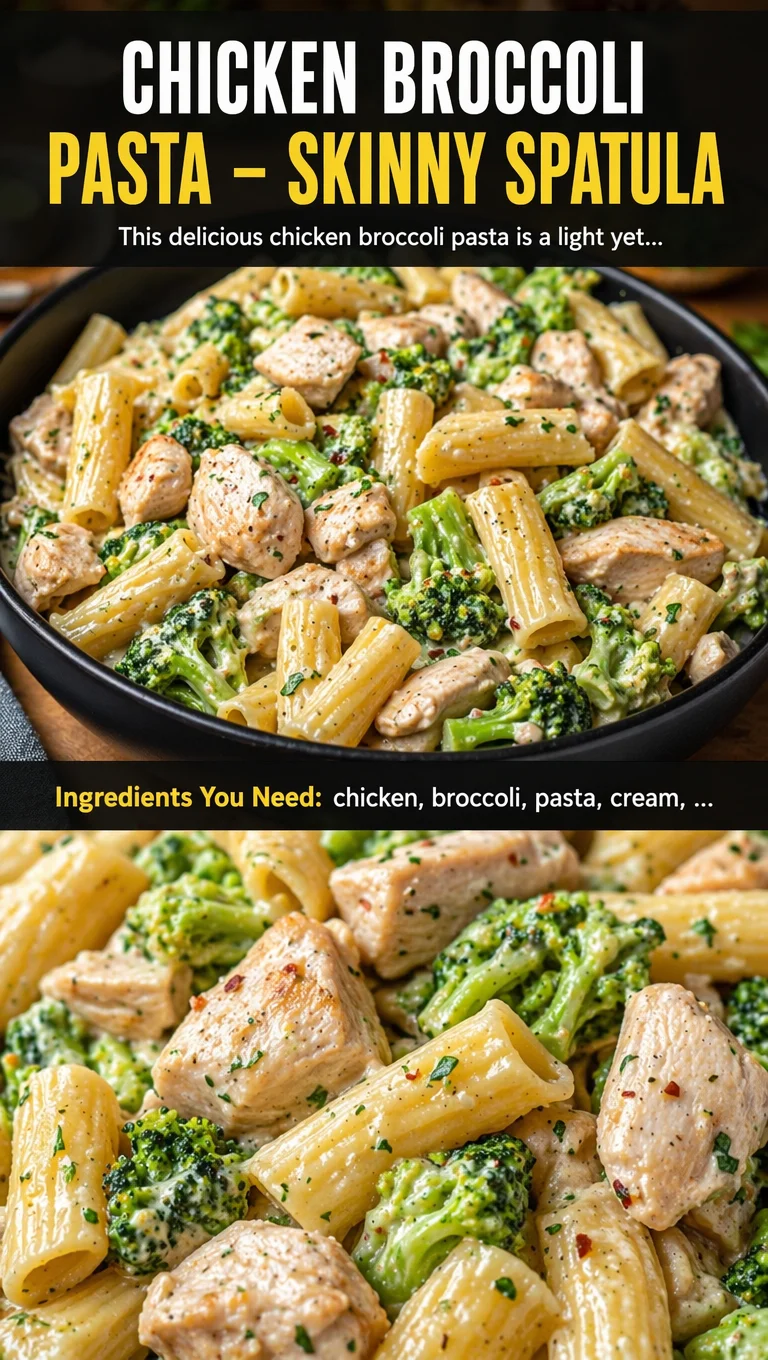
This creamy chicken broccoli pasta is a light yet satisfying 30-minute meal. Tender chicken, nutritious broccoli, and a luscious sauce make it perfect for busy weeknights.
Ingredients
Instructions
Bring a large pot of generously salted water to a rolling boil. Add the pasta and cook according to package directions until al dente—typically 8-10 minutes. About 2 minutes before the pasta is done, add the broccoli florets to the boiling water. This blanches the broccoli, turning it bright green and tender-crisp. Reserve about 1/4 cup of pasta water before draining. Drain the pasta and broccoli together in a colander and set aside. The reserved starchy water will help thicken the sauce later.
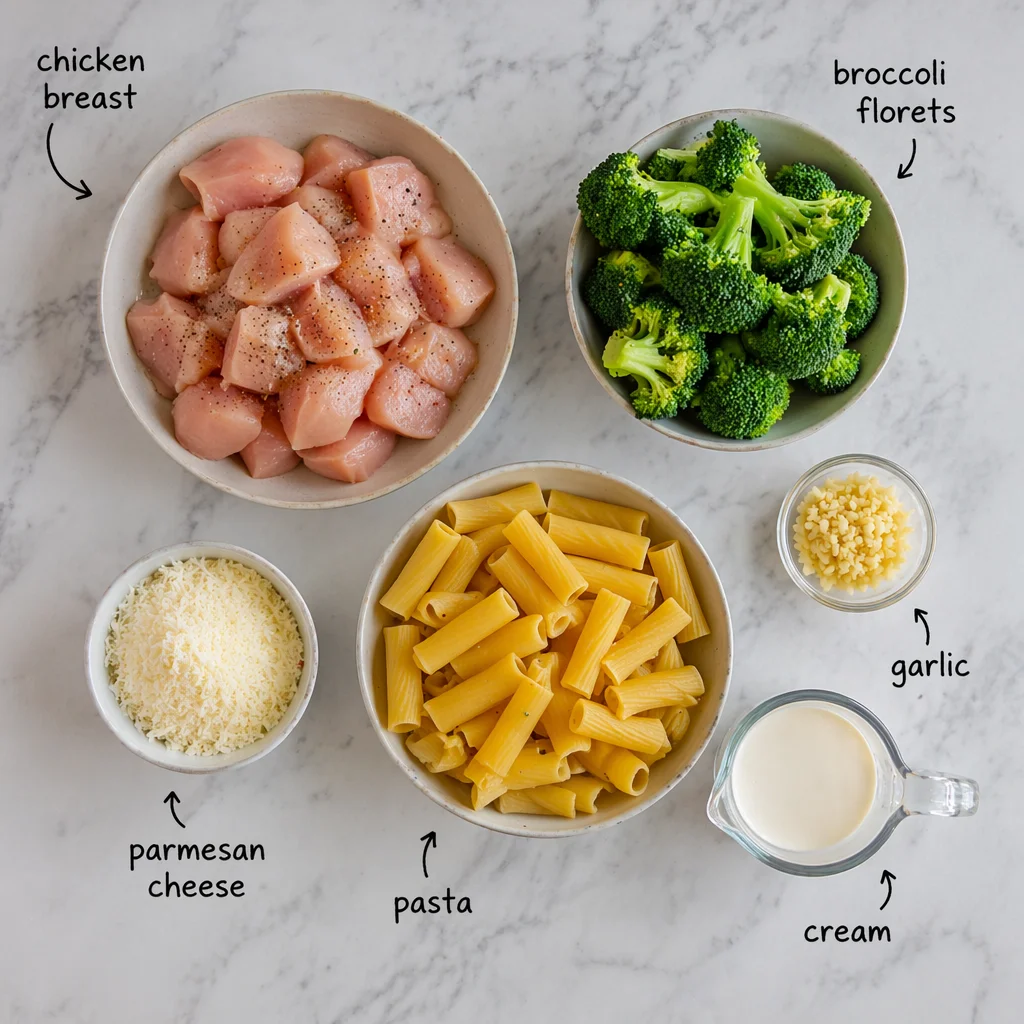
While the pasta cooks, season the chicken pieces with salt, pepper, and a pinch of red pepper flakes if using. In a large skillet or deep pan, heat the olive oil over medium-high heat until shimmering. Add the chicken in a single layer (work in batches if needed to avoid overcrowding). Cook for 4-5 minutes per side, until golden brown and cooked through (internal temperature 165°F/74°C). The chicken should be nicely browned on the outside and juicy inside. Transfer the cooked chicken to a plate and tent with foil to keep warm.
Reduce the heat to medium and add the minced garlic to the same skillet. Sauté for 30-60 seconds until fragrant, scraping up any browned bits from the bottom of the pan. Be careful not to burn the garlic—it should become aromatic but not dark. Immediately pour in the heavy cream, stirring constantly to incorporate the browned bits (fond) into the sauce. Let the cream simmer gently for 2-3 minutes, stirring occasionally, until it thickens slightly and coats the back of a spoon.
Add the grated Parmesan cheese to the sauce and stir until fully melted and smooth. The sauce should be creamy and slightly thickened. If it seems too thick, add a splash of the reserved pasta water to loosen it. Taste and adjust seasoning with salt and pepper. For a thinner sauce, add more pasta water a tablespoon at a time.
Return the cooked chicken to the skillet, then add the drained pasta and broccoli. Toss everything together gently with tongs or a wooden spoon until the pasta, chicken, and broccoli are evenly coated in the creamy sauce. Let it cook for 1-2 minutes over low heat to allow the flavors to meld. If the sauce becomes too thick, add a little more pasta water to reach desired consistency.
Serve immediately, garnished with extra Parmesan cheese and a sprinkle of black pepper or fresh parsley if desired. The dish is best enjoyed hot, when the sauce is at its creamiest. Leftovers can be stored in an airtight container in the refrigerator for up to 3 days. Reheat gently on the stovetop with a splash of milk or cream to revive the sauce.
For best results
- For the best texture, cook the pasta al dente—firm to the bite—because it will continue to cook slightly when tossed with the hot sauce. Overcooked pasta turns mushy and won't hold the sauce as well. Always reserve pasta water before draining; the starch helps emulsify the sauce and gives it a silky consistency without needing extra cream.
- If using frozen broccoli, add it directly to the boiling pasta water during the last 2 minutes of cooking—no need to thaw first. Frozen broccoli is already blanched, so it just needs to be heated through. Be careful not to overcook; you want it tender but still bright green with a slight crunch.
- To keep the chicken juicy, avoid overcooking. Use a meat thermometer to check for 165°F (74°C) at the thickest part. Let the chicken rest for a few minutes after cooking before slicing or adding to the sauce. This allows the juices to redistribute, resulting in more tender meat.
- For a lighter version, substitute half-and-half or whole milk for the heavy cream. The sauce will be less rich but still creamy. To prevent curdling, bring the dairy to room temperature before adding to the pan and heat gently over medium-low heat, stirring constantly.
- Grate your own Parmesan cheese from a block rather than using pre-shredded. Pre-shredded cheese often contains anti-caking agents that prevent smooth melting, leading to a grainy sauce. Freshly grated Parmesan melts beautifully and adds a nutty, savory depth.
- This recipe is easily scalable. For a larger crowd, double the ingredients and use a larger skillet or Dutch oven. You may need to cook the chicken in batches to ensure even browning. The sauce can be multiplied without issues, but keep an eye on the salt level as Parmesan is salty.
Variations
- Vegetarian Version: Omit the chicken and add a can of drained chickpeas or white beans for protein. Sauté the garlic and then add the beans along with the cream. You can also toss in sun-dried tomatoes or sautéed mushrooms for extra umami. The dish remains creamy and satisfying without meat.
- Gluten-Free Adaptation: Use your favorite gluten-free pasta (rice, corn, or legume-based). Cook according to package directions—gluten-free pasta can become mushy if overcooked, so check frequently. Ensure all other ingredients are gluten-free, especially the Parmesan (some brands use anti-caking agents with gluten).
- Dairy-Free Option: Replace heavy cream with full-fat coconut milk or a cashew cream (soaked cashews blended with water). Use nutritional yeast or a dairy-free Parmesan alternative for the cheesy flavor. The sauce will have a slightly different flavor profile but will still be creamy and delicious.
- Spicy Twist: Add 1/2 teaspoon of red pepper flakes along with the garlic, or stir in a tablespoon of sriracha or chili garlic sauce at the end. For extra heat, use spicy Italian sausage instead of chicken—brown and crumble it before proceeding with the recipe.
- Protein Swap: Replace chicken with shrimp, sliced Italian sausage, or cubed tofu. For shrimp, cook for 2-3 minutes per side until pink and opaque. For tofu, press and cube, then pan-fry until golden before adding to the sauce. Adjust cooking times accordingly.
Nutrition
- Calories485 kcal
- Total Fat28g
- Saturated Fat15g
- Cholesterol125mg
- Sodium620mg
- Total Carbohydrates32g
- Dietary Fiber3g
- Sugars4g
- Protein35g