
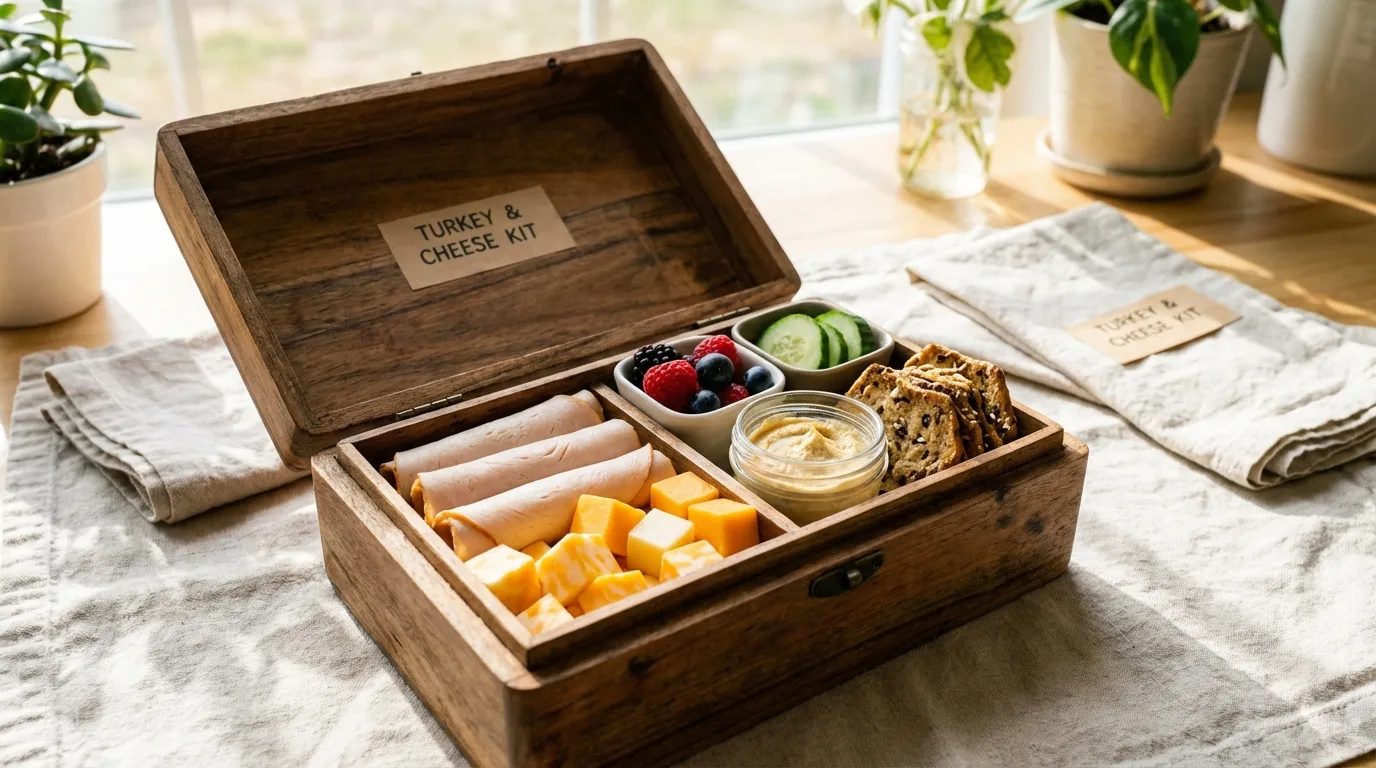
Busy parents can mass-produce 5 days of lunches in 10 minutes as part of a larger 1-hour Sunday kitchen reset using a “Deconstructed Bento” method and a factory-style assembly line. By isolating wet and dry ingredients in compartmentalized containers, you prevent spoilage and sogginess, ensuring meals remain fresh, crisp, and safe for consumption throughout the school week.
The Economics of DIY “Lunchables”
DIY lunch kits cost approximately $1.10 per unit, compared to $3.50 for commercial alternatives, while eliminating industrial preservatives and excess sodium. By purchasing bulk ingredients like crackers, cheddar blocks, and deli meats, you gain complete nutritional control and reduce weekly lunch expenditures by roughly 70%.
The Lunchbox Arbitrage
| Lunch Source | Preservatives | Customization | Cost Per Box | Chef Verdict |
|---|---|---|---|---|
| Frozen Cafeteria Meal | Very High | Zero | $3.00 | ❌ Processed |
| Name-Brand “Kits” | High | Zero | $3.50 | ❌ Chemical overload |
| Sunday “Assembly Line” | Zero | Infinite | $1.10 | ✅ Superior ROI |
The financial impact of this shift is significant. A family with two children saves approximately $1,000 per 40-week school year by transitioning from store-bought kits to the 10-minute Sunday assembly method.
The 10-Minute Assembly Line Workflow
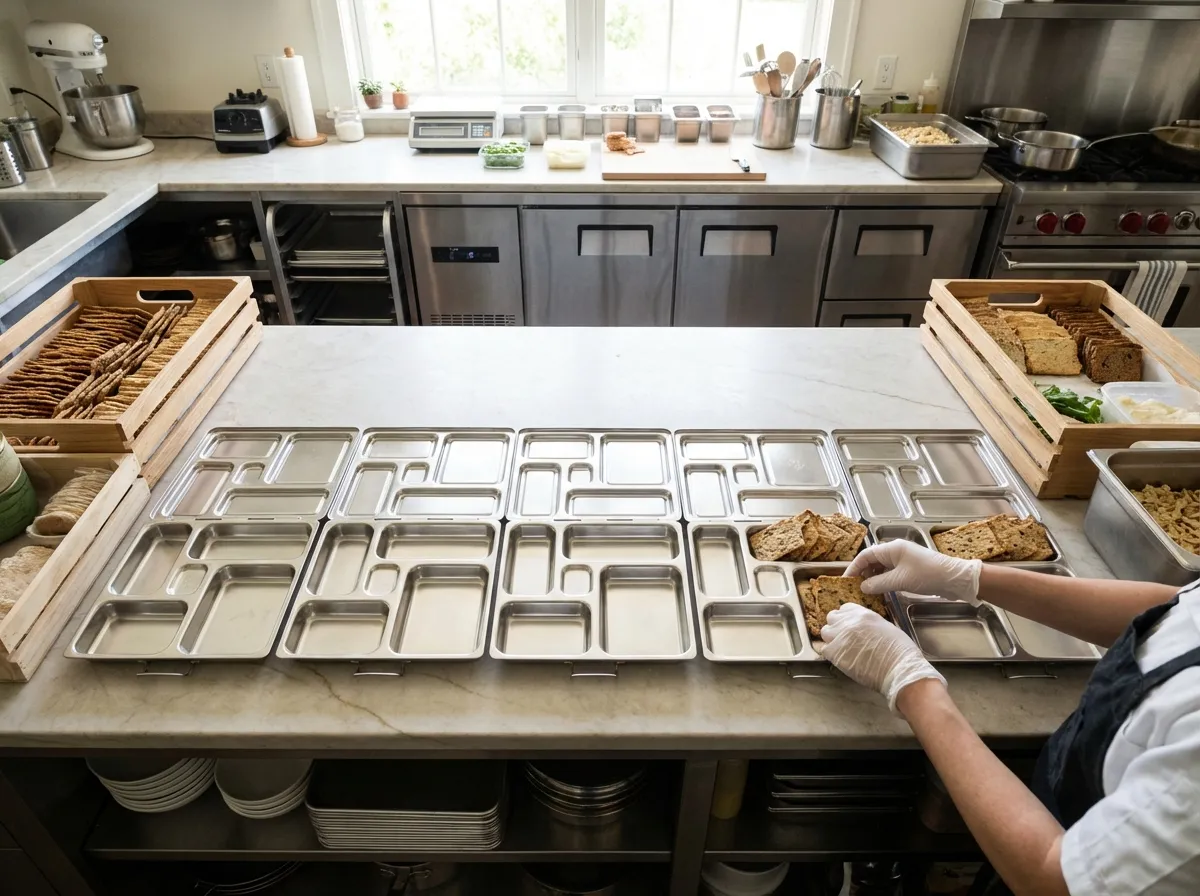
The Assembly Line: Fill all five boxes at once to slash your prep time by 70%.
To achieve maximum efficiency, layout all 5 containers simultaneously and perform one task across every box before moving to the next. This batch-processing model eliminates repetitive transitions and decision fatigue, allowing you to complete the entire week’s food preparation in exactly 10 minutes.
The Moisture Barrier Rule
A moisture barrier is a physical separation strategy that prevents liquid migration from wet ingredients to porous dry carbohydrates. By using silicone liners or placing fat-based barriers like cheese slices between meat and crackers, you stop the natural secretion of liquids from destroying the structural integrity of the lunch.
The Lunch Factory Hardware Toolkit
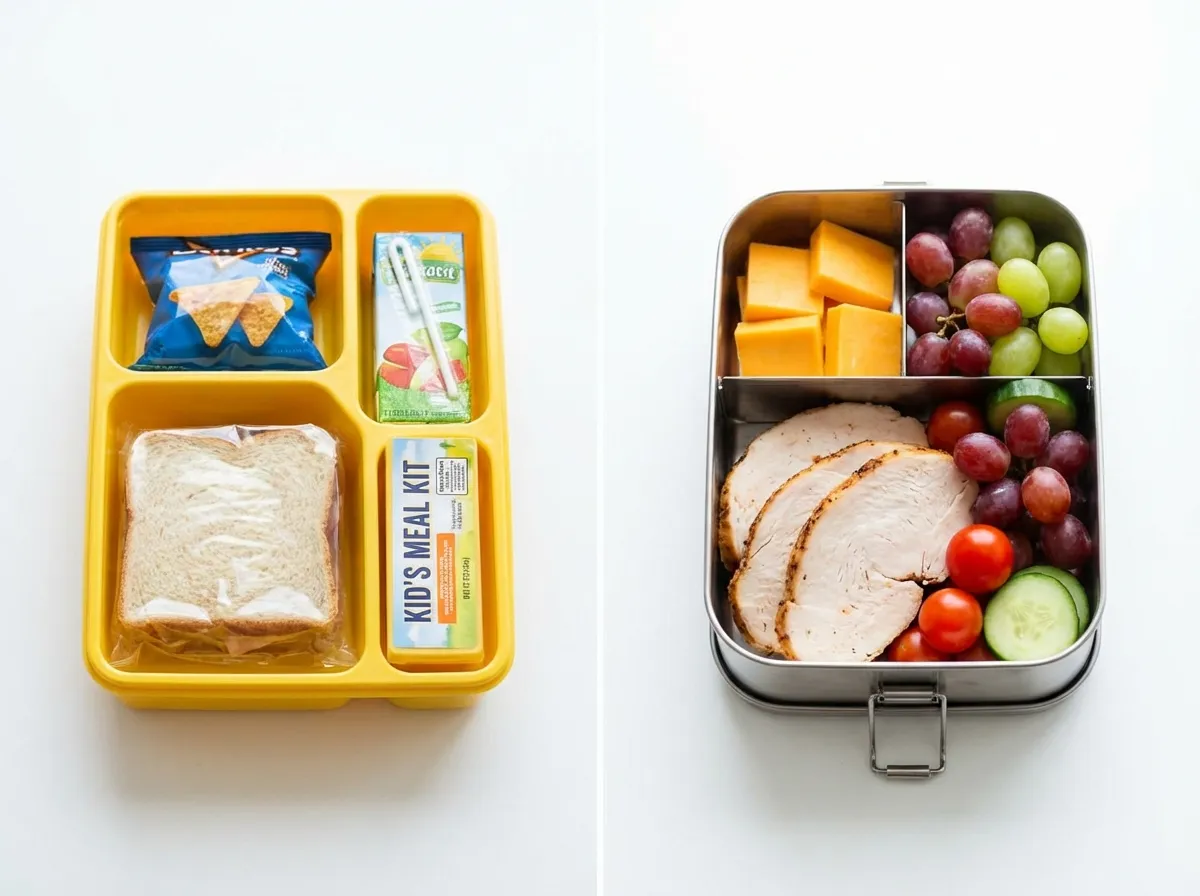
The ‘Lunchbox Arbitrage’: Better ingredients for a fraction of the cost.
| Hardware Requirement | Culinary Function | Risk if Ignored |
|---|---|---|
| Stainless Bento Boxes | Compartmental isolation | Food mixing during transport |
| Silicone Cupcake Liners | Waterproof moisture barrier | Paper liners absorb liquid and leak |
| Mechanical Apple Slicer | Rapid fruit portioning | Excessive manual prep time |
- Stainless Bento Boxes: Use 5-compartment stainless steel containers to ensure a rigid, leak-proof environment that keeps ingredients physically isolated regardless of backpack movement.
- Reusable Silicone Baking Liners: Utilize rigid silicone cups as waterproof dams for sauces and wet fruits; unlike paper liners, these do not absorb liquid or transfer moisture to surrounding items.
- Thin-Spine Mechanical Apple Slicer: Use a mechanical slicer to process whole fruit into uniform segments in 1 second, maintaining the 10-minute total prep timeline.
Field-Tested Results: The “Edible Ice Pack” Hack
The “Edible Ice Pack” is a frozen juice box used as a dual-purpose cooling element and beverage. By freezing a standard juice box for 12–24 hours and placing it against deli meats, you keep the food at food-safe temperatures below 40°F until the lunch period, at which point the juice thaws for drinking.
3 Bento Box Flavor Themes
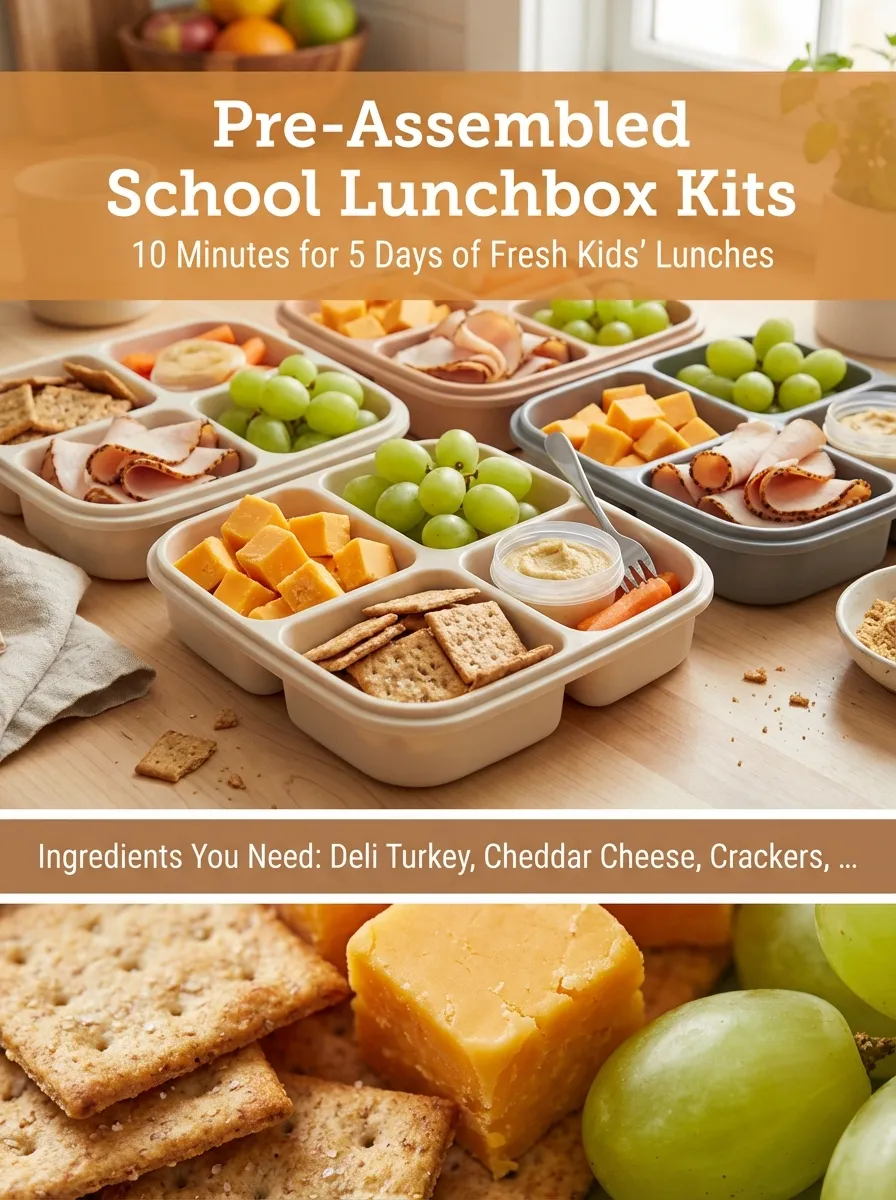
- The Classic Stack: Original Triscuits, folded thick-cut deli turkey, sharp cheddar cubes, and firm green grapes.
- The Mini Pizza Kit: Halved English muffins, a red silicone cup of marinara sauce, a blue silicone cup of shredded mozzarella, and mini pepperonis.
- The Dipper Box: Pretzel rods, tightly rolled deli ham spears, a silicone cup of garlic hummus, and baby carrots.
Frequently Asked Questions
If I cut and assemble apples on Sunday, will they brown by Thursday?
Yes, raw apples oxidize quickly. You can prevent this by tossing freshly sliced apples in a mixture of cold water and 1 teaspoon of lemon juice before packing. The citric acid lowers the pH level, chemically inhibiting the oxidation process for up to 5 days.
Can I put wet yogurt directly into a bento compartment?
Do not place liquid yogurt in a compartment unless the container has a leak-proof, silicone-sealed lid specifically designed for that section. Standard flat plastic lids will leak during transit, causing liquid to migrate into dry foods, ruining the texture of crackers and bread.
Can I use plastic baggies instead of silicone cups to save money?
While possible, plastic baggies are inefficient for children to handle. Silicone baking cups cost approximately $5 for a multi-pack, are infinitely reusable, stand upright for easier access, and are significantly more durable than thin plastic bags, making them the superior choice for consistent, daily use.
What is a high-protein, dry substitute for deli meat?
Roasted edamame or hard-boiled eggs are excellent high-protein alternatives; you can also pair these lunches with freezer-friendly breakfast pockets to cover the entire morning rush. A hard-boiled egg remains fresh for 6 days in a sealed refrigerator container. Keep the shell on until mealtime to act as a natural, biological freshness barrier that protects the egg from contamination.
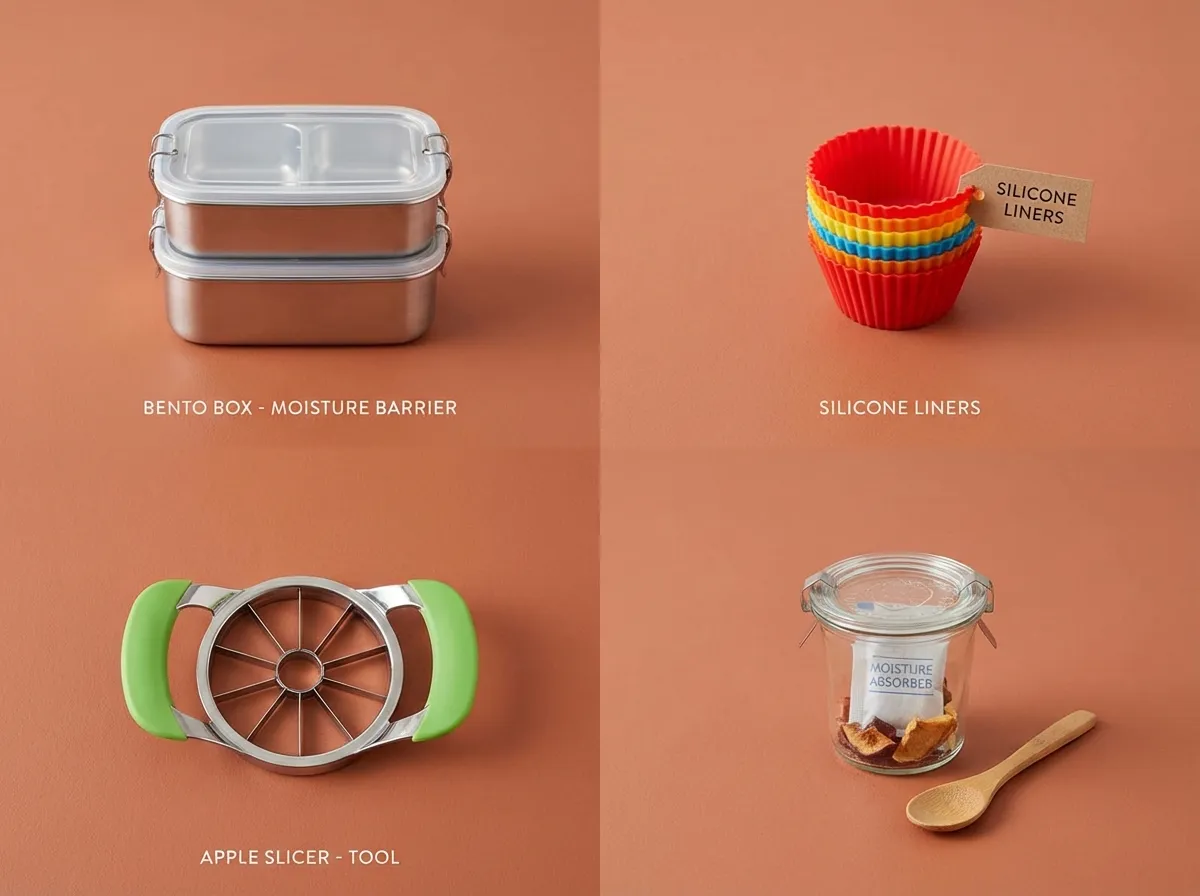
The right hardware, like silicone liners, creates a permanent moisture barrier for crisp crackers.
Save this 10-minute lunch hack to your school meal prep board!