
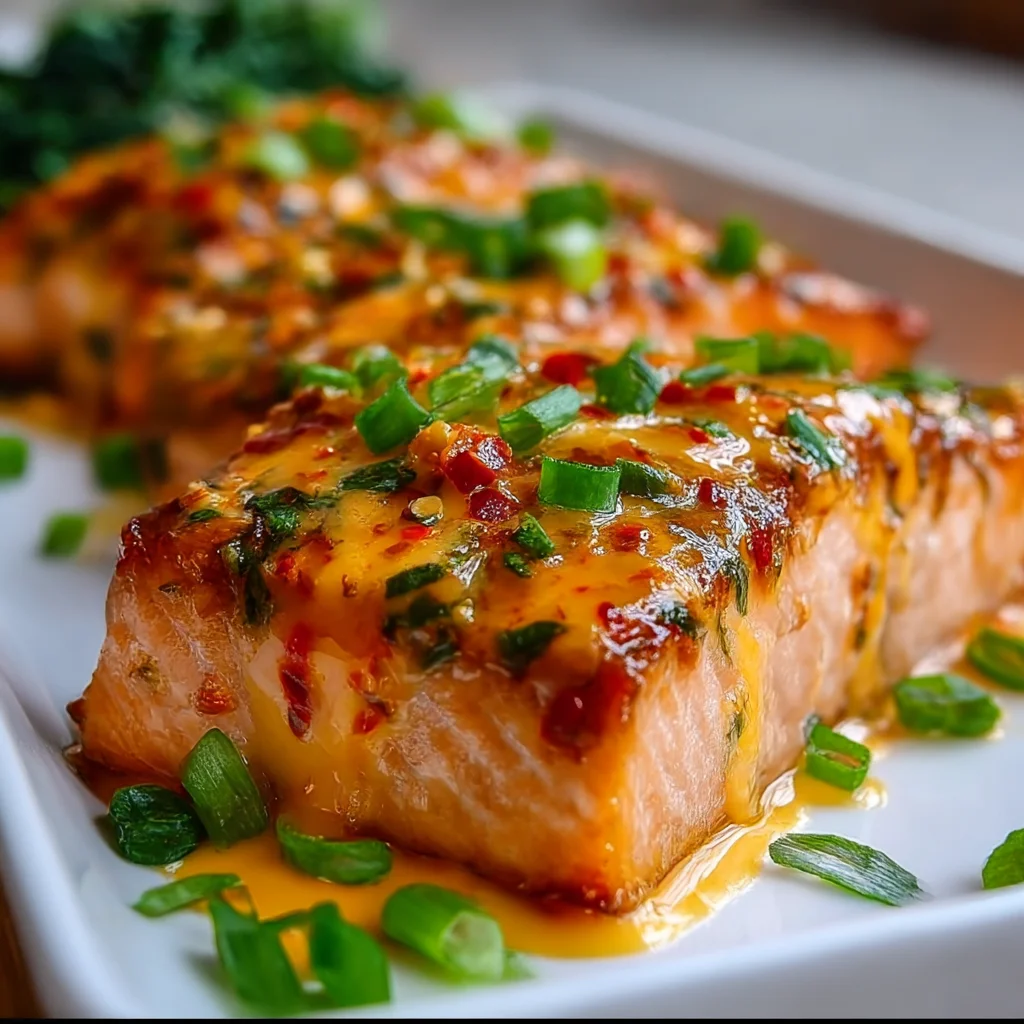
This 15-minute Bang Bang Salmon is a quick, healthy dinner idea that combines baked salmon with a spicy sriracha honey glaze. Perfect for busy weeknights, this easy recipe delivers big…
Ingredients
Instructions
Preheat your oven to 425°F (220°C) and line a baking sheet with parchment paper or aluminum foil for easy cleanup. Pat the salmon fillets dry with paper towels—this is crucial because removing excess moisture ensures the glaze adheres properly and the salmon develops a beautiful caramelized crust rather than steaming. Season both sides of the fillets with salt and pepper. If your fillets have pin bones, remove them with tweezers. Place the salmon skin-side down (if skin-on) on the prepared baking sheet, spacing them at least 1 inch apart to allow for even heat circulation. Drizzle with olive oil and gently rub to coat.
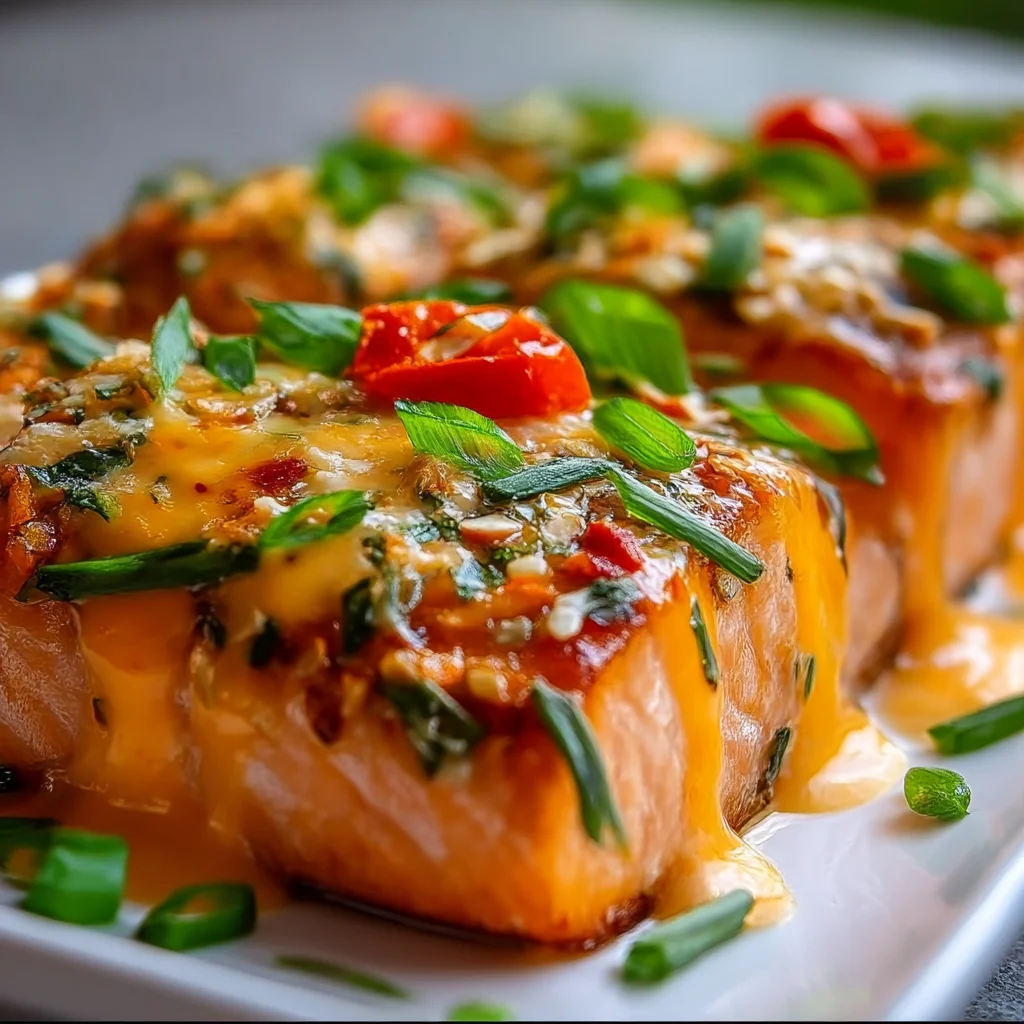
In a small bowl, whisk together the mayonnaise, sriracha, honey, minced garlic, and soy sauce (if using) until smooth and well combined. The mayonnaise serves as a rich base that balances the heat of the sriracha and the sweetness of the honey, while also helping the glaze cling to the salmon and preventing it from drying out during baking. Taste the sauce and adjust: add more sriracha for extra heat, more honey for sweetness, or a pinch of salt if needed. The consistency should be thick but spoonable—if too thick, thin with a teaspoon of water or lime juice.
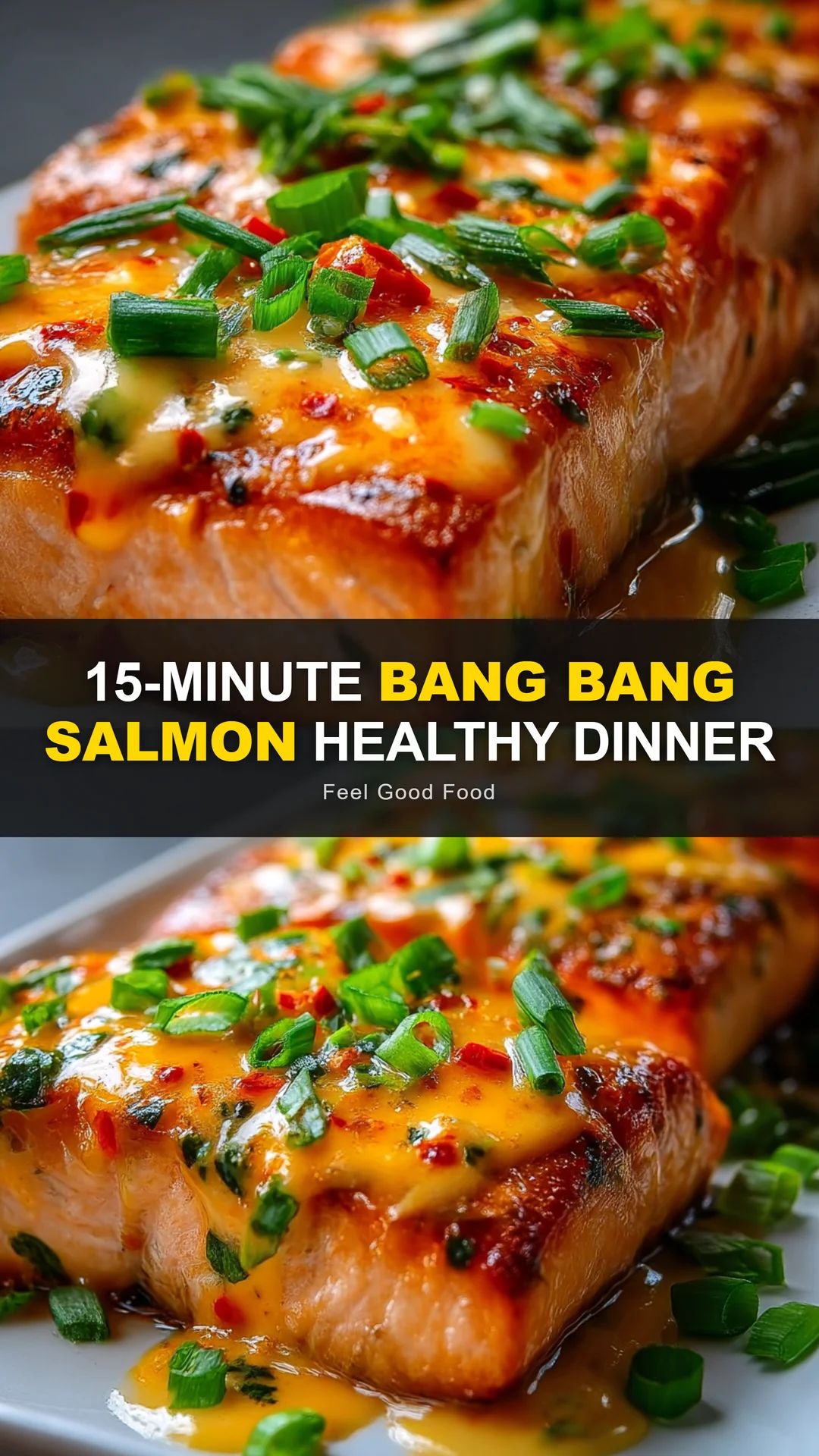
Spoon about half of the bang bang sauce over the salmon fillets, spreading it evenly with the back of a spoon or a silicone brush to cover the top and sides. Reserve the remaining sauce for serving. The glaze will spread and caramelize as it bakes, creating a sticky, golden crust. For extra flavor, you can also brush a thin layer under the fillets. Place the baking sheet in the preheated oven and bake for 8-12 minutes, depending on the thickness of your fillets. The salmon is done when it flakes easily with a fork and the internal temperature reaches 145°F (63°C) at the thickest part. The glaze should be bubbly and slightly browned at the edges. Avoid overbaking, as salmon can go from perfectly moist to dry in just a minute.
Remove the salmon from the oven and let it rest for 2 minutes on the baking sheet. This allows the juices to redistribute and the glaze to set. Transfer the fillets to serving plates. Drizzle the reserved bang bang sauce over the top for an extra burst of flavor and a beautiful presentation. Garnish with sliced green onions, toasted sesame seeds, and a squeeze of fresh lime juice. The lime adds acidity that cuts through the richness of the sauce and brightens the dish. Serve immediately with steamed rice, roasted vegetables, or a crisp green salad.
For best results
- For the best texture, choose salmon fillets that are evenly thick so they cook uniformly. If using frozen salmon, thaw it overnight in the refrigerator and pat it very dry before seasoning. Avoid thawing in the microwave as it can partially cook the fish and lead to a mushy texture. If you prefer a crispier glaze, switch the oven to broil for the last 1-2 minutes of cooking, but watch closely to prevent burning.
- The bang bang sauce can be made up to 3 days in advance and stored in an airtight container in the refrigerator. This makes weeknight prep even faster. Let it come to room temperature before using, or give it a quick stir. You can also double the sauce and use it as a dip for shrimp, chicken, or roasted vegetables. The sauce tends to thicken when cold; thin with a splash of water or lime juice if needed.
- If you don't have sriracha, substitute with any hot sauce like sambal oelek, gochujang (Korean chili paste), or even red pepper flakes mixed with a little vinegar. For a milder version, use half the sriracha and add a tablespoon of ketchup or tomato paste. The honey can be replaced with maple syrup, agave nectar, or brown sugar (dissolved in a teaspoon of warm water). Each sweetener imparts a slightly different flavor—maple adds a woodsy note, while agave is more neutral.
- To ensure your salmon doesn't stick to the baking sheet, use parchment paper or a silicone baking mat. If using foil, lightly grease it with oil. For even easier cleanup, line the sheet with foil and then parchment. The glaze can caramelize and stick, so a non-stick surface is key. Also, avoid overcrowding the pan; if making more than 4 fillets, use two baking sheets or bake in batches to maintain high heat and proper caramelization.
- Leftover cooked salmon can be stored in an airtight container in the refrigerator for up to 3 days. It's delicious cold over salads, flaked into rice bowls, or made into salmon cakes. To reheat, place in a 300°F (150°C) oven for 5-7 minutes or microwave gently at 50% power to avoid drying out. The glaze may lose some of its shine but the flavor remains. I don't recommend freezing cooked salmon as the texture can become watery upon thawing.
Variations
- Air Fryer Bang Bang Salmon: Preheat air fryer to 400°F (200°C). Place seasoned and glazed salmon fillets in the basket (skin-side down if skin-on) and cook for 7-9 minutes, depending on thickness. No need to flip. The air fryer yields an even crispier exterior while keeping the inside moist. Check for doneness at 7 minutes. This method is perfect for smaller portions and reduces cooking time further.
- Grilled Bang Bang Salmon: For a smoky twist, grill the salmon over medium-high heat (about 400°F/200°C). Oil the grates well and place the fillets skin-side down. Grill for 4-5 minutes, then carefully flip and grill for another 3-4 minutes. Brush with extra sauce during the last minute. The char from the grill adds incredible depth. Use a fish basket or foil packet to prevent sticking and flaking.
- Coconut Bang Bang Salmon: Replace half the mayonnaise with full-fat coconut milk for a dairy-free, tropical version. Add 1 teaspoon of grated ginger and a tablespoon of lime juice to the sauce. Garnish with toasted coconut flakes and fresh cilantro. This variation pairs beautifully with jasmine rice and a cucumber salad. The coconut milk adds a subtle sweetness and creamy texture.
- Spicy Miso Bang Bang Salmon: Add 1 tablespoon of white miso paste to the sauce and reduce the honey to 1 tablespoon. Miso adds a savory umami depth that complements the sriracha. This Japanese-inspired version is excellent served with soba noodles and steamed bok choy. If miso is too salty, balance with a squeeze of orange juice.
- Sheet Pan Bang Bang Salmon with Vegetables: Add vegetables like broccoli florets, bell pepper strips, and snap peas to the baking sheet around the salmon. Toss the veggies with olive oil, salt, and pepper before adding the salmon. Drizzle a little extra sauce over the vegetables (or use a separate batch of sauce) and roast everything together. The vegetables will absorb the spicy-sweet flavors and make a complete meal in one pan. Adjust cooking time if vegetables need more time—add them 5 minutes before the salmon.
- Gluten-Free and Paleo Adaptations: This recipe is naturally gluten-free if you use tamari or coconut aminos instead of soy sauce. For a paleo version, use avocado oil mayonnaise or make your own with avocado oil and egg. Replace honey with a small amount of maple syrup if avoiding honey for paleo. Serve with cauliflower rice or sweet potato mash for a Whole30-compatible meal (omit soy sauce and use coconut aminos).
Nutrition
- Calories385 kcal
- Total Fat22g
- Saturated Fat4g
- Cholesterol85mg
- Sodium620mg
- Total Carbohydrates12g
- Dietary Fiber0g
- Sugars10g
- Protein34g