
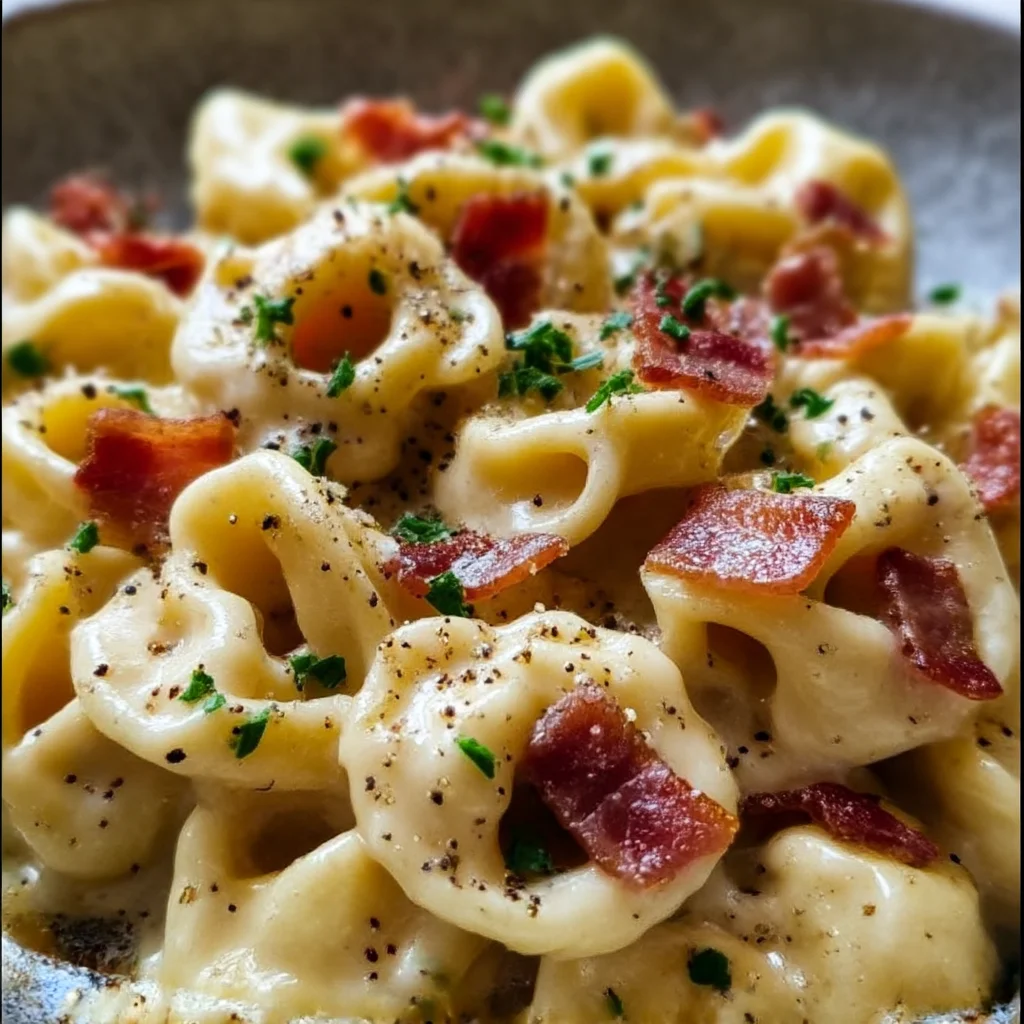
This easy 30-minute tortellini carbonara combines cheese-stuffed pasta with a rich egg and parmesan sauce, crispy pancetta, and creamy texture. Perfect quick dinner idea for busy weeknights.
Ingredients
Instructions
Bring a large pot of salted water (about 4 quarts water with 1 tablespoon salt) to a rolling boil. The salt seasons the pasta from within, enhancing its flavor. While waiting, dice the pancetta into small, even cubes (about 1/4-inch) for uniform rendering. In a medium bowl, whisk together the eggs, Parmesan cheese, and heavy cream (if using) until completely smooth and pale yellow. The cream adds richness and helps prevent curdling, but traditional carbonara omits it—your choice. Set the egg mixture aside. Freshly grate the Parmesan from a block; pre-grated cheese contains anti-caking agents that prevent smooth melting.
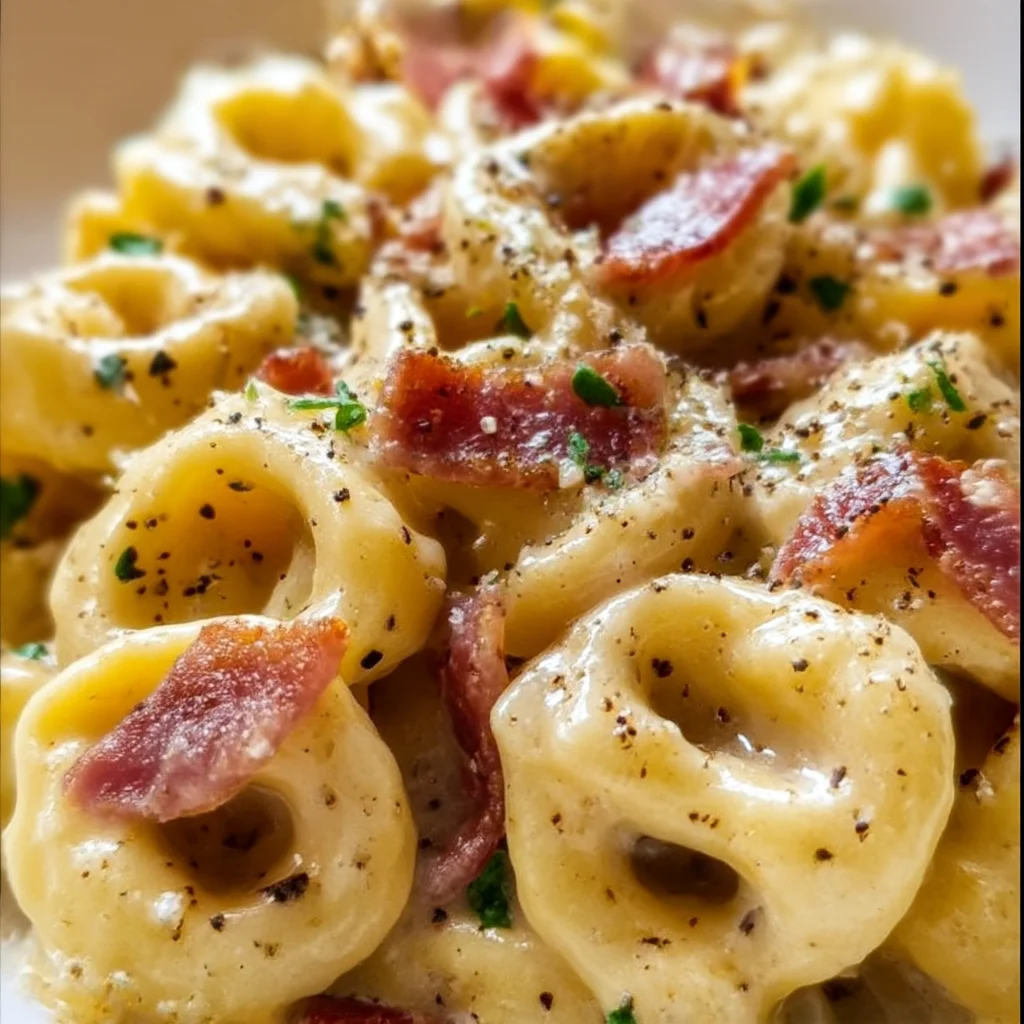
In a large, heavy-bottomed skillet or Dutch oven (preferably stainless steel or cast iron), heat 2 tablespoons olive oil over medium heat. Add the diced pancetta in a single layer—do not overcrowd, as crowding steams instead of crisps. Cook for 5-7 minutes, stirring occasionally, until the pancetta is golden brown and crispy. The fat will render, creating a flavorful base. If using garlic, add it during the last 30 seconds to avoid burning. Use a slotted spoon to transfer the pancetta to a paper towel-lined plate, leaving the rendered fat in the pan. Reserve about 2 tablespoons of fat; discard excess if needed.
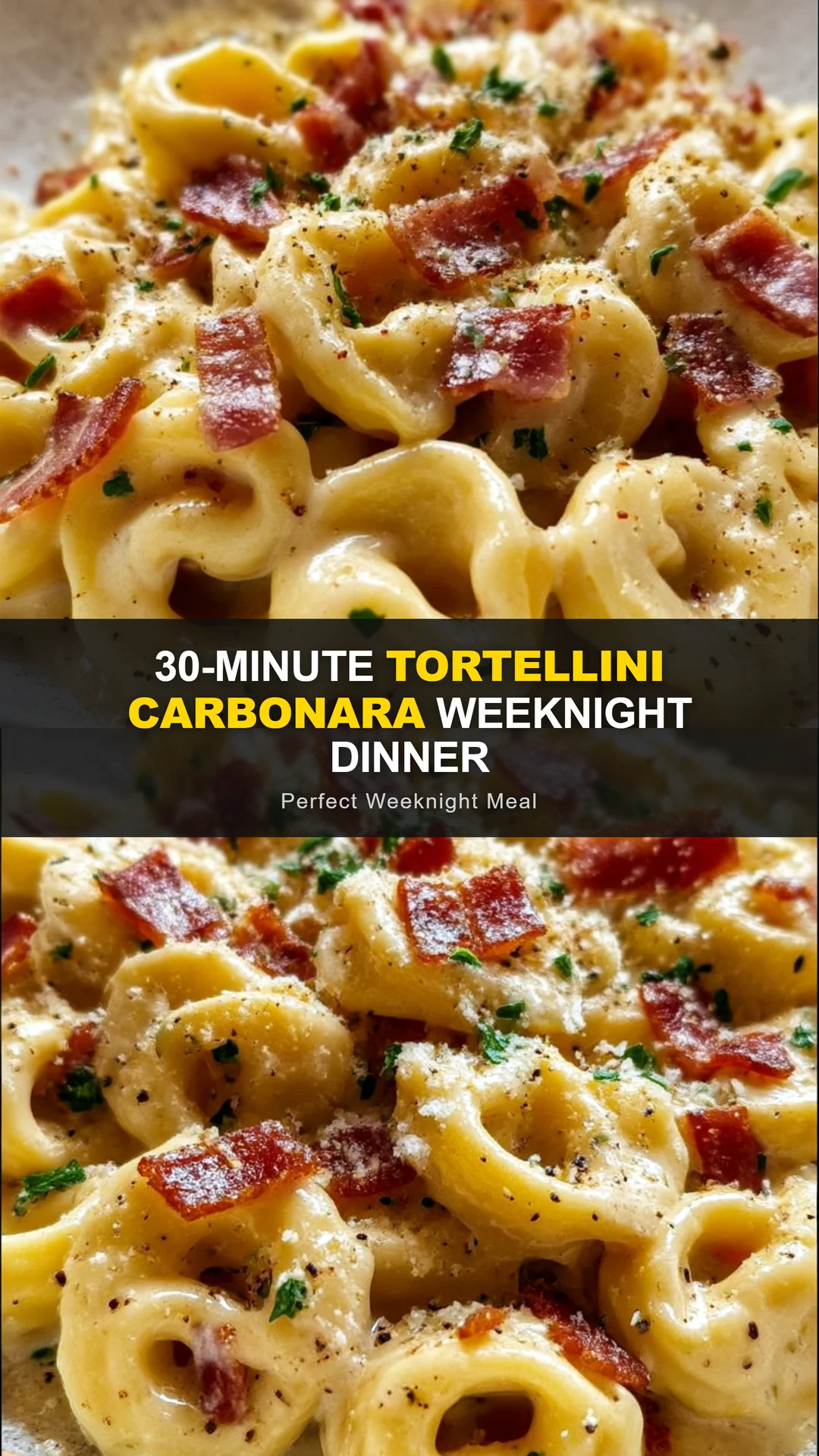
Cook the tortellini according to package directions, usually 2-4 minutes for fresh or 4-6 minutes for frozen. Fresh tortellini cooks quickly; watch closely to avoid overcooking. You want it al dente—firm to the bite but tender. Drain the pasta in a colander, reserving 1 cup of the starchy pasta water. Do not rinse the pasta; the starch helps the sauce cling. While the pasta drains, return the skillet with the reserved pancetta fat to low heat.
Immediately add the drained tortellini to the skillet with the warm fat. Toss gently to coat, about 30 seconds. Remove the skillet from the heat—this is crucial. Let it cool for 1 minute to prevent the eggs from scrambling when added. Slowly pour the egg-Parmesan mixture over the pasta while tossing vigorously with tongs. The residual heat will cook the eggs into a creamy, velvety sauce. If the sauce seems too thick, add reserved pasta water 1 tablespoon at a time until it reaches a silky consistency that coats each tortellini. The starch in the water emulsifies the sauce, preventing separation.
Add the crispy pancetta back to the skillet and toss to combine. Season with freshly ground black pepper and salt (remember pancetta is salty, so taste first). The pepper is traditional and adds a subtle heat that balances the richness. Serve immediately in warm bowls—carbonata waits for no one. Garnish with extra Parmesan and chopped parsley. The sauce will continue to thicken as it cools, so serve promptly. For best results, use warm bowls to keep the sauce fluid.
For best results
- **Room Temperature Eggs Are Non-Negotiable**: Cold eggs can cause the sauce to seize or curdle when added to hot pasta. To quickly bring eggs to room temperature, place them in a bowl of warm water (not hot) for 5 minutes before cracking. Alternatively, you can hold them under warm running water for 30 seconds. The egg mixture should be whisked until completely homogeneous—no streaks of white remain. This ensures a smooth, emulsified sauce that coats every tortellini.
- **Pasta Water is Liquid Gold**: The starchy pasta water is the secret to a silky carbonara sauce. It helps emulsify the fat and cheese, creating a creamy texture without heavy cream. Reserve at least 1 cup before draining, and add it gradually—you may not need all of it. If your sauce becomes too thin, toss over low heat for a few seconds to thicken. The ratio of water to sauce should be adjusted based on how much cheese you use; more cheese requires more water.
- **Choose the Right Tortellini**: For best results, use high-quality cheese tortellini from the refrigerated section of your grocery store. Fresh tortellini has a tender texture that absorbs the sauce beautifully. Frozen tortellini works too—just cook an extra minute. Avoid dried tortellini from the pasta aisle, as it takes longer to cook and may not achieve the same delicate texture. Look for tortellini filled with ricotta and Parmesan for an authentic flavor profile.
- **Pancetta vs. Guanciale vs. Bacon**: Traditional carbonara uses guanciale (cured pork cheek), but pancetta (Italian bacon) is more widely available and works perfectly. If you substitute American bacon, be aware it is smokier and may overpower the dish. To mimic guanciale, choose unsmoked pancetta. For a vegetarian option, omit the meat and add sautéed mushrooms for umami. The key is rendering the fat slowly to extract maximum flavor.
- **Avoid Scrambled Eggs**: The biggest pitfall in carbonara is scrambling the eggs. To prevent this, always remove the pan from heat before adding the egg mixture, and let it cool for 1 minute. Toss the pasta constantly as you pour the eggs—this distributes heat evenly and prevents hot spots. If you see any egg clumps forming, immediately add a splash of pasta water and toss vigorously. The sauce should be glossy, not lumpy.
- **Grate Your Own Parmesan**: Pre-shredded Parmesan contains cellulose and anti-caking agents that prevent smooth melting. For a silky sauce, always grate Parmesan from a block using a microplane or the fine side of a box grater. The finer the grate, the easier it incorporates into the egg mixture. For extra flavor, use a mix of Parmesan and Pecorino Romano—the latter adds a salty, tangy kick that elevates the dish.
Variations
- **Vegetarian Tortellini Carbonara**: Omit the pancetta and add 8 ounces of sliced cremini mushrooms, sautéed in olive oil until golden and crispy. The mushrooms provide a meaty texture and umami depth that mimics the savory flavor of pancetta. You can also add a pinch of smoked paprika for a subtle smokiness. For extra protein, toss in some frozen peas or edamame during the last minute of pasta cooking.
- **Spicy Arrabbiata Carbonara**: Add 1/2 teaspoon red pepper flakes to the pancetta while it renders, and stir in 1/4 cup of sun-dried tomato pesto (or chopped sun-dried tomatoes) when tossing the pasta. The heat and acidity cut through the richness, creating a bold, spicy twist. Finish with a drizzle of extra-virgin olive oil and fresh basil.
- **Lighter Carbonara with Greek Yogurt**: Replace the heavy cream with 1/2 cup plain Greek yogurt (full-fat) and reduce the eggs to 3. The yogurt adds creaminess and protein while lowering saturated fat. Whisk the yogurt with the eggs and Parmesan until smooth. The sauce will be slightly tangy and lighter in texture. Add a splash of pasta water to thin as needed. This variation is perfect for those watching calories but craving comfort.
- **Seafood Carbonara**: Swap pancetta for 8 ounces of cooked shrimp or lump crab meat. Sauté garlic in olive oil before adding the seafood, then proceed with the egg mixture. The delicate seafood pairs beautifully with the creamy sauce. Garnish with lemon zest and fresh dill. Be careful not to overcook the seafood—add it just before serving to keep it tender.
- **Gluten-Free and Low-Carb Options**: Use gluten-free tortellini (available in many stores) for a gluten-sensitive version. For a low-carb alternative, substitute the tortellini with zucchini noodles (zoodles) or shirataki noodles. If using zoodles, cook them separately for 2 minutes, then pat dry to remove excess moisture. The carbonara sauce will cling to the noodles, but the texture will be different. Increase the Parmesan to compensate for the lack of starch.
Nutrition
- Calories485 kcal
- Total Fat28g
- Saturated Fat12g
- Cholesterol215mg
- Sodium980mg
- Total Carbohydrates38g
- Dietary Fiber2g
- Sugars3g
- Protein22g