
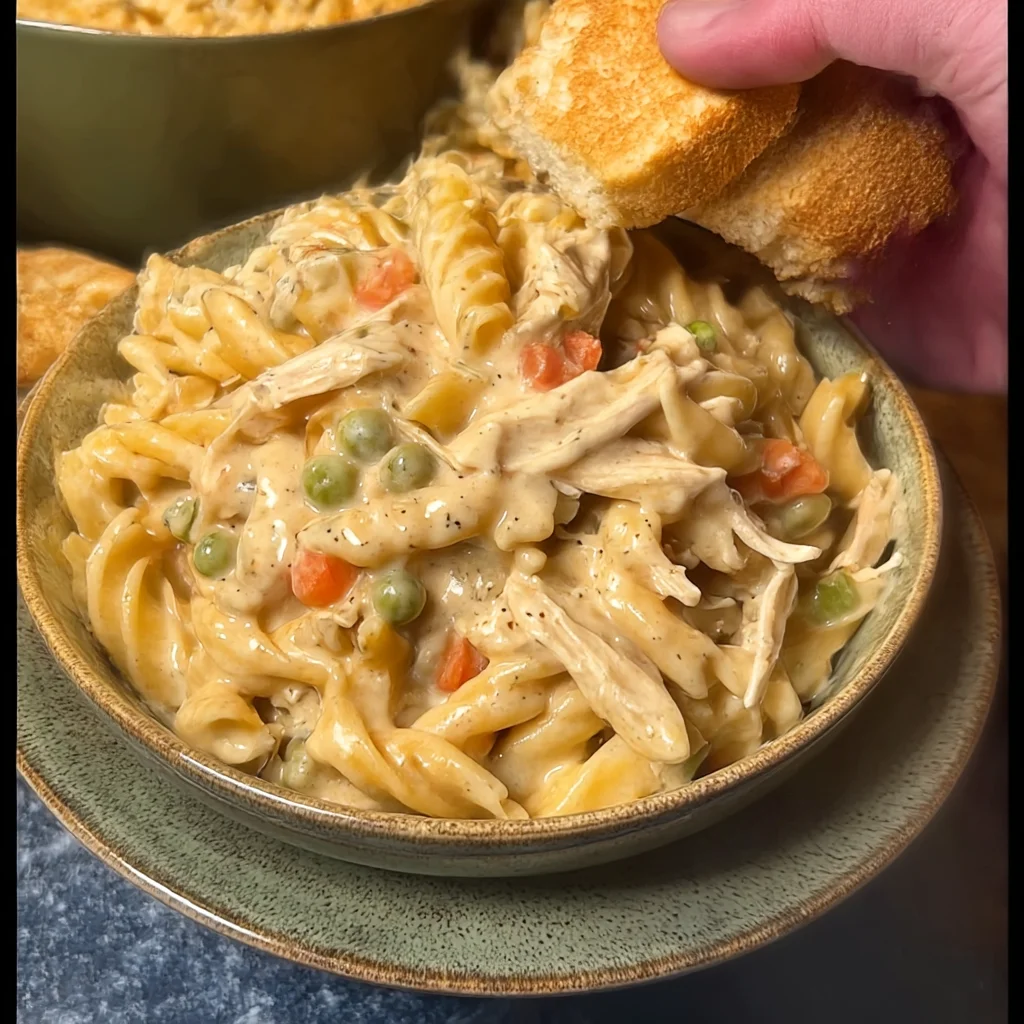
This easy Crock Pot Chicken Pot Pie Pasta recipe combines tender chicken, a creamy sauce, and hearty veggies for a simple weeknight dinner. A quick 30-minute prep makes this one…
Ingredients
Instructions
Begin by preparing your chicken. Pat the chicken breasts or thighs dry with paper towels—this ensures a nice sear and prevents steaming. Season both sides generously with salt and pepper. In a large skillet over medium-high heat, add 2 tablespoons of olive oil. Once the oil shimmers (about 1 minute), carefully place the chicken in the skillet. Cook for 4-5 minutes per side until golden brown. The chicken does not need to be cooked through at this stage; we are just building flavor. Transfer the seared chicken to a plate and set aside. This step adds depth to the final dish that cannot be achieved by simply adding raw chicken to the slow cooker.
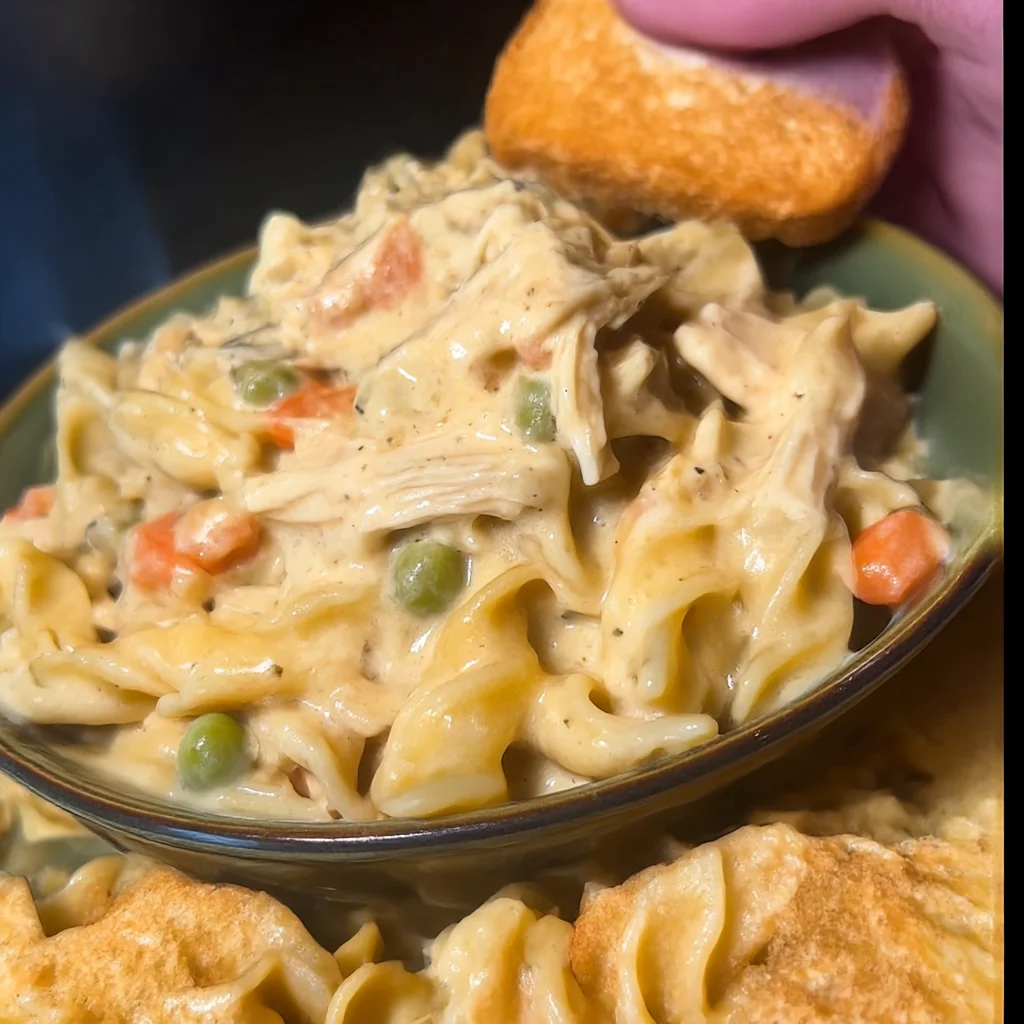
In the same skillet, reduce the heat to medium and add the diced onion. Sauté for 3-4 minutes until translucent, scraping up any browned bits from the bottom of the pan—those bits are pure flavor. Add the minced garlic and cook for another 30 seconds until fragrant. Then, add the sliced carrots and celery. Cook for 2 minutes, stirring occasionally. The vegetables will soften slightly and absorb the savory pan drippings. Transfer the entire vegetable mixture to the slow cooker.

Place the seared chicken on top of the vegetables in the slow cooker. In a medium bowl, whisk together the chicken broth, condensed cream of chicken soup, milk (or half-and-half), dried thyme, dried rosemary, and the remaining salt and pepper. Pour this creamy mixture over the chicken and vegetables. Ensure the chicken is mostly submerged. Cover the slow cooker with the lid and cook on LOW for 4 hours or on HIGH for 2.5 hours. The chicken should be fork-tender and easily shreddable. The aroma of thyme and rosemary will fill your kitchen, promising a comforting meal.
About 20 minutes before serving, remove the chicken from the slow cooker and place it on a cutting board. Using two forks, shred the chicken into bite-sized pieces. The meat should pull apart effortlessly; if it resists, it needs more time. Return the shredded chicken to the slow cooker and stir to combine. At this point, taste the sauce and adjust seasoning if needed. If you prefer a thicker sauce, prepare the cornstarch slurry by mixing 2 tablespoons cornstarch with 2 tablespoons cold water until smooth. Stir the slurry into the slow cooker and let it cook uncovered for 5-10 minutes, stirring occasionally, until the sauce thickens to your liking.
While the sauce thickens, cook your pasta according to package directions in a large pot of salted boiling water. For egg noodles, this usually takes 6-8 minutes. Cook until al dente—slightly firm to the bite—because they will continue to soften when added to the hot sauce. Drain the pasta well, but do not rinse (you want the starch to help bind the sauce). Add the cooked pasta and the frozen peas directly to the slow cooker. Stir gently to coat all the noodles with the creamy sauce. The peas will thaw and warm through in the residual heat, adding pops of sweetness and color. Cover and let everything meld for 5 minutes on LOW.
Serve the Crock Pot Chicken Pot Pie Pasta hot, garnished with fresh parsley if desired. Spoon generous portions into bowls, making sure each serving gets plenty of shredded chicken, vegetables, and creamy sauce. The pasta should be tender but not mushy, the sauce rich and velvety, and every bite a comforting blend of chicken pot pie flavors. Leftovers can be stored in an airtight container in the refrigerator for up to 4 days. Reheat gently on the stovetop or microwave, adding a splash of broth or milk to restore creaminess.
For best results
- For the best flavor, always sear the chicken before adding it to the slow cooker. The Maillard reaction creates deep, savory notes that elevate the entire dish. Even a quick 4-minute sear per side makes a noticeable difference. If you are short on time, you can skip this step, but the dish will be less complex. Also, use chicken thighs if you prefer juicier, more forgiving meat; they are harder to overcook and stay tender even with longer simmering.
- The choice of pasta matters. Wide egg noodles are classic for chicken pot pie because they hold the creamy sauce well and have a tender, comforting texture. However, you can substitute with fusilli, penne, or even gluten-free pasta. Cook the pasta separately and add it just before serving to avoid it becoming mushy. If you want to cook the pasta directly in the slow cooker, reduce the broth to 3 cups and add the pasta during the last 30 minutes of cooking, but check frequently as slow cookers vary.
- To make this recipe even more budget-friendly, use frozen mixed vegetables instead of fresh carrots and celery. A 1-pound bag of frozen peas, carrots, and green beans costs under $2 and works perfectly. You can also substitute the chicken with leftover rotisserie chicken—just add it during the last 30 minutes to warm through. This cuts prep time and saves money.
- The sauce can be made from scratch if you prefer to avoid canned soup. Sauté 2 tablespoons butter with 2 tablespoons flour to make a roux, then gradually whisk in 1 cup chicken broth and 1 cup milk. Cook until thickened, then season with salt, pepper, thyme, and rosemary. This homemade version has a cleaner flavor and allows you to control the sodium. It takes only 5 extra minutes.
- For a thicker, more stew-like consistency, use the cornstarch slurry as directed. However, if you prefer a thinner broth, simply skip the slurry. The sauce will still be delicious, though slightly soupier. You can also mash some of the cooked vegetables against the side of the slow cooker to naturally thicken the sauce. This is a great trick for adding body without extra calories.
- Storage and reheating tips: Store leftovers in an airtight container in the fridge for up to 4 days. The pasta will absorb some sauce overnight, so when reheating, add a splash of chicken broth or milk to restore the creamy consistency. Reheat gently on the stovetop over medium-low heat, stirring occasionally, or in the microwave in 30-second intervals. This dish also freezes well for up to 3 months—freeze without the pasta, then add freshly cooked pasta when serving for best texture.
Variations
- Vegetarian Version: Swap the chicken for 2 cans of drained chickpeas or 3 cups of cubed butternut squash. Use vegetable broth and a can of cream of mushroom soup instead of chicken soup. Add 1 cup of chopped mushrooms along with the onions for extra umami. The cooking time remains the same, but check the squash for tenderness after 3 hours on LOW. This variation is hearty, satisfying, and packed with plant-based protein.
- Gluten-Free Adaptation: Use gluten-free pasta such as rice noodles, corn pasta, or lentil pasta. Replace the condensed cream of chicken soup with a gluten-free cream soup or make a homemade gluten-free sauce using a 1:1 gluten-free flour blend. Ensure your chicken broth is certified gluten-free. The rest of the ingredients are naturally gluten-free, so this adaptation is simple and delicious.
- Dairy-Free and Lighter Option: Substitute the milk with unsweetened almond milk, oat milk, or coconut milk (full-fat for creaminess). Use a dairy-free cream of mushroom soup or make a roux with olive oil and gluten-free flour and use unsweetened plant milk. The sauce will be slightly thinner but still flavorful. For a lower calorie version, use skinless chicken breasts and skip the cream soup altogether, relying on a cornstarch-thickened broth.
- Herb and Flavor Twists: Add a teaspoon of smoked paprika or a pinch of cayenne pepper for a smoky, spicy kick. For an Italian twist, replace thyme and rosemary with 1 teaspoon dried oregano and 1/2 teaspoon fennel seeds, and use a can of diced tomatoes (drained) along with the broth. For a more traditional pot pie flavor, add a bay leaf during cooking (remove before serving). Garnish with fresh dill or tarragon for a bright, herbaceous finish.
- Protein Swaps: Use boneless pork shoulder or turkey breast in place of chicken. Pork shoulder benefits from the long, slow cooking and becomes incredibly tender. For a quicker version, use pre-cooked shredded rotisserie chicken added during the last 30 minutes. You can also use Italian sausage (casings removed) browned with the onions for a richer, spicier dish. Each protein brings its own unique character to the dish.
Nutrition
- Calories425 kcal
- Total Fat16g
- Saturated Fat6g
- Cholesterol95mg
- Sodium820mg
- Total Carbohydrates38g
- Dietary Fiber4g
- Sugars6g
- Protein32g