
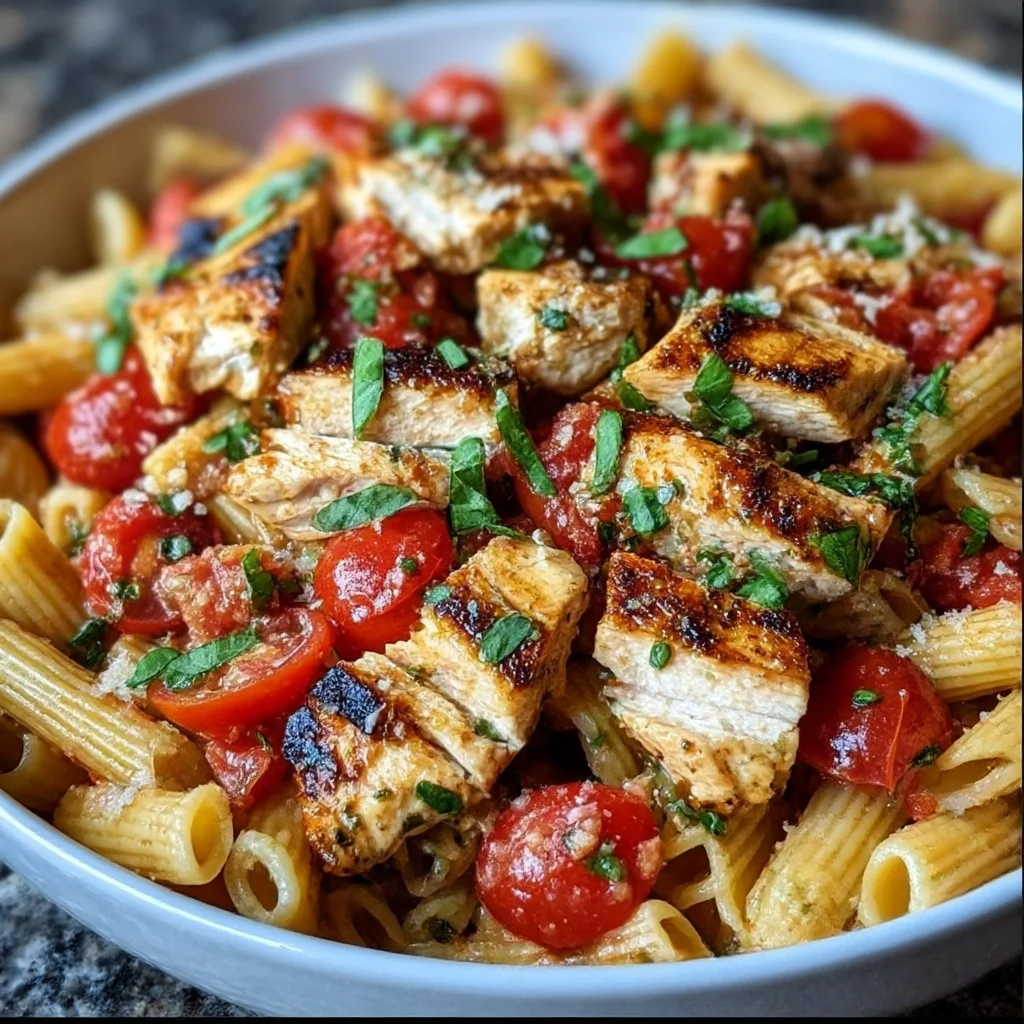
Quick dinner ideas don't get easier than this one-pan bruschetta chicken pasta dinner. Packed with fresh tomatoes, basil, and juicy chicken, this easy weeknight dinner is a flavorful family favorite…
Ingredients
Instructions
Begin by preparing all your ingredients. Cut the chicken breasts into uniform bite-sized pieces (about 1-inch cubes) so they cook evenly. Halve the cherry tomatoes, mince the garlic, and thinly slice the basil. Measure out the pasta, broth, cream, and Parmesan. Having everything ready ensures a smooth cooking process since this dish comes together quickly. Pat the chicken dry with paper towels to help achieve a nice golden sear. Season generously with salt and pepper on all sides.
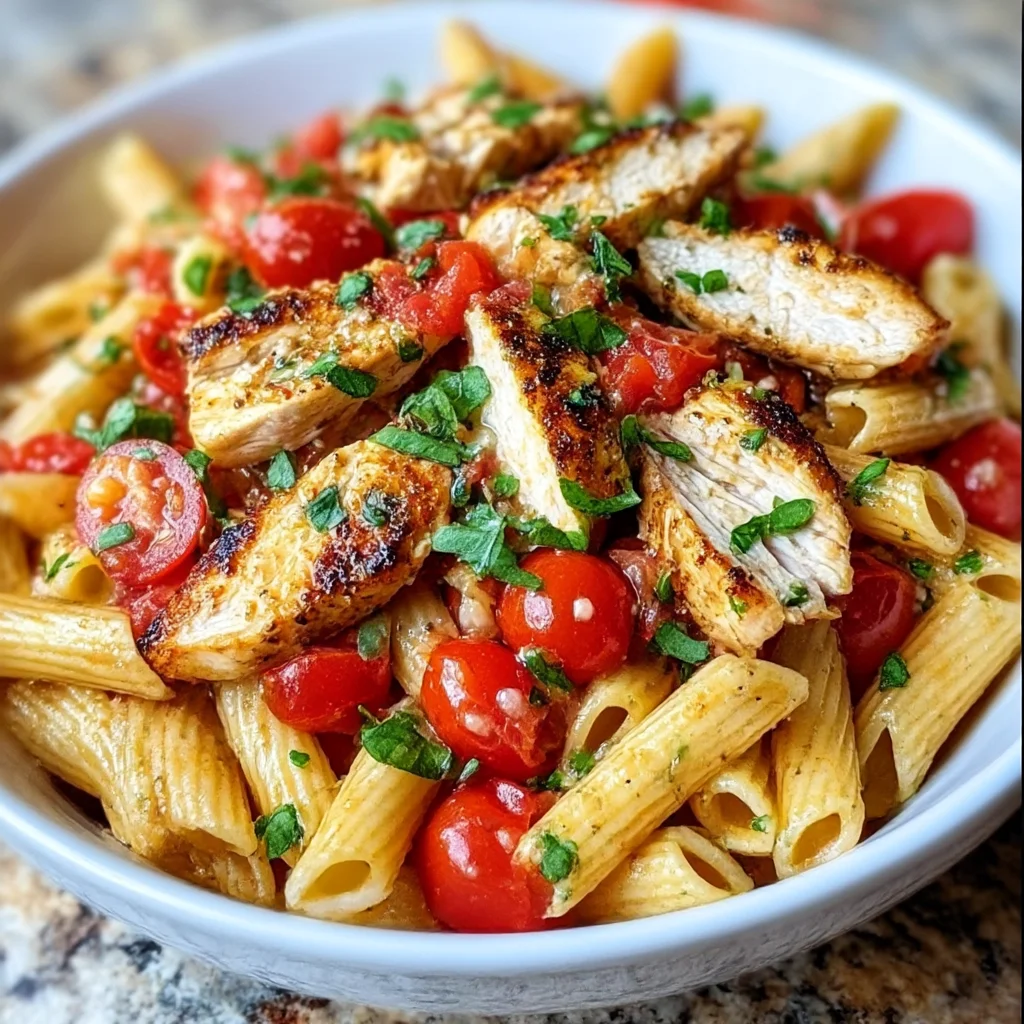
Heat 1 tablespoon of olive oil in a large, deep skillet or Dutch oven over medium-high heat. When the oil shimmers, add the chicken pieces in a single layer (work in batches if necessary to avoid overcrowding). Cook without moving for 4-5 minutes until the bottom is deeply golden and releases easily from the pan. Flip and cook another 3-4 minutes until the chicken is cooked through and golden on all sides. Transfer the chicken to a plate and set aside. The fond (browned bits) left in the pan is packed with flavor—do not discard it.
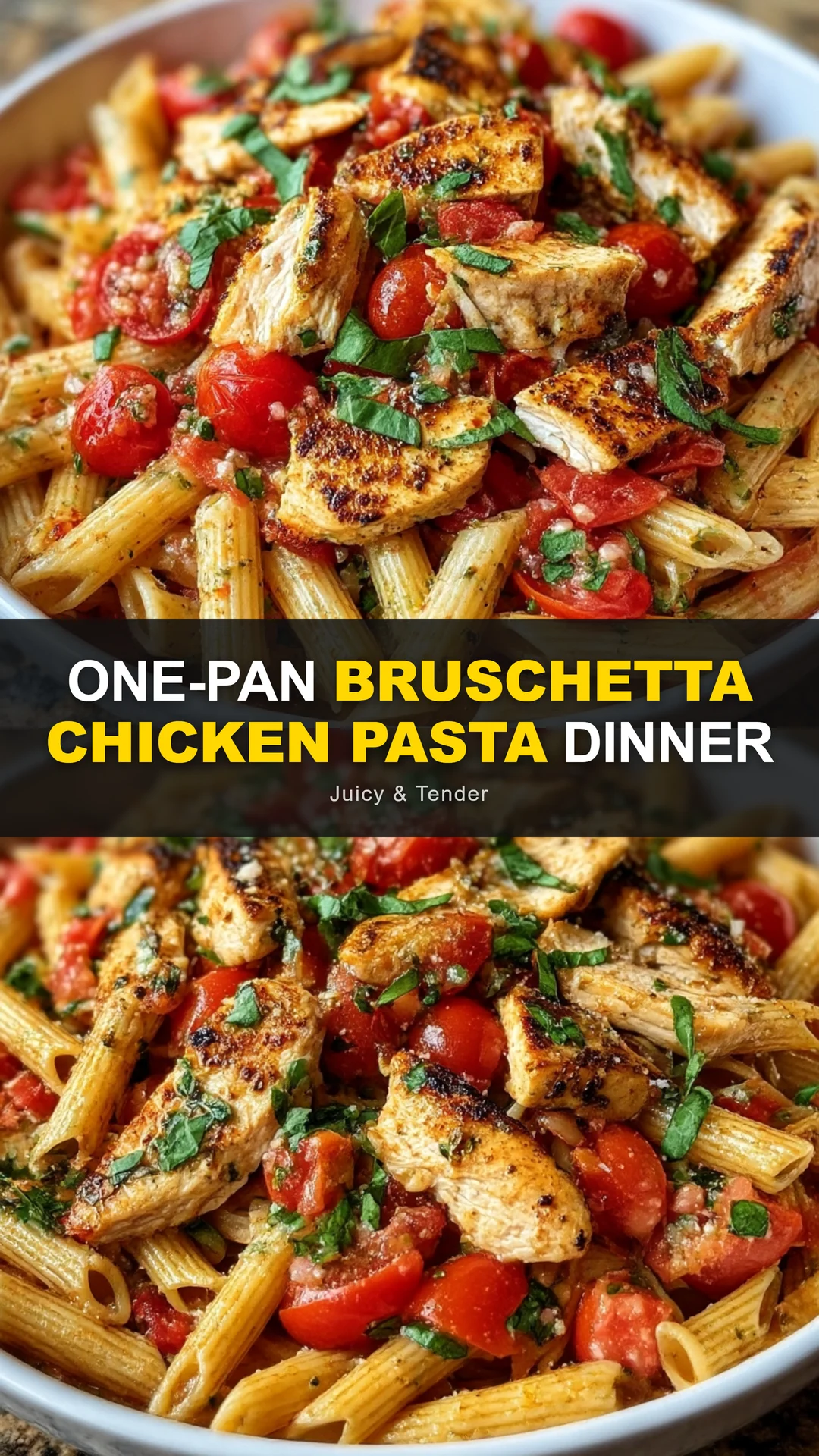
Reduce the heat to medium and add the remaining 1 tablespoon of olive oil. Add the minced garlic and cook, stirring constantly, for about 30 seconds until fragrant but not browned. Add the halved cherry tomatoes and cook for 2-3 minutes, stirring occasionally, until they start to soften and release their juices. Use a wooden spoon to scrape up the browned bits from the bottom of the pan—this deglazes the pan and incorporates all that flavor into the sauce. The tomatoes will become slightly jammy and burst open. Stir in the balsamic vinegar and let it cook for another minute to deepen the flavor.
Pour in the chicken broth and bring to a boil. Add the uncooked pasta, stirring to ensure it is submerged in the liquid. Reduce the heat to a gentle simmer, cover the skillet with a lid, and cook for 10-12 minutes, stirring once halfway through, until the pasta is al dente and most of the liquid has been absorbed. The pasta will absorb the broth and tomato flavors, becoming incredibly savory. If the pan looks dry before the pasta is done, add an extra 1/4 cup of broth or water. Remember that the sauce will continue to thicken as it sits.
Once the pasta is tender, return the cooked chicken to the skillet. Pour in the heavy cream and sprinkle the grated Parmesan cheese over the top. Stir gently to combine and let everything heat through for 1-2 minutes. The cream and Parmesan will meld into a luscious, silky sauce that coats each piece of pasta and chicken. Taste and adjust seasoning with salt and pepper. If you like a bit of heat, add a pinch of red pepper flakes. Finally, stir in the fresh basil, reserving some for garnish.
Remove the skillet from the heat. Serve the bruschetta chicken pasta immediately, garnished with additional fresh basil and a sprinkle of Parmesan if desired. For a complete meal, pair with a simple green salad or crusty bread to soak up any remaining sauce. This dish is best enjoyed fresh, but leftovers can be stored in an airtight container in the refrigerator for up to 3 days. Reheat gently on the stovetop or microwave with a splash of broth to restore creaminess.
For best results
- For the best flavor, use high-quality, ripe cherry tomatoes. They are naturally sweeter and more flavorful than out-of-season tomatoes. If you can only find larger tomatoes, Roma or San Marzano varieties work well; just dice them into small pieces. During winter, you can substitute with canned diced tomatoes (drained) but reduce the broth slightly since canned tomatoes have more liquid.
- To ensure the chicken stays juicy and develops a beautiful golden crust, do not overcrowd the pan. If you add too many pieces at once, they will steam rather than sear. Cook in two batches if necessary. Also, resist the urge to move the chicken around too much—let it cook undisturbed for 4-5 minutes per side to achieve that deep caramelization.
- The pasta will continue to absorb liquid as it sits. If you are planning to serve the dish later or want leftovers, slightly undercook the pasta (by about 1 minute) and add an extra splash of broth when reheating. You can also reserve a bit of the cooking liquid to adjust consistency before serving.
- Balsamic vinegar is a key ingredient that adds the signature tangy-sweet bruschetta flavor. Use a good quality balsamic vinegar—not the thick, syrupy glaze. If you only have balsamic glaze, dilute it with a teaspoon of water or red wine vinegar. For a non-alcoholic substitute, try apple cider vinegar mixed with a pinch of sugar.
- Fresh basil is non-negotiable for this recipe; dried basil will not provide the same vibrant, peppery flavor. To store fresh basil, place the stems in a glass of water at room temperature (not in the fridge) and cover loosely with a plastic bag. Change the water every two days—it will stay fresh for up to a week.
- If you prefer a lighter sauce, replace the heavy cream with half-and-half or whole milk. Keep in mind the sauce will be thinner. To thicken, mix 1 teaspoon of cornstarch with 2 teaspoons of cold water and stir it into the sauce during the last minute of cooking. For a dairy-free option, use full-fat coconut milk (the canned kind) for a subtle coconut flavor that pairs surprisingly well with tomato and basil.
Variations
- Make it vegetarian: Omit the chicken and add 1 can (15 oz) of drained chickpeas or white beans for protein. Sauté the chickpeas with the garlic and tomatoes until lightly golden. You can also add sautéed mushrooms or zucchini for extra texture. Use vegetable broth instead of chicken broth.
- Gluten-free adaptation: Swap the regular pasta with gluten-free pasta made from rice, corn, or quinoa. Note that gluten-free pasta often absorbs liquid differently, so check the package instructions. You may need to reduce the broth to 1 1/2 cups and cook for a shorter time. Avoid overcooking to prevent mushiness.
- Spicy Arrabbiata twist: Add 1/2 teaspoon of red pepper flakes along with the garlic, and stir in 1 tablespoon of tomato paste after the tomatoes soften. The paste deepens the tomato flavor and adds richness. For extra heat, finish with a drizzle of chili oil before serving.
- Creamy spinach version: Stir in 2 cups of fresh spinach leaves during the last 2 minutes of cooking, just until wilted. The spinach adds color and nutrients without overpowering the bruschetta flavors. You can also use kale—just cook it a few minutes longer.
- Protein swap: Use Italian sausage (casings removed) instead of chicken. Brown the sausage crumbles before cooking the garlic and tomatoes, then proceed with the recipe. The sausage adds a fennel-herb flavor that complements the tomatoes beautifully. For a seafood option, add cooked shrimp during the last 2 minutes of simmering.
Nutrition
- Calories485 kcal
- Total Fat22g
- Saturated Fat10g
- Cholesterol115mg
- Sodium680mg
- Total Carbohydrates38g
- Dietary Fiber3g
- Sugars6g
- Protein35g