
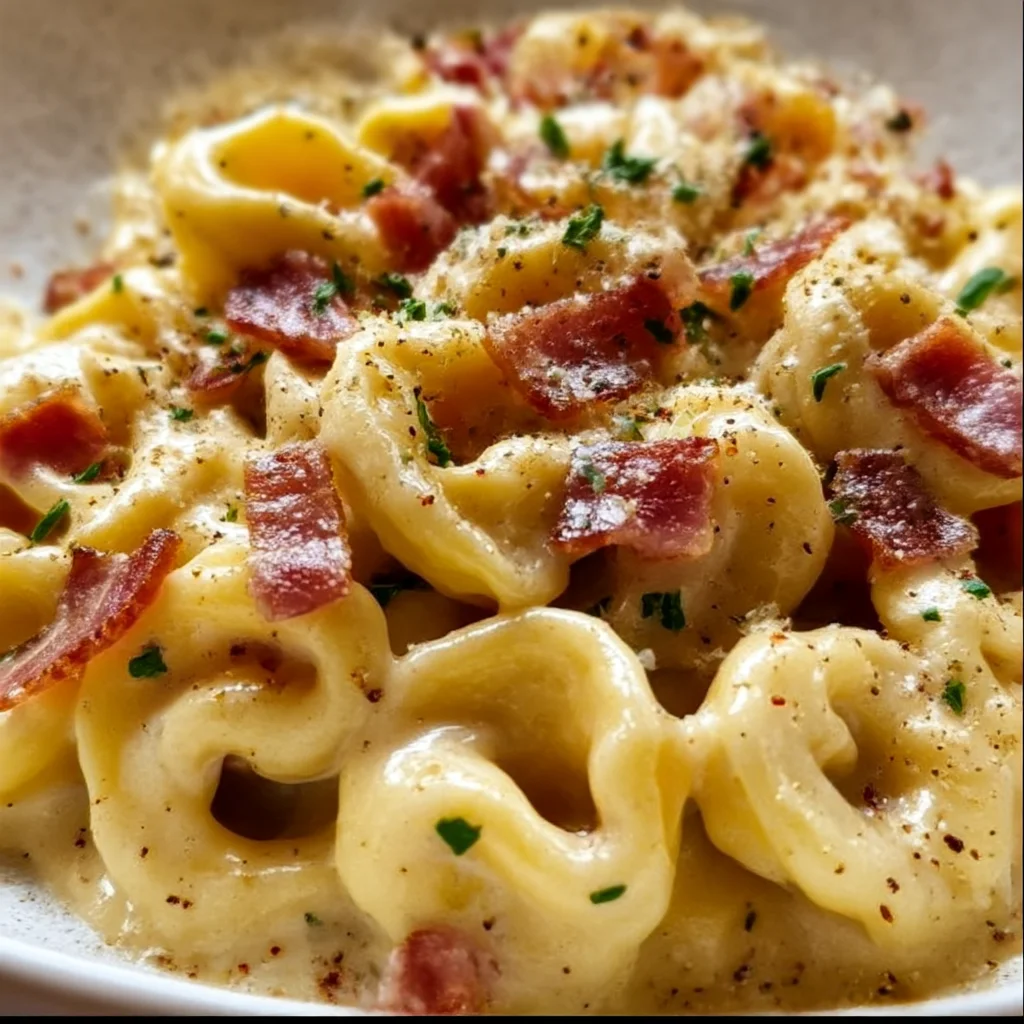
This creamy tortellini carbonara is a high-protein pasta twist on the classic, ready in 30 minutes. Cheese-stuffed tortellini, crispy pancetta, and a silky egg-parmesan sauce make an indulgent yet macro-friendly…
Ingredients
Instructions
Bring a large pot of generously salted water (about 1 tablespoon salt per 4 quarts water) to a rolling boil. The salt seasons the pasta from within, enhancing the overall flavor of the dish. While the water heats, crack the eggs into a medium bowl and whisk vigorously until the yolks and whites are fully combined and slightly frothy. Gradually whisk in the grated Parmesan cheese until the mixture is smooth and thick; set aside. The residual heat from the pasta will cook the eggs gently, so it’s crucial to start with room-temperature eggs to avoid scrambling.
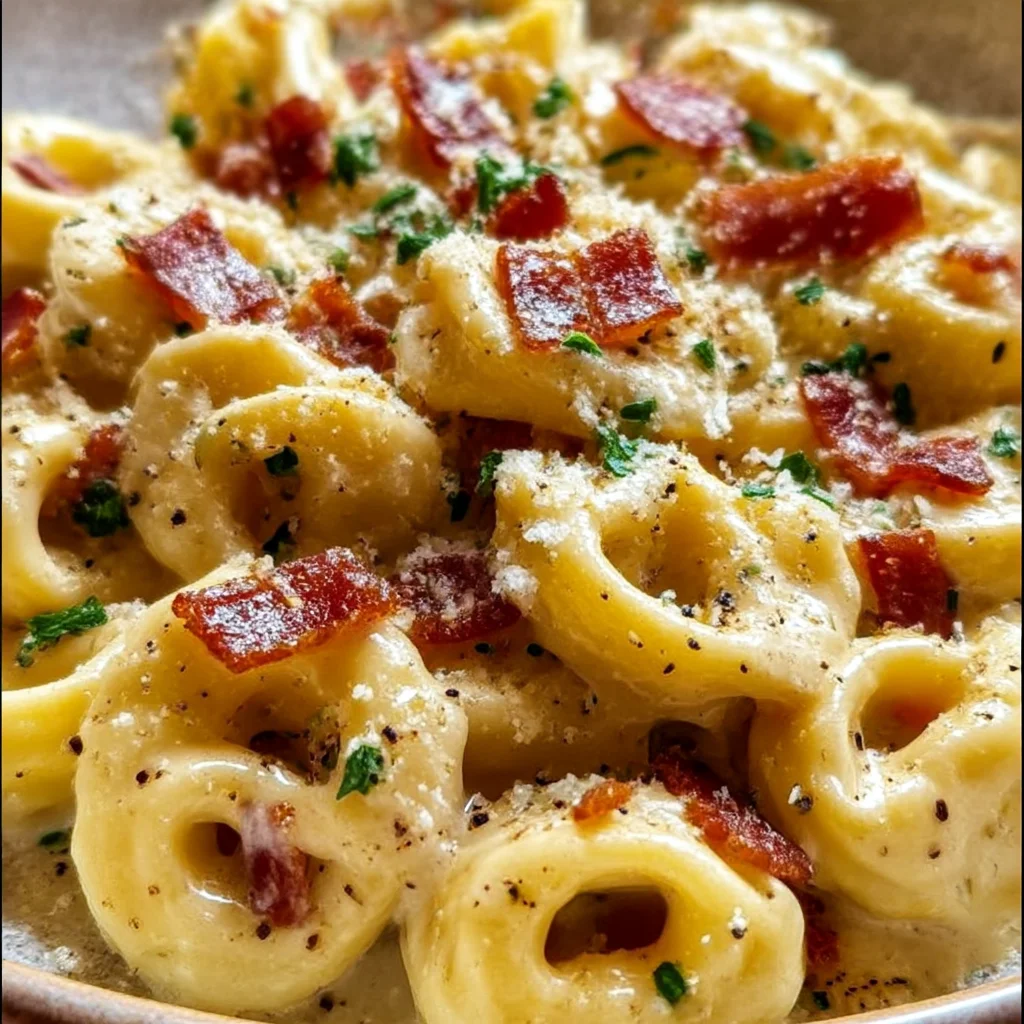
In a large, deep skillet or Dutch oven, cook the diced pancetta over medium heat, stirring occasionally, until the fat renders and the meat becomes crispy and golden brown (about 5-7 minutes). Use a slotted spoon to transfer the pancetta to a paper towel-lined plate, leaving about 2 tablespoons of rendered fat in the skillet. The pancetta fat is liquid gold—it will flavor the sauce and prevent the pasta from sticking. If using bacon instead, you may need to drain some fat to avoid greasiness.
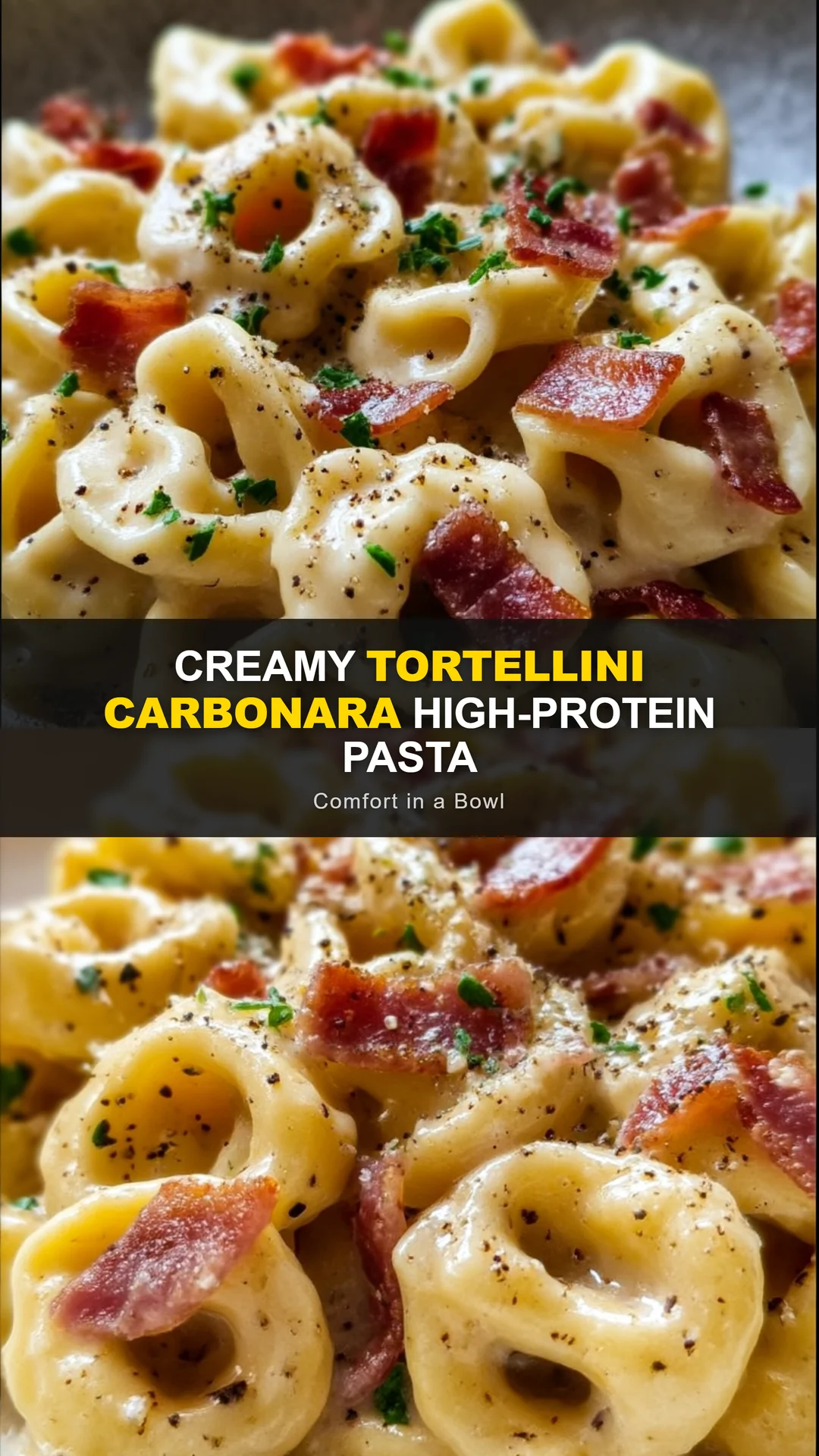
Add the minced garlic to the skillet with the reserved fat and sauté over medium-low heat for 30 seconds until fragrant but not browned. Garlic burns quickly and turns bitter, so keep a close eye. Immediately remove the skillet from the heat to prevent the garlic from overcooking. The skillet will be used later for tossing the pasta, so having it ready off the heat is key to a silky sauce.
Cook the tortellini in the boiling water according to package directions, usually 3-4 minutes for fresh or 5-7 minutes for frozen. Do not overcook; tortellini should be al dente with a slight bite. Reserve at least 1 cup of pasta cooking water before draining. The starchy water is the secret to a creamy, emulsified sauce that clings to every nook of the tortellini. Drain the pasta well but do not rinse—the starch on the surface helps the sauce adhere.
Working quickly, add the hot drained tortellini to the skillet with the garlic (off the heat). Pour the egg-Parmesan mixture over the pasta and toss vigorously with tongs for 30-60 seconds. The residual heat from the pasta will cook the eggs into a luscious, velvety sauce that coats each tortellini. If the sauce seems too thick, add reserved pasta water 1 tablespoon at a time, tossing continuously, until it reaches a creamy consistency that flows like heavy cream. If you added heavy cream, stir it in now to enrich the sauce further.
Return the crispy pancetta to the skillet, reserving a small handful for garnish. Add freshly ground black pepper and toss to combine. Taste and adjust seasoning with salt only if needed—pancetta and Parmesan are already salty. The pepper is a star here, so be generous. Serve immediately in warm bowls, topped with the reserved pancetta, extra grated Parmesan, and a sprinkle of fresh parsley. Carbonara waits for no one—it must be eaten right away to enjoy its creamy perfection.
For best results
- Use room-temperature eggs: Cold eggs can cause the sauce to seize or become lumpy when combined with hot pasta. Take the eggs out of the refrigerator 20-30 minutes before cooking. If you're short on time, place the eggs in a bowl of warm water for 5 minutes to bring them up to temperature. This simple step ensures a silky, emulsified sauce that coats every tortellini without scrambling.
- Freshly grate your Parmesan: Pre-shredded cheese contains anti-caking agents like cellulose that prevent it from melting smoothly, leading to a grainy sauce. For the best texture, buy a block of authentic Parmigiano-Reggiano and grate it fine using a Microplane or the small holes of a box grater. The finer the grate, the faster it incorporates into the eggs.
- Reserve extra pasta water: Don't be shy—save at least 1 cup of the starchy cooking water. The starch acts as a natural emulsifier, binding the fat and water in the sauce into a creamy, cohesive coating. If your sauce seems thin, add more pasta water; if it's too thick, add more. You can always adjust, but you can't add back water you've poured down the drain.
- Don't rinse the tortellini: After draining, resist the urge to rinse the pasta under cold water. The starch left on the surface is essential for the sauce to cling. Rinsing washes away that starch and makes the sauce slide off, resulting in a watery, separated mess. Simply drain well and transfer directly to the pan.
- Work off the heat: The key to a perfect carbonara is never exposing the eggs to direct high heat. Always remove the pan from the burner before adding the egg mixture. The gentle, residual heat from the pasta and pan is enough to cook the eggs to a safe temperature (165°F) while keeping them creamy. If you're nervous, you can use a double boiler or a heatproof bowl set over simmering water.
- Double the pancetta for extra crunch: If you're a bacon lover, feel free to increase the pancetta to 8 oz (225g). Cook it until extra crispy, then set aside a generous portion for the top. The contrast between the creamy pasta and crunchy meat is irresistible. You can also substitute guanciale (cured pork jowl) for an even richer, more authentic flavor.
Variations
- Vegetarian twist: Omit the pancetta and sauté 8 oz (225g) sliced mushrooms in olive oil until golden and crispy. The mushrooms provide a savory, umami-rich substitute that mimics the texture of pancetta. Add a pinch of smoked paprika for a hint of bacon-like smokiness. You can also stir in 1 cup of frozen peas at the end for sweetness and color.
- Gluten-free adaptation: Use gluten-free cheese tortellini (many brands make them with rice or corn flour) and ensure your Parmesan is gluten-free (some aged cheeses can contain trace gluten). The rest of the ingredients are naturally gluten-free. Follow the same cooking method, but be cautious with gluten-free pasta as it can overcook quickly—check for doneness 1 minute earlier than the package suggests.
- Spicy arrabbiata carbonara: Add 1/2 teaspoon red pepper flakes along with the garlic for a kick of heat. The spice cuts through the richness of the sauce and adds depth. For an extra layer, finish with a drizzle of chili-infused olive oil before serving. This variation is perfect for those who love a little heat in their comfort food.
- Chicken carbonara: For an even higher protein boost, add 1 lb (450g) diced cooked chicken breast. Sear the chicken in the skillet first until golden, then remove and set aside with the pancetta. Proceed with the recipe and toss the chicken back in at the end. This turns the dish into a complete, macro-friendly meal with over 40g protein per serving.
- Lighter version: Swap the heavy cream for 1/2 cup (120ml) low-fat milk mixed with 1 teaspoon cornstarch (slurry) to maintain creaminess. Use whole wheat tortellini for added fiber and reduce the Parmesan to 3/4 cup (75g). The sauce will be slightly less rich but still satisfyingly creamy, cutting calories by about 100 per serving.
Nutrition
- Calories485 kcal
- Total Fat24g
- Saturated Fat11g
- Cholesterol215mg
- Sodium890mg
- Total Carbohydrates38g
- Dietary Fiber2g
- Sugars3g
- Protein28g