
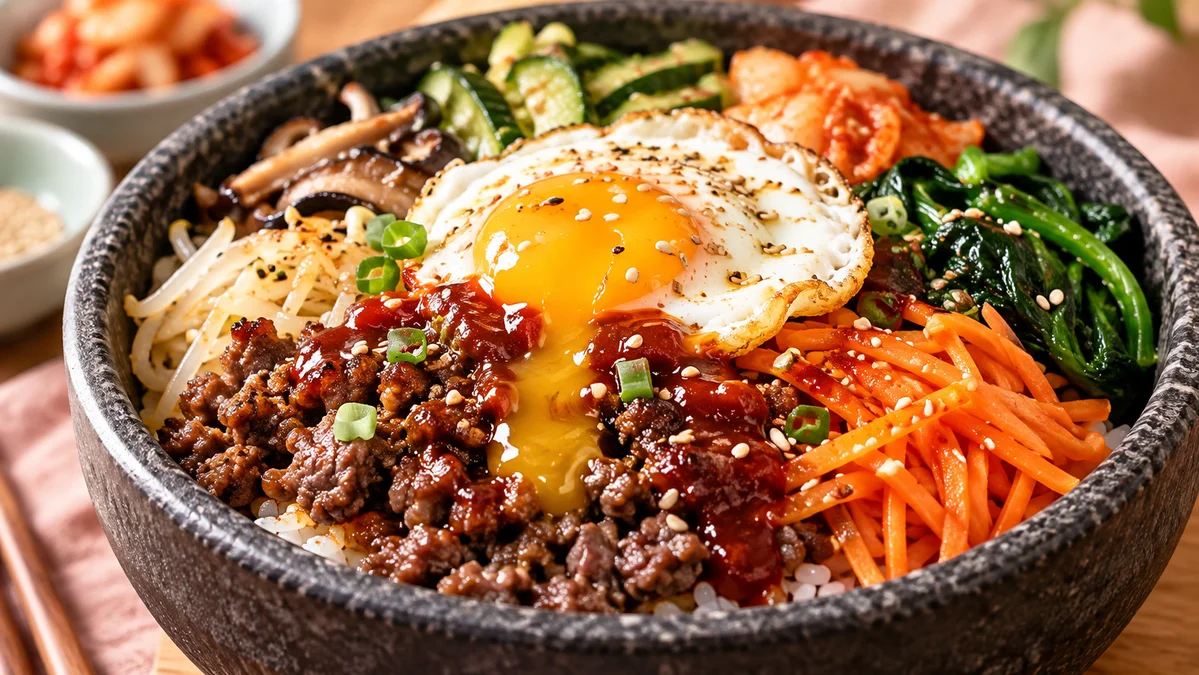
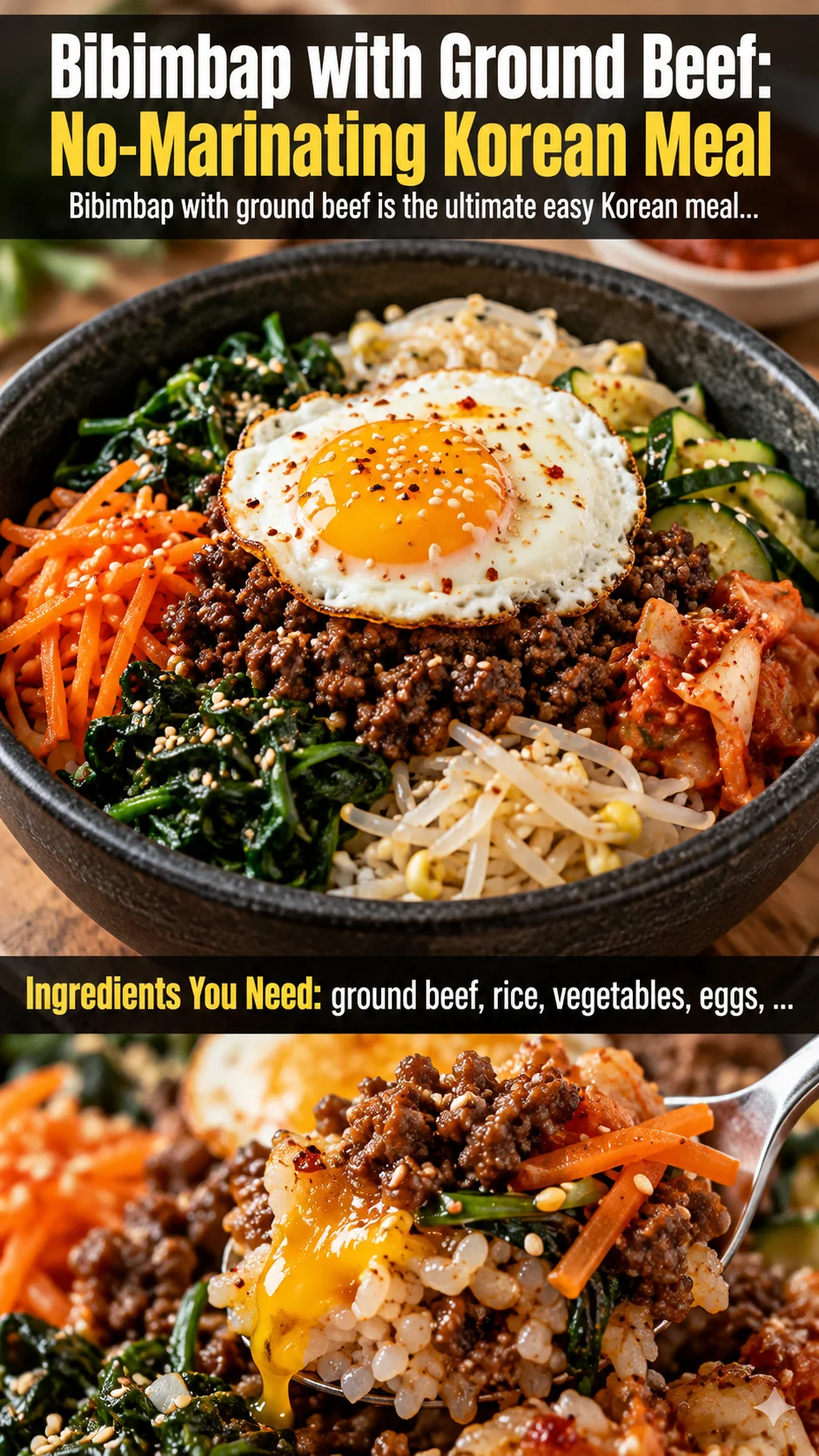
Bibimbap with ground beef is the ultimate easy Korean meal with no marinating needed. This high-protein Korean beef bowl is ready in 30 minutes for busy weeknights.
Ingredients
Instructions
Begin with mise en place, the French culinary practice of gathering and organizing every ingredient before you turn on the heat. This is the secret to a true 30-minute bibimbap because the actual cooking moves quickly. If you are starting with raw short-grain rice, rinse it until the water runs clear, then cook it according to package directions or in a rice cooker; you need about 3 cups of hot cooked rice. While the rice cooks, peel and julienne the carrot, trim and julienne the zucchini, rinse the bean sprouts, and slice the green onions. Measure out the gochujang, soy sauce, sesame oil, brown sugar, garlic, ginger, and sesame seeds. Pat the ground beef dry with paper towels, which helps it brown instead of steam. Set the spinach leaves in a bowl. Keeping everything within arm’s reach means you can sauté, brown, and fry without scrambling, and it guarantees the vegetables stay crisp-tender rather than soggy. This prep step is also where you set out four deep bowls so assembly is fast.
Cook or reheat the rice and keep it covered and warm. Short-grain rice is traditional for bibimbap because its plump, sticky kernels cling together and soak up the gochujang sauce without turning mushy. If you have day-old rice, sprinkle it with a tablespoon of water, cover it, and microwave it until steaming; day-old rice actually warms beautifully because it has less surface moisture. For stovetop rice, bring 1 cup rinsed rice and 1 1/4 cups water to a boil, reduce heat, cover, and simmer for 15 minutes, then rest off heat for 10 minutes. Fluff with a fork or rice paddle. The rice should be hot, glossy, and slightly sticky, never crunchy or waterlogged. Keep it covered while you cook the toppings so the steam finishes the grains and the bowl stays hot when you assemble. If you are using a rice cooker, start it before any chopping; it will hold warm for up to 30 minutes without drying out.
Whisk together the gochujang sauce in a small bowl: 3 tablespoons gochujang, 2 tablespoons soy sauce, 1 tablespoon toasted sesame oil, 1 tablespoon brown sugar or honey, 3 minced garlic cloves, 1 teaspoon grated ginger, and 1 tablespoon toasted sesame seeds. Taste and adjust. Gochujang brands vary widely in heat, sweetness, and saltiness, so this step is about balancing. You want a glossy, thick sauce that tastes savory, gently sweet, and spicy enough to make your lips tingle but not so hot that it overwhelms the vegetables. If it is too thick, add a teaspoon of water; if too salty, add a pinch more sugar; if too mild, add a dab more gochujang. Let the sauce sit while you cook so the garlic and ginger mellow slightly. It will smell pungent, sweet, and nutty, and it should coat the back of a spoon. This sauce is the soul of the bowl, so do not rush it.
Heat a large skillet or wok over medium-high heat and add a teaspoon of neutral oil. Add the ground beef in a single layer, breaking it into small crumbles with a wooden spoon. Let it sit undisturbed for 2 minutes so a deep brown crust forms, then stir and continue cooking for 4 to 6 minutes until no pink remains and the crumbles are juicy but not watery. Season with a pinch of salt and pepper. If your beef releases a lot of fat, spoon off all but 1 tablespoon so the final bowl is not greasy. For extra flavor, splash in 1 tablespoon soy sauce during the last minute and toss until it glistens. The beef should look caramelized at the edges, smell savory and beefy, and taste seasoned throughout. Transfer it to a plate and cover loosely with foil while you cook the vegetables. Ground beef is ideal here because it needs no marinating and delivers rich flavor in minutes.
In the same skillet, add another teaspoon of oil if needed. Sauté the carrots first for 2 to 3 minutes until just tender but still bright orange and slightly crisp; transfer to a plate. Then sauté the zucchini for 2 minutes until translucent at the edges but not limp; transfer. Add the bean sprouts and a pinch of salt, cook for 1 to 2 minutes until just wilted, then transfer. Finally, add the spinach and cook for 30 to 60 seconds until it collapses and turns deep green; squeeze out excess water if needed. Cooking each vegetable separately is the classic bibimbap technique because it preserves individual colors, textures, and flavors. You want a rainbow of toppings: orange, green, white, and deep green. If you crowd the pan, the vegetables steam and turn dull, so work in batches and keep the heat high. Season each vegetable lightly with salt and a drop of sesame oil at the end.
Wipe the skillet and add a thin layer of neutral oil over medium heat. Crack the eggs into the pan, keeping the yolks intact. Fry for 2 to 3 minutes until the whites are set and crisp at the edges but the yolks are still runny, or cook to your preferred doneness. For a classic bibimbap experience, the runny yolk acts as a rich sauce that mingles with the gochujang and coats the rice. If you prefer firmer eggs, cook them 1 minute longer, or make them sunny-side up with a lid for 30 seconds to set the top. Season the eggs lightly with salt and pepper. Slide them onto a plate as they finish. The eggs should smell buttery, look glossy, and jiggle slightly when you nudge the pan. If you are serving a crowd, fry the eggs in batches and keep them warm in a low oven.
To assemble, divide the hot rice among four deep bowls. Arrange the ground beef, sautéed carrots, zucchini, bean sprouts, and spinach in separate sections over the rice, like a colorful wheel. Place a fried egg in the center of each bowl. Spoon 1 to 2 tablespoons of the gochujang sauce over the egg and vegetables, or serve it on the side so everyone can control the heat. Sprinkle with sliced green onions and extra sesame seeds. The bowls should look vibrant and abundant, with steam rising and the yolk gleaming. If you are meal-prepping, pack the rice, beef, and vegetables in separate compartments and keep the sauce and egg separate until serving. The hot rice will gently warm the toppings, so serve immediately for the best contrast of hot rice, cool crisp vegetables, and rich egg.
Serve the bibimbap immediately, encouraging everyone to mix everything together vigorously with a spoon or chopsticks. The goal is to break the yolk, swirl in the gochujang, and create a cohesive, spicy, savory bite with different textures in every mouthful. For storage, keep leftovers without the egg and sauce in an airtight container in the refrigerator for up to 3 days. Reheat the rice, beef, and vegetables in a covered skillet or microwave with a splash of water until steaming. Fry a fresh egg and add fresh sauce when you are ready to eat. You can also enjoy the leftovers cold as a Korean-style rice salad. Do not freeze the assembled bowls with egg; the texture suffers. If you have extra gochujang sauce, it keeps in the fridge for up to 2 weeks and is delicious on eggs, noodles, or roasted vegetables.
For best results
- Choose the right ground beef. For the juiciest, most flavorful crumbles, use 80/20 or 85/15 ground beef. The fat renders into the sauce and keeps the meat tender, while leaner 90/10 or 93/7 can turn dry and pebbly in the hot skillet. If you only have lean beef, add an extra teaspoon of neutral oil and avoid overcooking. You can also mix in a tablespoon of grated onion or a beaten egg white to help bind moisture. The beef does not need a marinade because the gochujang sauce and the rendered fat provide all the seasoning. Brown it hard in a single layer for the best crust, and resist stirring constantly. That caramelization is where the deep, savory flavor comes from.
- Rice matters more than you think. Short-grain or medium-grain rice, such as Calrose or sushi rice, gives bibimbap its signature sticky, spoonable texture. Long-grain rice like jasmine or basmati will taste fine but will not clump and soak up the sauce in the same way. Rinse the rice until the water runs clear to remove excess starch, then cook it with slightly less water than usual for a firmer grain. Day-old refrigerated rice is excellent because it dries out slightly and warms without becoming gluey. Always serve the rice hot, because the heat gently wilts the spinach and warms the beef. If you want crispy rice, press the cooked rice into an oiled skillet for 3 to 4 minutes before assembling.
- Cook vegetables separately for the best texture. The classic bibimbap method cooks each vegetable individually, and that is not busywork. Carrots need a couple of minutes to soften, zucchini releases water quickly, bean sprouts need only a flash in the pan, and spinach collapses in under a minute. If you throw them all in together, they will steam, turn dull, and lose their distinct flavors. Season each vegetable lightly at the end with salt and a few drops of sesame oil, and spread them on a plate to cool slightly so they do not wilt the rice. This step also lets you customize the bowl for picky eaters. The result is a rainbow of toppings that looks as good as it tastes.
- Balance the gochujang sauce to your taste. Gochujang is a fermented Korean chili paste that brings sweetness, umami, and gentle heat. Different brands vary dramatically, so taste as you go. If your sauce is too spicy, add a little more sugar, honey, or even a spoonful of mayonnaise or yogurt for a creamy bibimbap-style sauce. If it is too sweet, add a splash of soy sauce or rice vinegar. A teaspoon of toasted sesame oil at the end adds a nutty aroma that makes the sauce sing. You can also add minced garlic, grated apple, or pear for a fruity note. Make a double batch and keep it in a jar; it lasts for weeks and transforms rice, noodles, and roasted vegetables.
- Meal prep like a pro. Bibimbap is one of the best meals for busy weeks because the components store beautifully. Cook the rice, beef, and vegetables separately, then refrigerate them in individual containers for up to 4 days. Keep the gochujang sauce in a small jar and the eggs uncooked. On the night you want dinner, reheat the rice and toppings in a covered skillet with a splash of water, fry an egg, and assemble. You can also pack the components in a bento box and eat them cold. If you want to save even more time, use pre-shredded carrots, bagged spinach, and microwaveable rice. Just remember to drain any excess liquid from the vegetables before storing.
- Do not skip the egg. The fried egg is not just a garnish; its runny yolk becomes a silky sauce that ties the spicy gochujang, savory beef, and nutty rice together. For the perfect sunny-side-up egg, use medium heat, a little oil, and a lid for the last 30 seconds to set the white without cooking the yolk. If you are concerned about food safety, use pasteurized eggs or cook the yolk until firm. For a vegan version, omit the egg and add sliced avocado or a drizzle of tahini for creaminess. You can also soft-boil eggs for 6 minutes, shock them in ice water, and slice them in half. Either way, the egg adds richness and protein that makes the bowl satisfying.
- Customize with banchan and pantry staples. Traditional bibimbap is often served with small side dishes called banchan, and you can raid your fridge for inspiration. Kimchi adds tang and crunch, pickled radish brings brightness, and a sprinkle of crushed nori or furikake adds umami. Mushrooms, bell peppers, broccoli, and bok choy are all excellent additions. If you have leftover bulgogi, grilled chicken, or tofu, use it instead of ground beef. A dollop of mayonnaise mixed with gochujang makes a creamy spicy sauce that is popular in Korean fusion bowls. The beauty of bibimbap is that it is endlessly adaptable, so use what you have and make it your own.
Variations
- Ground turkey or chicken bibimbap. Swap the ground beef for 1 pound of ground turkey or ground chicken. Because these meats are leaner, add an extra teaspoon of oil to the skillet and season the meat with a pinch of salt, garlic powder, and a splash of soy sauce as it cooks. Cook until no pink remains, about 5 to 7 minutes, and break it into small crumbles. The gochujang sauce adds plenty of flavor, so the bowl will still taste bold and satisfying. If you want a more traditional Korean flavor, mix a tablespoon of mirin or grated Asian pear into the meat as it finishes cooking. This version is lighter but still high in protein, and it works beautifully for meal prep.
- Vegetarian or vegan bibimbap. Omit the beef and eggs, and build the bowl with sautéed mushrooms, crispy tofu, and extra vegetables. Press and cube firm tofu, toss it in cornstarch, and pan-fry until golden on all sides. Season with soy sauce, garlic, and a little sesame oil. For the sauce, use a vegan gochujang and replace the honey with maple syrup or agave. Add avocado slices for creaminess and a handful of crushed walnuts or roasted peanuts for crunch. You can also use tempeh or seitan for a hearty texture. The key is to season each component well, because vegetables and tofu need more salt and acid than meat to taste vibrant. This vegan version is colorful, protein-rich, and completely satisfying.
- Low-carb cauliflower rice bibimbap. Replace the white rice with 4 cups of riced cauliflower, either fresh or frozen. Sauté the cauliflower in a skillet with a teaspoon of sesame oil until tender and slightly toasted, about 5 to 7 minutes. Season with salt and a splash of soy sauce. The cauliflower soaks up the gochujang sauce and keeps the bowl light and keto-friendly. Use ground beef or ground turkey, and pile on the vegetables and a fried egg. Be careful not to overcook the cauliflower, or it will turn mushy. If you miss the chew of rice, mix half cauliflower rice with half cooked short-grain rice for a lower-carb compromise that still feels satisfying.
- Spicy pork or bulgogi-style bibimbap. For a richer, more traditional flavor, use thinly sliced pork belly or ribeye instead of ground beef. Marinate the meat for 15 minutes in soy sauce, sesame oil, garlic, ginger, and a grated Asian pear or apple, then sear it in a hot skillet until caramelized. This adds a little prep time but delivers incredible depth. You can also use leftover bulgogi or Korean BBQ. If you want a spicy kick, add a tablespoon of gochugaru (Korean chili flakes) to the sauce. The sliced meat drapes beautifully over the rice and looks stunning in photos. Serve with extra kimchi and a sprinkle of sesame seeds for a restaurant-quality bowl at home.
- Crispy dolsot-style bibimbap. To mimic the stone bowl version served in Korean restaurants, heat a heavy cast-iron skillet or dolsot over medium-high heat with a tablespoon of sesame oil. Press the cooked rice into an even layer and let it sizzle for 3 to 5 minutes without stirring. The bottom will form a golden, crunchy crust called nurungji. Arrange the toppings over the rice, crack an egg in the center, and serve immediately. The residual heat will cook the egg slightly and keep everything hot. Be careful when serving, as the bowl will be extremely hot; set it on a wooden trivet. This variation adds an exciting texture and makes a dramatic presentation for guests.
Nutrition
- Calories560 kcal
- Total Fat24g
- Saturated Fat8g
- Cholesterol210mg
- Sodium820mg
- Total Carbohydrates58g
- Dietary Fiber6g
- Sugars9g
- Protein32g