
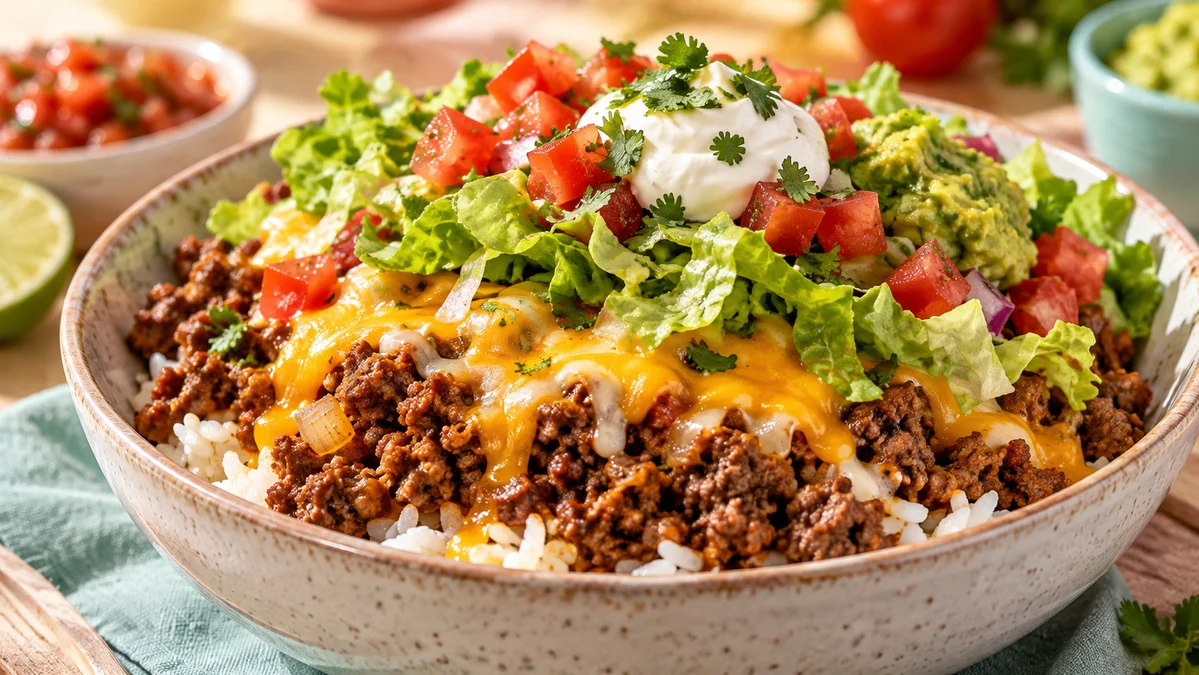
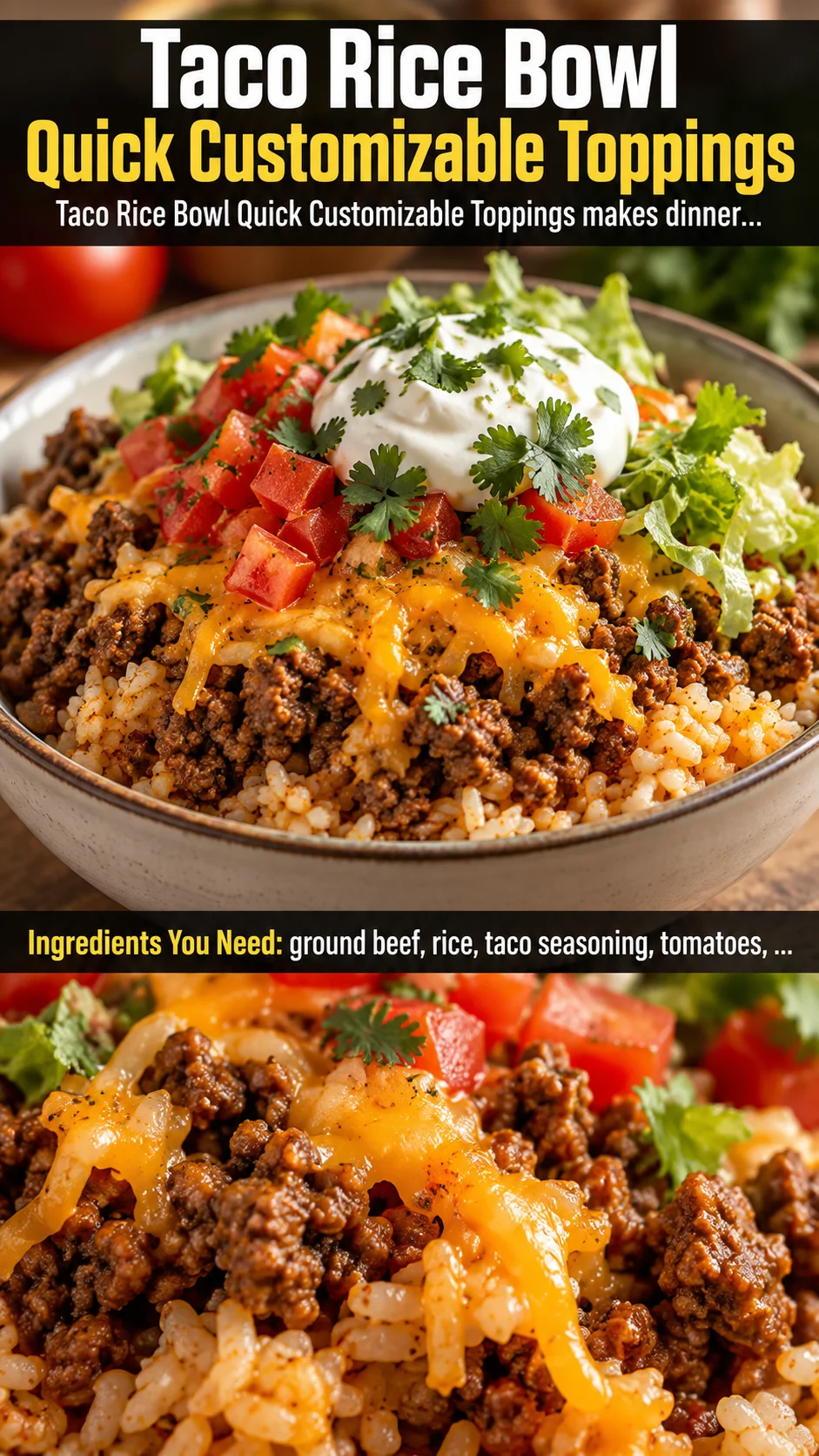
This Taco Rice Bowl with quick customizable toppings is a 30-minute high-protein dinner featuring seasoned ground beef, fluffy rice, and fresh veggies.
Ingredients
Instructions
Begin by gathering and prepping every ingredient before you turn on the heat. Set out the ground beef, cooked rice, taco seasoning, tomatoes, lettuce, cheese, sour cream, salsa, black beans, corn, cilantro, lime, avocado, olive oil, garlic, onion, cumin, chili powder, smoked paprika, salt, and pepper. This mise en place step is the secret to a true 30-minute dinner because it eliminates frantic searching while the beef browns. As you prep, think about texture: dice the tomatoes into bite-size pieces, shred the lettuce into thin ribbons, and grate the cheese so it melts quickly over the hot beef. If you are using canned beans, drain and rinse them now to remove excess sodium and starch. The goal is to have every topping within arm’s reach so the final assembly feels effortless and fast.
If you do not already have leftover rice, cook 1 cup of dry long-grain white rice according to the package directions, usually with 2 cups of water and a pinch of salt. For the fluffiest results, rinse the rice until the water runs clear before cooking; this removes surface starch that can make the grains gluey. Once cooked, let the rice rest covered for 5 minutes, then fluff it with a fork. You are looking for grains that are tender, separate, and slightly chewy, not wet or mushy. If you are short on time, microwave-ready rice works beautifully, but warm it with a splash of water and a squeeze of lime to wake up the flavor. Rice is the mild, comforting base that balances the salty, spicy beef and the cool, crunchy toppings, so seasoning it lightly with salt is important.
Place a large skillet over medium-high heat and add 2 tablespoons of olive oil. Once the oil shimmers, add the diced onion and cook for 3 to 4 minutes until it turns translucent and begins to soften. Stir in the minced garlic and cook for just 30 seconds until fragrant. This short sauté is called blooming, and it wakes up the garlic’s natural sugars and aromatic oils. Be careful not to burn the garlic, because burnt garlic turns bitter and will ruin the entire skillet. Your kitchen should smell warm, savory, and inviting at this point. If the garlic starts to brown too fast, lower the heat immediately and add the beef right away to stop the cooking.
Add the ground beef to the skillet and break it apart with a wooden spoon or spatula. Cook for 5 to 6 minutes, stirring occasionally, until the beef is no longer pink and has developed small, browned crumbles. Resist the urge to stir constantly; letting the beef sit undisturbed for a minute at a time encourages browning, which builds deep flavor. If your beef releases a lot of fat, carefully tilt the skillet and spoon off the excess, leaving about 1 tablespoon for moisture and richness. You want the meat to look juicy but not swimming in grease. When it is done, the beef should be tender, crumbly, and coated in its own savory juices.
Sprinkle the taco seasoning over the beef, then add the ground cumin, chili powder, smoked paprika, salt, and black pepper. Pour in about 1/4 cup of water and stir well, scraping up any browned bits from the bottom of the skillet. Simmer for 2 to 3 minutes until the sauce thickens and clings to the meat rather than pooling at the bottom. Taste a small spoonful and adjust: add more salt for depth, chili powder for heat, or a pinch of sugar if the tomatoes in your salsa make it too acidic. The finished beef should be glossy, fragrant, and boldly seasoned. This is the flavor anchor of the bowl, so do not rush this step.
While the beef simmers, prepare the fresh toppings. Dice the tomatoes, shred the lettuce, slice the avocado, chop the cilantro, and cut the lime into wedges. Keep the cold toppings refrigerated until the moment of assembly so they stay crisp and refreshing against the hot rice and beef. If you are using cheese, grate it fresh rather than buying pre-shredded, because fresh cheese melts more smoothly and tastes creamier. The contrast between hot, savory beef and cool, crunchy vegetables is what makes this taco rice bowl so satisfying. Set everything out on a board or in small bowls so you can build each serving quickly and let everyone customize their own bowl.
Warm the black beans and corn in a small saucepan over medium heat or in the microwave for 1 to 2 minutes. Season them with a pinch of salt and a squeeze of lime juice to brighten their flavor. Warming the beans and corn makes them taste more comforting and helps them meld with the seasoned beef. If you prefer a colder, more salad-like bowl, you can absolutely use them at room temperature, but the warm version feels more like a complete dinner. Stir gently so the beans do not break apart. Set them aside with the other toppings, keeping them covered so they stay warm until assembly.
To assemble, divide the fluffy rice among four bowls. Spoon the seasoned ground beef over the rice, then add the warm black beans and corn. Pile on the diced tomatoes, shredded lettuce, and shredded cheese. Add a dollop of sour cream and a spoonful of salsa, then finish with avocado slices, cilantro, and a lime wedge. Build the bowl in layers so every bite gets a little rice, a little beef, and a little crunch. If you are meal-prepping, keep the lettuce, tomatoes, and avocado separate and add them just before eating. The colors should be vibrant: red tomatoes, green lettuce, golden corn, creamy avocado, and rich brown beef.
Serve the taco rice bowls immediately while the beef and rice are still warm. Give each bowl a final squeeze of lime and a sprinkle of cilantro. Taste one bite and check the balance: if it needs brightness, add lime; if it needs richness, add sour cream or cheese; if it needs heat, add salsa or sliced jalapeño. This is the moment to customize, so let everyone adjust their own bowl. Store any leftovers in separate airtight containers in the refrigerator, keeping the rice and beef together and the fresh toppings separate. The beef and rice last up to 4 days, while lettuce, tomatoes, and avocado are best within 1 to 2 days. Reheat the beef and rice to 165°F (74°C) before serving.
For best results
- Choose 90% lean ground beef if you want a high-protein bowl without excess grease. Lean beef still browns beautifully and stays juicy when you add a splash of water with the taco seasoning. If you only have 80% lean, pour off the extra fat after browning so the final bowl does not feel heavy. For the most flavor, look for grass-fed beef or a local butcher blend with a little chuck for richness. You can also swap in ground turkey or chicken, but add an extra teaspoon of olive oil since poultry is leaner and can dry out faster.
- Toast your rice in a dry skillet for 2 minutes before cooking it if you have a few extra minutes. This step deepens the nutty flavor of the grains and helps them stay separate. Another restaurant-style trick is to cook the rice in chicken broth instead of water and add a squeeze of lime at the end. If you are using leftover rice, sprinkle it with a tablespoon of water, cover it, and microwave it until steaming. This restores moisture without making the rice soggy. Always fluff rice with a fork rather than stirring it, which can crush the grains.
- Make your own taco seasoning for better control over sodium and spice. A simple blend of 1 tablespoon chili powder, 1 teaspoon cumin, 1 teaspoon smoked paprika, 1/2 teaspoon garlic powder, 1/2 teaspoon onion powder, and a pinch of cayenne or oregano is excellent. Store it in an airtight jar for up to 6 months. Homemade seasoning tastes fresher and lets you avoid anti-caking agents found in some packets. If you use a packet, taste the beef before adding extra salt, because packets vary widely in sodium. A little brown sugar or honey can balance excessive bitterness or acidity.
- Do not overcrowd the skillet when browning the beef. If your pan is too small, cook the meat in two batches so it sears instead of steams. Overcrowding traps moisture and produces gray, boiled-tasting crumbles rather than browned, flavorful bits. Give the beef space, let it sit for a minute, then break it up. Use a heavy-bottomed skillet or cast-iron pan for the best crust. After browning, deglaze the pan with a spoonful of water or salsa to capture the fond, the browned flavor stuck to the bottom. That fond is pure umami and should end up in your bowl, not in the sink.
- Balance is everything in a taco rice bowl. You need richness from beef and cheese, brightness from lime and cilantro, heat from salsa or chili, and crunch from lettuce. If your bowl tastes flat, it usually needs acid, not more salt. A squeeze of lime or a spoonful of pickled jalapeños can transform the entire dish. If it tastes too spicy, add sour cream, avocado, or a little more rice. If it tastes too dry, add salsa or a splash of beef broth. Taste as you build and trust your palate.
- For meal prep, layer strategically. Put rice at the bottom, then beef, beans, and corn. Keep lettuce, tomatoes, avocado, and sour cream in separate small containers. When you are ready to eat, reheat the rice and beef, then add the cold toppings. This prevents soggy lettuce and mushy tomatoes. Glass containers work best because they do not stain or hold onto strong spices. Label with the date and use within 4 days for the best quality. If you pack lunches, add a lime wedge and cilantro in a tiny bag so you can freshen the bowl at work.
- Freshly grated cheese melts more evenly and tastes far better than pre-shredded cheese, which is coated with potato starch or cellulose to prevent clumping. For a melty, gooey texture, use a blend of cheddar and Monterey Jack. If you want a cheese pull, add the cheese directly over the hot beef and cover the bowl for 30 seconds before adding the cold toppings. For dairy-free bowls, use a cashew crema or a dollop of guacamole instead of sour cream and cheese. Nutritional yeast can add a cheesy, savory note if you are avoiding dairy.
- Salt your components in layers rather than all at once. Season the beef, season the rice water, and add a pinch of salt to the tomatoes and avocado. Layered seasoning tastes more complex than simply salting the finished bowl. However, be careful with canned beans and salsa, which already contain sodium. Taste each component before combining. If you are watching sodium, rinse the beans thoroughly and use a low-sodium taco seasoning. A final squeeze of lime and a sprinkle of flaky sea salt just before serving can make the whole bowl pop.
Variations
- For a lighter turkey or chicken version, substitute 1 pound of ground turkey or ground chicken for the beef. Because poultry is leaner, add an extra tablespoon of olive oil to the skillet and cook until the meat is just cooked through, about 6 to 7 minutes. You may also want to add a little extra taco seasoning or a spoonful of tomato paste to boost flavor. Ground turkey bowls are excellent for meal prep and stay tender when reheated with a splash of broth. If you use ground chicken, break it up finely so it absorbs the spices evenly.
- Make a vegetarian taco rice bowl by replacing the beef with 2 cups of cooked lentils, 1 can of drained black beans, or a combination of both. Sauté the onion and garlic as directed, then add the lentils or beans with the taco seasoning and a splash of water. Simmer for 5 minutes so the flavors meld. For a heartier texture, add 1 cup of sautéed mushrooms or crumbled tempeh. This version is budget-friendly, high in fiber, and still packed with protein. Top with avocado, salsa, and cilantro for a fresh, satisfying bowl.
- For a low-carb or keto-friendly bowl, swap the rice for cauliflower rice or a mix of cauliflower rice and shredded cabbage. Sauté the cauliflower rice in olive oil for 3 to 4 minutes until tender, then season with salt, lime, and cilantro. Keep the beef, cheese, sour cream, salsa, and avocado, and skip the beans and corn to reduce carbs. This version is still deeply flavorful and comes together in under 30 minutes. Be careful not to overcook cauliflower rice, or it becomes mushy; cook it just until the raw edge disappears.
- Add a Korean-Mexican fusion twist by stirring 1 to 2 tablespoons of gochujang or chili-garlic sauce into the cooked beef along with the taco seasoning. Top the bowl with kimchi, sliced scallions, toasted sesame seeds, and a drizzle of mayonnaise mixed with lime juice. The spicy, fermented flavors of kimchi pair beautifully with the savory beef and fluffy rice. You can also use bulgogi-style thinly sliced beef instead of ground beef for a different texture. This variation is bold, punchy, and perfect for anyone who loves spicy food.
- Turn this into a breakfast taco rice bowl by adding scrambled eggs, crispy bacon, and a drizzle of hot sauce. Cook the beef as directed, then scramble 4 to 6 eggs in a separate skillet until soft and creamy. Build the bowl with warm rice, beef, eggs, cheese, tomatoes, avocado, and cilantro. A spoonful of salsa or pico de gallo adds freshness. This is a fantastic way to use leftover rice and beef, and it makes a hearty weekend breakfast or brunch. You can also add roasted potatoes or black beans for extra staying power.
- Swap the ground beef for cilantro-lime shrimp for a lighter, coastal-inspired bowl. Toss 1 pound of peeled shrimp with olive oil, lime juice, garlic, cumin, chili powder, and salt. Sauté over medium-high heat for 2 to 3 minutes per side until pink and opaque. Serve over rice with black beans, corn, avocado, and a creamy cilantro-lime dressing. Shrimp cooks very quickly, so have all your toppings ready before you start. This version feels elegant enough for guests but is still fast enough for a weeknight. Do not overcook the shrimp, or they will become rubbery.
Nutrition
- Calories520 kcal
- Total Fat26g
- Saturated Fat10g
- Cholesterol85mg
- Sodium780mg
- Total Carbohydrates42g
- Dietary Fiber6g
- Sugars5g
- Protein32g