
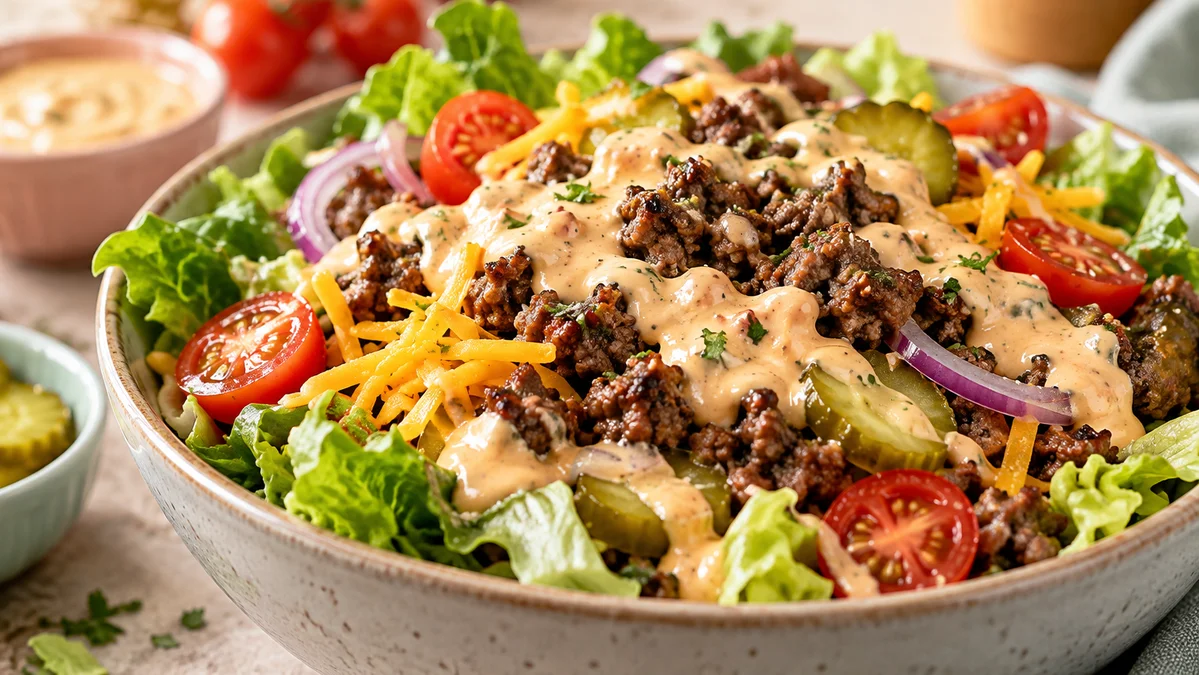
Quick healthy burger bowl recipe for weeknight dinner with juicy ground beef, fresh veggies, and creamy burger sauce. Low-carb, high-protein, ready in 30 minutes.
Ingredients
Instructions
Start by gathering every ingredient on the counter and prepping your vegetables. This step, called mise en place, is the secret to a 30-minute dinner because once the skillet gets hot, you will not want to stop and chop. Wash and dry the romaine or butter lettuce thoroughly, then chop it into bite-sized pieces. Wet lettuce will water down the burger sauce, so spin it dry or pat it with a clean kitchen towel. Halve the cherry tomatoes, thinly slice the red onion, slice the avocado, and drain the pickles. Shred the cheddar if you bought a block, and measure out all the spices into a small bowl. Set out four bowls. Having everything ready means the cooking process becomes fast, clean, and stress-free.
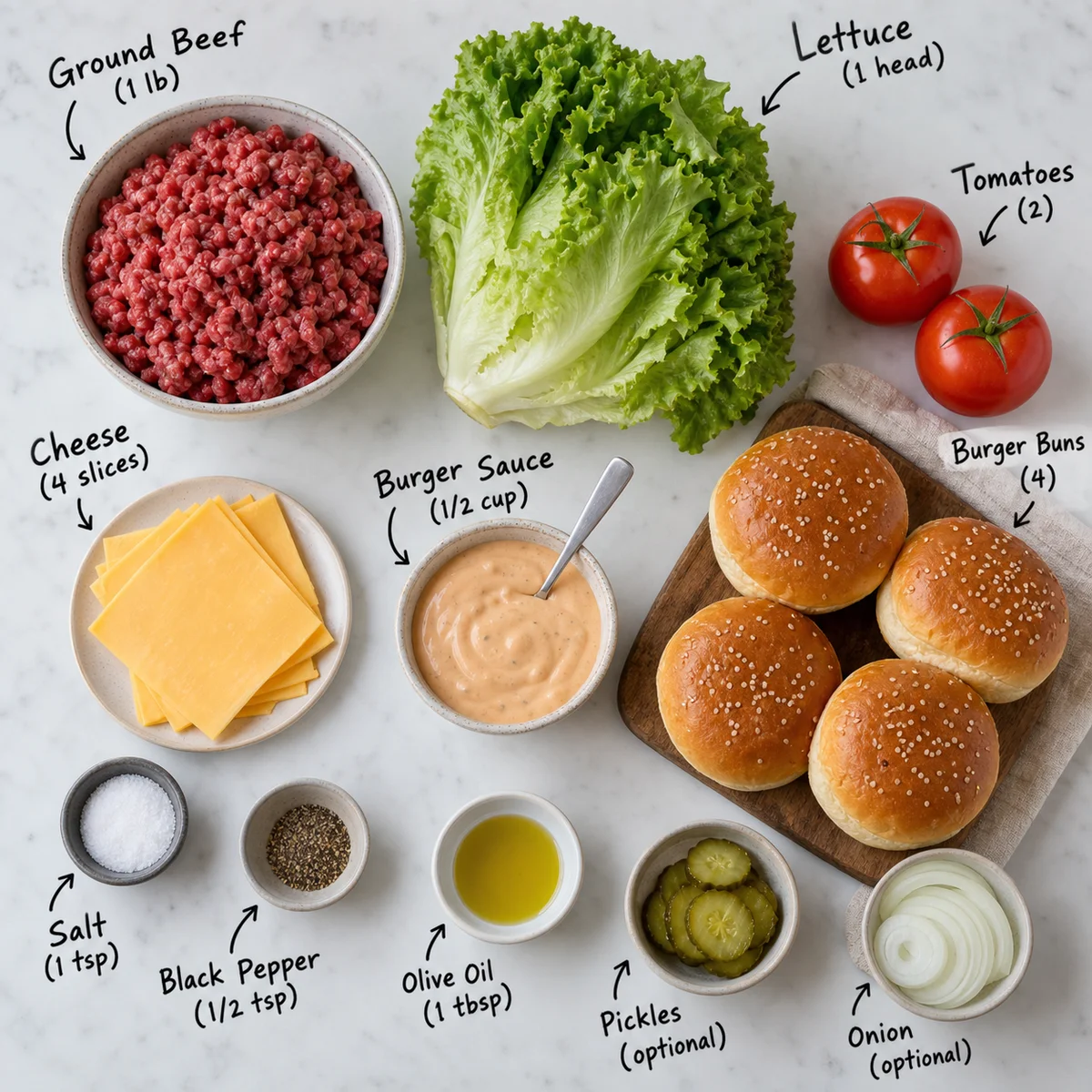
Make the creamy, tangy burger sauce first so the flavors have time to meld while you cook the beef. In a medium bowl, whisk together the plain Greek yogurt, mayonnaise, ketchup, yellow mustard, pickle relish, apple cider vinegar, smoked paprika, salt, and pepper. Taste it and adjust: you want it tangy like a classic burger spread but lighter, thanks to the yogurt. If it feels too thick, add a teaspoon of water or pickle juice to loosen it. If you prefer a sweeter sauce, add a tiny pinch of sugar or a drizzle of honey. Cover and refrigerate while you cook. This sauce is the heart of the bowl, so do not skip it. It brings the juicy beef, crisp lettuce, and sharp cheddar together in every bite.
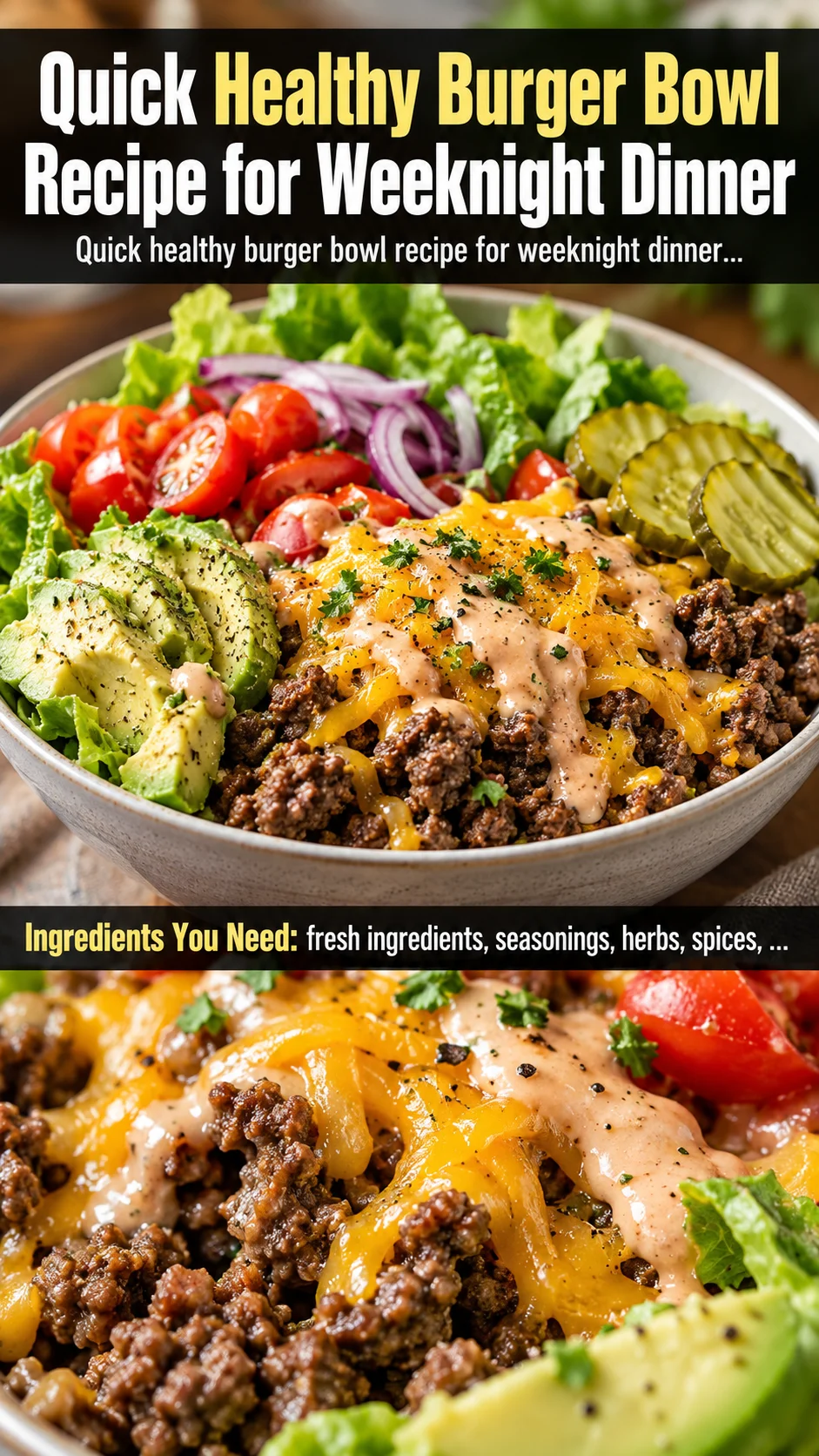
Use a wooden spoon or spatula to break the beef into small crumbles and continue cooking for 5 to 6 minutes, stirring occasionally, until it is no longer pink and has browned nicely. If there is excess grease, carefully tilt the pan and spoon some off, but leave a little fat because it carries flavor. Sprinkle the garlic powder, onion powder, smoked paprika, cumin if using, salt, and pepper over the beef. Stir well and cook for another minute until the spices smell fragrant and toasted. The beef should look glossy, deeply seasoned, and juicy. Do not overcook it, or it will become dry and crumbly. Ground beef is safe when it reaches 160°F (71°C) internally, but for bowls, slightly juicy is better than leathery.
Drizzle the chilled burger sauce generously over each bowl. Use as much or as little as you like, but remember that the sauce is what makes this taste like a real burger. Finish with extra cracked black pepper, a pinch of flaky sea salt, and a sprinkle of smoked paprika if you want a smoky finish. If you enjoy a little heat, add a few sliced jalapeños or a dash of hot sauce. Serve immediately while the beef is warm and the lettuce is crisp. These bowls are best eaten right away because the lettuce will wilt if left to sit. For meal prep, store the components separately and assemble just before eating.
For best results
- Choose the right ground beef for the juiciest bowls. I recommend 90% lean ground beef because it has enough fat to stay juicy and flavorful without making the bowl greasy. If you use 93% lean or higher, add an extra teaspoon of olive oil to the skillet and be careful not to overcook it. For a richer, more decadent bowl, 85% lean works beautifully, but you may want to drain a little extra fat. Grass-fed beef has a slightly stronger, more mineral flavor that pairs wonderfully with smoked paprika and sharp cheddar. If you are using frozen beef, thaw it completely in the refrigerator overnight and pat it dry before cooking so it browns instead of steams.
- Make the burger sauce at least 15 minutes ahead, or even the night before. Like many great sauces, it tastes better after the flavors marry. The Greek yogurt gives it a tangy, high-protein base, while the mayonnaise adds richness. If you want to lighten it further, use all Greek yogurt and skip the mayo, but add an extra teaspoon of olive oil or avocado oil for body. A splash of pickle juice instead of vinegar adds authentic burger-joint flavor. Store the sauce in an airtight jar in the refrigerator for up to 5 days. It is also fantastic as a dip for fries, a spread for wraps, or a dressing for other salads.
- Do not skip drying your lettuce. This is the number one mistake people make with burger bowls. If the lettuce is wet, the sauce slides off and pools at the bottom, making the bowl soggy and sad. After washing, use a salad spinner or lay the leaves on a clean kitchen towel and pat them completely dry. I like to chop the lettuce first and then spin it, which makes it easier to dry evenly. Butter lettuce, romaine, and iceberg all work well, but romaine offers the best crunch. For a nutrient boost, mix in chopped kale or shredded Brussels sprouts, but massage them with a little olive oil and salt first to soften their texture.
- Control the heat when browning the beef. A common pitfall is overcrowding the pan, which lowers the temperature and causes the beef to steam. If your skillet is not large enough to hold all the beef in a single layer, cook it in two batches. Also, resist the urge to stir constantly. Let the beef sit for a full 2 minutes before breaking it up so it develops a deep brown crust. Those browned bits are pure flavor. If you notice a lot of liquid in the pan, increase the heat slightly and let it evaporate before adding the spices. Once the spices go in, stir constantly for about 30 seconds to toast them, then remove the pan from the heat to prevent burning.
- Meal prep these bowls like a pro. The best way to enjoy healthy burger bowls on a busy week is to prep the components separately. Cook the beef, make the sauce, and chop the vegetables, then store them in separate airtight containers in the refrigerator. The lettuce should be kept dry and cold in a container lined with paper towels. The beef lasts up to 4 days, the sauce up to 5 days, and the chopped vegetables up to 3 days. When you are ready to eat, warm the beef gently in a skillet or microwave, then assemble the bowls. This keeps the lettuce crisp and the beef juicy. It is a perfect grab-and-go lunch for work or school.
- Customize the cheese for different flavor profiles. Sharp cheddar is classic, but you can also use pepper jack for heat, Swiss for a nutty note, or crumbled blue cheese for a bold burger experience. If you are dairy-free, omit the cheese or use a dairy-free shred that melts well. Nutritional yeast adds a cheesy, savory flavor without dairy. For a creamier bowl, add a dollop of sour cream or full-fat Greek yogurt on top. If you want a smoky, melty effect, sprinkle the cheese over the hot beef and cover the skillet for 30 seconds so it melts before you scoop it into the bowls.
- Balance the textures and temperatures for the best eating experience. A great burger bowl should have hot, juicy beef, cold, crisp lettuce, creamy sauce, crunchy pickles, and buttery avocado. To keep that contrast, assemble the bowls just before serving and do not toss everything together. Instead, let each person mix their own bowl at the table. If you are packing a lunch, keep the sauce in a separate small container and drizzle it on right before eating. You can also serve the beef at room temperature rather than piping hot, which is actually delicious and prevents the lettuce from wilting too quickly. Add a handful of crispy fried onions or crushed pork rinds for a crunchy, low-carb topping.
Variations
- For a Mediterranean twist, swap the cheddar for crumbled feta and the burger sauce for a lemon-herb yogurt sauce made with Greek yogurt, lemon juice, garlic, dill, and cucumber. Use ground lamb instead of beef for a rich, aromatic bowl. Add chopped cucumber, Kalamata olives, and cherry tomatoes, and serve over chopped romaine with a drizzle of olive oil. This variation is bright, tangy, and perfect for summer. You can also add a scoop of hummus or baba ganoush for creaminess. The lamb should be cooked with oregano, cumin, and cinnamon for a warm, exotic flavor that pairs beautifully with the cool yogurt sauce.
- Make it a spicy Southwest burger bowl by using ground turkey or ground chicken instead of beef. Season the meat with chili powder, cumin, smoked paprika, and a pinch of cayenne. Top the lettuce with black beans, corn, diced red bell pepper, avocado, and pepper jack cheese. Replace the burger sauce with a chipotle-lime yogurt sauce: Greek yogurt, lime juice, chipotle in adobo, garlic, and cilantro. Add crushed tortilla chips for crunch if you are not strictly low-carb. This variation is high in fiber and protein, and it meal-preps beautifully. For a vegetarian version, use seasoned black beans or crumbled tofu instead of meat.
- Turn this into a bacon cheeseburger bowl by cooking 4 slices of thick-cut bacon until crisp, then crumbling them over the top. Use the bacon fat to cook the ground beef for an extra layer of smoky flavor. Add caramelized onions instead of raw red onion for a sweet, jammy contrast. Use a sharp white cheddar or American cheese for that classic cheeseburger taste. The burger sauce can be spiked with a teaspoon of bacon grease or a dash of Worcestershire sauce. This version is indulgent but still low-carb and packed with protein. If you want to keep it lighter, use turkey bacon and drain the fat before adding the beef.
- For a dairy-free and paleo-friendly version, omit the cheese and use a dairy-free sauce made with avocado oil mayonnaise, coconut yogurt, and a splash of apple cider vinegar. Add extra avocado for creaminess and sprinkle with nutritional yeast for a cheesy flavor. Use grass-fed beef and load up on fresh vegetables like cucumber, radish, and bell pepper. Instead of pickles, try quick-pickled red onions or sliced pepperoncini. This bowl is naturally gluten-free, grain-free, and packed with healthy fats. You can also add roasted sweet potato cubes for a heartier, paleo-friendly carbohydrate source. Just be sure to check your condiments for added sugar and preservatives.
- Create a teriyaki burger bowl by swapping the burger sauce for a homemade teriyaki glaze: soy sauce or coconut aminos, rice vinegar, honey or maple syrup, garlic, ginger, and a cornstarch slurry. Cook the ground beef with garlic and ginger, then glaze it at the end. Serve over shredded cabbage and lettuce with shredded carrots, edamame, avocado, and sesame seeds. Add pickled ginger and sliced scallions. This Asian-inspired variation is sweet, savory, and incredibly satisfying. For a low-carb option, use a sugar-free sweetener in the teriyaki sauce. You can also use ground pork or ground chicken for a different flavor profile.
- Make it a Greek-style burger bowl with ground lamb or beef seasoned with oregano, garlic, and lemon zest. Top with chopped cucumber, tomatoes, red onion, Kalamata olives, and crumbled feta. Drizzle with a tzatziki-style sauce made from Greek yogurt, cucumber, garlic, dill, and lemon juice. Add a handful of fresh parsley and mint. This bowl is fresh, herbaceous, and perfect for warm weather. For extra protein, add a scoop of hummus or a soft-boiled egg. If you want a grain-free tabbouleh effect, use finely chopped cauliflower instead of bulgur. The lamb should be cooked to medium for the juiciest texture, but ground meat should always reach 160°F for safety.
Nutrition
- Calories420 kcal
- Total Fat28g
- Saturated Fat8g
- Cholesterol85mg
- Sodium720mg
- Total Carbohydrates12g
- Dietary Fiber4g
- Sugars6g
- Protein30g