
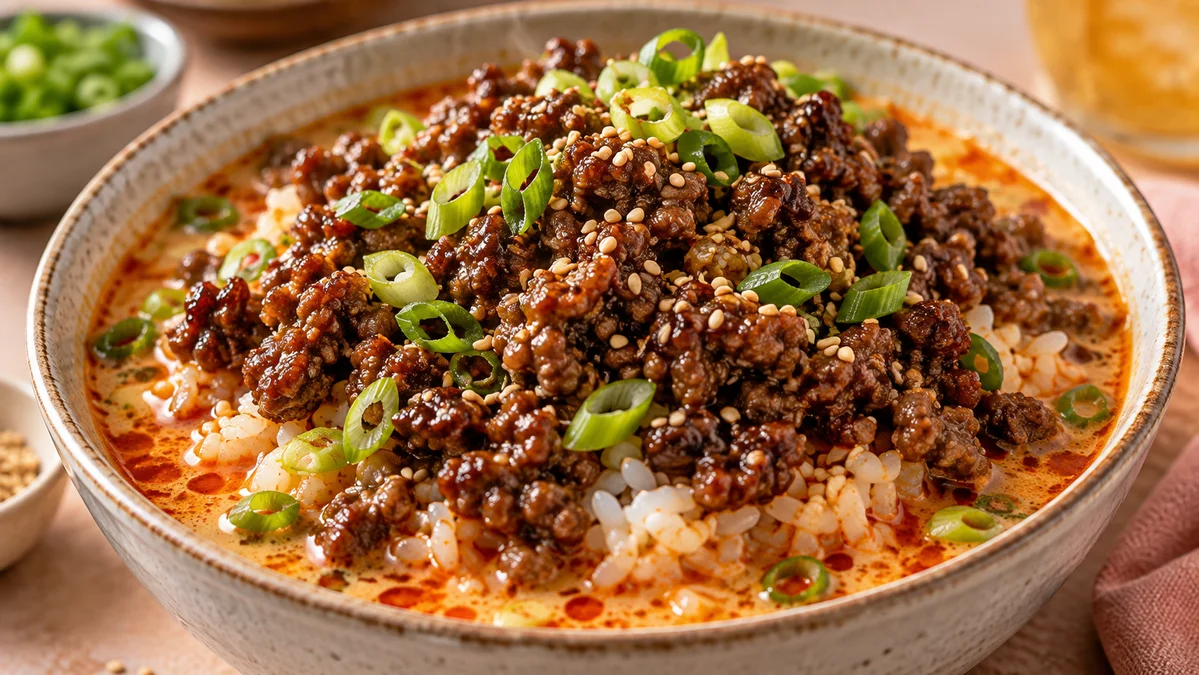
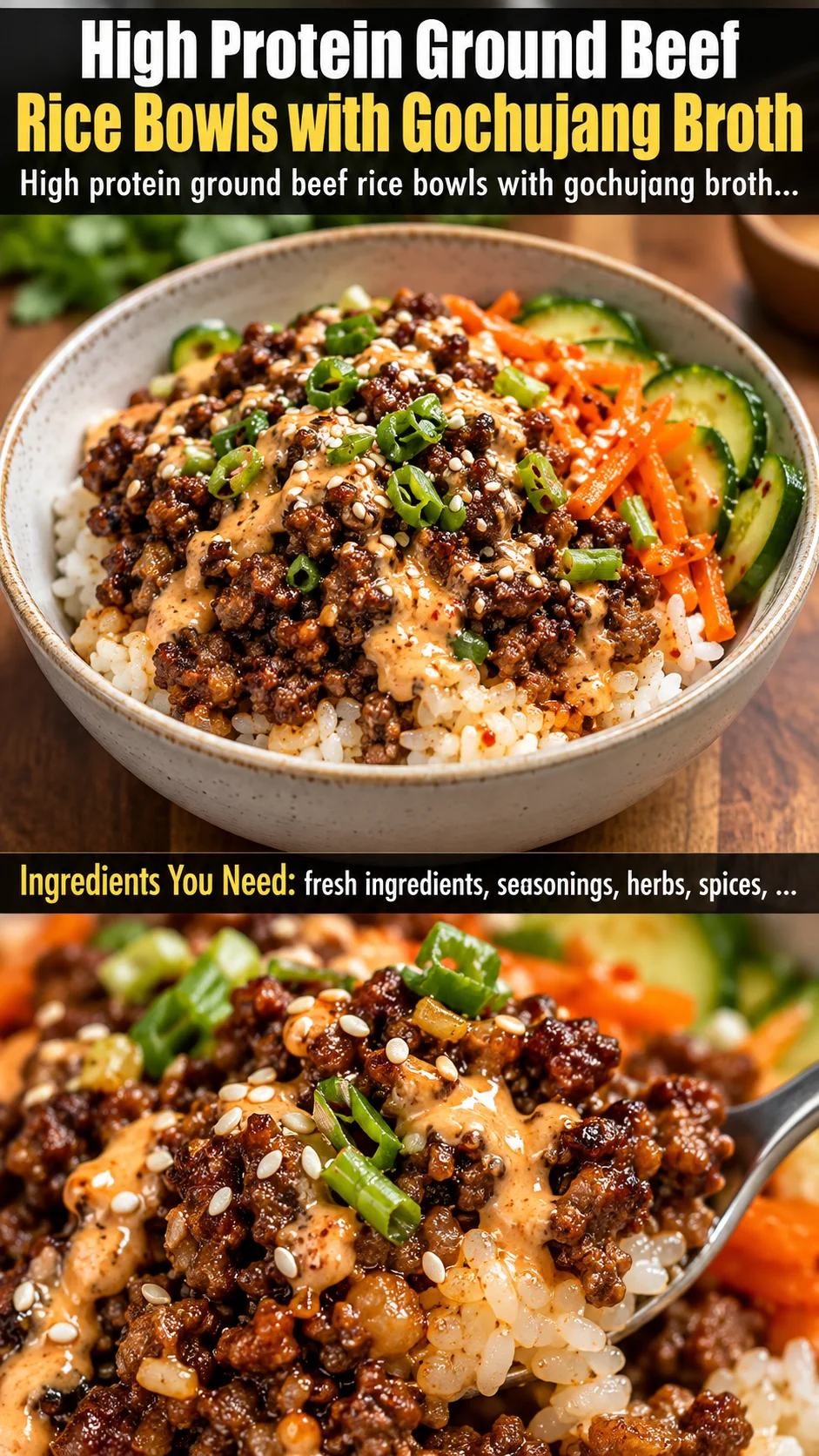
High protein ground beef rice bowls with gochujang broth deliver 36g protein and 5g fat per serving. Sesame beef, fluffy rice, creamy broth, ready in 30 minutes.
Ingredients
Instructions
Begin by gathering every ingredient on the counter so the cooking process feels calm and organized. This is the secret to a true 30-minute dinner: mise en place. Rinse the jasmine rice in a fine-mesh strainer under cool running water for about 60 seconds, massaging the grains with your fingers until the water runs clear instead of cloudy. That cloudy water is surface starch, and rinsing it away is what gives you separate, fluffy grains rather than sticky clumps. Drain the rice thoroughly. Pat the ground beef dry with paper towels, which helps it brown instead of steam. Measure the soy sauce, gochujang, honey, rice vinegar, sesame oil, garlic, and ginger into small bowls. If you are using cottage cheese, let it sit at room temperature while you prep so it blends into a silky broth instead of a grainy one. Finally, slice the green onions and toast the sesame seeds in a dry skillet for 30 seconds, just until they smell nutty and begin to pop.
Cook the rinsed jasmine rice using the absorption method. Add the rice and 1 1/2 cups low-sodium chicken broth or water to a medium saucepan with a tight-fitting lid. Bring to a rolling boil over high heat, then immediately reduce the heat to the lowest possible setting, stir once, cover, and cook for 12 to 14 minutes. Do not lift the lid while it cooks. The trapped steam is what finishes the grains evenly. After the time is up, remove the pan from the heat and let it rest, covered, for 5 minutes. Then fluff gently with a fork. You should see tender, separate grains that hold their shape. If the rice looks wet, place it back over low heat for 1 minute uncovered to let excess moisture evaporate. For extra flavor, you can replace 1/4 cup of the broth with kimchi juice or a splash of rice vinegar, but keep the total liquid ratio the same so the rice does not turn mushy.
Heat a large 12-inch nonstick or cast-iron skillet over medium-high heat for 2 minutes. Add a light spray of avocado oil or 1 teaspoon of oil and swirl to coat. Add the ground beef in a single layer, breaking it into large chunks with a wooden spoon. Let it sear undisturbed for 2 minutes. This initial contact with the hot pan is where the Maillard reaction begins, creating the deep, caramelized flavor that makes this bowl taste like it came from a Korean restaurant. After 2 minutes, break the beef into small crumbles and continue cooking for 3 to 4 minutes, stirring occasionally. You want the beef to look deeply browned and slightly crispy at the edges, not gray and steaming. If liquid pools in the pan, increase the heat and let it cook off before adding the aromatics. Once the beef is browned, push it to one side of the pan and tilt the skillet so the rendered fat collects. If you are using 96% lean beef, there will be very little fat, which is exactly what keeps this dish at 5 grams of fat per serving.
Add the garlic and ginger to the cleared side of the pan and cook for 30 seconds, just until fragrant. Do not let them burn, or the whole dish will turn bitter. Stir the aromatics into the beef. In a small bowl, whisk together 2 tablespoons soy sauce, 1 tablespoon gochujang, 1 tablespoon honey or brown sugar, 1 tablespoon rice vinegar, and 1 tablespoon toasted sesame oil. Pour the sauce over the beef and toss constantly for 1 to 2 minutes. The sauce should bubble, thicken, and glaze every crumble with a glossy, mahogany-red sheen. You will know it is ready when the beef looks sticky and caramelized rather than wet. Taste a small spoonful and adjust: add a pinch of salt if it tastes flat, a drizzle of honey if it is too spicy, or a splash of rice vinegar if it needs brightness. Turn off the heat and leave the beef in the skillet while you make the broth.
Make the creamy gochujang broth by blending 1 cup low-fat cottage cheese, 1/2 cup low-sodium chicken broth, 1 tablespoon gochujang paste, 1 teaspoon toasted sesame oil, 1 teaspoon soy sauce, and 1 teaspoon rice vinegar in a blender or small food processor. Blend on high for 45 to 60 seconds until the mixture is completely smooth and pourable. If your blender struggles, add an extra tablespoon of broth at a time until it moves freely. For an even silkier texture, blend in 1 teaspoon of cornstarch, then pour the mixture into a small saucepan. Warm it over medium-low heat for 3 to 4 minutes, whisking constantly, until it thickens slightly and begins to steam. Do not boil it hard, or the cottage cheese can split and become grainy. The finished broth should be creamy, tangy, gently spicy, and just thick enough to coat the back of a spoon. Taste and add a pinch of salt if needed.
Assemble the bowls while everything is hot. Divide the fluffy jasmine rice among four shallow bowls or meal-prep containers. Spoon the caramelized sesame ground beef over the rice, then ladle the warm creamy gochujang broth around the edges, letting it pool around the rice like a savory moat. Garnish generously with sliced green onions, toasted sesame seeds, and cucumber ribbons, kimchi, or shredded carrots for crunch. Serve immediately. Each bowl should deliver about 36 grams of protein and roughly 5 grams of fat, making it a perfect muscle-building meal prep lunch or a low-fat dinner that still feels indulgent. For meal prep, cool the components completely, then store the rice, beef, and broth in separate compartments or jars. Reheat the rice and beef together, then pour the broth over just before eating so it stays creamy.
Store leftovers in an airtight container in the refrigerator for up to 4 days. Keep the broth separate from the rice and beef if possible. The beef will stay juicy, but the rice can absorb the broth and become soft over time. To reheat, microwave the rice and beef covered with a damp paper towel for 90 seconds, then warm the broth in a small saucepan or microwave-safe cup for 30 seconds and pour it over. If the broth has thickened in the fridge, stir in a splash of water or unsalted broth to loosen it. You can also freeze the beef and rice together for up to 3 months, but freeze the broth in a separate container. Thaw overnight in the refrigerator before reheating. This makes the recipe ideal for Sunday meal prep: portion everything out and you have four high-protein lunches ready to grab.
For best results
- Choose the right ground beef for the macro target. The recipe is built around 96% lean ground beef, which delivers about 36 grams of protein per serving with only 5 grams of fat. If you use 80% lean, the flavor will be richer, but the fat content can jump to 15 grams or more per serving. For a middle ground, use 93% lean and drain any excess fat after browning. You can also swap in ground turkey or ground chicken, but add an extra teaspoon of sesame oil to keep the mixture from drying out.
- Toast your sesame seeds and sesame oil for deeper flavor. Toasted sesame oil is not the same as regular sesame oil; it is pressed from toasted seeds and has a dark amber color and intense nutty aroma. Add it off the heat or at the very end of cooking so its delicate flavor does not burn. For the sesame seeds, place them in a dry skillet over medium heat and shake the pan constantly for 30 to 60 seconds. They are ready when they smell warm and nutty and make a faint popping sound.
- Make the cottage cheese broth silky, not grainy. The key is a high-speed blender and room-temperature cottage cheese. If your cottage cheese is cold, it can seize and stay lumpy. Blend for a full 60 seconds, scraping down the sides once. For an ultra-smooth result, strain the blended broth through a fine-mesh sieve before warming. If you do not have cottage cheese, substitute Greek yogurt, but add it off the heat and whisk gently so it does not curdle.
- Control the heat level of gochujang. Gochujang is a fermented Korean chili paste that varies in spice from brand to brand. Start with 1 tablespoon in the beef and 1 tablespoon in the broth, then taste. If you want more heat, add a teaspoon of gochugaru Korean chili flakes. If you want less, reduce the gochujang and add a tablespoon of tomato paste for color and umami. A spoonful of honey or brown sugar balances the heat and helps the beef caramelize.
- Rinse rice until the water runs clear. This is not optional if you want fluffy grains. The surface starch on jasmine rice is what makes it gluey and clumpy. Rinse it in a fine-mesh strainer under cool water, rubbing the grains gently with your fingers, until the water runs clear. Then drain it well before cooking. If you are short on time, use a rice cooker or precooked microwave rice, but reduce the broth to 1/4 cup if the rice is already seasoned.
- Meal prep like a pro by layering components. Store the rice at the bottom of the container, then the beef, then the broth in a separate small jar. This prevents the rice from soaking up all the broth and becoming mushy. When you are ready to eat, reheat the rice and beef, shake the broth, and pour it over. Add fresh green onions and sesame seeds after reheating so they stay crisp and fragrant.
- Balance the bowl with acid and crunch. The creamy gochujang broth is rich, so a hit of acid and crunch makes the bowl sing. Quick-pickled cucumbers, kimchi, shredded carrots, or even a squeeze of lime juice can brighten each bite. If you are watching sodium, use coconut aminos instead of soy sauce and rinse the kimchi before serving.
- Do not skip the rest for the rice. After the rice cooks, letting it sit covered for 5 minutes allows the remaining moisture to redistribute through the grains. If you fluff it immediately, the rice may seem wet and sticky. Resting also makes the grains firmer and more separate. If you are doubling the recipe, use a wider pot rather than a taller one so the rice cooks evenly.
Variations
- Korean-Style Spicy Pork Variation. Swap the lean ground beef for ground pork and increase the gochujang to 2 tablespoons in the beef mixture. Ground pork has more fat, so you will not need any added oil. Brown it until crispy, then add the aromatics and sauce. The pork version is richer and slightly sweeter, so add an extra teaspoon of rice vinegar to the broth to cut through the richness. Serve with steamed broccoli and kimchi for a complete Korean-inspired dinner.
- Turkey or Chicken Variation. For an even leaner bowl, use 99% lean ground turkey or ground chicken. Because these meats are very low in fat, add 1 teaspoon of avocado oil to the pan and cook over medium-high heat without stirring for 2 minutes to get a good sear. The sauce will keep the meat moist, but if it looks dry, add a splash of chicken broth. The protein stays high and the fat drops even lower, making this ideal for a strict low-fat meal plan.
- Vegetarian Variation with Lentils or Tofu. Replace the beef with 1 cup of cooked brown lentils or 14 ounces of extra-firm tofu crumbled into small pieces. For tofu, press it for 15 minutes to remove excess water, then crumble and pan-fry with a teaspoon of sesame oil until golden. Add the same garlic, ginger, and sauce. For lentils, sauté them with the aromatics for 2 minutes to warm through. The cottage cheese broth remains the same, and you can add a tablespoon of nutritional yeast for extra savory depth.
- Low-Carb Cauliflower Rice Variation. Swap the jasmine rice for 4 cups of cauliflower rice. Sauté the cauliflower rice in a dry nonstick skillet over medium-high heat for 5 to 7 minutes until lightly browned and tender, then season with a pinch of salt. This drops the carbohydrate count dramatically while keeping the protein at 36 grams. The creamy gochujang broth pairs beautifully with cauliflower rice and makes the bowl feel just as satisfying.
- Spicy Kimchi Fried Rice Variation. Turn leftovers into a new meal by chopping 1 cup of kimchi and stirring it into the cooked rice with a teaspoon of gochujang. Spread the rice in the skillet after browning the beef, press it down, and let it crisp for 3 minutes. Top with the caramelized beef, a fried egg, and the creamy broth. The egg adds extra protein and makes it a hearty brunch bowl.
- Miso-Sesame Variation. For a Japanese-inspired twist, replace the gochujang in the broth with 1 tablespoon of white miso paste. Omit the honey in the beef and add 1 teaspoon of mirin instead. The broth becomes earthy and mellow rather than spicy. Finish with sliced nori and pickled ginger. This version is excellent for people who love umami but cannot handle chili heat.
Nutrition
- Calories430 kcal
- Total Fat5g
- Saturated Fat1.5g
- Cholesterol70mg
- Sodium780mg
- Total Carbohydrates52g
- Dietary Fiber3g
- Sugars6g
- Protein36g