
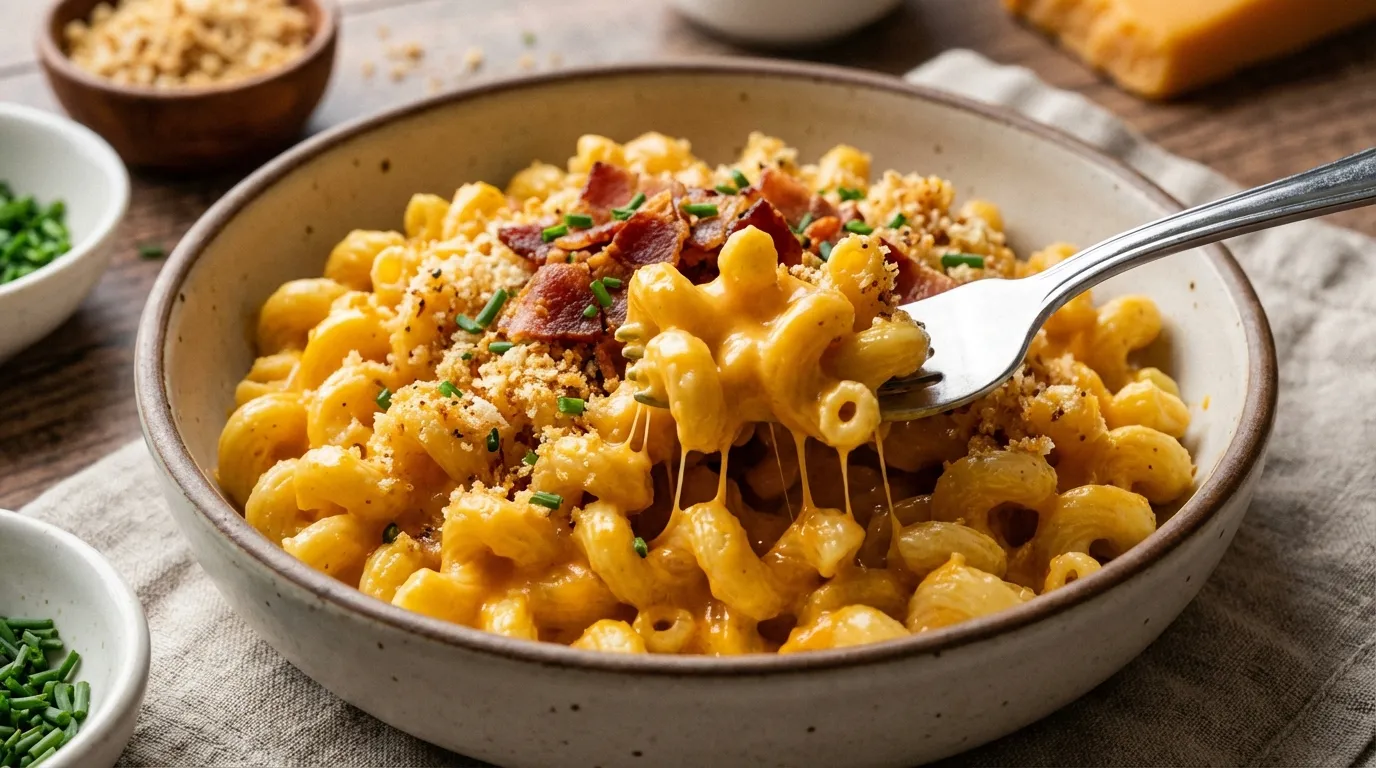
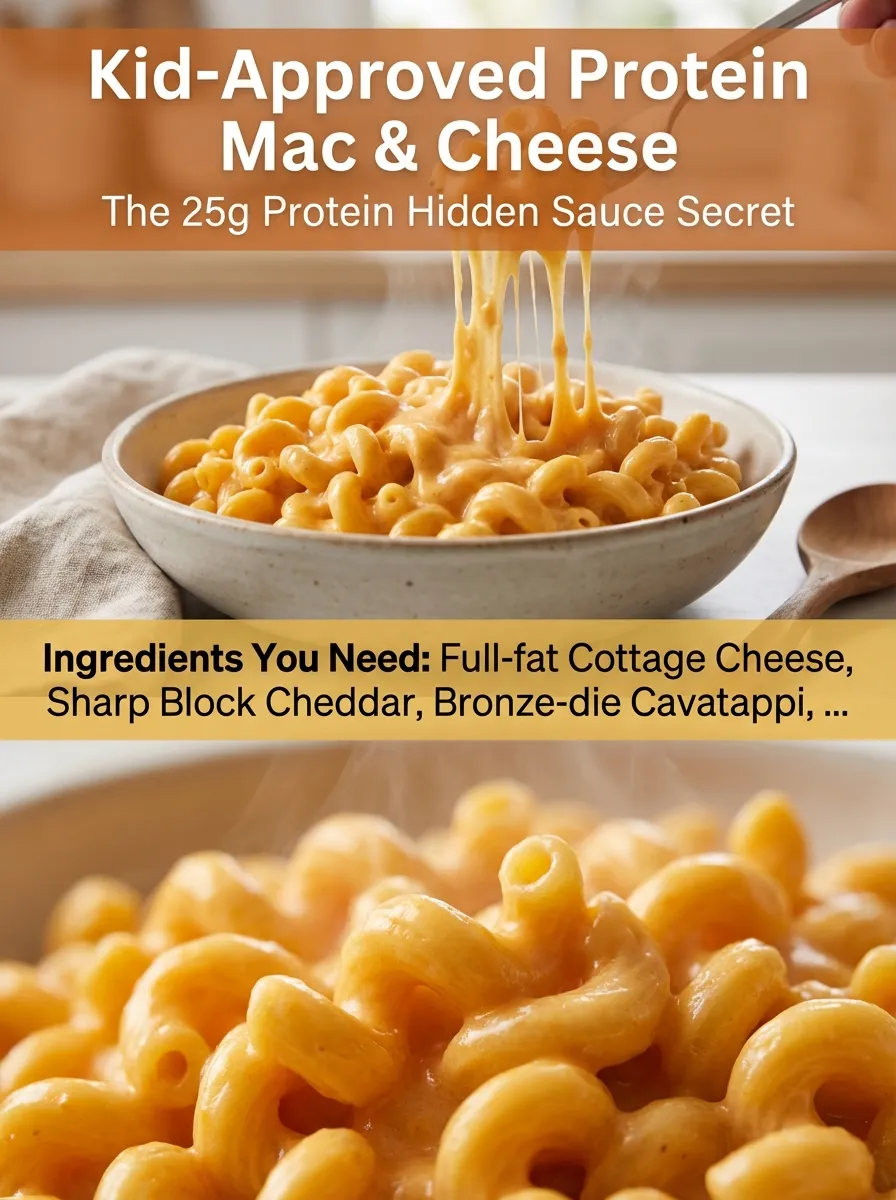
To sneak protein into 30-minute dinners like macaroni and cheese without detectable texture changes, use the Hot Blender Emulsion method. While boiling 8oz of pasta, blend 1 cup of full-fat cottage cheese, 1.5 cups of freshly grated sharp cheddar, and ¼ cup of starchy pasta water on high for 60 seconds. This creates a smooth, velvety sauce containing 25g of casein protein per serving.
The Empty Calories of Boxed Mac & Cheese
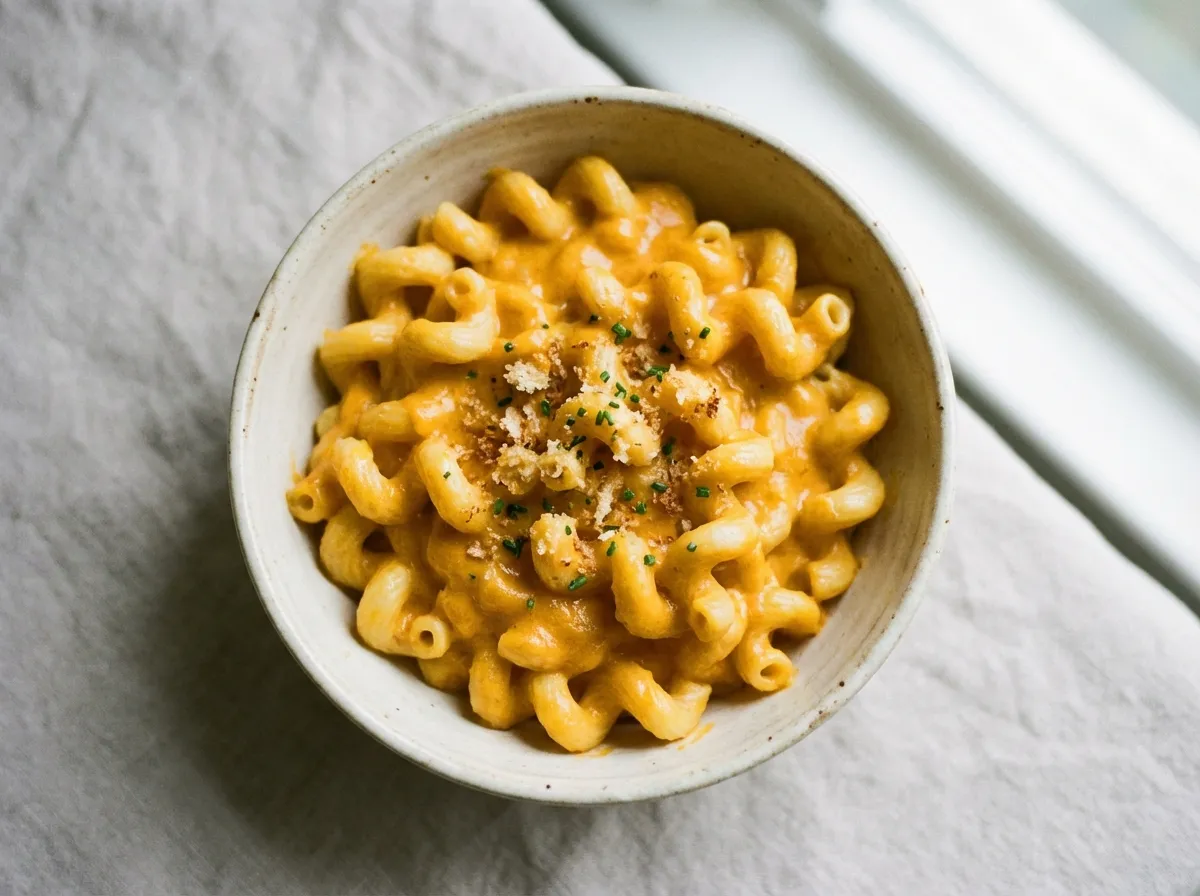
Unlike thin boxed sauces, this emulsion delivers 25g of protein with a rich, Velveeta-like silkiness.
Standard boxed macaroni and cheese is a calorie-dense meal consisting primarily of simple carbohydrates and sodium, providing approximately 5g of protein per serving. This protein is derived from wheat rather than high-quality dairy sources. By replacing powdered cheese packets with cottage cheese and block cheddar, you replace empty calories with 25g of high-quality casein protein.
The Protein Premium Arbitrage
| Mac Layer | Cost Per Serving | Protein | Texture | Result |
|---|---|---|---|---|
| Standard Blue Box | $0.50 | ~5g | Processed goo | Empty carb crash |
| Hot Blender Cottage Cheese | $1.80 | 25g casein | Rich Velveeta silk | Trojan Horse nutrition |
| Greek yogurt stirred in | $1.20 | 12g | Grainy | Immediate rejection |
Adding $1.30 of cottage cheese and cheddar per serving transforms the dish into a recovery meal. Much like the nutritional benefits of hiding lentils in sloppy joes, using casein provides a slow-digesting dairy protein that provides amino acid release for 5–7 hours. This supports overnight growth hormone production for children, a benefit unavailable through standard refined-carb pasta meals.
The Hot Blender Emulsion: How It Works
The Hot Blender Emulsion is a technique that uses mechanical force and starch binding to prevent dairy separation. Stirring cold cottage cheese into hot noodles causes the fat to rise and the curds to remain intact, resulting in a lumpy texture. The blender method solves this through three specific mechanisms:
- Pasta water starch binding: Starchy boiling water contains amylose and amylopectin, which act as emulsifiers. These starches bind fat and water molecules together, preventing the sauce from separating.
- Thermal curd liquefaction: Boiling pasta water at 212°F melts the cottage cheese curd structure instantly, allowing the blender to achieve a uniform consistency.
- High-RPM mechanical friction: Operating a blender at 15,000+ RPM for 60 seconds reduces the cottage cheese curds to sub-micron particles, making them invisible to the palate.
The Cellulose Trap: Why Block Cheddar Is Non-Negotiable
Never use pre-shredded bagged cheese for this emulsion. Pre-shredded cheese is coated in cellulose or potato starch to prevent clumping. These anti-caking agents do not melt and will create a gritty, sandy texture in your sauce. Freshly grating a block of sharp cheddar ensures the cheese contains only fat and protein, allowing for a completely smooth emulsification.
The Emulsion Hardware Toolkit
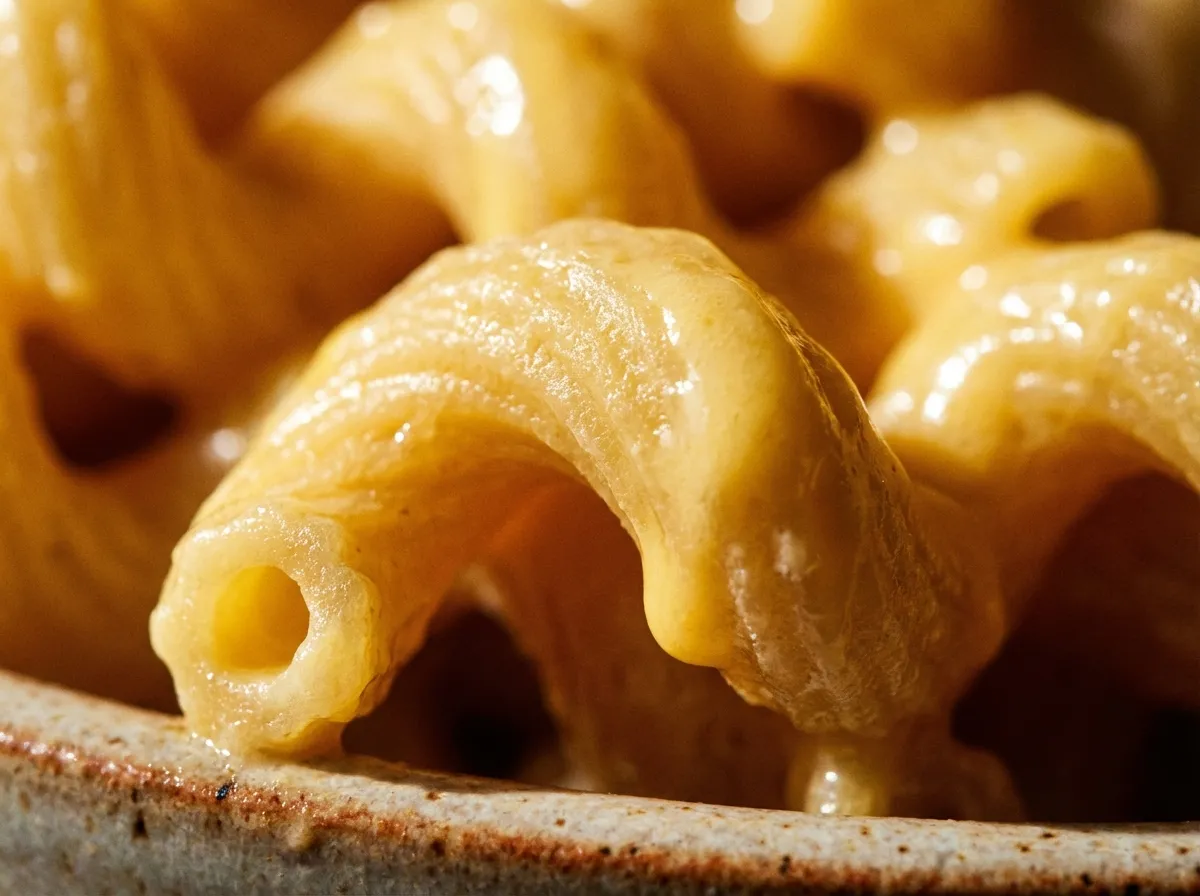
Bronze-die pasta features a rough surface that physically ‘catches’ the heavy protein sauce.
| Tool | Function | Skip Penalty |
|---|---|---|
| High-speed blender (15,000+ RPM) | Obliterates curds to microscopic smooth | Lumps in sauce |
| Sharp box grater | Bypasses cellulose bag coating | Gritty, sandy texture |
| Bronze-die cavatappi pasta | Porous surface holds heavy emulsion | Sauce pools at bottom |
Bronze-die cavatappi is the preferred pasta because it is extruded through rough molds, creating a porous surface. This texture physically grips the thick protein sauce, ensuring it stays on the noodle rather than sliding to the bottom of the bowl.
Recipe: Hidden Protein Mac & Cheese
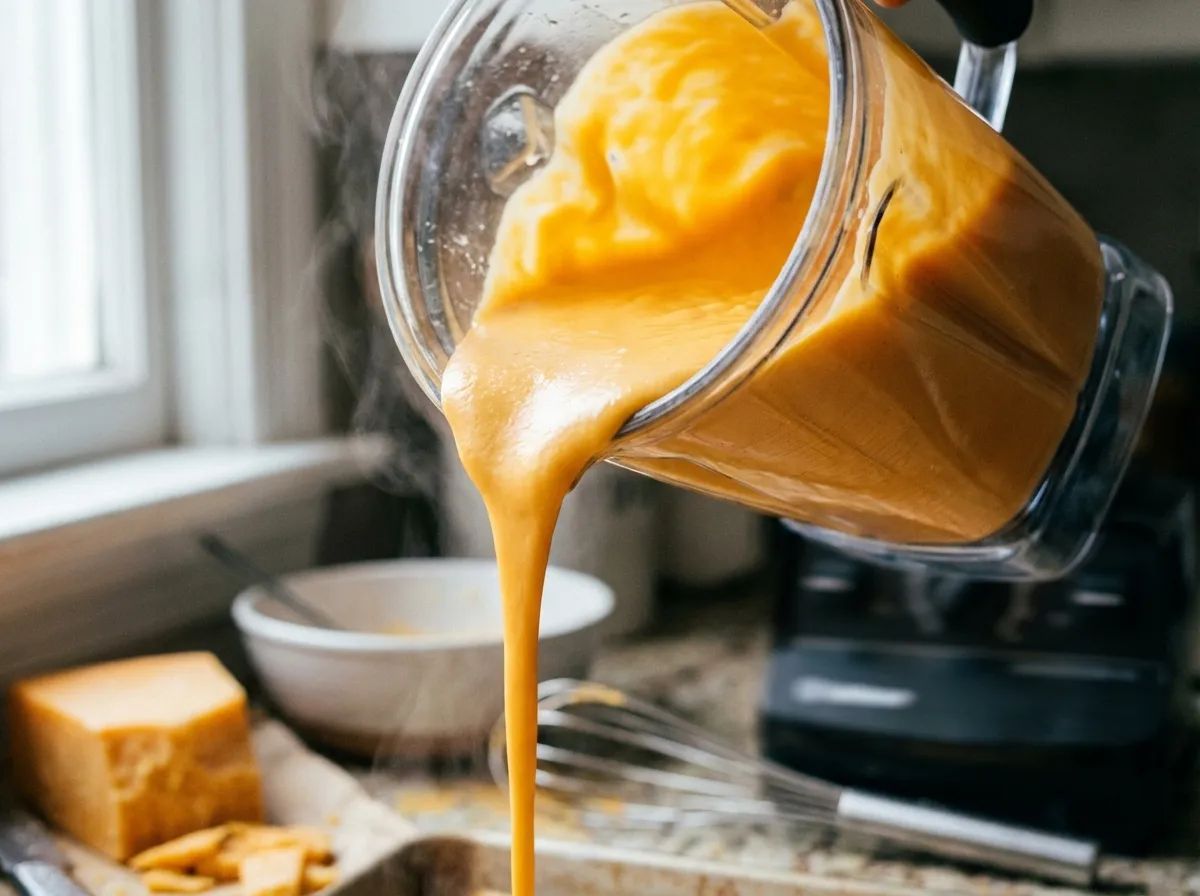
60 seconds of high-RPM friction obliterates cottage cheese curds into a microscopic, smooth matrix.
Ingredients (4 servings):
* 8oz bronze-die cavatappi
* 1 cup full-fat (4%) cottage cheese
* 1.5 cups freshly grated sharp cheddar
* ¼ cup boiling pasta water (reserved)
* 2 tbsp unsalted butter
* ½ tsp dry mustard powder
* ¼ tsp garlic powder
* Salt to taste
Method:
1. Boil pasta 1 minute under package al dente time. Reserve ¼ cup pasta water.
2. Add cottage cheese, grated cheddar, and pasta water to a blender.
3. Blend on high for exactly 60 seconds until smooth.
4. Return drained pasta to the pot. Add sauce and butter. Toss over low heat for 90 seconds.
5. Serve immediately. This technique is a perfect addition to your rotation of cheesy high-protein skillet meals.
Nutrition Per Serving
- Calories: 390 kcal
- Protein: 25g
- Carbohydrates: 42g
- Total Fat: 14g
- Casein Protein: ~18g
Reheating Without Breaking the Emulsion
To reheat leftover mac and cheese without breaking the emulsion, add 1 tablespoon of milk or water to the container. Cover with a damp paper towel and microwave at 50% power, stirring every 30 seconds. This prevents the fat from overheating while allowing the starch matrix to rehydrate, maintaining the sauce’s silky texture.
Frequently Asked Questions
Save this 15-minute high-protein hack for your next busy weeknight!
Can I use Greek yogurt instead of cottage cheese?
No. While Greek yogurt functions mechanically, it imparts a sharp, tangy, or sour flavor that most children identify as “healthy” and reject. Full-fat cottage cheese has a neutral flavor profile that remains undetectable when blended with sharp cheddar.
Does it need to be full-fat (4%) cottage cheese?
Yes. Fat-free cottage cheese lacks the lipid molecules necessary to stabilize the emulsion. Fat is the physical backbone of the sauce’s texture; using fat-free products will result in a thin, watery, and separated sauce that fails to coat the pasta.
Can I use boiling milk instead of pasta water?
No. Pasta water provides dissolved carbohydrate starches that act as the structural glue for the sauce. Milk provides fat and protein but lacks the starch required to bind the cheese emulsion. Without pasta water, the sauce will lose its velvet consistency.
Is the sauce safe for nut allergies?
Yes, this recipe contains no nuts. The only potential allergens are dairy (cottage cheese, cheddar, butter) and gluten (pasta). Always verify specific brand labels for cross-contamination warnings if you are managing severe allergies.