
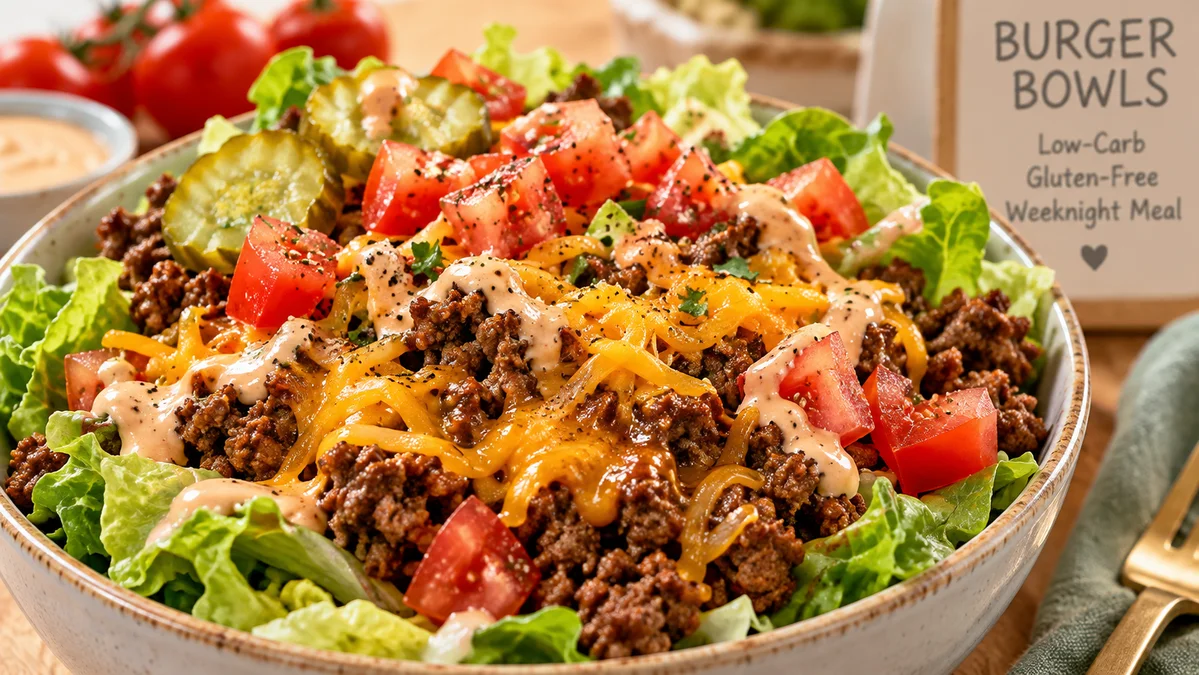
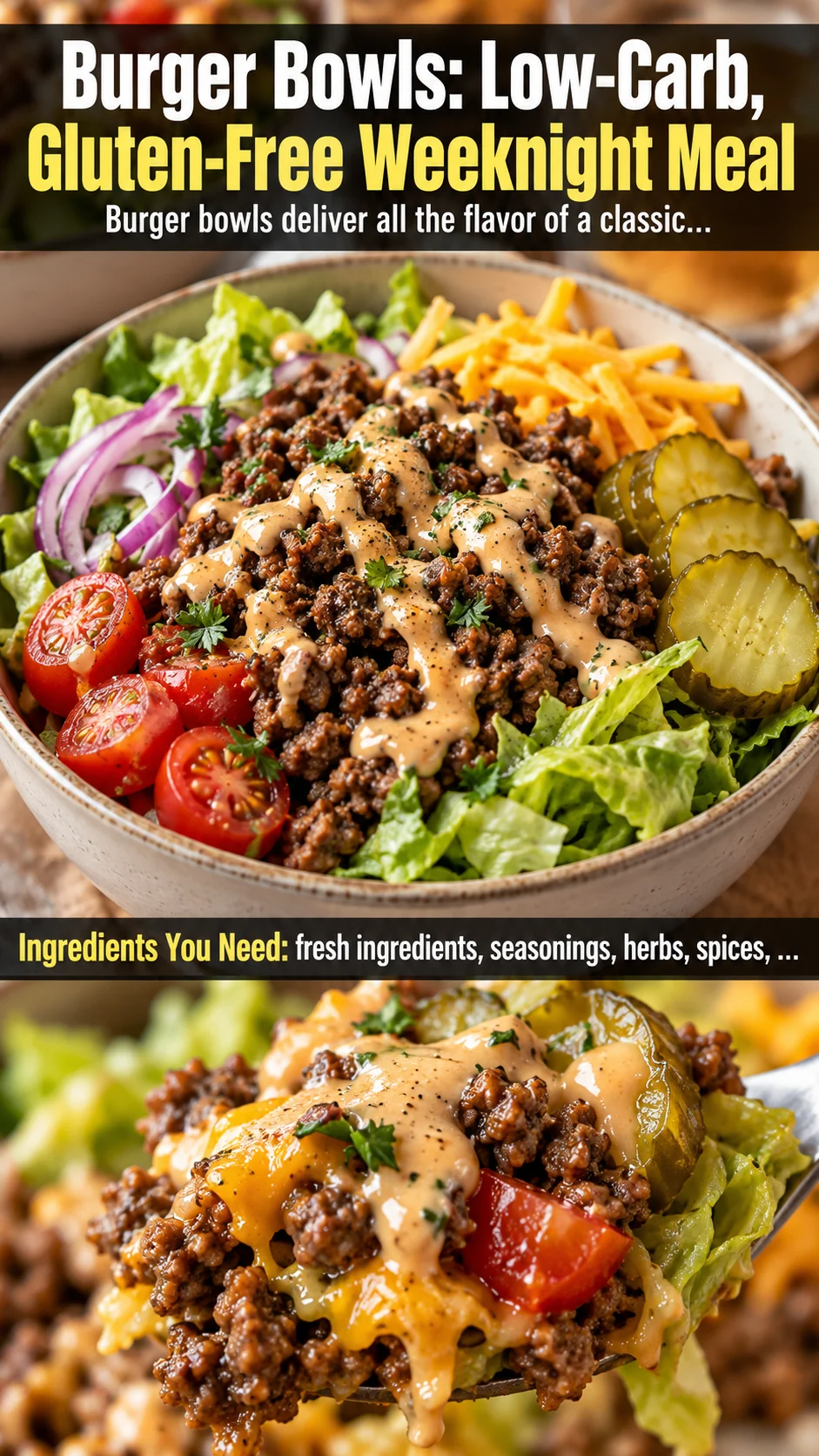
These low-carb, gluten-free burger bowls deliver all the flavor of a classic cheeseburger without the bun. Ready in under 30 minutes and packed with high protein.
Ingredients
Instructions
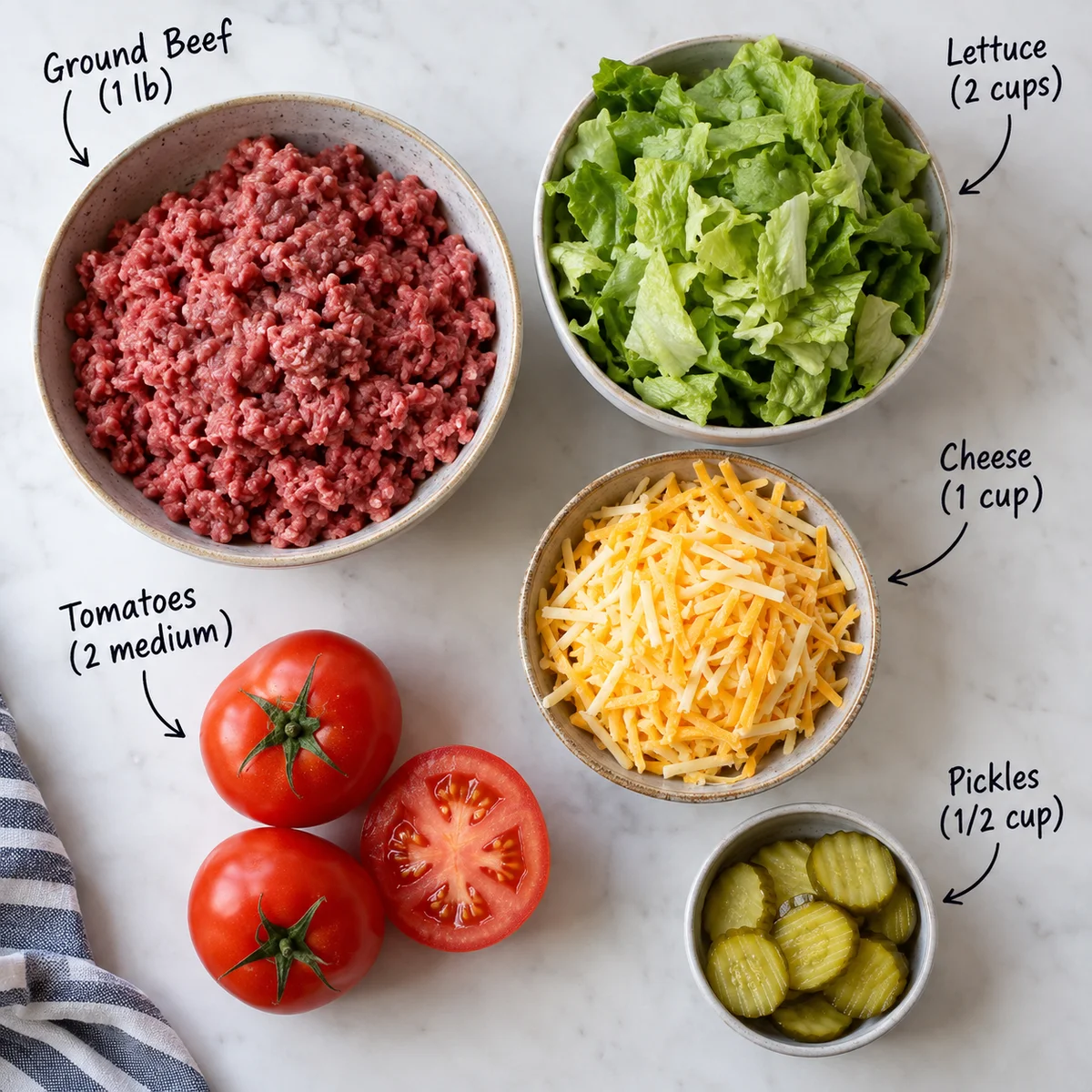
Begin with mise en place, the professional habit of prepping every ingredient before the heat goes on. This is the single most important step for a 30-minute burger bowl, because once the beef hits the skillet, things move quickly. Rinse and thoroughly dry 4 cups of chopped romaine or butter lettuce; a salad spinner or clean kitchen towels work beautifully. Excess water is the enemy of a burger bowl because it dilutes the sauce and makes the lettuce soggy. Halve 1 cup of cherry tomatoes, dice 1/4 cup red onion, slice 1/2 cup dill pickles, and shred 1 cup sharp cheddar. If using avocado or bacon, slice and cook them now. Measure the garlic powder, onion powder, smoked paprika, kosher salt, and black pepper into a small pinch bowl. Open the mayonnaise, ketchup, mustard, relish, and Worcestershire sauce so they are ready to whisk. Arrange everything on a sheet pan or in small bowls. You should feel calm and organized, not frantic. This setup ensures the beef cooks evenly and the final bowls are assembled while the meat is still hot enough to lightly wilt the lettuce and melt the cheese.
Make the burger sauce next so the flavors have a few minutes to marry while you cook the beef. In a small bowl, whisk together 1/2 cup mayonnaise, 2 tablespoons ketchup, 1 tablespoon yellow mustard, 1 tablespoon dill pickle relish, and 1 teaspoon Worcestershire sauce. Add a tiny pinch of kosher salt and a few cracks of black pepper. The sauce should be creamy, pale pink, and tangy with a savory depth from the Worcestershire. If it feels too thick to drizzle, whisk in water one teaspoon at a time until it falls from the spoon in a slow ribbon. Taste it: you want a balance of creamy, sweet, acidic, and salty that mimics the best cheeseburger condiment packet. Some people like a little hot sauce or a pinch of sugar here, but start neutral and adjust. Set the sauce aside at room temperature if using within 30 minutes, or refrigerate it if you are prepping ahead. This sauce is the secret weapon that makes bunless burger bowls taste indulgent rather than like a sad salad. It clings to the beef crumbles and lettuce leaves, carrying all the classic burger flavor in every bite.
Place a large cast-iron or heavy-bottomed skillet over medium-high heat and let it preheat for a full 2 minutes. Add 1 tablespoon olive oil and swirl to coat. The oil should shimmer but not smoke; if it smokes, lower the heat slightly. Add 1 pound of ground beef in a single, even layer. Resist the urge to stir immediately. Let it sear undisturbed for 4 to 5 minutes. You are listening for a lively sizzle and watching for a deep brown crust to form on the bottom. That browned layer, called the Maillard reaction, is where burger flavor lives. After the crust forms, use a wooden spoon or spatula to break the beef into bite-sized crumbles. Continue cooking for 3 to 4 minutes, stirring occasionally, until no pink remains and the crumbles are juicy but cooked through. If your beef releases a lot of liquid, that usually means the pan was not hot enough or the beef was very lean; simply continue cooking until the liquid evaporates and the meat begins to sizzle again. Do not drain the fat unless there is more than 2 tablespoons of standing grease, because that fat carries flavor and keeps the bowls from tasting dry.
Season the beef while it is still in the hot skillet. Sprinkle 1 teaspoon garlic powder, 1 teaspoon onion powder, 1 teaspoon smoked paprika, 1/2 teaspoon kosher salt, and 1/2 teaspoon black pepper over the crumbles. Toss and stir for 30 seconds until the spices bloom and become fragrant; you should smell a warm, smoky, savory aroma that makes the kitchen feel like a burger joint. Pour in 2 tablespoons water or beef broth. This small amount of liquid deglazes the pan, lifting the browned bits and turning them into a glossy, flavorful coating. Simmer for 1 to 2 minutes, just until the liquid reduces and clings to the meat rather than pooling. Taste a crumble and adjust salt or pepper. The beef should be juicy, well-seasoned, and slightly saucy, not dry or crumbly. If it tastes flat, add a pinch more salt; if it tastes harsh, add a tiny drizzle of the burger sauce. Turn off the heat and leave the beef in the skillet while you assemble the bowls. The residual warmth will melt the cheese beautifully.
While the beef finishes cooking, build the cold layer of the bowls. Divide 4 cups of chopped romaine or butter lettuce among four wide, shallow bowls. A wide bowl is better than a deep one because it gives every ingredient room to shine and prevents the lettuce from steaming under the hot beef. Scatter 1 cup halved cherry tomatoes, 1/4 cup diced red onion, and 1/2 cup sliced dill pickles over the lettuce. If you are using avocado, fan a few slices on top now. Keep the shredded cheddar nearby but do not add it yet; cheese melts best when it hits the hot beef directly. The bowls should look colorful, fresh, and abundant. This is also the moment to check your sauce one last time. If it has thickened in the fridge, whisk in a splash of water. You want the textures to contrast: cool, crisp lettuce and vegetables against warm, juicy, spiced beef. That temperature and texture contrast is what makes burger bowls feel like a complete meal rather than a deconstructed salad.
Now melt the cheese and finish the hot topping. Spoon the seasoned beef evenly over the four bowls, mounding it in the center so the juices soak into the lettuce just slightly. Immediately sprinkle 1 cup shredded sharp cheddar over the hot beef. The cheese should begin to melt on contact, becoming gooey and glossy within 30 seconds. If you want an extra-melty finish, cover each bowl loosely with a lid or a piece of foil for 1 minute; the trapped steam will melt the cheddar completely without wilting the lettuce too much. If you are adding bacon, crumble the 4 slices over the top now. For a crunchy garnish, sprinkle sesame seeds or everything bagel seasoning. The bowls should smell incredible: smoky paprika, toasted sesame, and sharp cheddar mingling with the fresh tomato and pickle. Do not skip the cheese-melting moment, because warm cheese is what makes a burger bowl taste decadent and satisfying.
Drizzle the burger sauce generously over each bowl. Use about 2 tablespoons per serving, or more if you like it saucy. You can spoon it in a zigzag, thin it slightly and squeeze it from a bottle, or serve extra on the side for dipping. The sauce should coat the beef and vegetables without drowning them. Give each bowl a gentle toss right before eating, or leave it layered for a prettier presentation. The first bite should deliver juicy beef, creamy sauce, crisp lettuce, bright tomato, tangy pickle, and sharp cheddar all at once. If you are serving this to kids or picky eaters, keep the components separated in a divided plate and let them build their own. Burger bowls are meant to be casual and customizable. Serve immediately while the beef is warm and the lettuce is still crisp. A cold drink, a few extra pickles on the side, and dinner is done in under 30 minutes.
To serve and store, divide any leftovers into airtight containers, but keep the lettuce, sauce, and beef separate if possible. The beef mixture can be refrigerated for up to 4 days and reheated gently in a skillet or microwave until steaming. The lettuce and fresh vegetables are best enjoyed within 2 days; store them in a separate container lined with a paper towel to absorb moisture. The burger sauce keeps for up to 5 days in a sealed jar in the fridge. If you are meal prepping, pack the lettuce and cold toppings in one container and the beef, cheese, and sauce in another, then combine and microwave just the beef before serving. You can also freeze the cooked seasoned beef for up to 3 months; thaw overnight in the refrigerator before reheating. Burger bowls are excellent for busy weeknights, lunchboxes, and post-workout meals because they are high in protein and low in refined carbs. For the best texture, never freeze the lettuce or tomatoes. With a little planning, you can have a fresh, flavorful burger bowl ready in minutes any night of the week.
For best results
- Choose the right ground beef for maximum flavor and moisture. I recommend 85% lean, 15% fat for burger bowls because it provides enough fat to create juicy crumbles and a rich mouthfeel without making the bowl greasy. If you use 90% lean or higher, the beef can taste dry and chalky, especially once it hits the cool lettuce. If lean beef is all you have, add an extra drizzle of olive oil or a tablespoon of butter when cooking, and be careful not to overcook it. Grass-fed beef tends to be leaner, so adjust the cooking time and consider adding a little beef broth for moisture. For a splurge, 80/20 gives the most classic burger flavor, but you may want to drain off excess fat before assembling. Whatever you choose, taste the beef after seasoning and adjust salt before it goes into the bowls.
- Salt your beef at the right moment. Many recipes tell you to salt ground beef before cooking, but salt draws out moisture and can prevent a good sear. For the best crust, add the kosher salt after the beef has browned and broken into crumbles. This preserves the juicy interior while still seasoning every bite. If you are worried about blandness, you can salt the raw beef very lightly 10 minutes before cooking, but pat it dry first. Smoked paprika and garlic powder are not salty, so they can go in early without affecting texture. Always taste a crumble before serving and adjust. Remember that pickles, cheese, and burger sauce are all salty, so season the beef just to the point where it tastes good on its own, then let the toppings finish the job.
- Dry your lettuce like it is your job. The number one reason burger bowls turn into sad, watery salads is wet lettuce. After washing, spin the greens in a salad spinner, then pat them dry with a clean kitchen towel or paper towels. If you are short on time, use pre-washed romaine hearts and blot them well. Butter lettuce is tender and cup-shaped, which makes it excellent for holding beef crumbles, but it also holds water in its folds. Iceberg is crunchy and low-carb, but it has less nutritional value. A mix of romaine and butter lettuce gives you the best of both worlds: crunch and tenderness. Keep the lettuce in the refrigerator until the very last moment, and never dress the entire bowl if you plan on having leftovers. Soggy lettuce is the enemy of meal prep, so store it separately with a paper towel.
- Make the burger sauce ahead and let it chill. This sauce is essentially a upgraded thousand island dressing, and it tastes better after 30 minutes in the refrigerator because the dried spices hydrate and the flavors meld. You can make a double batch and keep it in a squeeze bottle for up to 5 days. If you are avoiding sugar, use a no-sugar-added ketchup. If you are avoiding eggs, use a vegan mayonnaise. For a spicy kick, add a teaspoon of hot sauce or a pinch of cayenne. For a tangier sauce, add extra pickle relish or a splash of apple cider vinegar. The sauce is also fantastic on regular burgers, grilled chicken, or as a dip for sweet potato fries. Just remember to taste and adjust before serving, because mayonnaise brands vary in saltiness and acidity. A good sauce can rescue a bland bowl.
- Do not overcook the beef. Ground beef continues to cook from residual heat after you turn off the burner, so stop cooking when it is just cooked through and still juicy. If you are adding the beef to the bowls immediately, it will stay warm for several minutes. If you are meal prepping, slightly undercook it by 30 seconds, because reheating will finish the job. Overcooked beef becomes pebbly and dry, and no amount of sauce can fully fix that texture. Use a meat thermometer if you like: ground beef should reach 160°F (71°C) for safety. However, because you are breaking it into small crumbles, visual cues are usually enough. Look for no pink remaining and a glossy, moist surface. If the beef starts to squeak against the pan, it is overcooked. Remove it from the heat immediately and add a splash of broth to cool it down.
- Meal prep these burger bowls for the week. I like to pack four containers with lettuce, tomatoes, red onion, and pickles on one side, and cooked beef, cheese, and sauce on the other. Use a bento-style container or two separate containers. When you are ready to eat, microwave only the beef and cheese for 60 to 90 seconds, then pour it over the cold vegetables and drizzle with sauce. This keeps the lettuce crisp and the beef hot. You can also prep the ingredients in zip-top bags and assemble fresh each day. The cooked beef freezes beautifully in a single layer, so you can make a double batch and freeze half for later. This system turns a 30-minute dinner into a 5-minute lunch, which is perfect for busy weekdays. Just remember to label and date everything.
- Check labels for gluten-free ingredients. Burger bowls are naturally gluten-free when made with fresh meat, vegetables, cheese, and gluten-free condiments. However, Worcestershire sauce often contains barley malt vinegar, and some pickles and ketchup may contain gluten-derived additives. Always read labels carefully. Choose a brand of Worcestershire sauce that is certified gluten-free, or substitute tamari or coconut aminos. Dill pickles are usually made with vinegar, salt, and water, but some brands add gluten-containing flavorings. Mustard and mayonnaise are typically gluten-free, but verify. If you are extremely sensitive, avoid cross-contamination by using a clean skillet and utensils. This recipe is also low-carb, but if you add a bun or breadcrumbs, it is no longer gluten-free. Keep the bowl components separate if you are serving someone with celiac disease, and always ask about dietary needs before cooking for guests.
- Warm your bowls for a restaurant-quality touch. A cold ceramic bowl pulls heat from the beef and makes the meal feel lukewarm. If you have a moment, run the bowls under hot water, dry them, and fill them while they are still warm. The lettuce will not wilt immediately because the beef is piled on top, but the bowl itself will keep the meal hot to the last bite. This is a small detail that makes a big difference, especially in winter. You can also warm the cheese by placing it over the beef and covering the bowl with a lid for 30 seconds. For a crispy element, toast a few almond flour tortilla strips or cheese crisps and tuck them into the bowl. These little touches transform a simple weeknight dinner into something that feels special and intentional.
Variations
- Turkey or chicken burger bowls: Swap the ground beef for 1 pound of ground turkey or ground chicken. Because poultry is leaner, add an extra tablespoon of olive oil to the skillet and be careful not to overcook it. Cook the turkey until it reaches 165°F (74°C) and is no longer pink. Season it with the same garlic powder, onion powder, smoked paprika, salt, and pepper. For extra moisture, add a tablespoon of mayonnaise or a pat of butter to the cooked meat before serving. You can also use ground bison for a richer, slightly sweeter flavor that is lower in fat than beef. If using ground chicken, it can be sticky; break it up thoroughly with a spatula. The burger sauce and toppings remain exactly the same, so you still get that classic cheeseburger experience with a lighter protein.
- Plant-based burger bowls: For a vegetarian or vegan version, use 1 pound of plant-based ground crumbles or cooked lentils. If using plant-based meat, cook according to package directions, then season with the same spices. If using lentils, cook 1 cup of dry green or brown lentils until tender, then drain well and sauté with olive oil and spices until slightly crisped. For a vegan bowl, use vegan cheddar shreds or a cashew-based cheese, and make the sauce with vegan mayonnaise. Add sliced avocado and extra pickles for richness. You can also crumble tempeh or extra-firm tofu that has been pressed and crumbled. Sauté the tofu with a tablespoon of soy sauce or tamari for umami. This variation is high in fiber and plant protein. Just be sure to taste and adjust the salt, because plant-based proteins often need a little extra seasoning to match the savory punch of beef.
- Bacon cheeseburger bowl: This is the ultimate indulgence. Cook 4 to 6 slices of bacon until crisp, then crumble them over the bowls. Use the rendered bacon fat to cook the ground beef instead of olive oil for an incredible smoky flavor. Add extra sharp cheddar or swap in smoked gouda for a melty twist. Top with crispy fried onions or homemade onion strings for crunch. Drizzle with extra burger sauce and a little bit of barbecue sauce if you like. The combination of salty bacon, juicy beef, melted cheese, and tangy pickles is irresistible. For a lower-sodium version, use unsalted bacon or turkey bacon. This variation is perfect for game day or a weekend treat, and it still comes together in under 30 minutes if you cook the bacon while the beef browns. Just be careful not to burn the bacon fat; medium heat is your friend.
- Taco burger bowl: Give your burger bowl a Tex-Mex spin by swapping the burger sauce for a cilantro-lime crema and adding taco seasoning to the beef. Use 1 tablespoon of homemade taco seasoning instead of the garlic, onion, and paprika blend. Top the lettuce with black beans, corn, diced avocado, salsa, and crushed tortilla chips. Use pepper jack cheese instead of cheddar. For the crema, blend 1/2 cup sour cream or Greek yogurt with lime juice, cilantro, garlic, and salt. This variation is gluten-free if you use corn tortilla chips and gluten-free taco seasoning. It is also a great way to use up leftover taco meat. If you want to keep it low-carb, skip the beans and corn, and add extra lettuce and avocado. The flavors are bold, fresh, and completely different from the classic burger bowl, which makes it a great way to beat dinner boredom.
- Greek burger bowl: Transform your burger bowl into a Mediterranean-inspired meal. Use ground lamb or beef seasoned with oregano, garlic, and lemon zest instead of the burger spices. Top the lettuce with chopped cucumber, cherry tomatoes, red onion, Kalamata olives, and crumbled feta cheese. Swap the burger sauce for a creamy tzatziki made with Greek yogurt, cucumber, garlic, lemon juice, and dill. Add a scoop of hummus or baba ganoush for extra creaminess. This variation is naturally low-carb and gluten-free. The cool, tangy tzatziki contrasts beautifully with the warm, spiced meat. If you want a heartier bowl, add cooked quinoa or cauliflower rice. This is a fantastic way to use up summer vegetables and fresh herbs. Serve with warm gluten-free pita on the side for anyone who wants a little bread, but the bowl is satisfying all on its own.
Nutrition
- Calories520 kcal
- Total Fat38g
- Saturated Fat14g
- Cholesterol110mg
- Sodium780mg
- Total Carbohydrates12g
- Dietary Fiber4g
- Sugars6g
- Protein32g