
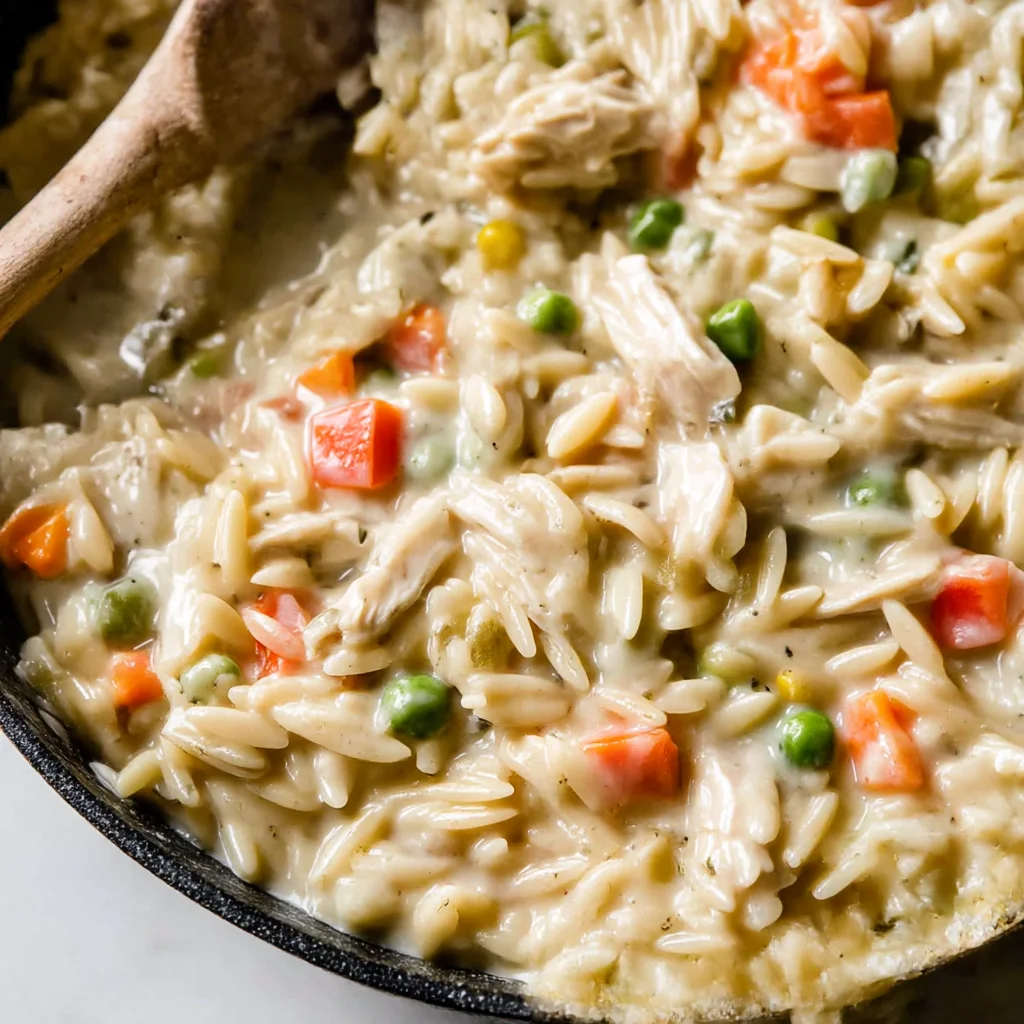
This creamy chicken pot pie orzo is a one-pot wonder that brings all the cozy pot pie flavors into a simple pasta dish, perfect for busy weeknights. Ready in 30…
Ingredients
Instructions
**Prepare the aromatics.** Place a large, deep skillet or Dutch oven over medium heat and add the olive oil and butter. Once the butter has melted and the mixture is shimmering, add the diced onion and a pinch of salt. Cook, stirring occasionally, for about 4-5 minutes until the onion becomes translucent and fragrant. The salt helps draw out moisture and prevents browning too quickly. Add the minced garlic and cook for another 30 seconds until fragrant—be careful not to burn the garlic as it turns bitter. This aromatic base builds the foundational flavor for the entire dish, much like a classic pot pie filling.
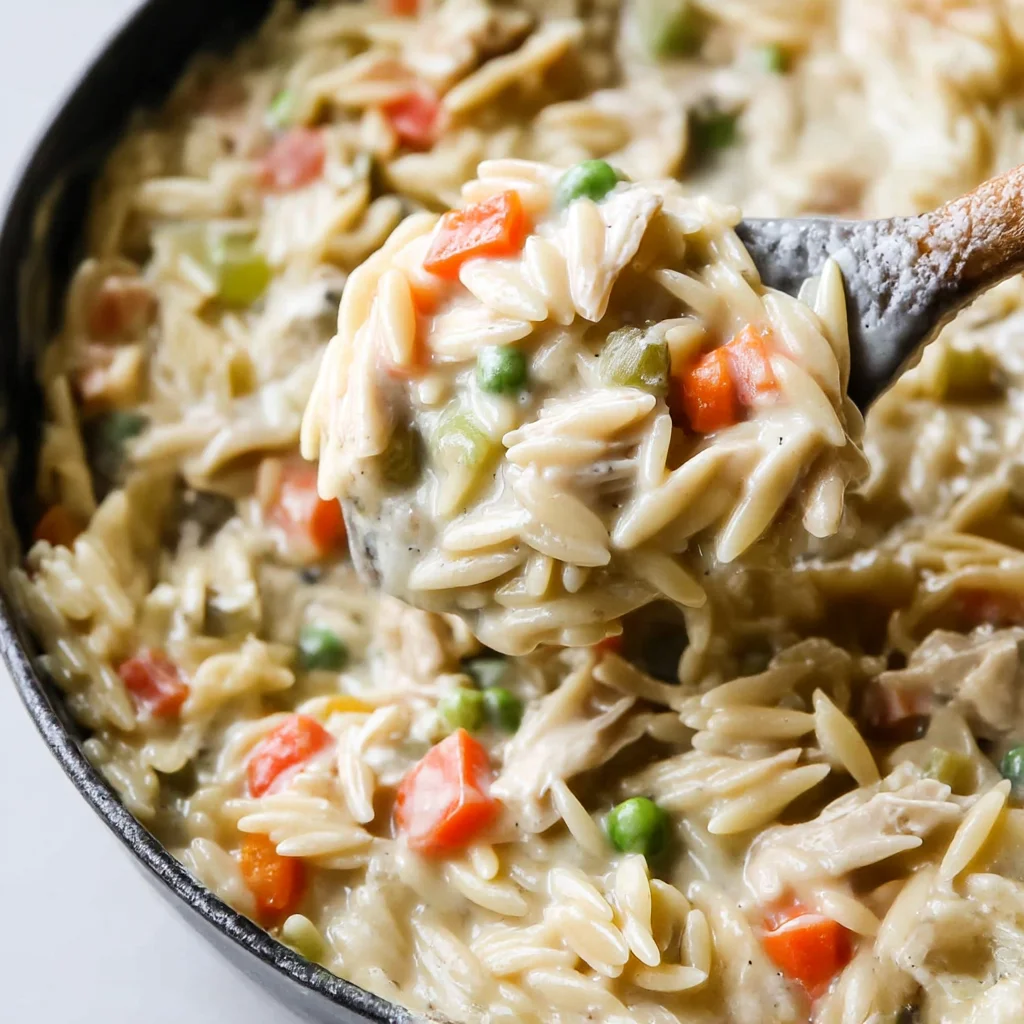
**Cook the chicken.** Push the onions and garlic to the sides of the pan, then add the chicken breasts (or thighs) in a single layer. Season the chicken with salt, pepper, and half of the dried thyme. Let it cook undisturbed for 4-5 minutes until the bottom is golden brown, then flip and cook another 4-5 minutes until the internal temperature reaches 165°F (74°C). The browning creates Maillard reaction compounds that add deep savory notes. If using thighs, they can be cooked a bit longer as they stay juicier. Once cooked, transfer the chicken to a cutting board and let it rest for 5 minutes before shredding or dicing into bite-sized pieces. Resting allows juices to redistribute, ensuring moist chicken.
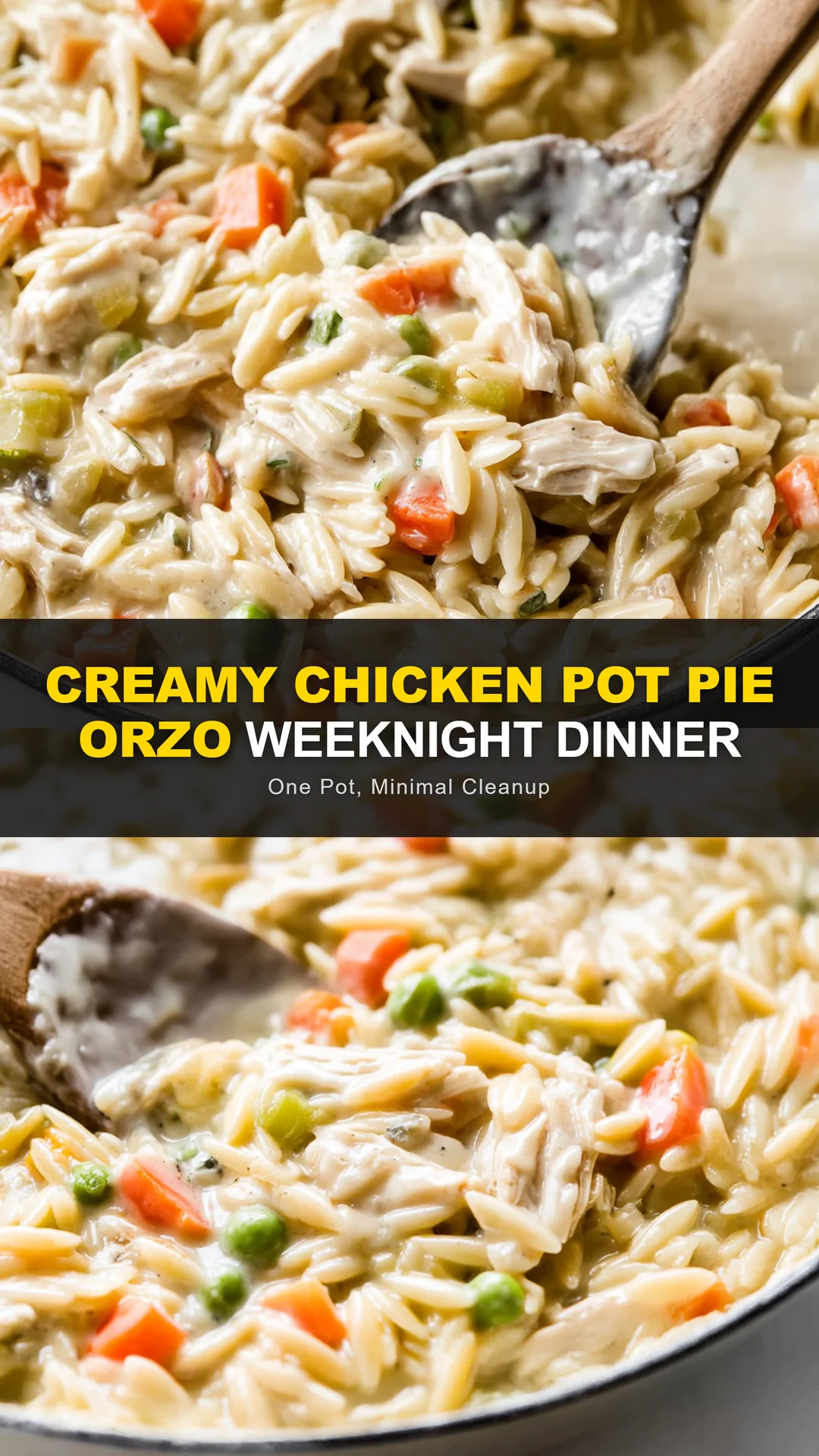
**Toast the orzo and make the roux.** In the same pan (do not wipe out—those browned bits are flavor!), add the orzo pasta and stir constantly for 1-2 minutes until it becomes lightly toasted and fragrant. Toasting the orzo enhances its nutty flavor and helps it hold up better during simmering. Sprinkle the flour over the orzo and stir for another minute to cook off the raw flour taste. This roux will thicken the sauce later. The mixture will look dry and clumpy at first; that’s normal.
**Deglaze and simmer.** Slowly pour in the chicken broth while stirring continuously to prevent lumps. The liquid will sizzle and steam as it hits the hot pan—scrape up any browned bits from the bottom. Add the remaining thyme, then bring to a boil. Once boiling, reduce heat to low, cover the pan, and let it simmer for 10-12 minutes, stirring occasionally to prevent sticking. The orzo will absorb most of the liquid and become tender. If it seems too dry before the orzo is done, add an extra splash of broth or water. You want the orzo to be al dente with a little bite.
**Add cream, vegetables, and chicken.** Uncover the pan and stir in the heavy cream, diced carrots, frozen peas, and the cooked shredded chicken. Continue to cook over medium heat for 3-5 minutes, stirring gently, until the carrots are tender and the peas are heated through. The cream will transform the dish into a luscious, velvety sauce. Taste and adjust seasoning with salt and pepper. If the sauce is too thin, let it simmer uncovered for an extra minute or two to thicken. If too thick, add a splash of broth or milk. The final consistency should be creamy and coat the back of a spoon.
**Garnish and serve.** Remove the pan from heat. Let the dish rest for 2-3 minutes to allow the sauce to settle and flavors to meld. Spoon the creamy chicken pot pie orzo into warm bowls, making sure each serving gets plenty of chicken, vegetables, and creamy sauce. Garnish with fresh chopped parsley for a pop of color and freshness. For an extra touch, serve with crusty bread or a simple side salad to round out the meal. This dish is best enjoyed immediately while hot and creamy.
For best results
- **Use leftover or rotisserie chicken for even faster prep.** Shredded rotisserie chicken is a weeknight lifesaver—just skip the step where you cook raw chicken and add it when you would normally add the cooked chicken. This cuts down your active cooking time to about 15 minutes. If using rotisserie, remove the skin and bones, then shred or chop the meat. You'll also get more flavor from the seasoned skin, but avoid adding the skin itself as it can make the dish greasy.
- **Toast the orzo properly for maximum flavor.** The 1-2 minute toasting step is non-negotiable. Watch the orzo closely—it should turn a light golden brown and smell nutty, like popcorn. If you skip this or rush it, the orzo will be bland and may turn mushy. Stir constantly to ensure even toasting. This technique works for any small pasta shape and adds a depth that can't be replicated.
- **Adjust the creaminess to your preference.** The recipe uses heavy cream for ultimate richness, but you can lighten it up by using half-and-half or even whole milk mixed with a tablespoon of cornstarch. For a dairy-free version, full-fat coconut cream or cashew cream works beautifully—though the flavor will shift slightly. If you want an extra-decadent dish, stir in a handful of grated Parmesan cheese along with the cream.
- **Don't overcook the vegetables.** Frozen peas only need a few minutes to heat through; if boiled too long, they become mushy and lose their sweet pop. Carrots should be diced small (about ¼-inch) so they cook quickly in the final simmer. You can also add other vegetables like corn, green beans, or diced potatoes—just adjust cooking times accordingly. If using potatoes, parcook them in the broth before adding orzo.
- **Make it a complete one-pot meal.** To add more protein without extra dishes, toss in a can of drained chickpeas or white beans along with the chicken. For extra greens, stir in a handful of baby spinach at the very end—it will wilt into the sauce in seconds. This boosts nutrition without altering the core pot pie flavor profile.
- **Store leftovers properly to retain texture.** Creamy pasta dishes can become thick and gluey when refrigerated due to starch retrogradation. Store in an airtight container for up to 3 days. To reheat, add a splash of broth or milk and gently warm on the stovetop over low heat, stirring often. Avoid the microwave if possible—it can make the sauce separate and the orzo uneven. You can also freeze the dish for up to 2 months, but thaw overnight in the fridge and reheat gently.
Variations
- **Vegetarian Mushroom Pot Pie Orzo.** Replace chicken with 2 cups of mixed mushrooms (cremini, shiitake, or oyster) sliced thickly. Sauté the mushrooms with the onions and garlic until they release their liquid and start browning—this builds umami. Use vegetable broth instead of chicken broth. For extra protein, add a can of drained chickpeas or white beans. The earthy mushrooms mimic the heartiness of chicken and pair perfectly with the creamy sauce.
- **Gluten-Free Adaptation.** Substitute orzo with a gluten-free orzo (made from rice or corn) or use a small pasta shape like gf ditalini. Alternatively, use 1 cup of arborio rice for a risotto-style dish—increase the broth to 3 cups and cook longer, stirring frequently. Ensure the flour used for the roux is a gluten-free all-purpose blend or skip the flour entirely and thicken the sauce with a slurry of cornstarch and water (1 tablespoon cornstarch mixed with 2 tablespoons cold water) stirred in at the end.
- **Dairy-Free Creamy Version.** Replace heavy cream with full-fat coconut cream from a can (chill the can first for easier separation) or use a thick cashew cream (soak ½ cup raw cashews in hot water for 15 minutes, then blend with ½ cup water until smooth). The coconut version will add a subtle tropical flavor, which works surprisingly well with the thyme and chicken. For a neutral taste, use unsweetened oat cream or a store-bought dairy-free cream alternative.
- **Spicy Southwest Twist.** Add 1 teaspoon of smoked paprika and ½ teaspoon of cumin along with the thyme. Replace half the chicken broth with fire-roasted diced tomatoes (undrained). Swap peas and carrots for corn and black beans. Stir in a diced jalapeño with the onion for heat. Finish with a squeeze of lime and garnish with cilantro. This version brings a whole new flavor profile while keeping the one-pot convenience.
Nutrition
- Calories450 kcal
- Total Fat20g
- Saturated Fat10g
- Cholesterol100mg
- Sodium800mg
- Total Carbohydrates35g
- Dietary Fiber3g
- Sugars5g
- Protein28g