
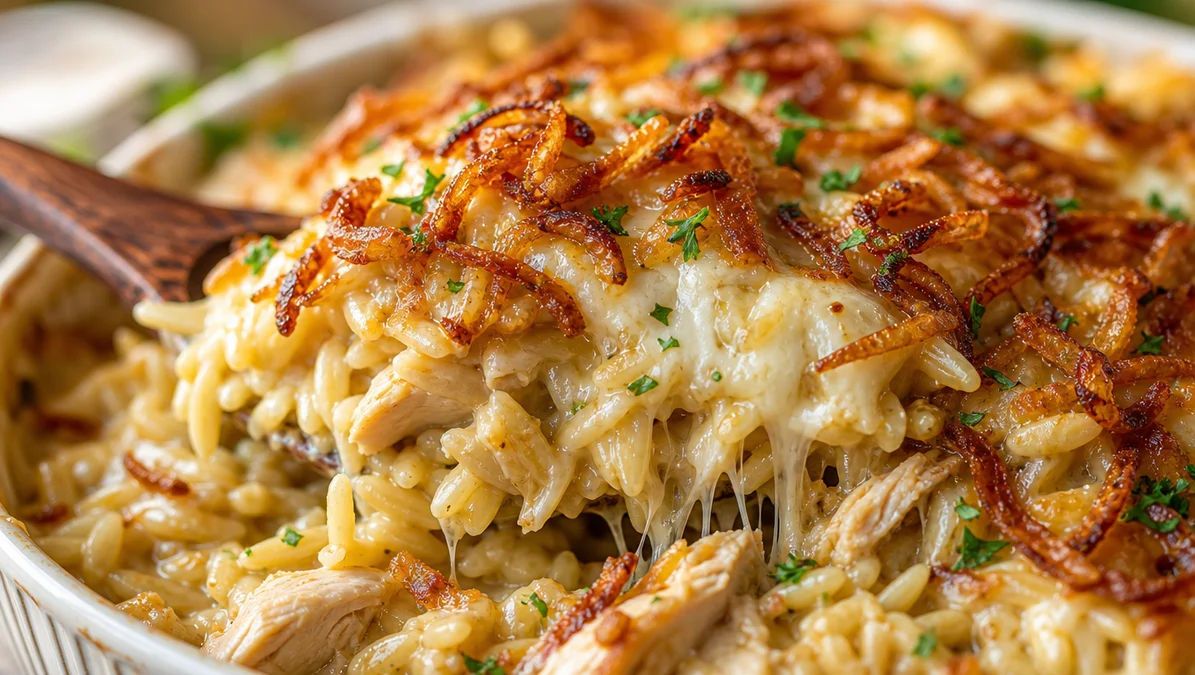
This French Onion Chicken Orzo Casserole combines tender chicken, caramelized onions, and creamy orzo pasta in a one-pan comfort meal. Topped with melty cheese and baked to bubbly perfection, it's…
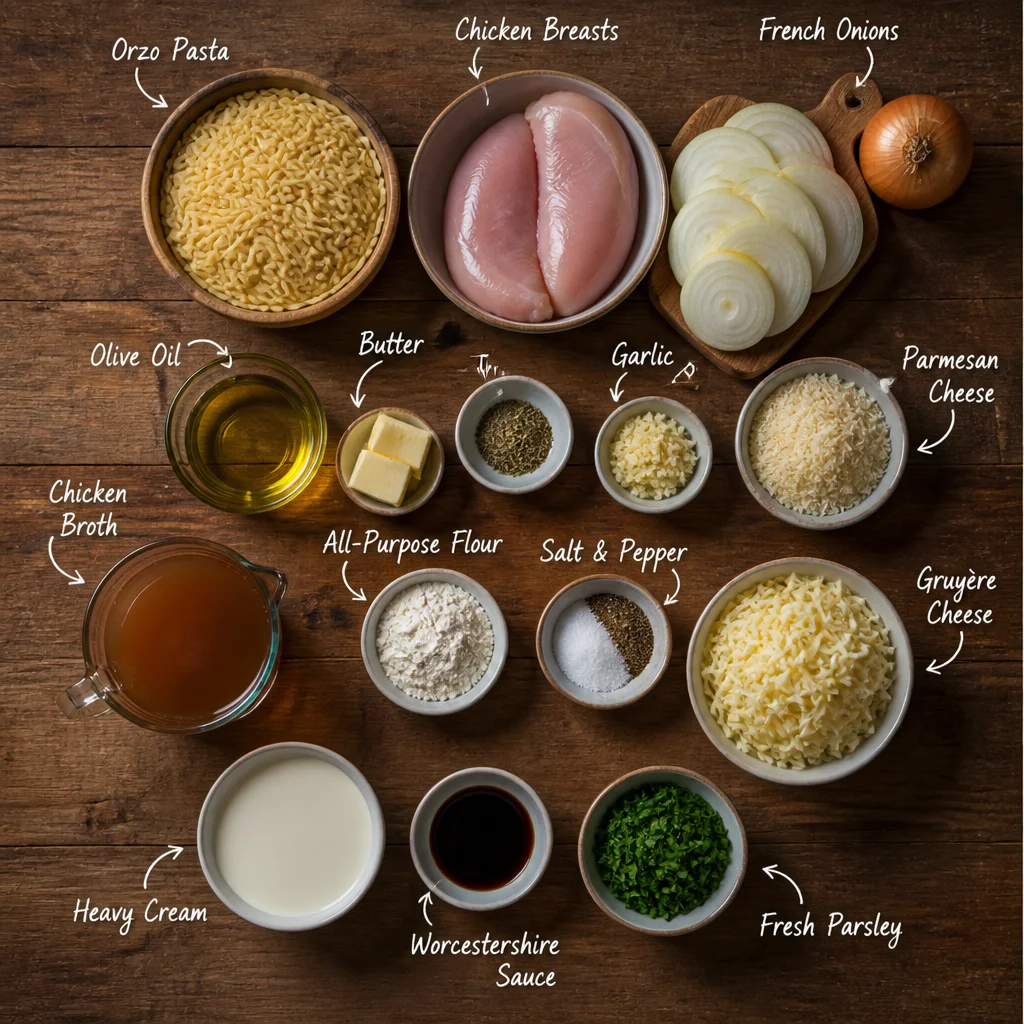
Ingredients
Instructions
**Caramelize the onions:** In a large oven-safe skillet or Dutch oven (at least 12 inches in diameter), melt the butter with 1 tablespoon of olive oil over medium heat. Add the sliced onions and toss to coat. Cook, stirring occasionally, for about 20–25 minutes, until the onions are deeply golden brown and sweet. The key to perfect caramelization is patience: don’t rush the heat. If the onions start to stick, deglaze with a splash of water or wine. You’ll know they’re done when they have a rich mahogany color and have reduced significantly in volume. Season with salt, pepper, and dried thyme, then stir in the white wine, scraping up any browned bits from the bottom of the pan. Let the wine cook off for 1–2 minutes. Transfer the caramelized onions to a bowl and set aside. (This step can be done up to 3 days ahead and refrigerated.)

**Sear the chicken:** In the same skillet, add the remaining 1 tablespoon of olive oil over medium-high heat. Pat the chicken pieces dry with paper towels (this ensures a good sear). Season lightly with salt and pepper. Add the chicken in a single layer (work in batches if needed) and cook without moving for 4–5 minutes, until golden brown on one side. Flip and cook another 3–4 minutes. The chicken doesn’t need to be fully cooked through at this point—it will finish in the oven. Use a slotted spoon to transfer the chicken to the plate with the onions. If there are any burnt bits, wipe the skillet clean with a paper towel.
**Combine the casserole base:** Preheat your oven to 375°F (190°C). Return the skillet to medium heat. Add the chicken broth, onion soup mix, and heavy cream, whisking to combine. Bring to a gentle simmer, then stir in the dried orzo. Let the orzo cook for about 2 minutes, stirring occasionally, so it starts to absorb the liquid. The mixture will be quite liquidy at this stage—that’s perfect. Return the caramelized onions and chicken (along with any accumulated juices) to the skillet, stirring to distribute evenly. Taste the broth and adjust seasoning with additional salt and pepper if needed. Note that the onion soup mix adds salt, so go easy.

**Top with cheese and bake:** Sprinkle the shredded Gruyère and grated Parmesan evenly over the top of the casserole. For an extra golden crust, you can also add a handful of panko breadcrumbs tossed with melted butter (optional). Transfer the skillet to the preheated oven and bake for 20–25 minutes, until the cheese is bubbly and deeply golden, and the orzo is tender. The casserole should be bubbling at the edges. If the top isn’t brown enough, switch to broil for the last 1–2 minutes, watching closely to avoid burning. Let the casserole rest for 5 minutes before serving—this allows the sauce to thicken slightly.
**Garnish and serve:** Sprinkle fresh chopped parsley over the top for a pop of color and freshness. Serve hot, straight from the skillet. This casserole pairs beautifully with a simple green salad dressed with a tangy vinaigrette to cut through the richness. Leftovers can be stored in an airtight container in the refrigerator for up to 4 days. Reheat gently in the microwave or oven, adding a splash of broth if needed to restore creaminess.
For best results
- **Mastering Caramelized Onions:** The secret to deeply flavorful onions is low and slow cooking. Use a heavy-bottomed pan to distribute heat evenly. Don't stir too often—let them develop color. A pinch of sugar can help kickstart browning, but it's not necessary if you're patient. If the onions start to burn, reduce the heat immediately. Deglazing with wine not only adds flavor but also lifts the fond (browned bits) that adds depth to the entire dish. You can caramelize onions in bulk and freeze them in ice cube trays for future use.
- **Choosing the Right Chicken:** Boneless skinless thighs are more forgiving and stay juicier than breasts, but either works. If using breasts, be careful not to overcook them during the sear. Cutting the chicken into uniform 1-inch pieces ensures even cooking. For extra flavor, marinate the chicken in a tablespoon of Worcestershire sauce and a clove of minced garlic for 15 minutes before cooking.
- **Orzo Cooking Tips:** Orzo is a small pasta that cooks quickly, but it can become mushy if overcooked. Since it will continue to cook in the oven, slightly undercook it during the stovetop step. The ideal texture is al dente—firm to the bite. If you prefer a thicker casserole, reduce the broth by 1/4 cup. For a gluten-free version, use gluten-free orzo or substitute with rice (adjust liquid accordingly).
- **Cheese Selection and Melting:** Gruyère is traditional for French onion soup and melts beautifully with a nutty flavor. If Gruyère is hard to find or expensive, a blend of Swiss and mozzarella works well. For a sharper taste, add a bit of aged cheddar. Always shred your own cheese from a block—pre-shredded cheese contains anti-caking agents that can prevent smooth melting. Let the cheese come to room temperature before baking for even melting.
- **Make-Ahead and Freezing:** This casserole is perfect for meal prep. Assemble the entire dish (without the cheese topping) up to 2 days in advance, cover, and refrigerate. When ready to bake, add the cheese and increase baking time by 10 minutes. To freeze, assemble in a freezer-safe dish, wrap tightly, and freeze for up to 3 months. Thaw overnight in the refrigerator before baking. The texture of the orzo may soften slightly upon reheating, but the flavor remains fantastic.
- **Serving Suggestions:** While this casserole is a complete meal on its own, it pairs wonderfully with a crisp green salad dressed with lemon vinaigrette or steamed green beans. For a low-carb option, serve over cauliflower rice or alongside roasted vegetables. A glass of dry white wine like Sauvignon Blanc or unoaked Chardonnay complements the creamy, cheesy flavors.
Variations
- **Low-Carb / Keto Version:** Replace the orzo with cauliflower rice or zucchini noodles. To keep the casserole from becoming watery, pre-cook the cauliflower rice by sautéing it in a dry pan until most moisture evaporates. Use full-fat cream and increase the cheese to 3 cups. Omit the onion soup mix (which contains sugar and starches) and instead use extra caramelized onions, onion powder, and garlic powder. This version is rich and satisfying with about 8g net carbs per serving.
- **Vegetarian Adaptation:** Omit the chicken and double the mushrooms. Use a mix of cremini and shiitake for earthy flavor. Sauté the mushrooms along with the onions until deeply browned. Replace chicken broth with vegetable broth. For protein, add a can of drained chickpeas or white beans. The result is a hearty, umami-packed casserole that even meat-lovers will enjoy.
- **Spicy Southwest Twist:** Add 1 teaspoon of smoked paprika, 1/2 teaspoon of cumin, and a pinch of cayenne to the onion mixture. Replace half the Gruyère with pepper jack cheese for a kick. Swap the parsley for fresh cilantro. Serve with a dollop of sour cream and sliced jalapeños. This variation brings a smoky heat that contrasts beautifully with the creamy orzo.
- **Herb and Lemon Version:** Add 2 tablespoons of fresh lemon juice and 1 teaspoon of lemon zest to the broth. Stir in 1/4 cup of chopped fresh dill and 2 tablespoons of capers just before baking. Use a combination of Gruyère and feta cheese for a tangy finish. This bright, herby version is perfect for spring and pairs wonderfully with grilled chicken or fish.
Nutrition
- Calories485 kcal
- Total Fat28g
- Saturated Fat15g
- Cholesterol120mg
- Sodium890mg
- Total Carbohydrates34g
- Dietary Fiber2g
- Sugars6g
- Protein32g