
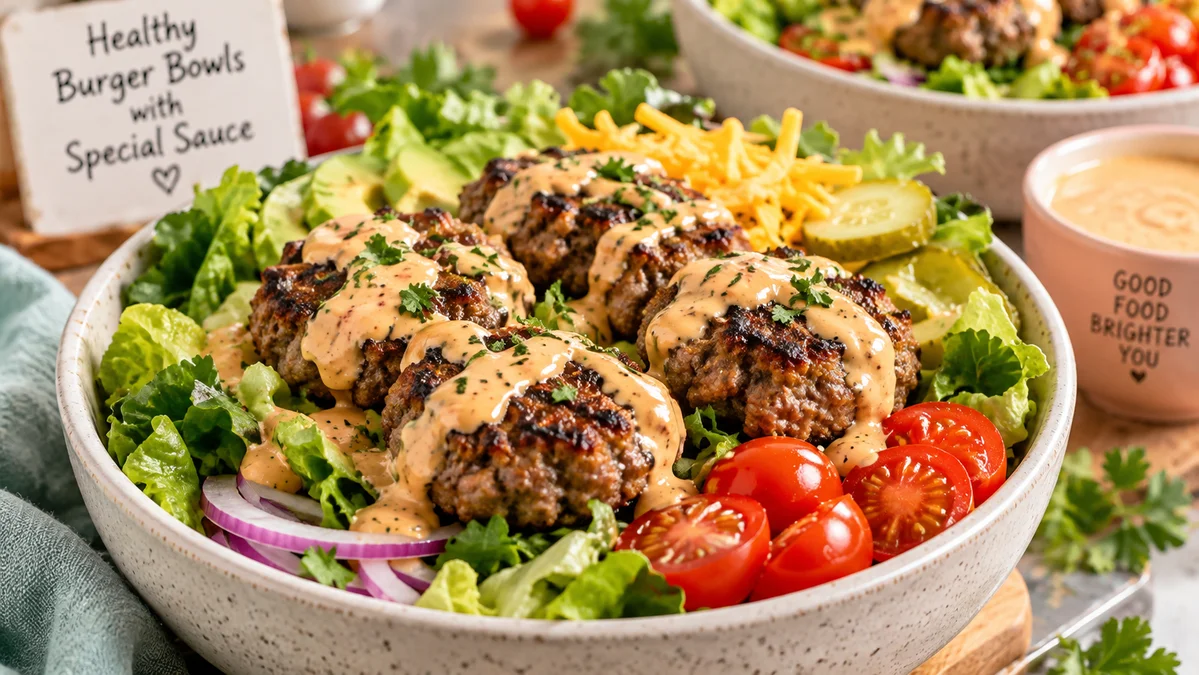
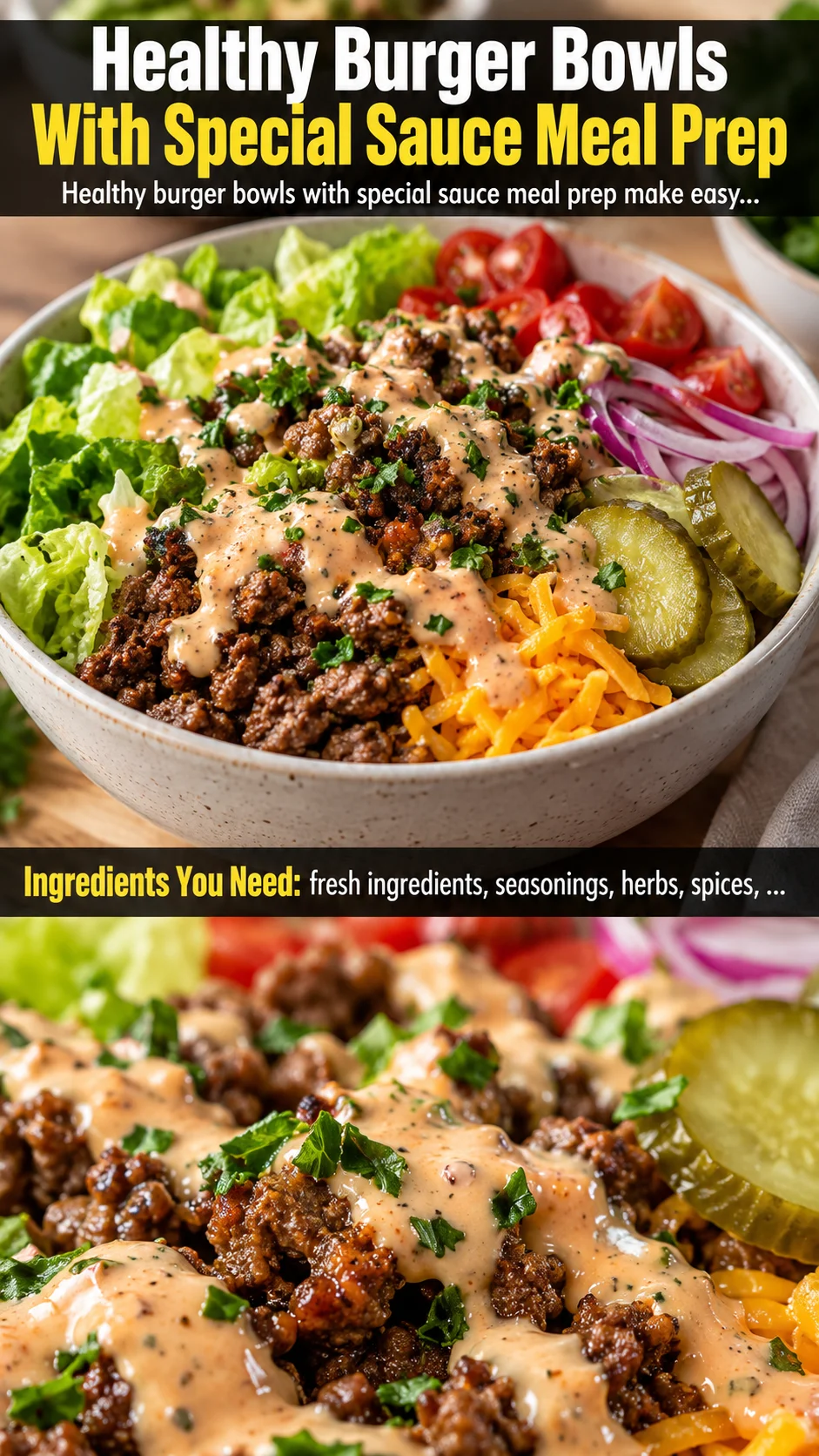
Healthy burger bowls with special sauce are the ultimate meal prep recipe. Juicy mini burgers, fresh toppings, and a creamy Whole30 sauce. High protein and delicious!
Ingredients
Instructions
Start by gathering and preparing all your ingredients. This is the key to a smooth meal prep session. Wash and dry the mixed greens thoroughly—a salad spinner works wonders here. If you don’t have one, pat them dry with paper towels; excess moisture will make your bowls soggy. Halve the cherry tomatoes, thinly slice the red onion, and slice the avocado (if using immediately, otherwise wait to slice avocado until serving to prevent browning). Slice the pickles and cucumber, shred the carrots, and cook the bacon if using. For the bacon, I recommend baking it on a wire rack at 400°F (200°C) for 15-20 minutes until crispy—this yields perfectly flat, evenly cooked slices. Crumble and set aside. Having everything prepped and organized in small bowls (mise en place) makes assembly fast and enjoyable.
In a small bowl, whisk together the mayonnaise, sugar-free ketchup, mustard, pickle juice, apple cider vinegar, garlic powder, onion powder, and smoked paprika until smooth and creamy. Taste and adjust seasoning with salt and pepper. The sauce should be tangy, slightly sweet, and have a little kick from the smoked paprika. If you prefer a thinner sauce, add a teaspoon of water at a time until desired consistency. Cover and refrigerate while you prepare the burgers. This sauce can be made up to 5 days ahead and stored in an airtight container in the fridge—the flavors meld and deepen over time, so making it ahead is a great time-saver.
In a large bowl, combine the ground beef (or turkey), salt, pepper, garlic powder, onion powder, and smoked paprika. Use your hands to gently mix until just combined—overmixing can make the burgers tough. Divide the mixture into 12 equal portions (about 2 tablespoons each) and shape into small, flat patties, about 2 inches in diameter and 1/2 inch thick. Press a slight indentation in the center of each patty with your thumb; this helps prevent them from puffing up during cooking. Place the patties on a plate or baking sheet lined with parchment paper. If you’re not cooking them immediately, cover and refrigerate for up to 24 hours.
Heat a large skillet, preferably cast iron, over medium-high heat. Add the coconut oil or avocado oil and swirl to coat. Once the oil is shimmering, add the patties in a single layer, making sure not to overcrowd the pan—cook in batches if necessary. Cook for 2-3 minutes per side for medium-rare, or 3-4 minutes per side for medium. The internal temperature should reach 160°F (71°C) for food safety. You’ll know they’re ready to flip when they easily release from the pan and have a nice brown crust. Resist the urge to press down on the patties; that squeezes out the juices. Transfer the cooked burgers to a plate and let them rest for 5 minutes before assembling the bowls. This resting period allows the juices to redistribute, ensuring every bite is juicy.
To assemble, divide the mixed greens among four bowls or meal prep containers. Top with the cherry tomatoes, red onion, avocado, pickles, bacon (if using), shredded carrots, and cucumber. Arrange 3 mini burgers on top of each bowl. Drizzle generously with the special sauce—I like to use a squeeze bottle for precise drizzling, or simply spoon it over. Garnish with fresh cilantro or parsley. If you’re meal prepping, pack the sauce separately to keep the greens crisp. These bowls are best enjoyed within 4 days for optimal freshness. The flavors come together beautifully, and each bite offers a perfect balance of savory, fresh, and creamy.
To serve immediately, enjoy right away! For meal prep, divide the ingredients into airtight glass containers. I recommend keeping the greens at the bottom, then layering the heartier toppings like carrots, cucumber, and pickles, followed by the burgers. Store the special sauce in small separate containers or mini jars. When ready to eat, drizzle the sauce over the bowl, toss gently, and enjoy cold or at room temperature. These bowls are perfect for grab-and-go lunches or quick dinners. They stay fresh for up to 4 days in the refrigerator. If you prefer warm burgers, you can reheat them separately in a skillet or microwave for 30-60 seconds before adding to the bowl.
For best results
- Invest in high-quality ground beef. The fat content matters: 80/20 (80% lean, 20% fat) yields the juiciest burgers. If you're using leaner meat like ground turkey or chicken, add a tablespoon of olive oil or grated onion to the mix to keep them moist. For Whole30 compliance, ensure your meat is fresh and not enhanced with additives.
- Make the special sauce your own. The base recipe is tangy and creamy, but you can adjust the heat by adding a pinch of cayenne or a dash of hot sauce (Whole30-compliant). For a creamier sauce, add more mayo; for a tangier kick, add extra pickle juice or vinegar. Taste as you go—the sauce should be bold since it's the main flavor booster for the bowls.
- Meal prep like a pro: Use glass containers with compartments to keep ingredients separate. This prevents the greens from wilting and the tomatoes from getting mushy. If you don't have compartment containers, layer the ingredients strategically: greens first, then hearty veggies, then burgers, and finally delicate items like avocado (which should be added fresh if possible). Avocado browns quickly when cut; to prevent this, toss slices in lime juice or store them with the pit.
- Don't skip resting the meat. Letting the cooked patties rest for 5 minutes before slicing or serving allows the juices to redistribute, resulting in a more flavorful and moist burger. If you're meal prepping, cool the patties completely before adding to containers to prevent condensation, which can make the greens soggy.
- Get creative with toppings. While the recipe calls for classic burger toppings, feel free to add roasted sweet potato cubes, sautéed mushrooms, or even a fried egg (if not Whole30). For a crunch, add jicama or bell pepper strips. The beauty of burger bowls is their versatility—use what you have on hand.
- Storage secrets: Keep the special sauce separate until serving. It can be stored in the fridge for up to 5 days. The assembled bowls (without sauce) last up to 4 days. If you're adding avocado, it's best to add it fresh each day. For longer storage, you can freeze the cooked burger patties for up to 3 months; thaw overnight in the fridge and reheat gently.
- Troubleshooting: If your burgers turn out dry, it's likely due to overcooking or using too lean meat. Next time, check the internal temperature with a meat thermometer—160°F is the target. If your sauce is too thick, thin it with a little water or extra pickle juice. If the bowls seem bland, it might need more salt or acid (vinegar or lemon juice). Always taste and adjust.
- Batch cooking: Double the recipe for a week's worth of lunches. Cook the burgers in batches and store them separately. You can also prep the veggies ahead—wash and chop everything on Sunday, and assemble bowls in 5 minutes each morning.
Variations
- Turkey Burger Bowls: Swap the ground beef for ground turkey (93% lean). To keep them moist, add 2 tablespoons of almond flour (paleo) or coconut flour as a binder, along with a grated zucchini (squeezed dry). The cooking time remains the same. Turkey burgers are a leaner option but still delicious with the special sauce.
- Salmon Burger Bowls: For a seafood twist, use canned salmon or fresh salmon minced. Mix with an egg, almond flour, and seasonings. Form into patties and cook in a skillet for 3-4 minutes per side. The special sauce pairs beautifully with salmon. This version is packed with omega-3s.
- Vegan Burger Bowls: Use a plant-based burger patty (store-bought or homemade with black beans and quinoa). Note that most store-bought veggie burgers are not Whole30 or paleo due to grains and legumes. For a Whole30 vegan option, try portobello mushroom caps seasoned and grilled. The special sauce can be made with vegan mayo (avocado oil-based) to keep it compliant.
- Spicy Burger Bowls: Add heat by incorporating chopped jalapeños into the burger mix or adding a dash of hot sauce to the special sauce. You can also top with sliced pepperoncini or banana peppers. For a smoky flavor, add chipotle powder to the sauce.
- Breakfast Burger Bowls: Turn this into a breakfast meal prep by adding scrambled eggs or a fried egg on top. Use breakfast sausage instead of beef patties, and swap the special sauce for a drizzle of hollandaise or a simple avocado crema. It's a fun twist that works for brunch.
Nutrition
- Calories420 kcal
- Total Fat28g
- Saturated Fat8g
- Cholesterol80mg
- Sodium780mg
- Total Carbohydrates12g
- Dietary Fiber5g
- Sugars5g
- Protein30g