
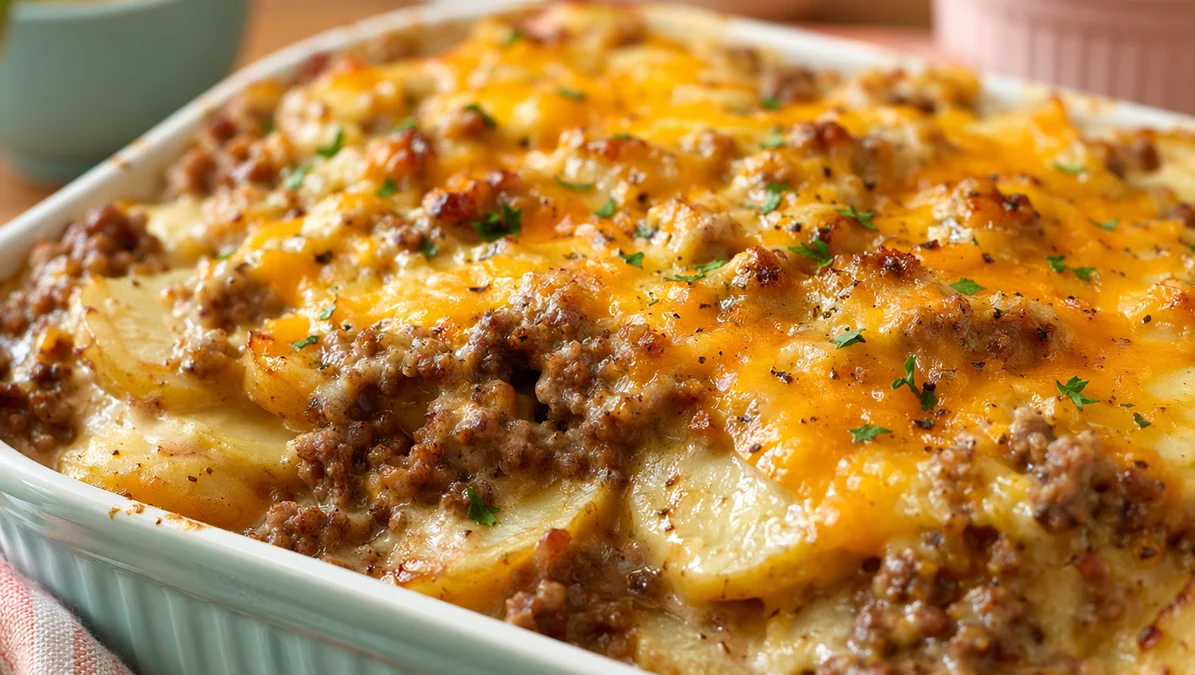
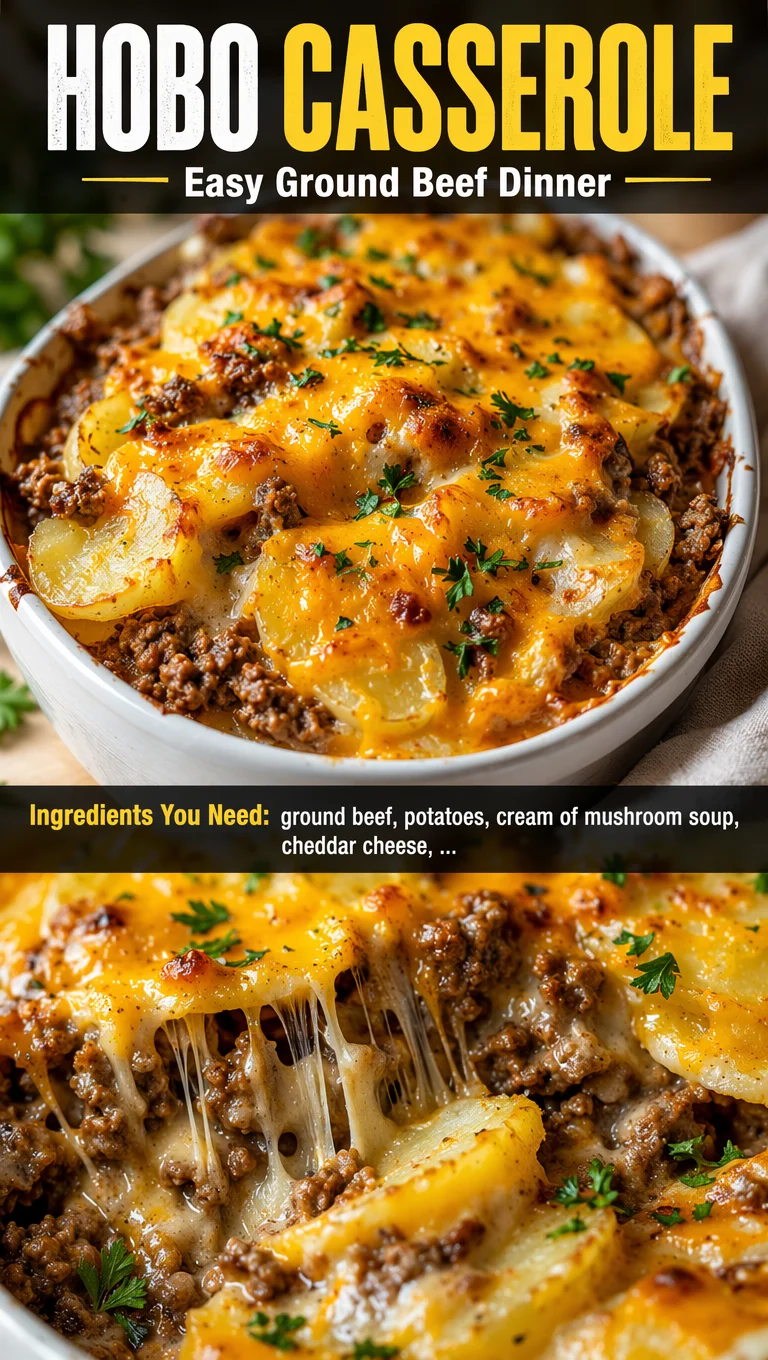
This easy hobo casserole with ground beef is a hearty one-dish meal perfect for busy weeknights. Made with tender potatoes, creamy soup, and melted cheese, it's a comforting dinner the…
Ingredients
Instructions
Preheat your oven to 375°F (190°C). While the oven is heating, prepare all your ingredients. This step is crucial for a smooth cooking process. Dice the onion and mince the garlic, then set them aside. Wash the potatoes thoroughly and slice them into thin, even rounds about 1/8-inch thick. Using a mandoline slicer ensures uniform thickness, which promotes even cooking. If you don’t have a mandoline, a sharp knife and a steady hand will work—just try to keep the slices consistent. The goal is to have the potatoes cook through in the same time as the casserole bakes.
In a large skillet, heat the olive oil over medium-high heat until shimmering. Add the diced onion and sauté for 3-4 minutes until translucent and beginning to brown at the edges. Add the minced garlic and cook for 30 seconds until fragrant—be careful not to burn the garlic as it turns bitter. Next, add the ground beef, breaking it apart with a wooden spoon. Cook for 5-7 minutes, stirring occasionally, until the beef is fully browned and no pink remains. You’ll know it’s done when the beef releases its juices and they begin to evaporate, leaving behind sizzling crumbles. Drain off any excess fat if necessary (though lean beef should produce minimal grease). Season the meat mixture with salt, black pepper, smoked paprika, and dried thyme. Stir well to incorporate the spices, then remove from heat.
In a medium bowl, whisk together the condensed cream of mushroom soup, whole milk, and sour cream until smooth. This creamy sauce will bind the casserole and keep the potatoes tender. The condensed soup provides concentrated flavor and thickness, while the milk and sour cream add richness and a slight tang. If you prefer a thinner sauce, you can add an extra splash of milk. For a lighter version, use low-fat milk and reduced-fat sour cream, though the texture will be slightly less luxurious.
Now it’s time to assemble the casserole. Lightly grease a 9×13-inch baking dish with non-stick spray or butter. Spread half of the sliced potatoes evenly across the bottom of the dish. The potatoes should overlap slightly but not be piled too thickly. Next, spoon half of the browned beef mixture over the potatoes, distributing it evenly. Pour half of the creamy soup mixture over the beef, using a spatula to spread it into an even layer. Sprinkle half of the shredded cheddar cheese and all of the mozzarella cheese over the top. Repeat the layers: remaining potatoes, remaining beef, remaining soup mixture, and finally the remaining cheddar cheese. The mozzarella in the middle adds a gooey, stretchy texture, while the cheddar on top creates a golden, bubbly crust.
Cover the baking dish tightly with aluminum foil. This traps steam and helps the potatoes cook through without drying out. Bake in the preheated oven for 35 minutes. After 35 minutes, carefully remove the foil—watch out for the hot steam. Continue baking uncovered for an additional 10-15 minutes, or until the top is golden brown and bubbly, and the potatoes are tender when pierced with a fork. The edges should be bubbling, and the cheese should be melted with some browned spots. If you want an extra-crispy top, you can switch the oven to broil for the last 1-2 minutes, but keep a close eye to prevent burning.
Remove the casserole from the oven and let it rest for 5-10 minutes before serving. This resting period allows the layers to set, making it easier to slice and serve. Garnish with fresh chopped parsley for a pop of color and freshness. Serve hot as a complete meal—this casserole is hearty enough on its own, but pairs well with a simple side salad or steamed green beans for a balanced dinner. Leftovers can be stored in an airtight container in the refrigerator for up to 4 days. To reheat, microwave individual portions or warm in a 350°F oven covered with foil until heated through.
For best results
- For the best texture, use Yukon Gold potatoes. They have a buttery flavor and hold their shape well during baking. Russet potatoes can become too mushy, while waxy potatoes like red potatoes may not soften enough. Slice them thinly and uniformly—a mandoline slicer is your best friend here. If you're short on time, you can parboil the potato slices for 3-4 minutes before layering to reduce baking time by about 10 minutes. Just drain them well before adding to the casserole.
- To save time on a busy weeknight, you can prep the components ahead. Brown the ground beef and onion mixture, then refrigerate it for up to 2 days. You can also slice the potatoes and store them in a bowl of cold water in the fridge to prevent browning. When ready to assemble, drain the potatoes and pat them dry with a clean kitchen towel before layering. The creamy sauce can be whisked together and stored in the fridge as well. Assemble the casserole just before baking, or you can assemble it completely and refrigerate for up to 24 hours—just add an extra 10-15 minutes to the baking time if starting from cold.
- If you don't have cream of mushroom soup, you can make a quick homemade substitute. Melt 2 tablespoons of butter in a saucepan, whisk in 2 tablespoons of all-purpose flour, and cook for 1 minute. Gradually whisk in 1 cup of milk or chicken broth, then add 1/2 cup of finely chopped mushrooms (optional) and season with salt, pepper, and garlic powder. Simmer until thickened, about 5 minutes. This homemade version is lower in sodium and free of preservatives. For a gluten-free option, use a gluten-free flour blend or cornstarch slurry.
- Don't skip the step of covering the casserole with foil for the first part of baking. This creates a steamy environment that cooks the potatoes through without drying them out. If you find that the casserole is still too watery after baking, you may have used too much milk or sour cream, or the potatoes released excess water. To avoid this, make sure to pat the potato slices dry before layering, and don't overdo the liquid. The casserole should be creamy, not soupy. If it does turn out runny, let it rest longer—the starches from the potatoes will help thicken it as it cools.
- For a richer flavor, try adding a tablespoon of Worcestershire sauce to the ground beef while browning. It adds umami depth that complements the beef and cheese. You can also add a pinch of cayenne pepper or red pepper flakes for a subtle heat. If you love cheese, experiment with different blends: Gruyère melts beautifully and adds a nutty flavor, while pepper jack gives a spicy kick. For a smoky twist, use smoked cheddar or add a few drops of liquid smoke to the beef.
- This casserole freezes exceptionally well. Assemble the casserole completely but do not bake it. Cover the dish tightly with plastic wrap and then a layer of aluminum foil. Freeze for up to 3 months. When ready to bake, thaw overnight in the refrigerator, then bake as directed, adding about 10 minutes to the covered baking time. Alternatively, you can bake from frozen: increase the covered baking time to 60 minutes, then uncover and bake for an additional 15-20 minutes until bubbly and cooked through. The texture will be slightly softer but still delicious.
- To make this casserole a complete meal in one dish, consider adding vegetables. Layer in some frozen peas and carrots, or sautéed bell peppers and zucchini between the beef and potatoes. You can also stir a cup of frozen mixed vegetables into the creamy sauce before layering. Just make sure to thaw and drain frozen vegetables well to avoid excess moisture. For a heartier version, add a can of drained and rinsed kidney beans or black beans to the beef mixture.
Variations
- Vegetarian Hobo Casserole: Replace the ground beef with a plant-based meat substitute or a mixture of sautéed mushrooms, lentils, and walnuts. Use cream of mushroom soup (or a vegetarian cream soup) and ensure the cheese is vegetarian (some cheeses use animal rennet). Follow the same layering process. The mushrooms provide a meaty umami flavor, while lentils add protein and fiber. This version is just as hearty and satisfying.
- Turkey or Chicken Hobo Casserole: Substitute the ground beef with lean ground turkey or chicken. Because poultry is leaner, you may need to add a tablespoon of olive oil when browning to prevent dryness. Season with the same spices, but consider adding a teaspoon of poultry seasoning or sage for a flavor twist. The rest of the recipe remains the same. This variation is lower in saturated fat and calories.
- Tex-Mex Hobo Casserole: Give the casserole a Southwestern flair by replacing the smoked paprika with chili powder and cumin. Add a can of drained and rinsed black beans, a can of diced tomatoes with green chiles (drained), and a cup of corn kernels (frozen or canned). Use a blend of cheddar and Monterey Jack cheese, and top with sliced jalapeños before baking. Serve with a dollop of sour cream and fresh cilantro. This version is bursting with flavor and color.
- Cheesy Bacon Hobo Casserole: For an indulgent twist, cook 4 slices of bacon until crisp, then crumble and set aside. Render the bacon fat and use it to brown the ground beef instead of olive oil. Layer the crumbled bacon over the beef before adding the cheese. The smoky bacon flavor permeates the entire dish. You can also use a combination of cheddar and Gouda for extra creaminess. This variation is a crowd-pleaser for bacon lovers.
- Loaded Baked Potato Hobo Casserole: Transform the casserole into a loaded baked potato experience. Add 1/2 cup of cooked, crumbled bacon, 1/2 cup of chopped green onions, and 1/2 cup of sour cream mixed into the creamy sauce. Top the casserole with extra cheddar cheese and a drizzle of sour cream before serving. Garnish with additional green onions and a sprinkle of paprika. This version is pure comfort food.
- Low-Carb Hobo Casserole: Replace the potatoes with thinly sliced cauliflower or zucchini. For cauliflower, blanch the florets for 3 minutes, then slice them into 1/4-inch pieces. For zucchini, slice lengthwise into strips and pat dry. Layer as directed, but reduce the baking time by 10 minutes since these vegetables cook faster. You can also use a combination of both. This variation is keto-friendly and lower in carbohydrates.
Nutrition
- Calories385 kcal
- Total Fat18g
- Saturated Fat9g
- Cholesterol75mg
- Sodium680mg
- Total Carbohydrates32g
- Dietary Fiber3g
- Sugars5g
- Protein24g