
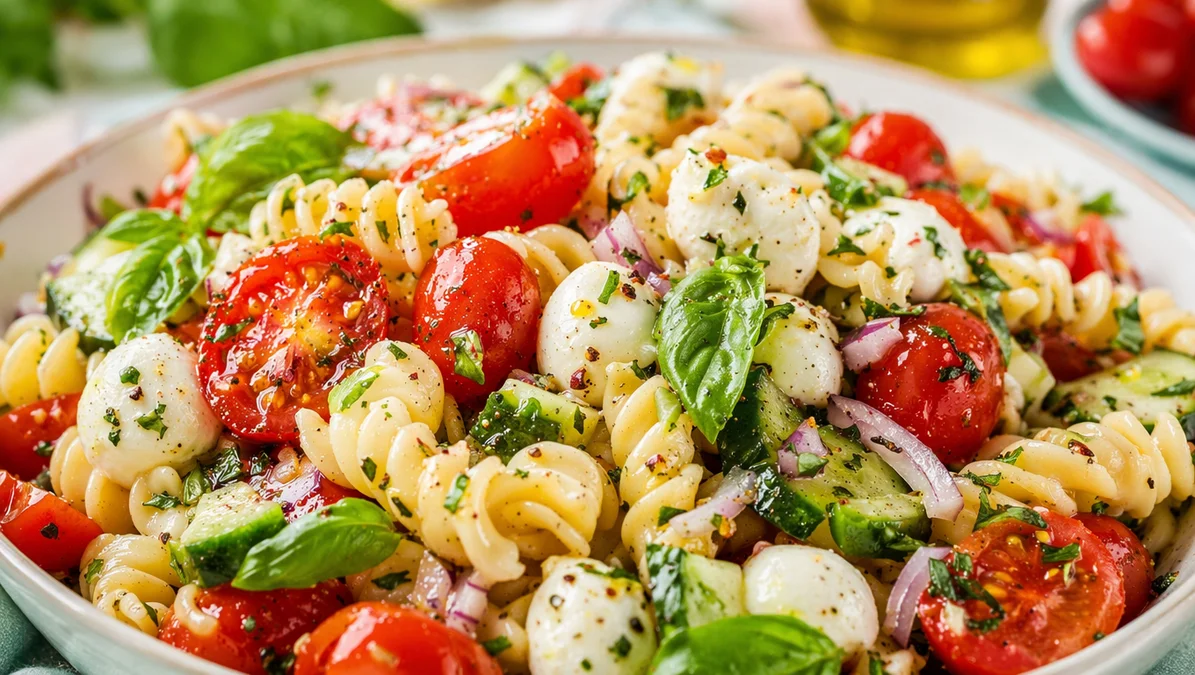
This make ahead summer salad is loaded with colorful veggies and a zesty dressing. Perfect for hot days, picnics, and easy weeknight dinners.
Ingredients
Instructions
Cook the pasta: Bring a large pot of generously salted water to a rolling boil (about 1 tablespoon salt per 4 quarts water). Add the pasta and cook according to package directions until al dente – typically 8-10 minutes for most short pasta shapes. Al dente means the pasta should be tender but still firm to the bite; this is crucial for a pasta salad because the pasta will continue to absorb dressing and soften over time. Overcooked pasta will become mushy and unappealing. Once done, reserve about 1/2 cup of pasta water before draining (this starchy water can help loosen the dressing later if needed). Drain the pasta in a colander and immediately rinse under cold running water for about 30 seconds to stop the cooking process and cool it down. Shake the colander well to remove excess water. Transfer the cooled pasta to a large mixing bowl. Drizzle with a teaspoon of olive oil and toss gently to prevent sticking.
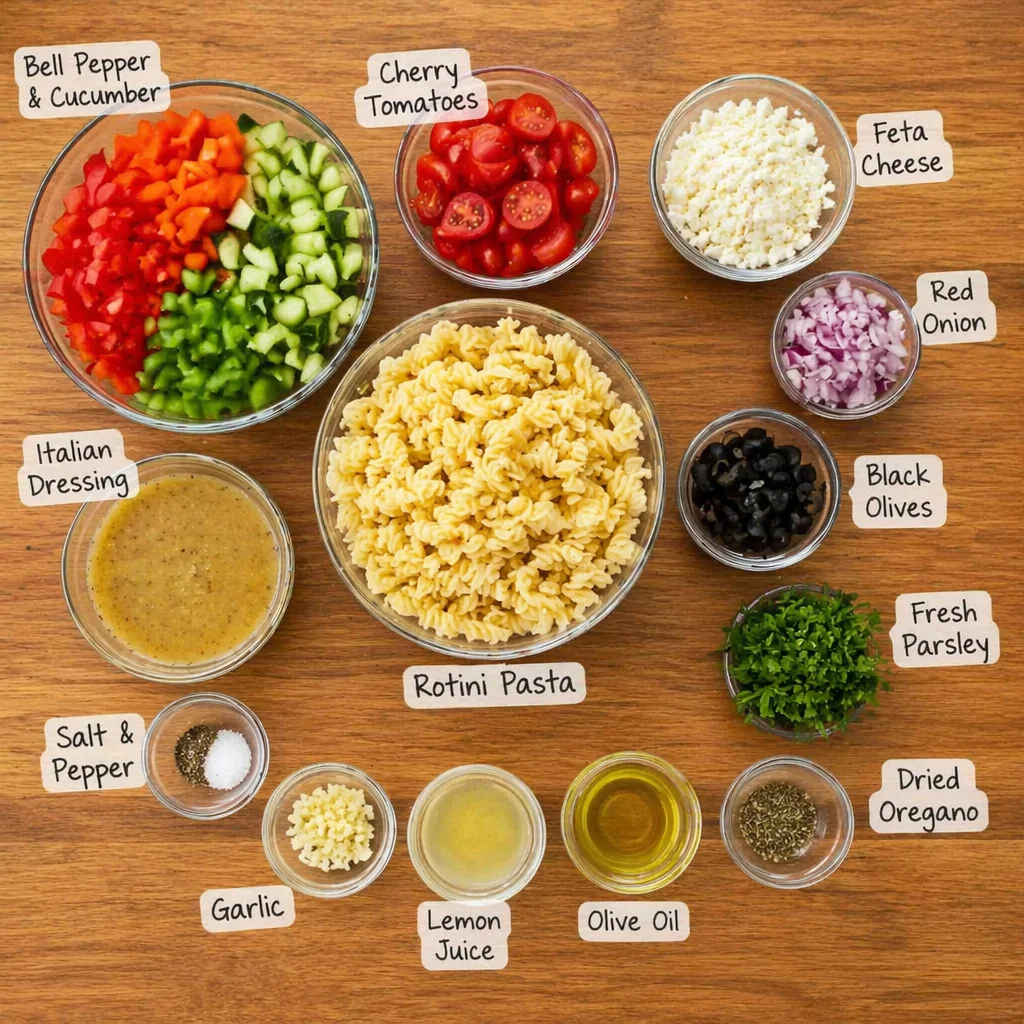
Prepare the vegetables: While the pasta cooks, wash and chop all the vegetables. Halve the cherry tomatoes; if they are large, quarter them. Dice the cucumber into bite-sized pieces (about 1/2-inch cubes). If the cucumber has a thick or waxy skin, you may peel it partially for a more tender texture, but the skin adds color and nutrients. Dice the red and yellow bell peppers into similar-sized cubes. Finely dice the red onion – for a milder flavor, soak the diced onion in cold water for 5 minutes, then drain. Slice the black olives into rings. Place all the chopped vegetables into the large bowl with the cooled pasta. Add the sliced olives and, if using, the crumbled feta cheese. Reserve the fresh basil for later.
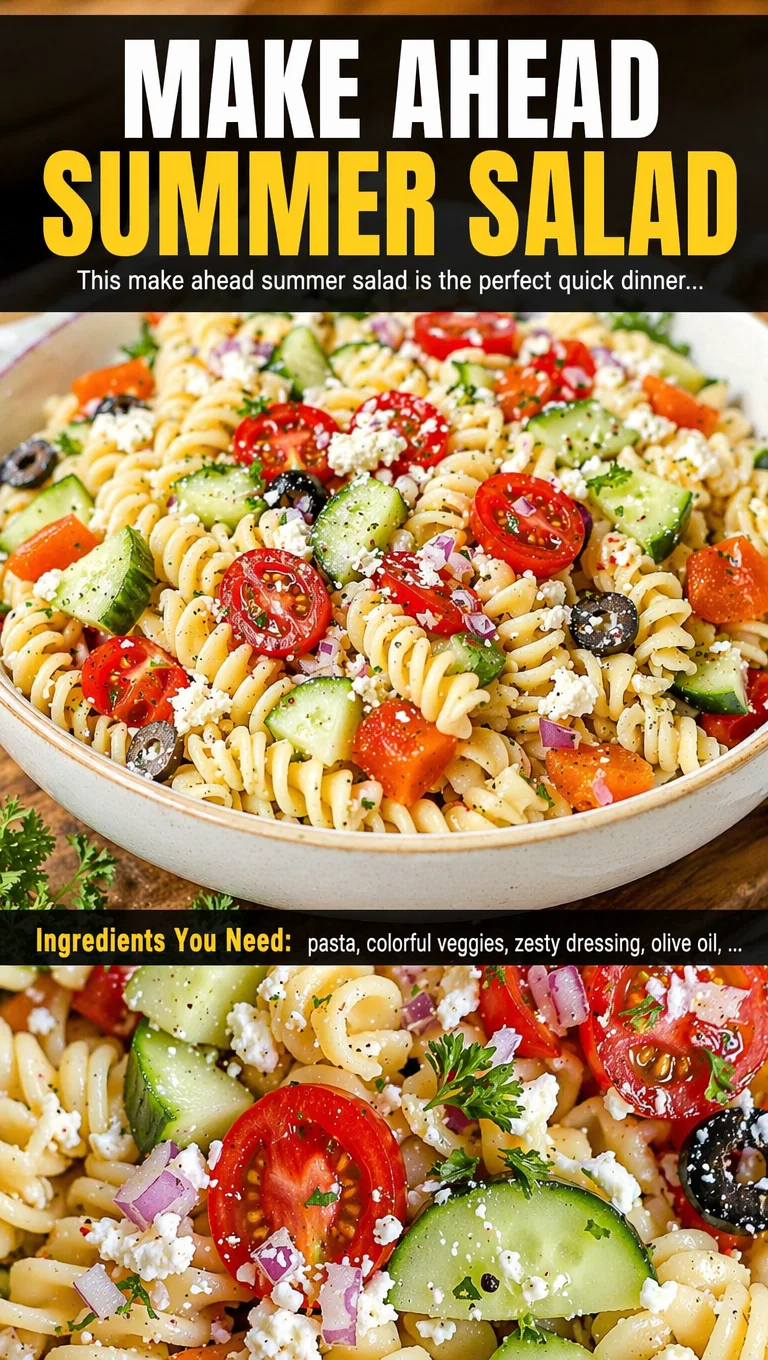
Make the zesty dressing: In a small bowl or a jar with a tight-fitting lid, combine the extra virgin olive oil, red wine vinegar, lemon juice, Dijon mustard, minced garlic, dried oregano, salt, and black pepper. Whisk vigorously until emulsified, or shake the jar for about 20 seconds until the dressing looks thick and creamy. The mustard acts as an emulsifier, helping the oil and vinegar stay combined. Taste the dressing and adjust seasoning – it should be bright, tangy, and well-seasoned. Remember that the pasta and vegetables will absorb some of the salt, so the dressing should be slightly saltier than you think.
Assemble the salad: Pour the dressing over the pasta and vegetables. Use a large spatula or wooden spoon to gently fold everything together, ensuring all ingredients are evenly coated. Be careful not to crush the tomatoes or break the pasta. Add the chopped fresh basil and fold once more. At this point, the salad can be served immediately, but for the best make-ahead results, cover the bowl tightly with plastic wrap or transfer to an airtight container and refrigerate for at least 1 hour, or up to 24 hours. Chilling allows the flavors to meld and the pasta to absorb the dressing, resulting in a more cohesive and flavorful dish.
Serve and garnish: Before serving, give the salad a good stir. If it seems dry after refrigeration, add a splash of olive oil or a tablespoon of the reserved pasta water to revive the dressing. Taste and adjust salt and pepper if needed. Transfer to a serving platter or individual bowls. Garnish with additional fresh basil leaves, a few extra cherry tomato halves, and a sprinkle of feta cheese if desired. This salad is best served cold or at room temperature. Enjoy as a main dish, a side, or a potluck contribution.
For best results
- Choosing the right pasta: For pasta salads, short, sturdy shapes like rotini, fusilli, penne, or farfalle work best. Their nooks and crannies catch the dressing and bits of vegetables, ensuring every bite is flavorful. Avoid long, delicate noodles like spaghetti or angel hair, which can clump and become mushy. Whole wheat or legume-based pastas are excellent for added nutrition and fiber, but note they may absorb more dressing, so you might need to add a little extra olive oil before serving. Cook the pasta al dente – it will soften slightly as it sits in the dressing, so starting with a firm texture prevents a soggy salad.
- Rinse pasta thoroughly: After draining, rinsing the pasta with cold water is not just for cooling – it also removes excess surface starch that can make the salad gummy. Rinse until the pasta feels cool to the touch, then drain very well. Any water left clinging to the pasta will dilute the dressing. If you have time, spread the rinsed pasta on a baking sheet to air-dry for a few minutes while you prepare the vegetables.
- Season your water aggressively: Pasta water should taste like the sea. Use about 1 tablespoon of salt per 4 quarts of water. This is the only opportunity to season the pasta from within; if you undersalt the water, the pasta will be bland no matter how much salt you add later. The salt also helps the pasta maintain its structure and prevents it from becoming sticky.
- Balance your dressing: The dressing for this salad is a classic vinaigrette with a 3:1 oil-to-acid ratio (3 parts olive oil to 1 part vinegar/lemon juice). This ratio provides a bright, tangy flavor without being overly acidic. Feel free to adjust to your taste – some prefer a punchier dressing with more vinegar. For a creamier version, whisk in 2 tablespoons of mayonnaise or Greek yogurt. The Dijon mustard is essential not only for flavor but also for emulsification; do not skip it.
- Let it rest: The magic of this make-ahead salad happens during the resting period. As the salad chills, the pasta absorbs the dressing, and the flavors of the vegetables, herbs, and seasonings meld together. For the best results, refrigerate for at least 2 hours, or overnight. If you're in a hurry, you can serve it immediately, but it won't be as flavorful. When ready to serve, taste and adjust seasoning – chilling can dull flavors, so a pinch of salt and a squeeze of lemon can brighten it up.
- Storage and shelf life: This pasta salad keeps well in an airtight container in the refrigerator for up to 5 days. The flavors will continue to develop, making it even better on day two. However, the vegetables may release some water over time, so before serving leftovers, stir well and add a drizzle of olive oil or a splash of vinegar to refresh the dressing. Do not freeze this salad, as the texture of the vegetables and pasta will become mushy upon thawing.
Variations
- Protein-packed version: Turn this salad into a complete meal by adding protein. Grilled chicken breast (diced), cooked shrimp, canned tuna (drained and flaked), or chickpeas (rinsed and drained) are excellent additions. For a vegetarian protein boost, add 1 cup of cooked edamame or cubed firm tofu marinated in Italian dressing. Simply fold the protein into the salad along with the vegetables. The protein will absorb the dressing and become more flavorful as it sits.
- Mediterranean twist: Give the salad a Mediterranean flair by swapping the feta for crumbled goat cheese or cubed fresh mozzarella pearls. Add 1/2 cup of sun-dried tomatoes (rehydrated and chopped), 1/4 cup of capers (rinsed), and a handful of fresh parsley or mint in addition to the basil. Use a lemon-oregano vinaigrette with a splash of balsamic vinegar for depth. This variation pairs beautifully with grilled lamb or falafel.
- Southwest fiesta: For a spicy, colorful twist, replace the red wine vinegar with lime juice and add 1 teaspoon of cumin and 1/2 teaspoon of chili powder to the dressing. Use black beans (rinsed), corn kernels (fresh or thawed from frozen), diced avocado (added just before serving to prevent browning), and chopped cilantro instead of basil. Top with crushed tortilla chips for crunch. This version is perfect for cookouts and pairs well with grilled meats or tacos.
- Gluten-free and low-carb option: To make this salad gluten-free, use your favorite gluten-free pasta – brown rice pasta, chickpea pasta, or lentil pasta work well. Be careful not to overcook gluten-free pasta, as it can become mushy quickly. For a low-carb alternative, replace the pasta with cauliflower florets (roasted or steamed until tender), zucchini noodles (blanched and squeezed dry), or a mix of fresh vegetables like spiralized carrots and bell peppers. The dressing works beautifully on these substitutes, and the salad remains vibrant and satisfying.
- Vegan version: This salad is naturally vegan if you omit the feta cheese and ensure your pasta is egg-free (most dried pasta is vegan, but check the label). For a dairy-free 'cheesy' flavor, add 2 tablespoons of nutritional yeast to the dressing, or top with vegan feta crumbles. You can also add 1/2 cup of toasted pine nuts or slivered almonds for richness and crunch.
Nutrition
- Calories285 kcal
- Total Fat12g
- Saturated Fat3g
- Cholesterol10mg
- Sodium380mg
- Total Carbohydrates36g
- Dietary Fiber3g
- Sugars5g
- Protein7g