
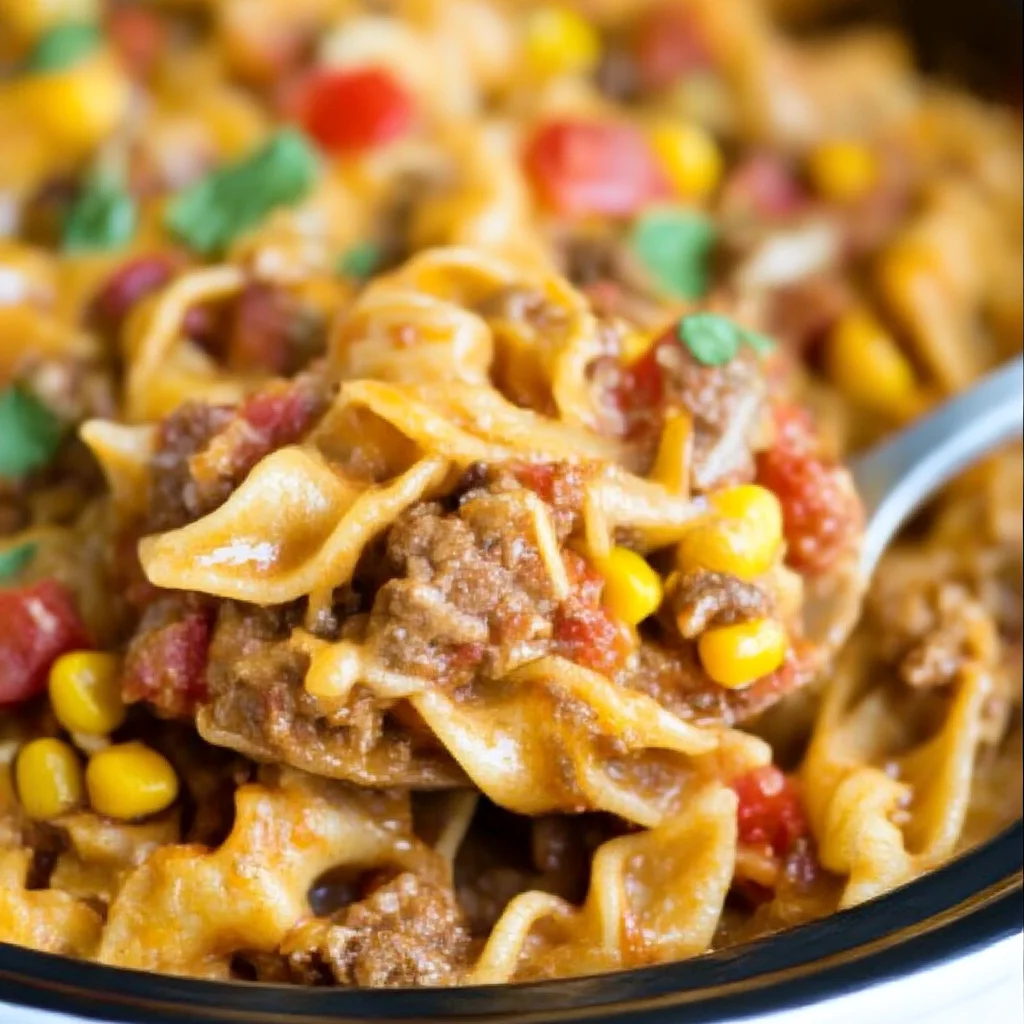
This easy crockpot taco pasta combines seasoned ground beef, tender shell pasta, and melted cheddar cheese for a quick weeknight dinner. Only 5 ingredients! Perfect for busy families.
Ingredients
Instructions
Start by browning the ground beef. In a large skillet over medium-high heat, add the ground beef and cook, breaking it apart with a wooden spoon, until fully browned — about 6 to 8 minutes. If using optional onion and garlic, add them in the last 2 minutes to soften. Drain any excess fat to avoid a greasy final dish. The browning step is crucial for developing deep, savory flavors through the Maillard reaction. You’ll want the beef to be finely crumbled, with no pink remaining, and a rich brown color.
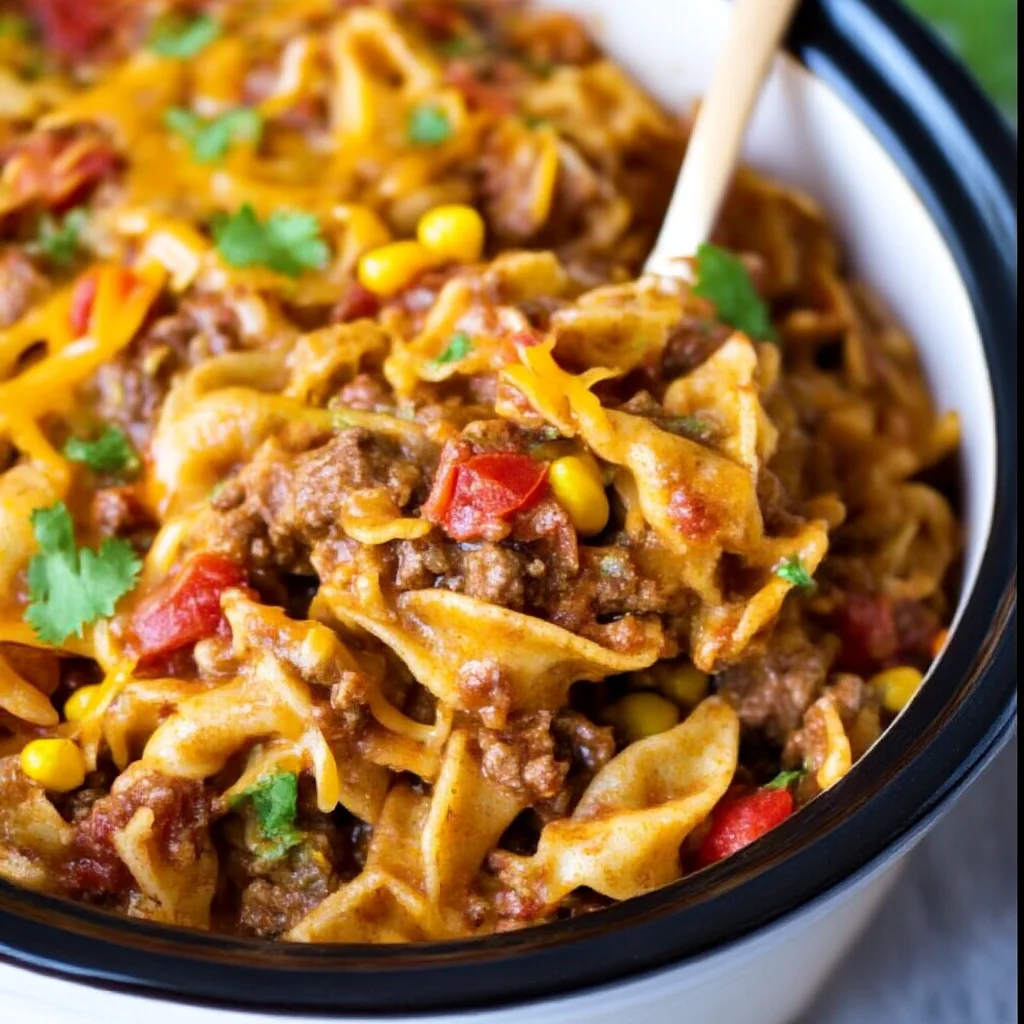
Transfer the browned beef to the slow cooker. Sprinkle the taco seasoning evenly over the meat and stir to coat. Taco seasoning typically contains chili powder, cumin, garlic powder, onion powder, paprika, and a touch of cayenne — it gives the dish its signature Tex-Mex flavor. Make sure every bit of beef is seasoned. Then pour in the beef broth and the entire can of undrained diced tomatoes with green chilies. Stir everything together until well combined. The liquid will help cook the pasta and create a saucy consistency.
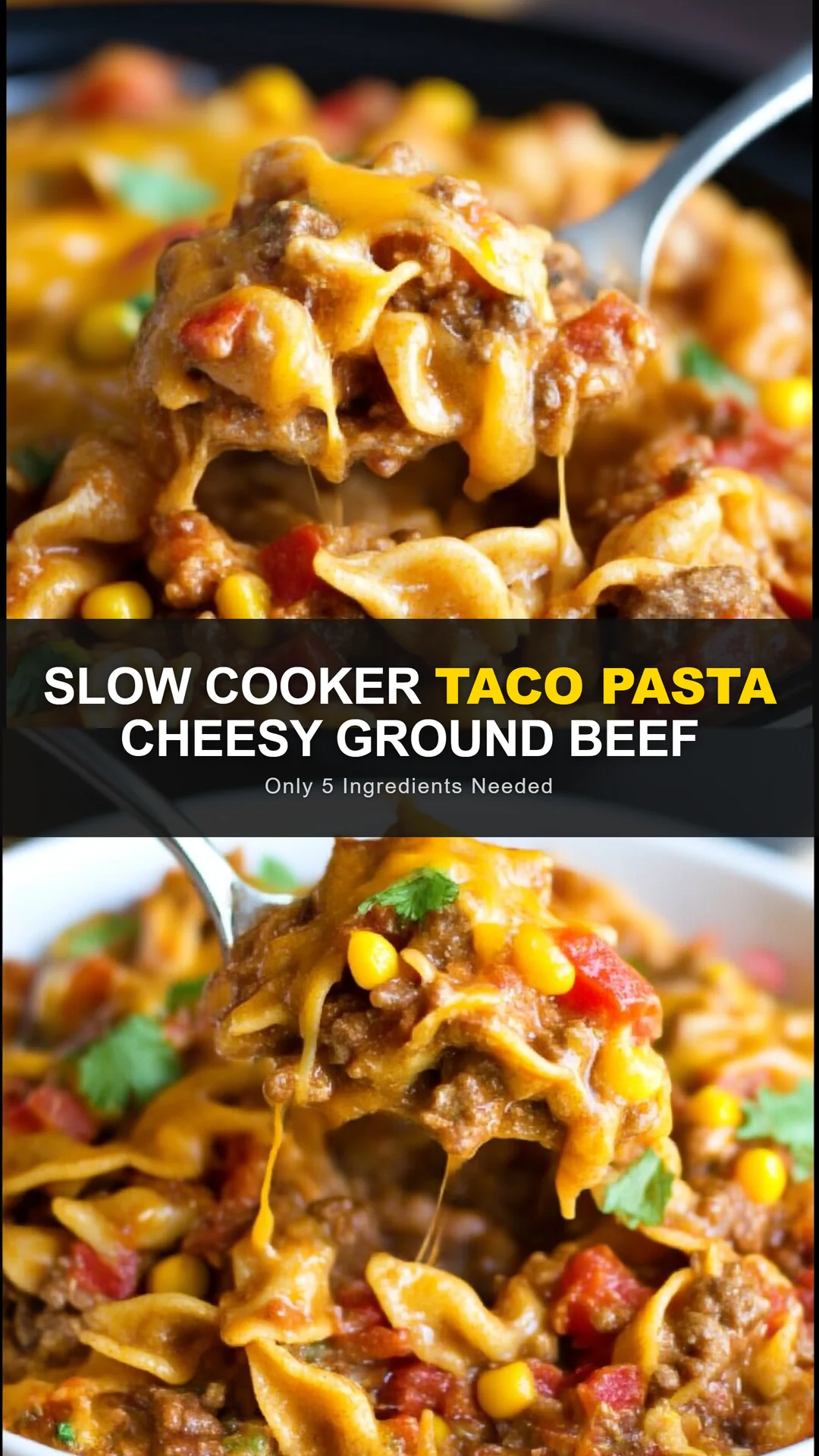
Cover the slow cooker and cook on HIGH for 2 hours or LOW for 4 hours. During this time, the flavors meld and the beef becomes even more tender. About 30 minutes before you’re ready to serve, stir in the uncooked shell pasta. It’s important to add the pasta later in the cooking process so it doesn’t turn mushy. Make sure the pasta is fully submerged in the liquid. Replace the lid and continue cooking on HIGH for 25-30 minutes, or until the pasta is al dente — tender but still with a slight bite.
Once the pasta is cooked, turn off the slow cooker (or switch to WARM). Sprinkle the shredded cheddar cheese evenly over the surface. Do not stir immediately; let the cheese sit for about 2 minutes to begin melting from the residual heat. Then gently fold the cheese into the pasta until melted and creamy. The sharp cheddar adds a richness that balances the spicy taco seasoning. If you like it extra cheesy, add an additional ½ cup. Taste and adjust salt and pepper if needed — the taco seasoning and canned tomatoes already contribute salt.
Serve immediately while hot and cheesy. Scoop into bowls and garnish with fresh cilantro, a dollop of sour cream, or sliced jalapeños if desired. This dish pairs wonderfully with a side salad or tortilla chips. The leftovers (if any) can be stored in an airtight container in the refrigerator for up to 4 days. Reheat gently in the microwave or on the stovetop with a splash of milk to restore creaminess.
For best results
- For best results, use lean ground beef (85/15 or 90/10) to avoid excessive grease. If you have a fattier blend, brown and drain thoroughly. You can also substitute ground turkey or chicken for a lighter option — just add a tablespoon of oil to prevent dryness.
- Don't skip the browning step. While slow cookers are forgiving, browning the meat first adds layers of flavor that can't be achieved by just throwing raw meat in. It creates fond (browned bits) that enhance the overall taste.
- Add the pasta at the right time. Different pasta shapes and brands absorb liquid differently. Check at 25 minutes — the pasta should be al dente. If it's still hard, cook 5 more minutes. Avoid overcooking as it will continue softening in the hot sauce.
- Use a good quality taco seasoning. Store-bought packets are convenient, but check sodium content. For a homemade blend, mix 1 tbsp chili powder, 1 tsp cumin, 1 tsp garlic powder, 1 tsp onion powder, ½ tsp paprika, ½ tsp oregano, and a pinch of cayenne. This gives you control over spiciness and sodium.
- For a creamy texture, stir in 4 oz of cream cheese along with the cheddar. The cream cheese adds richness and helps bind the sauce. Cut it into cubes so it melts evenly. You can also use a splash of heavy cream or half-and-half.
- To stretch the meal further, serve over rice or with crusty bread. The pasta to sauce ratio is generous, but adding a starch makes it even more filling. Leftovers thicken as they cool; thin with a little broth when reheating.
Variations
- Make it vegetarian: Swap the ground beef for 1 can (15 oz) of black beans (drained and rinsed) or 1.5 cups of cooked lentils. Add the beans in step 2 without browning. Increase the broth to 2 cups as beans absorb more liquid. Use a vegetarian taco seasoning and top with pepper Jack cheese for extra flavor.
- Spice it up: For a smoky kick, use chipotle taco seasoning or add 1-2 chipotle peppers in adobo sauce (minced) along with the tomatoes. Stir in a tablespoon of chopped pickled jalapeños before serving. You can also use hot Rotel for extra heat.
- Protein swap: Ground chicken, turkey, or pork all work well. For a chorizo twist, substitute 1 lb of Mexican-style chorizo (remove casing) and brown it. Chorizo is already seasoned, so reduce taco seasoning to half a packet. The red oil from chorizo will add vibrant color and spice.
- Gluten-free adaptation: Use gluten-free pasta shells or elbows. Since gluten-free pasta can be more delicate, cook it separately according to package directions and stir in at the end. Alternatively, use cooked rice or quinoa instead of pasta — stir in 2 cups of cooked rice after the cheese melts.
- Cheese variety: Mix cheeses for complexity. Try 1 cup sharp cheddar, ½ cup Monterey Jack, and ½ cup crumbled queso fresco. Queso fresco adds a salty bite and creamy texture. For a smoky flavor, use smoked Gouda in place of half the cheddar.
Nutrition
- Calories580 kcal
- Total Fat28g
- Saturated Fat14g
- Cholesterol105mg
- Sodium1180mg
- Total Carbohydrates38g
- Dietary Fiber4g
- Sugars6g
- Protein36g