
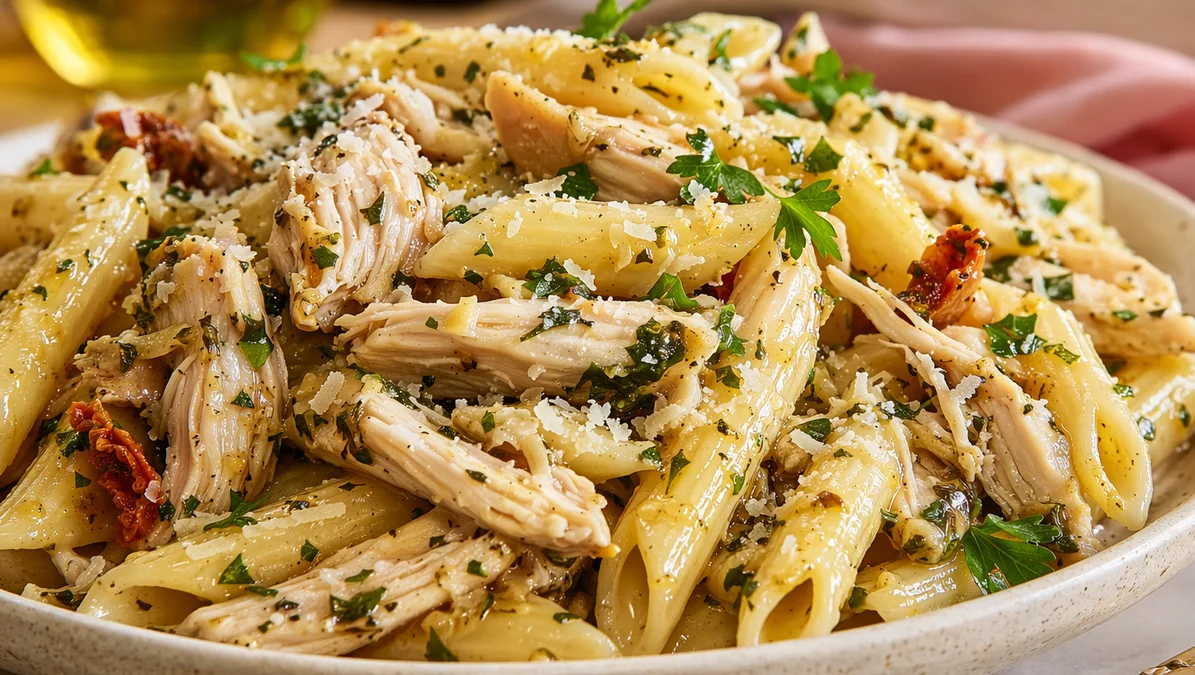
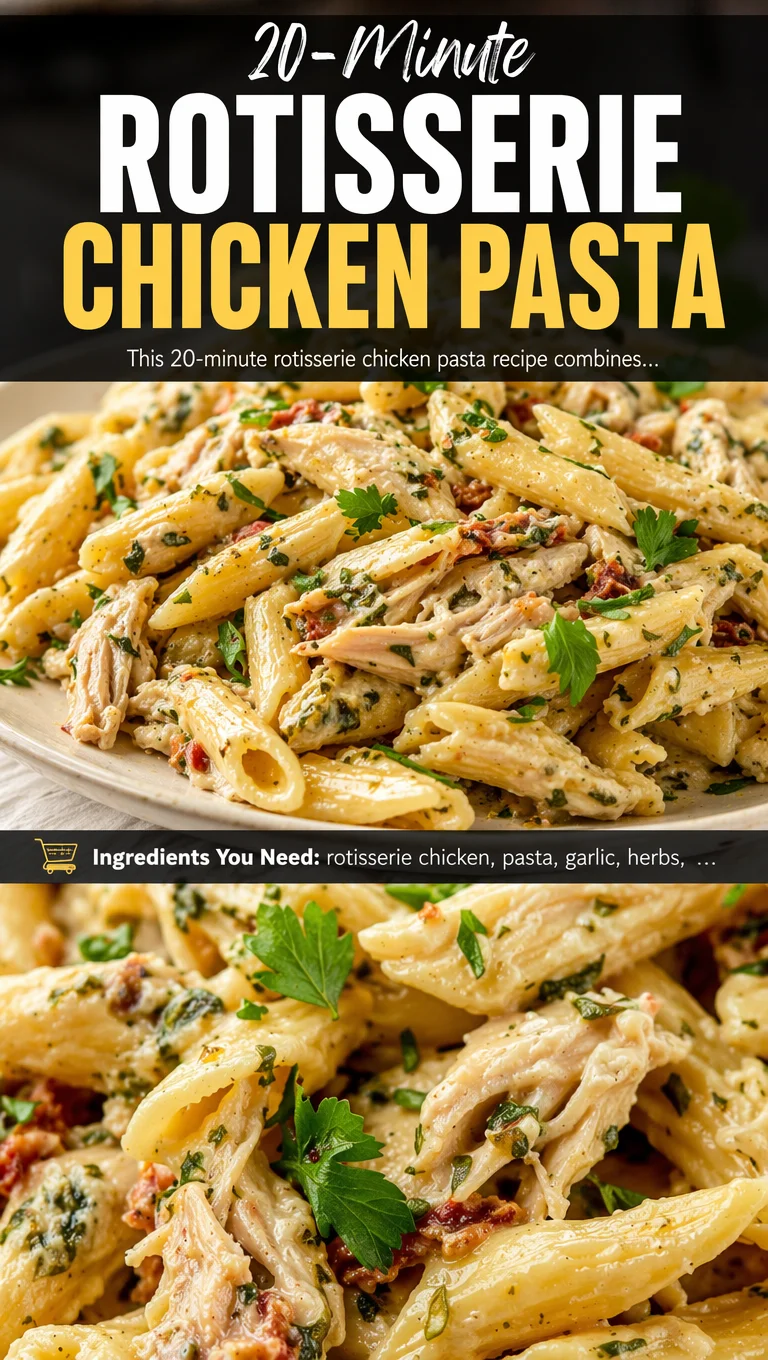
This 20-minute rotisserie chicken pasta recipe combines tender chicken with garlic, herb, and olive oil flavors for a quick and easy weeknight dinner. Perfect high-protein meal for busy families.
Ingredients
Instructions
Bring a large pot of generously salted water (about 1 tablespoon of salt per 4 quarts of water) to a rolling boil. The salt seasons the pasta from within, ensuring every bite is flavorful. Add the pasta and cook according to package directions until al dente—typically 8-10 minutes for penne. Al dente means the pasta offers slight resistance when bitten, which is crucial because it will continue cooking slightly when tossed with the hot oil and chicken. Before draining, reserve 1 cup of the starchy pasta water. The starch in this water will help emulsify the sauce later, creating a silky coating that clings to the pasta and chicken. Drain the pasta in a colander, but do not rinse it; rinsing washes away the starch that helps the sauce adhere.
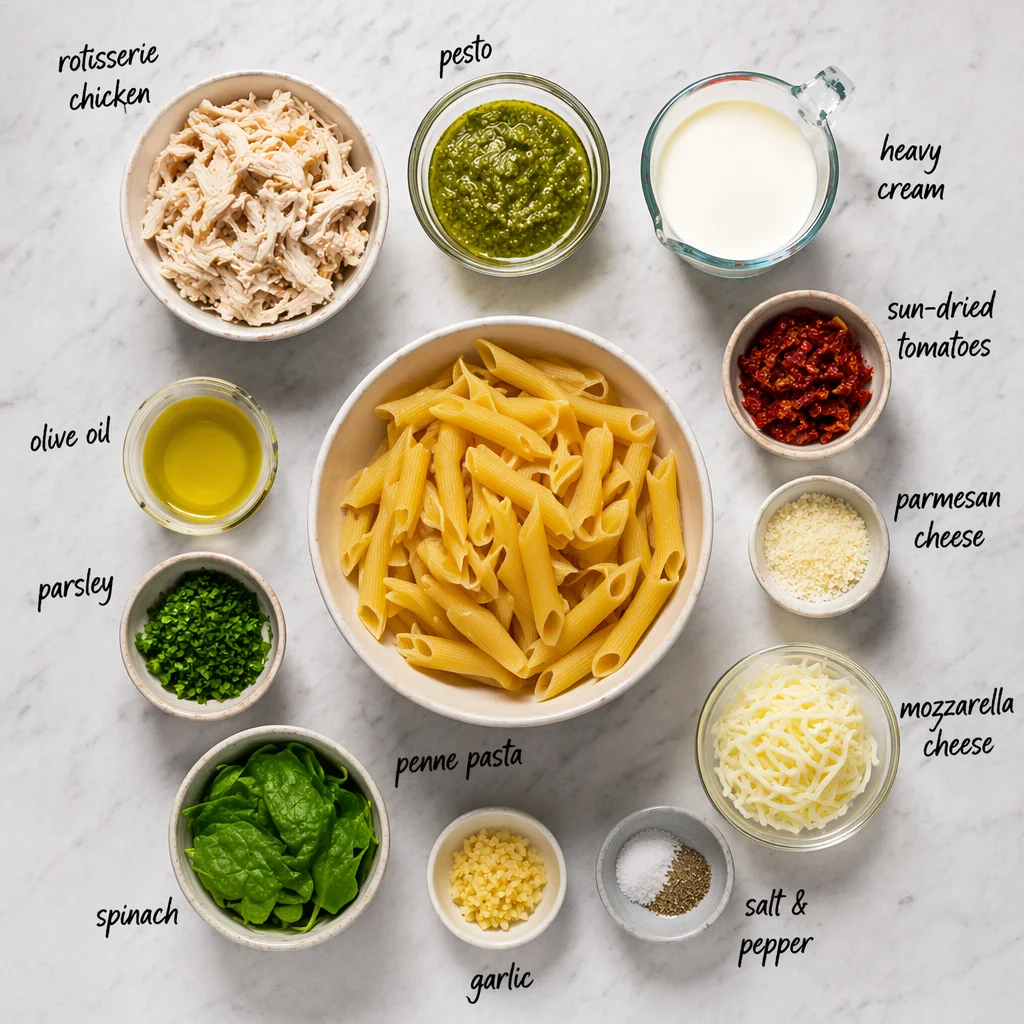
While the pasta cooks, prepare the rotisserie chicken. Remove the skin and bones, then shred the meat into bite-sized pieces using two forks or your hands. Rotisserie chicken is already fully cooked and seasoned, so this step is all about efficiency. You should end up with about 3 cups of shredded chicken. If your chicken is on the larger side, save any extra for salads or sandwiches later. Set the shredded chicken aside at room temperature—it will warm up quickly when added to the hot oil and pasta.
In a large skillet or Dutch oven, heat the extra virgin olive oil over medium heat. The oil should shimmer but not smoke—if it smokes, the pan is too hot and the garlic will burn. Add the minced garlic, fresh rosemary, and fresh thyme. Cook for 1-2 minutes, stirring constantly, until the garlic is fragrant and just beginning to turn golden. Be careful: garlic can go from golden to burnt in seconds. The herbs will release their essential oils, filling your kitchen with an aromatic blend of piney rosemary and earthy thyme. If using red pepper flakes, add them now to bloom the heat in the oil, which mellows and distributes the spice evenly.
Add the shredded rotisserie chicken to the skillet and toss to coat in the herb-infused oil. Cook for 2-3 minutes, stirring occasionally, until the chicken is heated through and slightly crisped at the edges. The residual moisture from the chicken will steam it initially, but as it evaporates, the chicken will start to brown. This step adds texture and deepens flavor. If the pan looks dry, add a splash of the reserved pasta water to keep things moist.
Add the drained pasta directly to the skillet with the chicken and herbs. Pour in about 1/2 cup of the reserved pasta water. Toss everything together using tongs or a wooden spoon, ensuring the pasta is well coated in the oil and herb mixture. The heat from the pasta and skillet will help the starchy water emulsify with the olive oil, creating a light, glossy sauce that clings to every strand. If the sauce seems too thick, add more pasta water a tablespoon at a time until it reaches your desired consistency. Season with salt and pepper to taste—remember that the rotisserie chicken and Parmesan are already salty, so go easy on the salt.
Remove the skillet from the heat. Sprinkle the grated Parmesan cheese over the pasta and toss vigorously to incorporate. The residual heat will melt the cheese into the sauce, adding a nutty, savory richness. Squeeze the lemon juice over the top if using—the acidity brightens the dish and balances the richness of the oil and cheese. Garnish with fresh parsley for color and a fresh herbal note. Serve immediately in warm bowls, with extra Parmesan on the side. The pasta is best enjoyed fresh, but leftovers can be stored in an airtight container in the refrigerator for up to 3 days.
For best results
- Choosing the Right Rotisserie Chicken: Not all rotisserie chickens are created equal. For the best flavor, look for a freshly roasted chicken from the deli section of your grocery store, preferably one that is seasoned with herbs and spices rather than a plain or heavily salted version. If you can, ask for one that has just come out of the rotisserie—the meat will be juicier and more tender. Avoid pre-packaged rotisserie chickens that have been sitting under heat lamps for hours, as the meat can become dry and stringy. If you have time, you can also roast your own chicken at home, but the beauty of this recipe is its speed, so rotisserie is your best friend.
- Pasta Water is Liquid Gold: Always reserve at least a cup of pasta water before draining. This starchy water is the secret to a silky, emulsified sauce that clings to the pasta without the need for heavy cream or butter. If you forget to reserve it, you can mix 1 teaspoon of cornstarch with 1 cup of water as a substitute, but it won't have the same flavor or body. When adding the water, start with 1/2 cup and add more as needed. The sauce should be light and coat the back of a spoon, not watery or greasy.
- Don't Overcook the Garlic: Garlic is the backbone of this dish, but it can turn bitter and acrid if burned. Always cook garlic over medium heat and stir constantly. The moment it becomes fragrant and just starts to take on a pale golden color, add the chicken immediately. If you see dark brown spots, the garlic is burnt and you should start over—burnt garlic will ruin the entire dish. For a milder flavor, you can smash the garlic cloves instead of mincing them, which releases less allicin and results in a sweeter, more subtle garlic presence.
- Maximize Chicken Crispiness: For extra texture, spread the shredded chicken in a single layer in the skillet and let it cook undisturbed for 1-2 minutes before stirring. This allows the bottom to develop a golden crust. If your skillet is crowded, the chicken will steam instead of sear. Use a large enough pan (12 inches or more) to give the chicken room. For an even crispier result, you can broil the chicken on a baking sheet for 2-3 minutes before adding it to the pasta, but that adds time and another dish to wash.
- Herb Substitutions and Storage: Fresh herbs are ideal for this recipe, but you can use dried if that's what you have. Use 1 teaspoon each of dried rosemary and dried thyme instead of the fresh amounts. Dried herbs are more potent, so adjust to taste. Store any leftover fresh herbs by wrapping them in a damp paper towel and placing them in a resealable bag in the refrigerator; they'll last up to a week. Alternatively, you can freeze herbs in olive oil in ice cube trays for easy future use.
- Make it a Complete Meal: This pasta is a balanced meal on its own, but you can round it out with a simple side salad dressed with lemon vinaigrette or steamed green beans tossed with butter and almonds. For extra vegetables, stir in a handful of baby spinach or arugula at the very end, allowing the residual heat to wilt them. You can also add halved cherry tomatoes along with the chicken for a burst of acidity and color.
Variations
- Creamy Garlic Chicken Pasta: For a richer, more indulgent version, add 1/2 cup of heavy cream or half-and-half along with the pasta water. Reduce the pasta water to 1/4 cup and increase the Parmesan to 3/4 cup. The cream creates a luscious, velvety sauce that coats the pasta beautifully. Stir in 1/4 cup of chopped sun-dried tomatoes for an extra layer of flavor. This variation is perfect for cold winter nights or when you want a comforting, decadent meal.
- Lemon Herb Chicken Pasta with Spinach: Brighten up the dish by doubling the lemon juice and adding 2 cups of fresh baby spinach. After tossing the pasta with the chicken and sauce, add the spinach and stir until it wilts, about 1 minute. The lemon cuts through the richness, while the spinach adds a pop of green and a boost of nutrients. You can also add a teaspoon of lemon zest for an even more vibrant citrus flavor. This variation is light and refreshing, ideal for spring or summer.
- Spicy Arrabbiata Chicken Pasta: Transform this dish into a spicy, tomato-based pasta by substituting the olive oil with 2 tablespoons of olive oil and 1/4 cup of tomato paste. Cook the tomato paste with the garlic and herbs for 2 minutes to deepen its flavor, then add 1/2 cup of crushed tomatoes and 1 teaspoon of red pepper flakes. Simmer for 5 minutes before adding the chicken and pasta. The result is a robust, slightly spicy sauce that pairs beautifully with the tender chicken. Garnish with fresh basil instead of parsley.
- Gluten-Free and Low-Carb Options: To make this recipe gluten-free, use your favorite gluten-free pasta, such as brown rice pasta or chickpea pasta. Be sure to cook it according to the package directions, as gluten-free pasta often requires less time and can become mushy if overcooked. Reserve pasta water as usual. For a low-carb version, substitute the pasta with zucchini noodles (zoodles) or spaghetti squash. Spiralize 2 medium zucchinis and sauté them in the skillet with the chicken for 2-3 minutes until tender-crisp. Do not add pasta water; instead, use a splash of chicken broth if needed. This version is keto-friendly and packed with vegetables.
- Pesto Chicken Pasta: For a no-cook sauce variation, replace the garlic and herbs with 1/3 cup of store-bought or homemade basil pesto. After cooking the pasta and heating the chicken in a little olive oil, toss everything together with the pesto and a splash of pasta water. Add 1/4 cup of pine nuts for crunch and 1/2 cup of cherry tomatoes halved. This version comes together in even less time and is bursting with the flavors of basil, garlic, and Parmesan.
Nutrition
- Calories485 kcal
- Total Fat18g
- Saturated Fat4g
- Cholesterol85mg
- Sodium620mg
- Total Carbohydrates48g
- Dietary Fiber3g
- Sugars2g
- Protein35g