
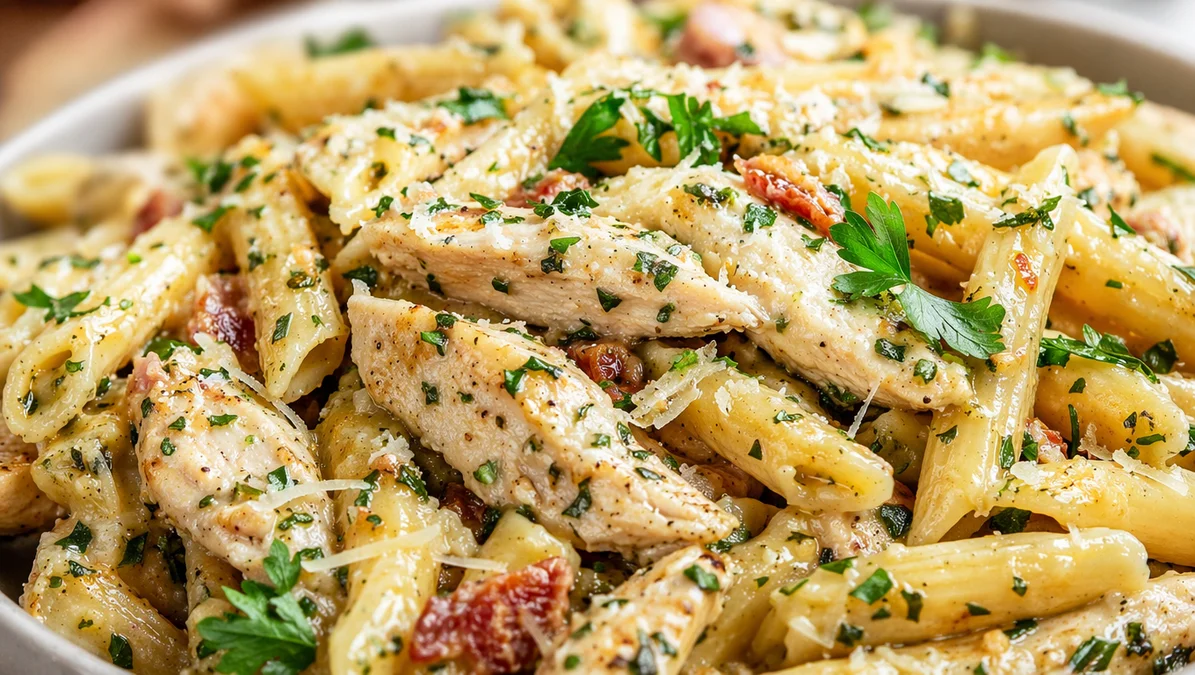
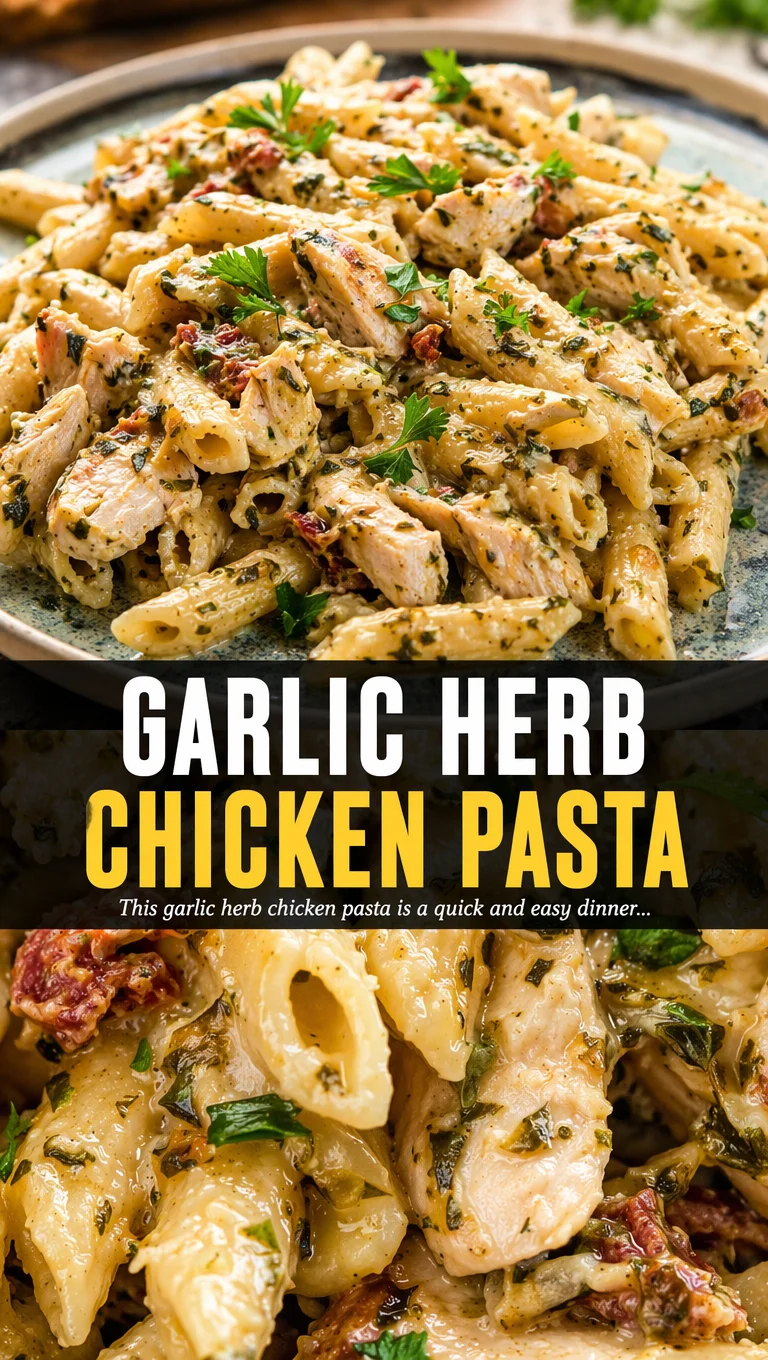
This garlic herb chicken pasta is a quick and easy dinner idea, featuring rotisserie chicken for a simple, high-protein meal. Ready in 20 minutes, it’s perfect for busy families seeking…
Ingredients
Instructions
Bring a large pot of heavily salted water (about 1 tablespoon salt per 4 quarts water) to a rolling boil. Add the pasta and cook according to package directions until al dente—typically 8-10 minutes depending on shape. Al dente means the pasta is tender but still has a slight firmness when bitten; this prevents it from becoming mushy when tossed with the sauce. Reserve at least 1/2 cup of the starchy pasta water before draining. The starch in this water will later help emulsify the olive oil and cheese into a silky sauce that clings to every piece of pasta. Drain the pasta in a colander, but do not rinse—rinsing removes the starch that helps the sauce adhere. Set aside.
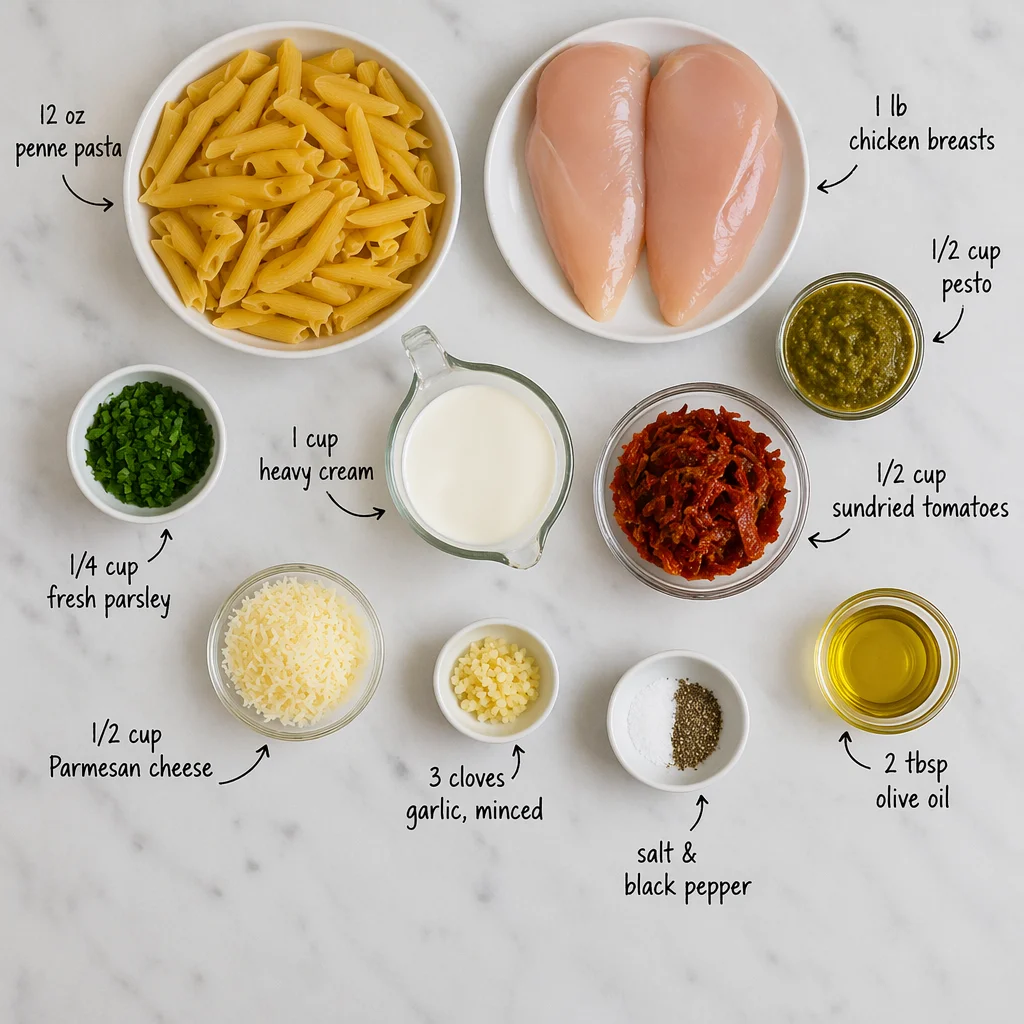
While the pasta cooks, heat the olive oil in a large skillet or Dutch oven over medium heat. Add the sliced garlic and cook for 30-60 seconds, stirring constantly, until fragrant and just starting to turn golden at the edges. Be careful not to burn the garlic—burnt garlic turns bitter and will ruin the dish. If using red pepper flakes, add them now to bloom in the oil, releasing their heat and aroma. The oil will become infused with garlic and pepper, forming the flavor base of the sauce.
Add the shredded rotisserie chicken to the skillet. Toss to coat in the garlic oil and cook for 2-3 minutes, stirring occasionally, until the chicken is heated through and edges are slightly crispy. Rotisserie chicken is already fully cooked, so we’re just reheating and adding flavor. If you want extra browning, increase heat to medium-high and let the chicken sit undisturbed for 30 seconds before stirring. The goal is to warm the chicken without drying it out.
If using wine, pour it into the skillet and let it sizzle, scraping up any browned bits from the bottom of the pan with a wooden spoon. Cook for 1-2 minutes until the wine has mostly evaporated, leaving behind a subtle acidity that balances the richness. If you skip the wine, add 1/4 cup of chicken broth instead. The deglazing step is key to incorporating all the flavorful fond into the sauce.
Reduce heat to low. Add the drained pasta to the skillet along with the fresh herbs (parsley, basil, oregano) and 1/4 cup of the reserved pasta water. Toss everything together with tongs for about 1 minute, allowing the pasta to absorb the liquid and the herbs to wilt. The pasta water will combine with the olive oil and cheese to create a light, glossy sauce. If the mixture seems dry, add more pasta water, 1 tablespoon at a time, until you reach the desired consistency. The sauce should coat the pasta like a thin, emulsified glaze, not pool at the bottom.
Remove the skillet from heat. Sprinkle the grated Parmesan cheese over the pasta and toss quickly to combine. The residual heat will melt the cheese, creating a creamy finish without clumping. Taste and adjust seasoning with salt and pepper—remember that rotisserie chicken and Parmesan are already salty, so go easy on the salt. Serve immediately in warm bowls, garnished with additional Parmesan and a sprinkle of fresh herbs. For a final touch, drizzle a tiny bit of good olive oil over each serving for extra richness and shine.
For best results
- For the best flavor, use a high-quality extra-virgin olive oil. It’s the star of this simple sauce, so choose one with a fruity or peppery profile. Avoid "light" olive oils, which lack flavor. If you want to elevate the dish further, finish with a drizzle of a robust Tuscan or Greek olive oil just before serving. The oil not only adds taste but also a luxurious mouthfeel that coats the pasta beautifully.
- Rotisserie chicken is the ultimate shortcut, but you can also use leftover cooked chicken or even canned chicken in a pinch. For the most tender results, shred the chicken by hand rather than chopping it—shredded pieces hold onto the sauce better and have a more pleasant texture. Remove the skin if you prefer a leaner dish, but leaving a little skin adds flavor and richness. Store-bought rotisserie chickens are usually brined, so adjust salt accordingly.
- Reserve more pasta water than you think you’ll need (at least 1 cup). The starchy water is the secret to a silky, emulsified sauce without heavy cream. If you accidentally add too much, simply let the pasta cook a bit longer over low heat to evaporate excess liquid. Conversely, if the sauce is too thick, add a splash of pasta water to loosen it. The pasta will continue to absorb liquid as it sits, so a slightly saucier consistency at plating is ideal.
- Fresh herbs make a huge difference here. Parsley adds freshness, basil brings a sweet anise note, and oregano lends earthiness. If you only have dried herbs, use about one-third the amount (e.g., 1 teaspoon dried basil instead of 1 tablespoon fresh). Add dried herbs earlier—with the garlic—to allow them to rehydrate and release their oils. For a more complex herb profile, consider adding a pinch of dried thyme or rosemary.
- This dish is best enjoyed immediately after cooking, as pasta continues to absorb sauce and can become dry. If you need to reheat leftovers, add a splash of chicken broth or water and reheat gently in a skillet over medium-low heat, tossing frequently. Avoid the microwave, which can make the pasta rubbery. For meal prep, store the pasta and sauce separately and combine when reheating to maintain the best texture.
- To make this dish even more budget-friendly, use store-brand pasta and buy a whole rotisserie chicken when it’s on sale. You can shred the meat and freeze it in portions for future quick meals. The chicken bones can be simmered with aromatics to make a homemade broth—zero waste! Also, consider growing your own herbs in a small pot on the windowsill; they’re cost-effective and always fresh.
Variations
- Make it creamy: Stir in 1/4 cup heavy cream or full-fat coconut milk along with the pasta water. The cream adds richness and a velvety texture that pairs beautifully with the garlic and herbs. For a lighter cream sauce, use half-and-half or a splash of milk combined with an extra tablespoon of Parmesan. This variation is especially comforting on chilly evenings.
- Vegetable-packed version: Sauté 1 cup of chopped zucchini, bell peppers, or sun-dried tomatoes along with the garlic. You can also add a handful of baby spinach at the end, letting it wilt in the residual heat. For extra color and nutrients, toss in some roasted cherry tomatoes or steamed broccoli florets. This turns the dish into a complete one-pot meal with added fiber and vitamins.
- Protein swap: Replace rotisserie chicken with cooked shrimp, Italian sausage (casings removed and crumbled), or crispy tofu. For shrimp, cook them first in the skillet until pink, then set aside and add back at the end. For sausage, brown it before adding garlic. For tofu, use extra-firm, press it dry, and pan-fry until golden before tossing with the pasta. Each protein brings a unique flavor profile while keeping the dish quick and satisfying.
- Lemon herb twist: Add the zest of one lemon and a squeeze of lemon juice (about 1 tablespoon) along with the herbs. The acidity brightens the dish and cuts through the richness of the oil and cheese. You can also toss in some capers or artichoke hearts for a Mediterranean flair. Serve with a side of lemon wedges for an extra burst of freshness.
- Spicy arrabbiata version: Increase red pepper flakes to 1 teaspoon and add a can of diced tomatoes (drained) along with the chicken. Simmer for 5 minutes to meld flavors before adding the pasta. This creates a more substantial, saucy dish reminiscent of a classic arrabbiata but with the convenience of rotisserie chicken. Omit the wine if using tomatoes, as the acidity is already present.
Nutrition
- Calories485 kcal
- Total Fat18g
- Saturated Fat4g
- Cholesterol75mg
- Sodium520mg
- Total Carbohydrates48g
- Dietary Fiber3g
- Sugars2g
- Protein32g