
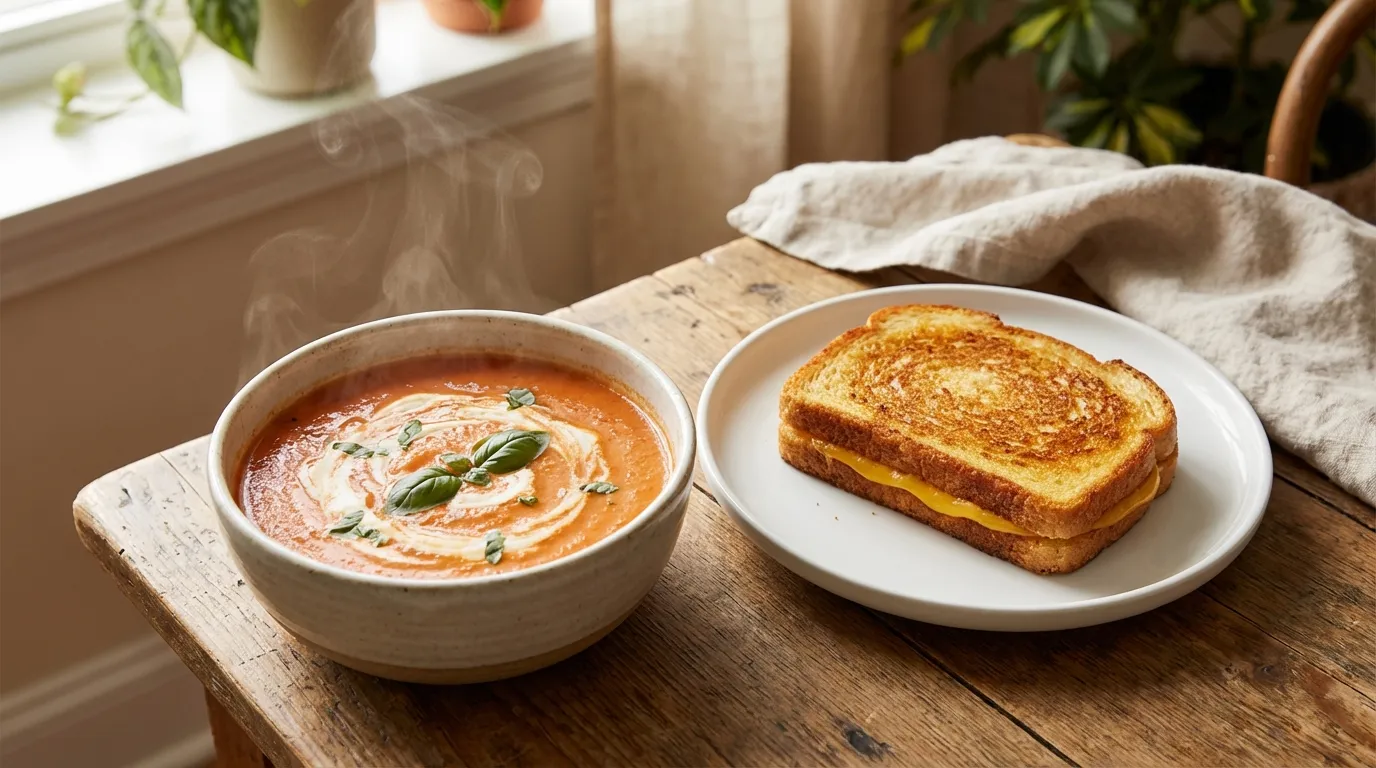
To succeed at feeding a family of four for under $10, you can serve a restaurant-quality batch of creamy tomato bisque and crispy grilled cheese for exactly $5 by building the soup from scratch using canned crushed tomatoes and chemical acid neutralization. By simmering generic tomatoes with spices and 1/4 teaspoon of baking soda, you neutralize acidity and create a velvety texture for a fraction of the cost of canned alternatives.
The Economics of Scratch Soup vs. Canned
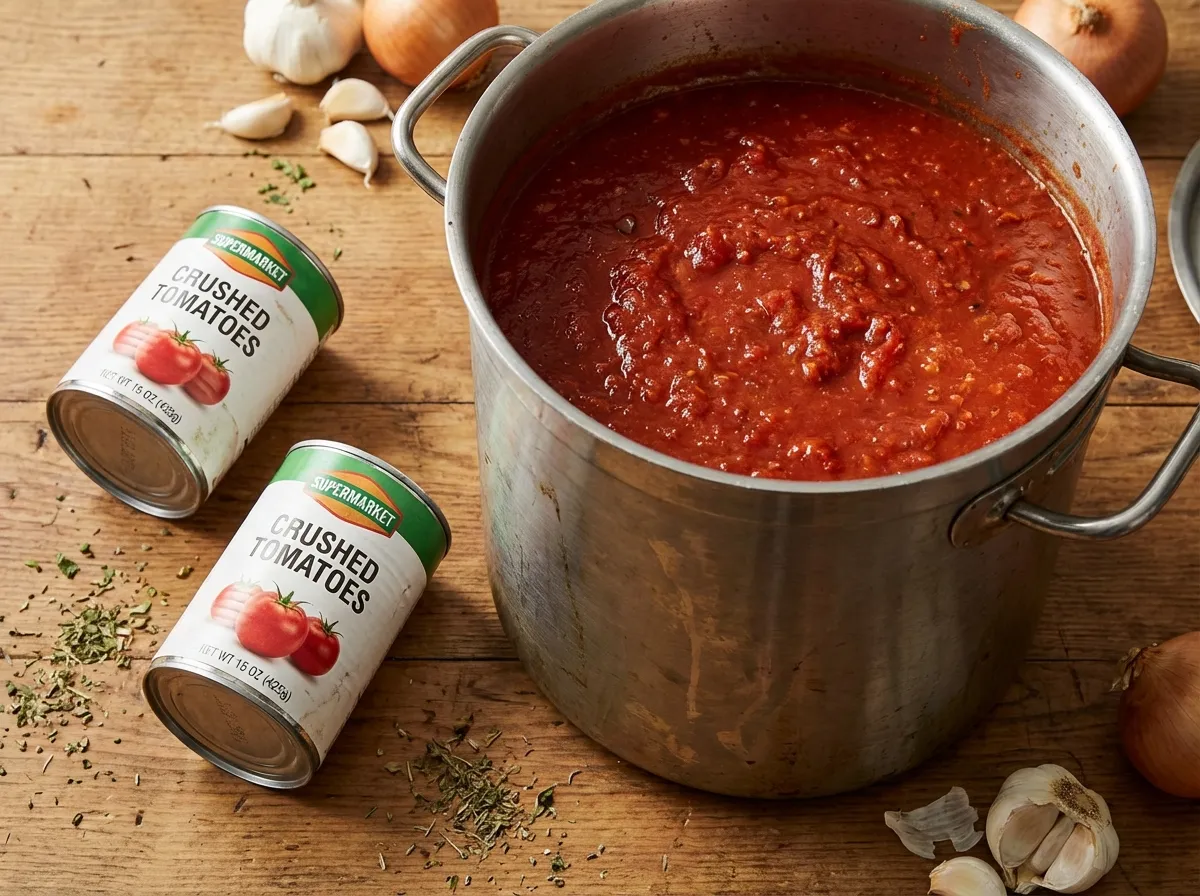
Two simple cans of crushed tomatoes create over 40 ounces of rich, filling soup.
A standard $2.50 can of condensed tomato soup yields only 2.5 small servings, which is insufficient for a family of four. By purchasing two $1 cans of generic crushed tomatoes, you produce over 40 ounces of thick soup. This approach doubles the meal volume while removing excess sugar and sodium found in branded products.
The Soup Volume Arbitrage
| Soup Method | Total Cost (Family of 4) | Yield Volume | Flavor Profile | Chef Verdict |
|---|---|---|---|---|
| Premium Gourmet Pouches | $14.00 | 32 oz | Very High | Unaffordable |
| Brand-Name Condensed | $5.00 | 30 oz | Thin / High Sugar | Poor ROI |
| Scratch Canned Bisque | $2.50 | 40+ oz | Rich / Acid-Neutral | Budget Anchor |
Bypassing branded marketing budgets by focusing on homemade pantry staples and purchasing raw generic ingredients halves your grocery receipt while increasing total food output by 33%.
The “Baking Soda” Acid Neutralizer Hack
Baking soda is a chemical leavening agent that, when added to acidic tomato bases, reacts to neutralize pH levels. Canned tomatoes are naturally high in citric acid, often resulting in a metallic, harsh flavor. Adding exactly 1/4 teaspoon of baking soda triggers a carbon dioxide release that instantly raises the pH, eliminating bitterness without requiring sugar or excess cream.
The “Mayo-Crust” Grilled Cheese Secret
The “Mayo-Crust” technique involves replacing butter with a thin layer of full-fat mayonnaise on the bread exterior to ensure even browning. Mayonnaise is a shelf-stable emulsion of oil and egg yolks that spreads easily on soft bread without tearing. It fries in a skillet to create a golden, crispy crust that prevents the bread from becoming soggy.
The Bisque Hardware Toolkit
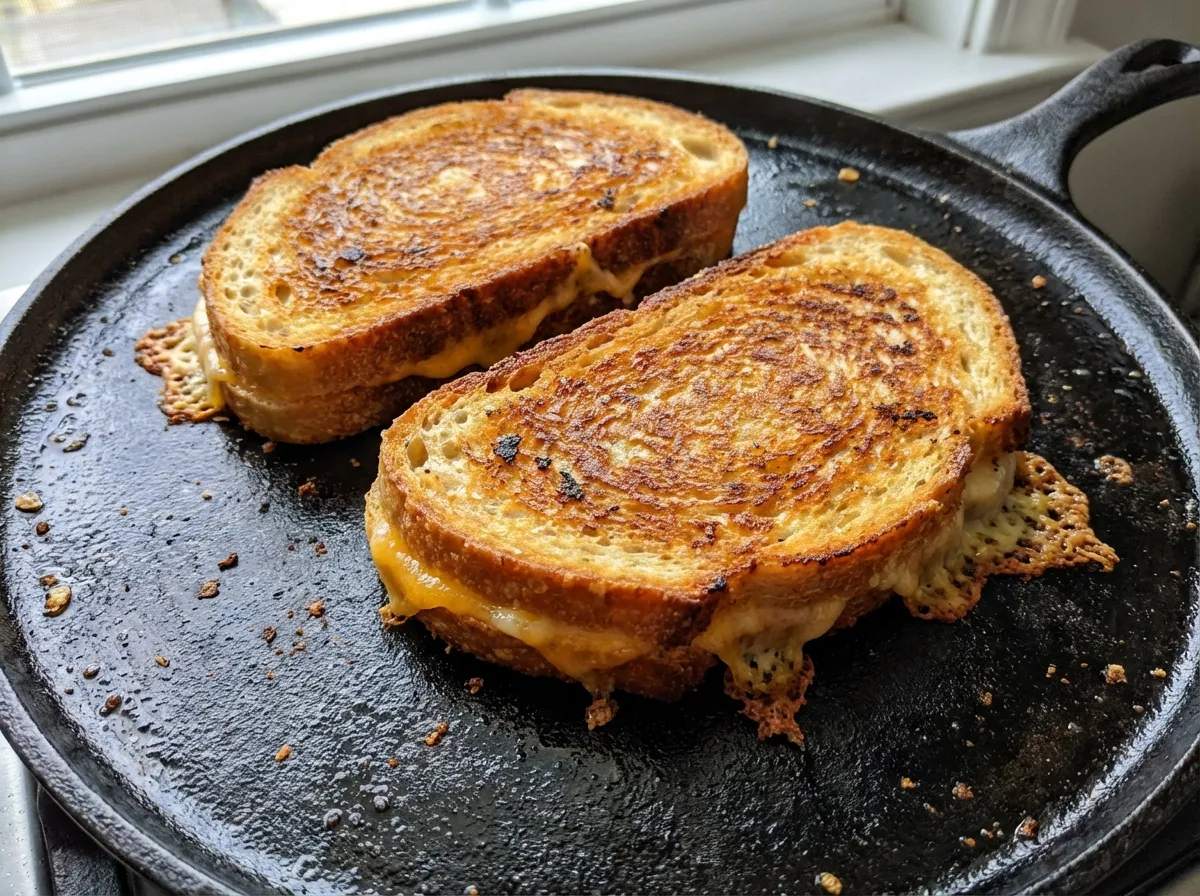
The secret to an even, diner-style crust? A thin layer of mayo and a heavy cast iron griddle.
Achieving the correct consistency and crust requires specific tools to handle thermal mass and chemical reactivity.
| Hardware Requirement | Culinary Function | Risk if Ignored |
|---|---|---|
| Stick Immersion Blender | Purees chunky tomatoes | Boiling liquid burns during transfer |
| Cast Iron Griddle | Provides uniform heat | Soggy or unevenly browned bread |
| Stainless Steel Saucepan | Non-reactive boiling | Acid strips metal from aluminum pans |
- Immersion Blender: Use this to pulverize tomatoes directly in the pot, avoiding the safety hazards of moving boiling liquid to a standard blender.
- Cast Iron Griddle: Heavy cast iron maintains a consistent 350°F–375°F, ensuring the entire surface of the sandwich browns at the same rate.
- Stainless Steel Pan: Stainless steel is non-reactive, preventing the acidic tomato base from leaching metallic flavors from aluminum or damaged non-stick coatings.
Field-Tested Results: Preventing Curdled Dairy
Curdling occurs when cold dairy is introduced to a boiling, acidic environment, causing proteins to seize into solid lumps. To ensure a smooth texture, remove the soup from the heat source and allow it to stop boiling before adding dairy. Once the baking soda has neutralized the acid, gently stir in the butter or milk to create a stable, velvety emulsion.
Recipe: $5 Scratch Tomato Soup & Grilled Cheese
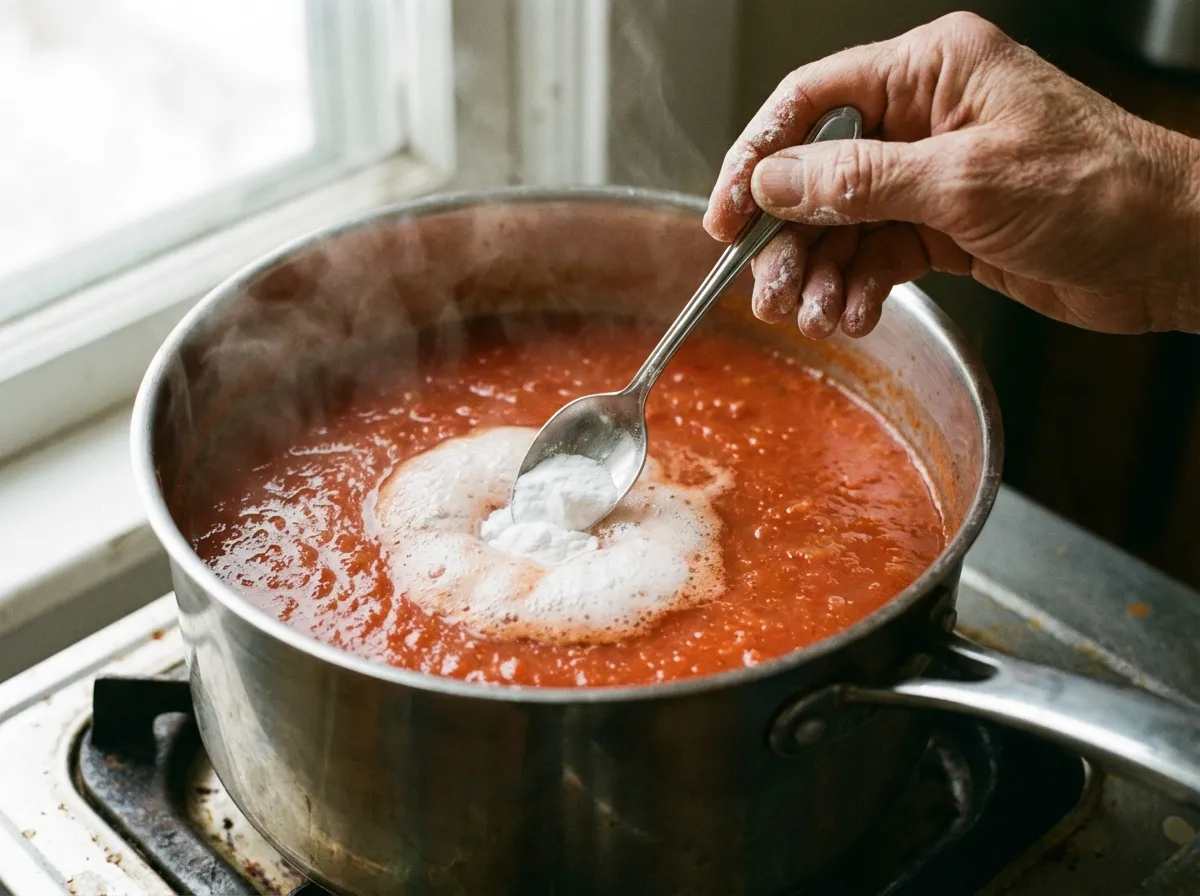
The baking soda reaction: neutralizing canned acidity for a smoother, chef-level flavor.
Ingredients (Yield: 4 servings):
* Bisque: 2 cans (15oz each) crushed tomatoes ($2.00); 1/4 tsp baking soda ($0.05); 1 tbsp butter or milk ($0.15); 1/2 tsp onion powder; 1/2 tsp garlic powder; 1 tsp salt; 1/2 tsp black pepper.
* Grilled Cheese: 8 slices sandwich bread ($0.50); 8 slices American/cheddar cheese ($1.50); 2 tbsp mayonnaise ($0.30).
Method:
1. Build Base: Combine tomatoes, spices, salt, and pepper in a stainless steel saucepan. Bring to a gentle boil over medium heat (approx. 300°F) and simmer for 10 minutes.
2. Neutralize: Remove from heat. Once boiling stops, stir in 1/4 tsp baking soda. Wait 15 seconds for the foam to subside.
3. Finish: Stir in 1 tbsp butter or milk until the texture is velvety.
4. Assemble: Prepare sandwiches with 2 slices of cheese each.
5. Coat: Spread a thin layer of mayonnaise on the exterior of each bread slice.
6. Fry: Heat a cast iron griddle to medium heat. Fry sandwiches for 3–4 minutes per side until golden and the cheese is fully melted.
Nutrition Per Serving (4 Servings)
| Nutrient | Amount |
|---|---|
| Calories | 480 kcal |
| Protein | 14g |
| Carbohydrates | 58g |
| Total Fat | 22g |
| Meal Cost | $1.25 per serving |
Frequently Asked Questions
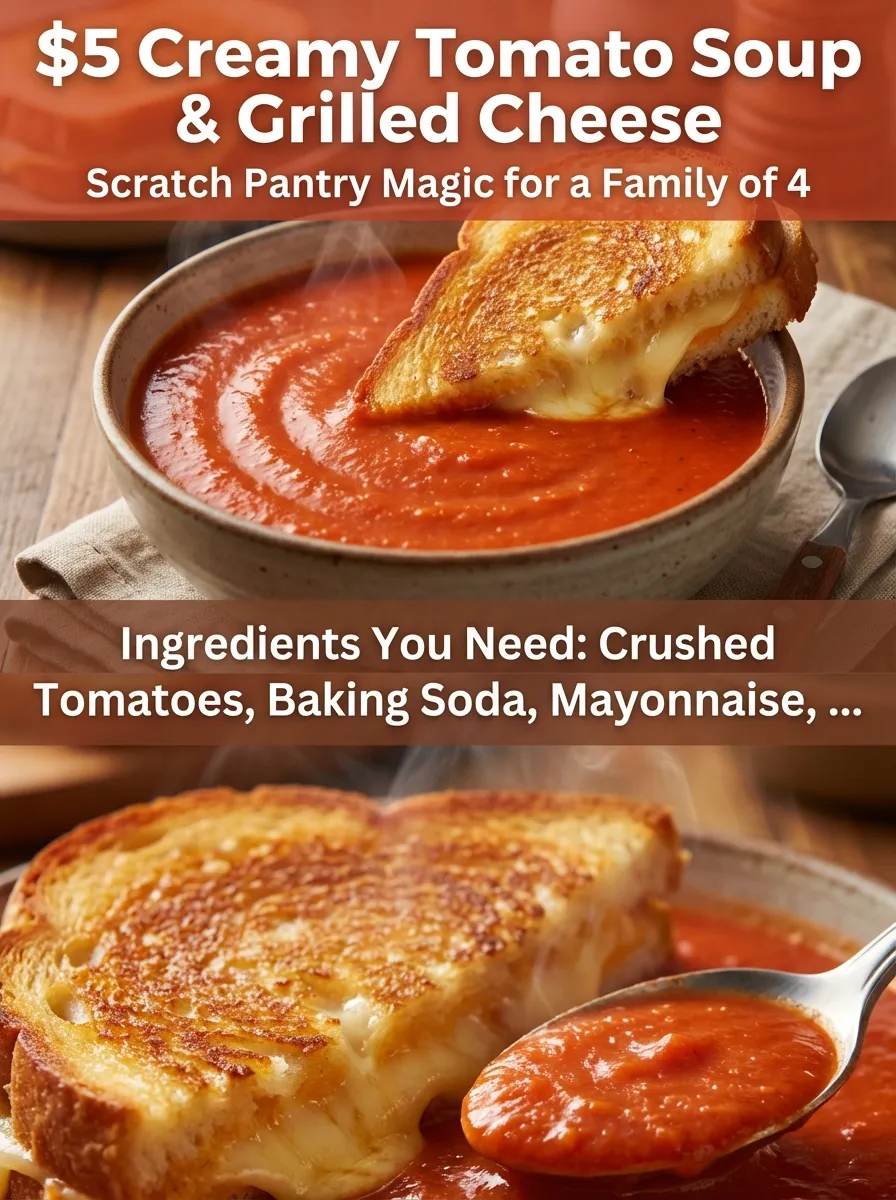
Pin this $5 family meal hack for your next rainy weeknight.
Question: Why did my hot soup aggressively foam up when I added baking soda?
Answer: The foam is the visual evidence of a chemical reaction between the alkaline baking soda and the acidic tomato base. This reaction releases carbon dioxide gas, which effectively neutralizes the harsh metallic flavor of the canned tomatoes. The foam will completely subside within 5 to 10 seconds of stirring.
Question: Can I use diced tomatoes instead of crushed?
Answer: Yes, but you must use an immersion blender to pulverize the tomatoes. Diced tomatoes are packed with calcium chloride to maintain their shape, which prevents them from breaking down into a smooth, creamy bisque texture during the simmering process.
Question: Will frying with mayonnaise make the sandwich taste like eggs?
Answer: No. Mayonnaise acts strictly as a fat source. When heated to 350°F in a skillet, the egg yolks and oils fry the bread surface to a crisp finish, leaving no distinguishable mayonnaise or egg flavor behind. It is a standard technique used in professional diner kitchens.
Question: Can I use olive oil instead of mayonnaise on the bread?
Answer: Using olive oil is discouraged because it is a liquid fat that absorbs into the porous bread, resulting in a greasy texture. Mayonnaise is a solid emulsion that sits on the surface of the bread, creating a protective barrier that ensures a crispy, golden-brown crust rather than a soggy sponge.