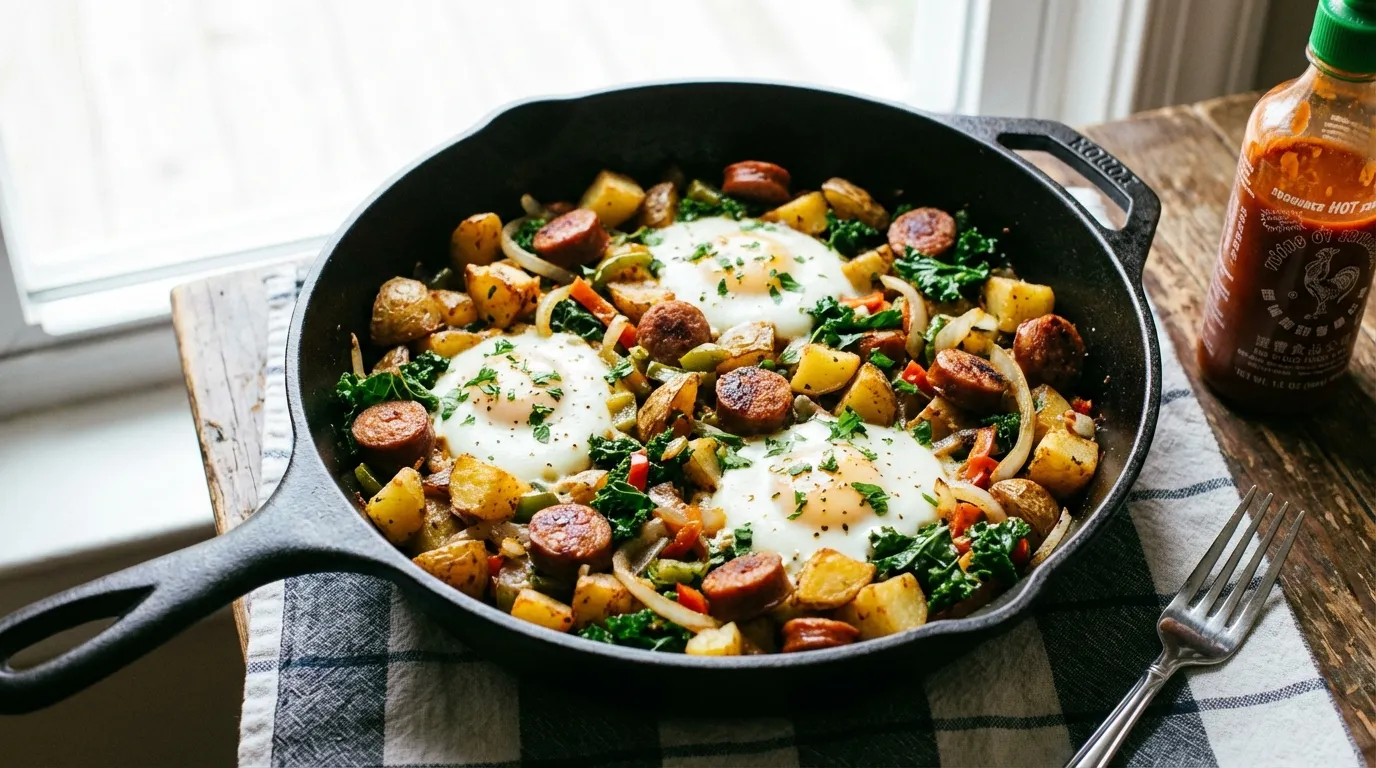
To execute a restaurant-crispy sausage and potato hash skillet for under $6, you must use the “fat-rendering” sequence. Place 1 lb of sliced smoked sausage into a cold cast-iron skillet and heat to medium. Once the sausage fat renders, remove the meat, then fry 4 cups of dried, diced potatoes in the remaining oil.
Potatoes: The Ultimate Budget Satiety Base
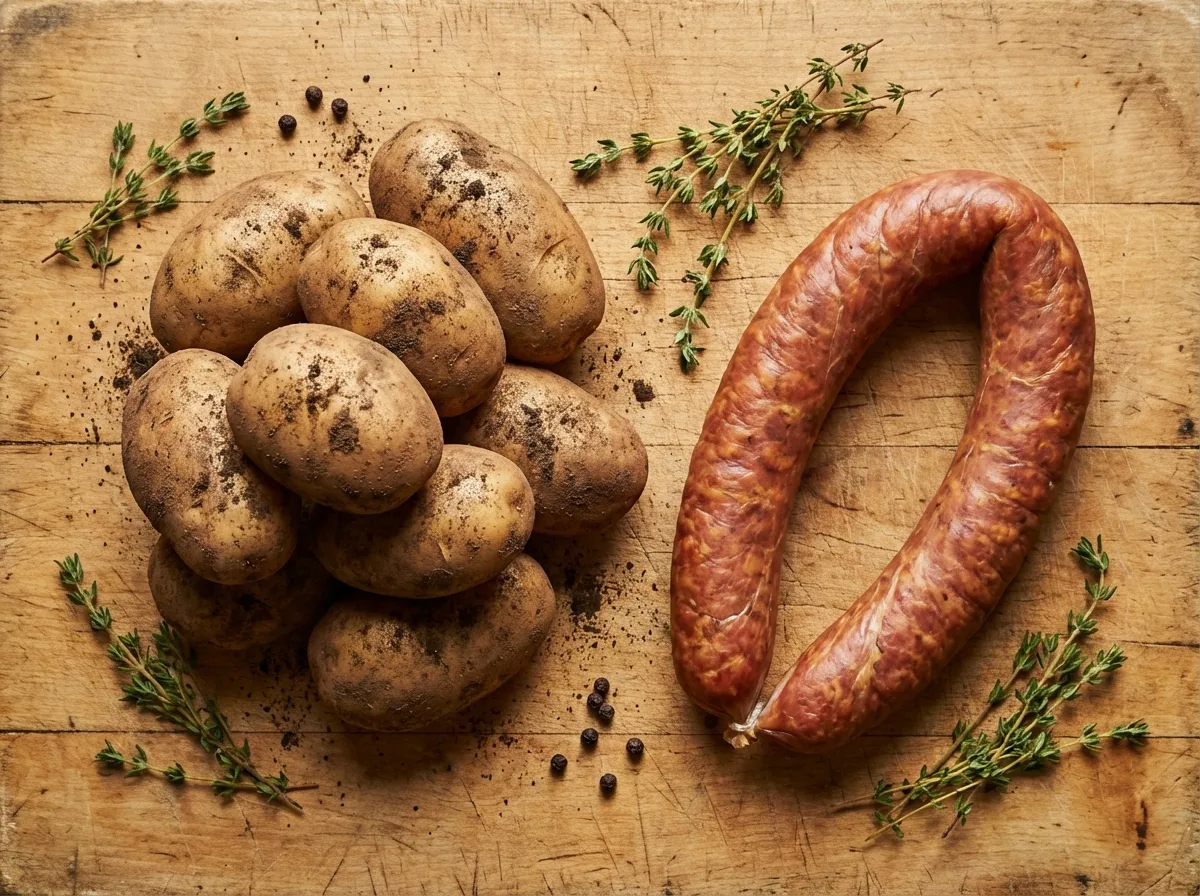
Potatoes and smoked sausage: The most cost-effective way to maximize family satiety.
The Satiety Index is a clinical metric that ranks food based on its ability to satisfy human hunger per calorie. Russet potatoes rank as the most satiating food on earth, outperforming proteins like beef or eggs. By pairing $1 of potatoes with $3–$4 of fatty sausage, you create a nutrient-dense, filling meal.
The Satiety Arbitrage Matrix
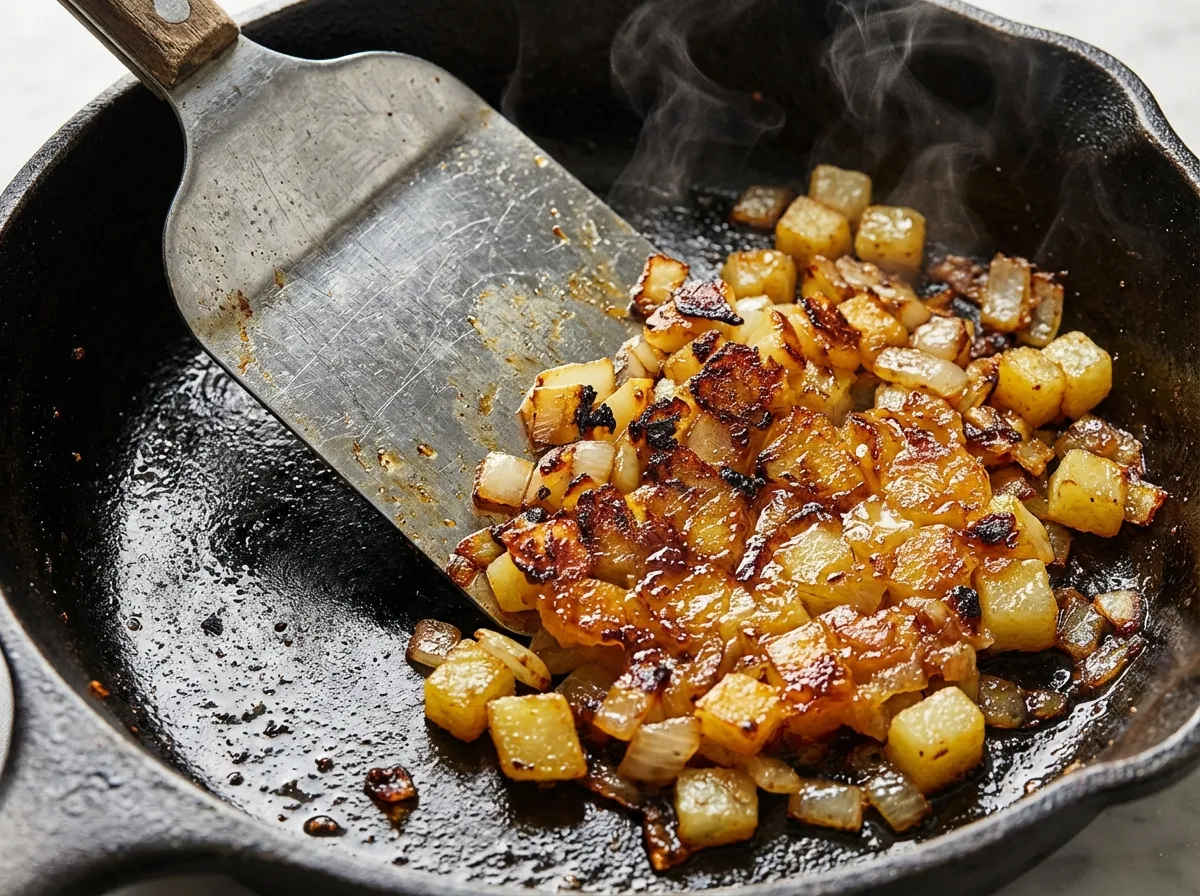
The result of the ‘Rule of 5’: A restaurant-grade crust that stays crispy.
| Dinner Strategy | Satiety Yield | Total Cost (4 Servings) | Result |
|---|---|---|---|
| Fast Food Burgers | Low | $30.00 | Hungry in 2 hours |
| Frozen Pizzas | Moderate | $14.00 | High sodium spike |
| Sausage & Potato Hash | Maximum | $6.00 | Full until morning |
Quick Answer: Potatoes provide the highest satiety-per-dollar ratio of any common grocery staple. Using sausage fat as the cooking medium instead of store-bought oil eliminates additional costs while maximizing flavor extraction.
The “Cold Pan” Fat Rendering Trick
The “Cold Pan Render” is a culinary technique involving placing cold, sliced sausage into a cold skillet and heating it slowly to medium. This process allows the animal fat to liquefy and extract before the protein exterior sears, providing an abundant, flavor-rich oil base for frying the potatoes.
Why Your Hash is Mushy (The Starch Wash)
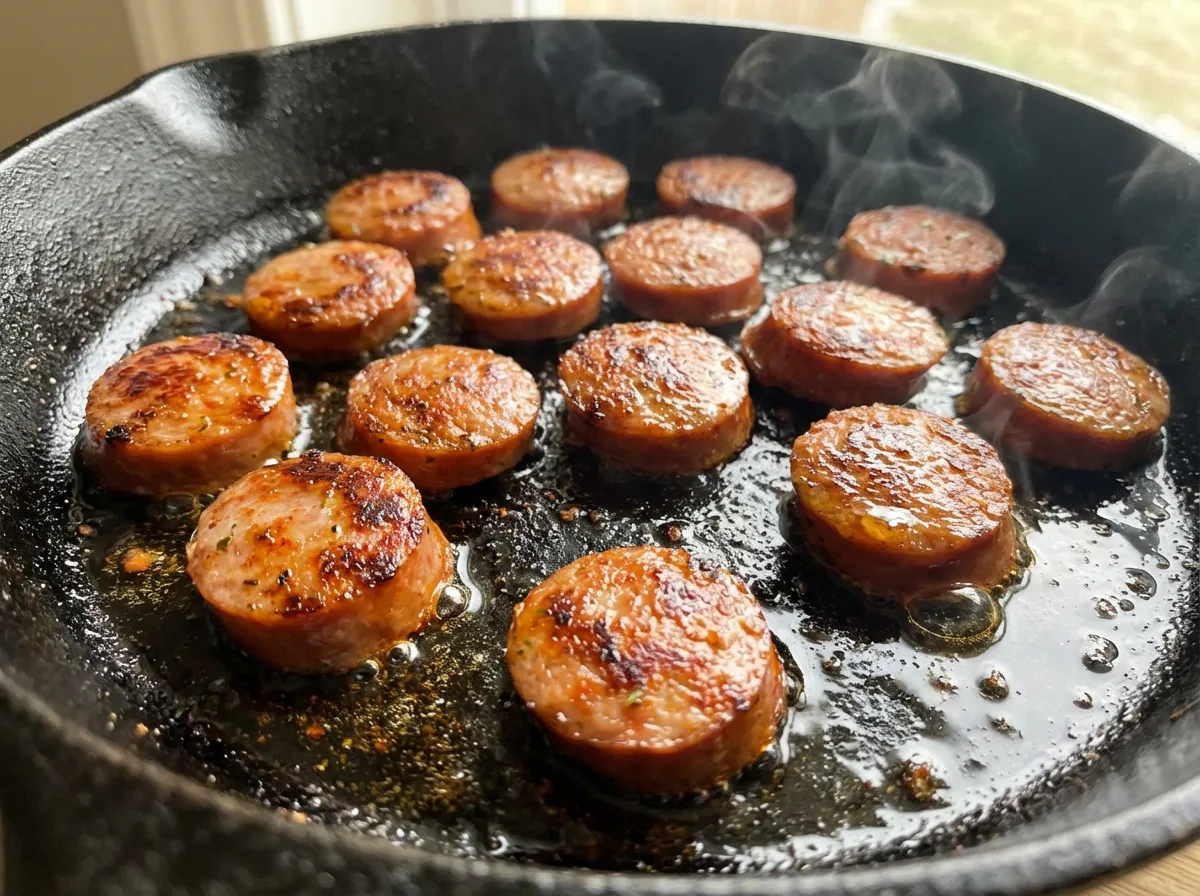
The Cold Pan Render: Extracting every drop of flavor to fry the potatoes.
Surface starch is a glue-like residue on raw, cut potatoes that causes them to weld to the pan and turn into mush. A “Starch Wash” involves submerging diced potatoes in ice-cold water for 5 minutes to dissolve this residue, ensuring the potatoes crisp rather than steam when introduced to hot fat.
The Crust Formation Arsenal
| Hardware | Culinary Function | Risk If Ignored |
|---|---|---|
| 12-Inch Cast Iron | Sustained radiant thermal mass | Temperature crash; steaming |
| Stainless Slotted Spoon | Isolates meat from liquid lipids | Loss of essential frying fat |
| Steel Micro-Mesh Colander | Complete “Starch Wash” drainage | Grease fires from excess water |
- Cast Iron Skillet: Heavy iron maintains high temperatures when cold potatoes are added. A thin pan will drop in temperature, causing the potatoes to steam and soften.
- Stainless Slotted Spoon: This tool allows you to remove the sausage while keeping the rendered fat in the pan for the potato-frying stage.
- Large Colander: Removing all water post-wash is mandatory. Excess moisture creates steam, which prevents the formation of a glass-like crust.
Field-Tested Results: The Undisturbed Crust
The “Rule of 5” is a mandatory cooking instruction requiring 5 minutes of undisturbed thermal contact between the potatoes and the hot skillet. Constant stirring prevents the potato surface from reaching the temperature required to polymerize, which is necessary to form a firm, glass-like crust.
Recipe: $6 Budget Sausage & Potato Hash
Ingredients (Yield: 4 servings):
* 1 lb Smoked Sausage or Kielbasa (cut into ½-inch coins)
* 4 cups Russet Potatoes (3 large, diced to ½-inch cubes; do not peel)
* 1 large yellow onion, diced
* 1 tbsp olive oil (optional; use only if sausage renders insufficient fat)
* 1 tsp garlic powder, 1 tsp paprika, ½ tsp salt, ½ tsp black pepper
* Scallions or parsley (garnish)
Method:
1. Starch Wash: Submerge diced potatoes in ice-cold water for 5 minutes. Drain and pat completely dry with a clean towel.
2. Cold-Pan Render: Place sausage in a cold 12-inch cast-iron skillet. Heat to medium for 6–8 minutes until fat renders and sausage is crisp.
3. Extraction: Remove sausage with a slotted spoon. Keep all rendered fat in the pan.
4. Rule of 5: Add potatoes and onion to the hot fat. Season with spices. Do not stir for 5 minutes.
5. Crisping: Toss potatoes with a metal spatula. Cook for 10–12 minutes, tossing occasionally, until fork-tender and browned.
6. Combine: Return sausage to the pan for 1 minute to reheat. Garnish and serve.
Nutrition Per Serving
| Nutrient | Amount |
|---|---|
| Calories | 420 kcal |
| Protein | 14g |
| Carbohydrates | 48g |
| Total Fat | 20g |
| Cost | $1.50 per serving |
Frequently Asked Questions
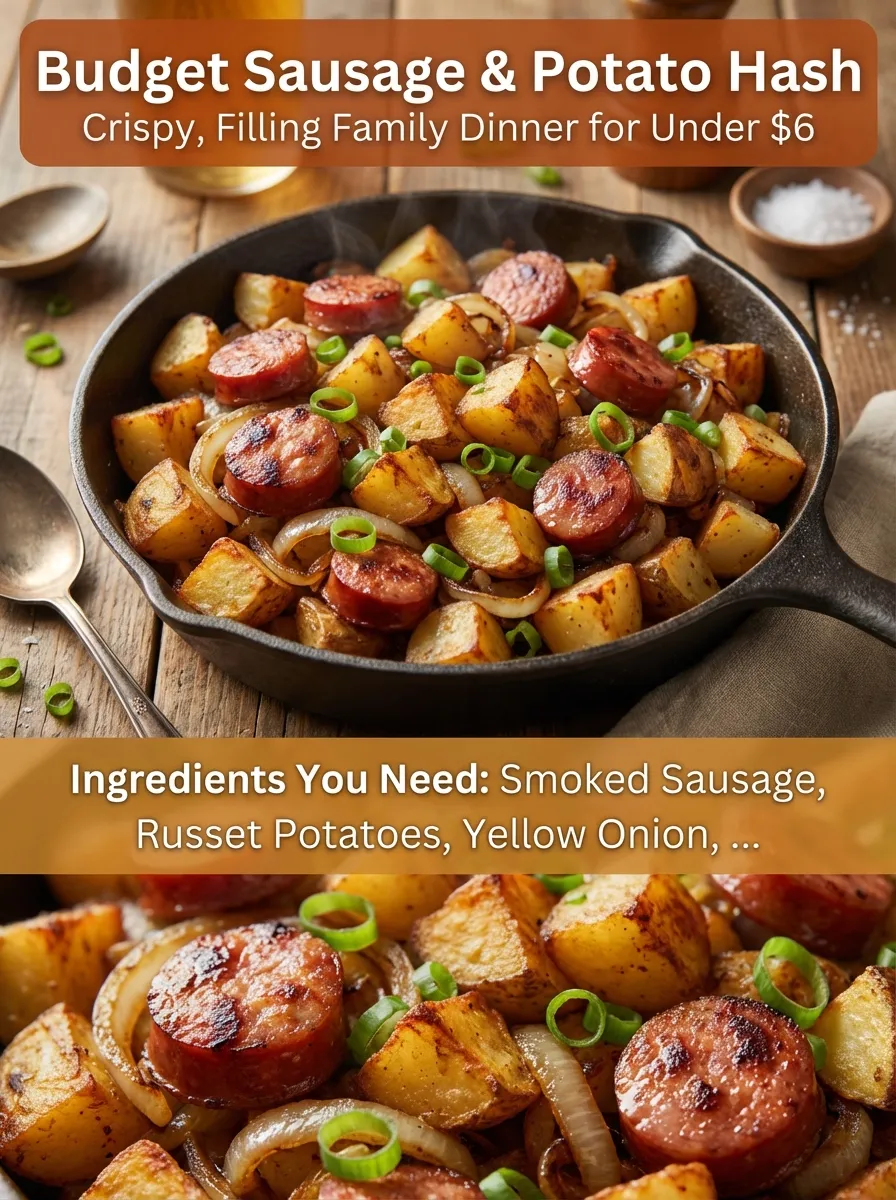
Pin this $6 meal for your next busy weeknight!
What specific kind of cheap sausage renders the most fat?
U-shaped “Smoked Sausage” or Kielbasa rings are the most efficient choices. These products have a high fat-to-meat ratio designed to release large volumes of savory oil during the slow-rendering process, providing sufficient medium for frying the potatoes without needing extra cooking oil.
Should I peel the russet potatoes before dicing?
Do not peel the potatoes. The skin contains essential fiber and nutrients that add texture to the hash. Frying the skins in rendered sausage fat creates an additional layer of crunch that improves the overall mouthfeel of the dish while saving you preparation time.
Can I add eggs to this skillet for extra protein?
Yes. Once the hash is fully cooked, use a spoon to create 4 wells in the mixture. Crack 4 eggs into the wells, cover the skillet with a lid, and steam on medium-low heat for 3 minutes until the whites are set and yolks remain runny.
Does the starch wash reduce the nutritional value?
No. The 5-minute cold water wash only removes surface starch molecules exposed by cutting. The internal carbohydrate matrix and the nutrients found in the potato skin remain fully intact, ensuring the caloric density and satiety benefits of the meal are preserved.
What to Read Next
To learn more about budget-conscious meal planning, consult the Feeding a Family for Under $10 guide. For additional high-volume, low-cost recipes, explore the Bean Enchilada Skillet Tray or the Large-Yield Baked Ziti Casserole. For more iron-cooking techniques, view the QuickPlateChef Resource Library.