
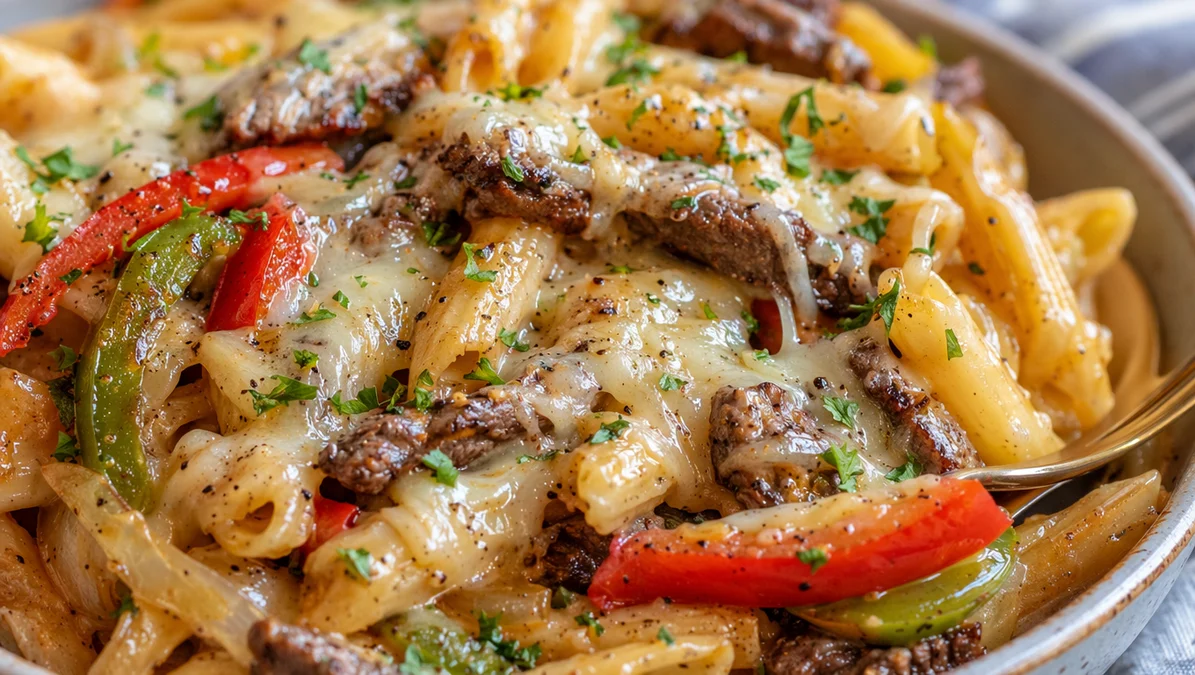
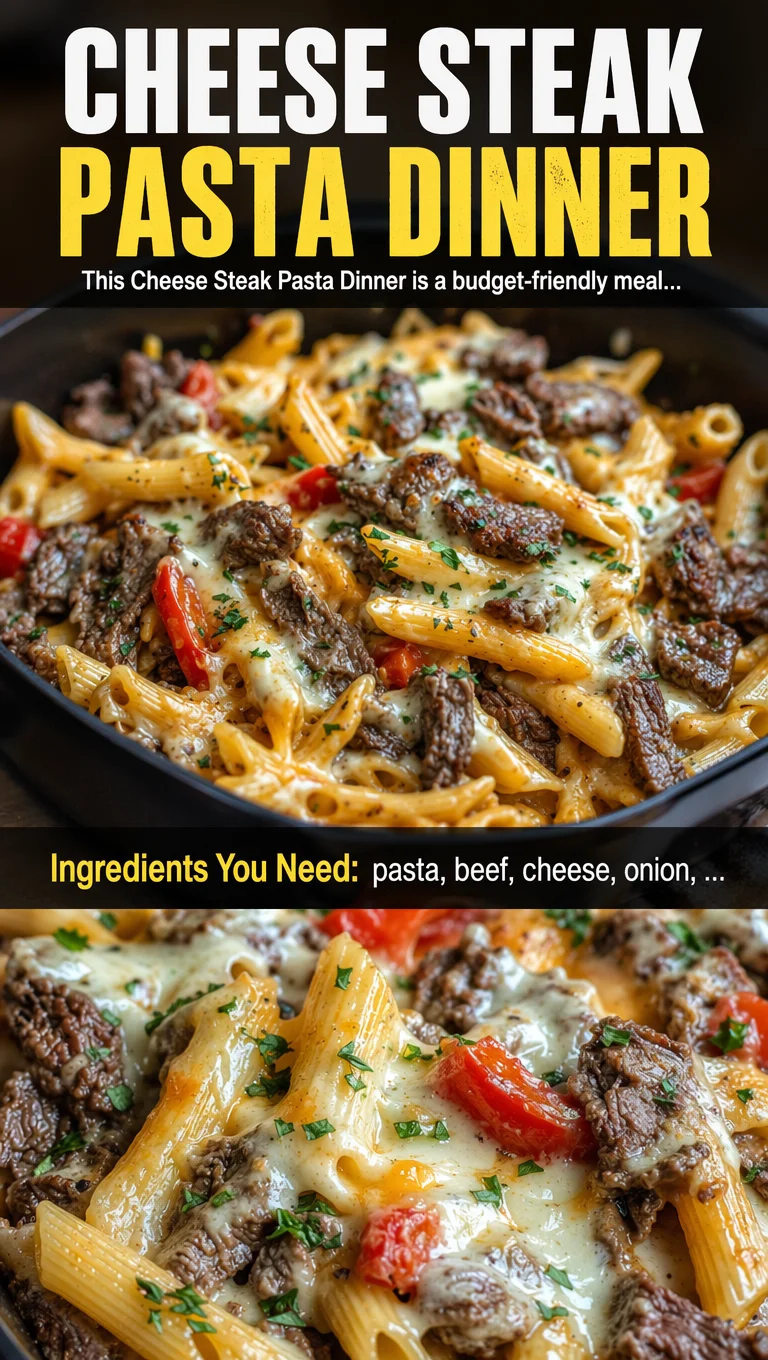
This Cheese Steak Pasta Dinner is a budget-friendly meal that combines tender steak, bell peppers, and creamy cheese sauce over pasta. An easy weeknight dinner the whole family loves.
Ingredients
Instructions
Bring a large pot of generously salted water (about 1 tablespoon salt per 4 quarts) to a rolling boil. Add the pasta and cook according to package directions until al dente, typically 8-10 minutes. Al dente pasta will have a slight resistance when bitten, which is important because it will continue to absorb some sauce later. Reserve about 1 cup of pasta water before draining – this starchy liquid can be used to thin the sauce if needed. Drain the pasta in a colander and set aside. Do not rinse the pasta; the starch on the surface helps the sauce cling better.
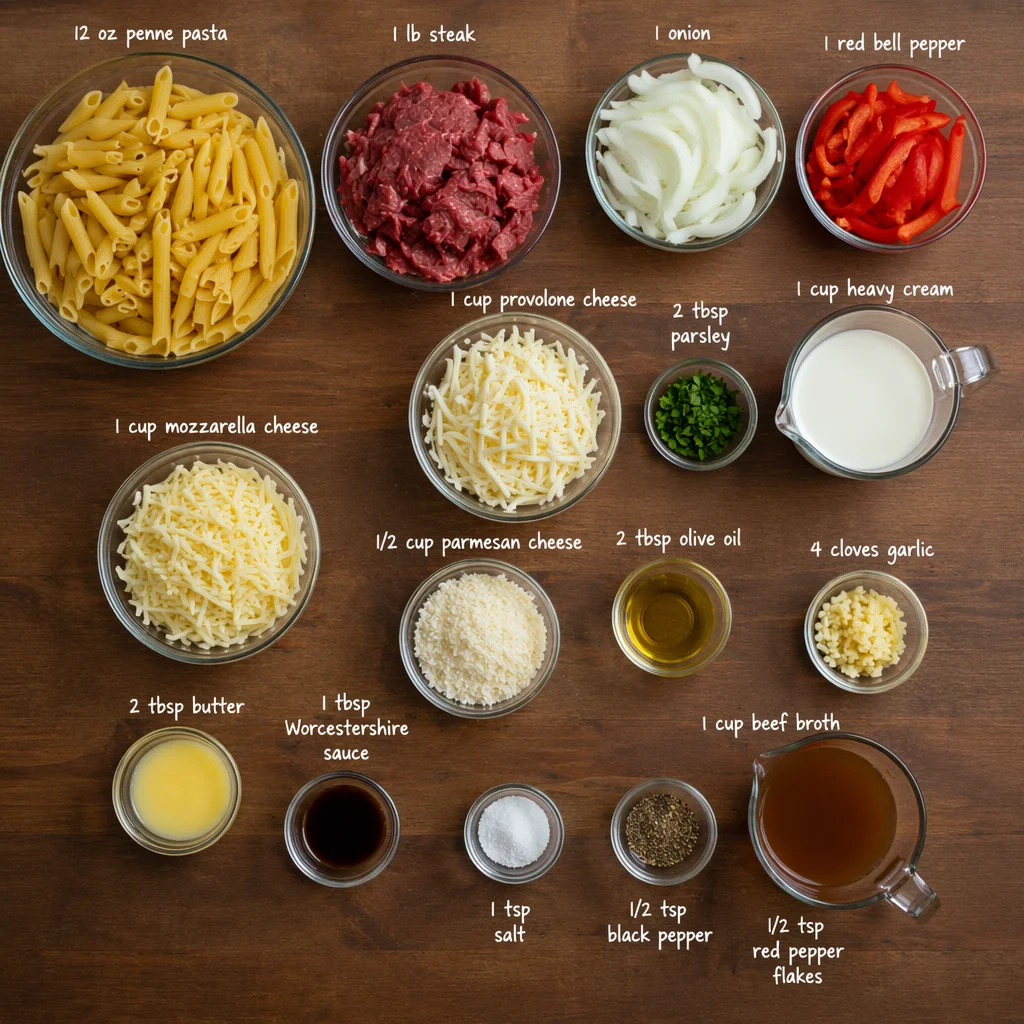
While the pasta cooks, pat the sliced steak dry with paper towels. Moisture is the enemy of browning – excess steam will prevent a good sear. Season the steak generously with salt and pepper. In a large skillet or Dutch oven, heat 1 tablespoon of olive oil over high heat until shimmering (just before the smoking point). Add the steak in a single layer – do not overcrowd the pan, work in batches if necessary. Sear for 1-2 minutes per side until a deep brown crust forms. The crust is where the rich, beefy flavor lives. Remove the steak to a plate and set aside. The steak will finish cooking later in the sauce, so it’s okay if it’s slightly underdone now.
Reduce heat to medium-high and add the remaining 1 tablespoon olive oil. Add the sliced onion and bell peppers. Sauté for 5-7 minutes, stirring occasionally, until the vegetables are softened and beginning to caramelize. The natural sugars in the onions and peppers will deepen in flavor, creating that classic Philly cheesesteak taste. You want the onions to be translucent with golden edges. Add the minced garlic and cook for 30 seconds until fragrant, stirring constantly to prevent burning.
Push the vegetables to one side of the pan and reduce heat to medium. Add the butter to the empty space. Once melted, whisk in the flour to form a roux. Cook the roux for 1-2 minutes, stirring constantly, until it turns a light golden color and smells nutty. This cooks out the raw flour taste and ensures a smooth, lump-free sauce. The roux will thicken the sauce and give it a velvety texture.
Slowly pour in the milk and beef broth while whisking continuously to incorporate the roux. Bring the mixture to a gentle simmer, then reduce heat to low. Let it simmer for 2-3 minutes, whisking occasionally, until the sauce thickens enough to coat the back of a spoon. If you run your finger across the spoon, the line should hold. Now add the softened cream cheese, breaking it into pieces for easier melting. Whisk until completely smooth. The cream cheese adds richness and a slight tang that balances the savory elements.
Add the shredded provolone cheese a handful at a time, stirring until each addition is fully melted before adding more. Provolone melts beautifully and gives that iconic stretchy, gooey texture. Stir in the Worcestershire sauce and smoked paprika. Season with salt and pepper to taste. The sauce should be well-seasoned, as the pasta will absorb some salt. If the sauce is too thick, add a splash of the reserved pasta water to reach desired consistency.
Return the seared steak (and any accumulated juices) to the skillet, along with the sautéed vegetables. Stir to combine and let everything warm through for 1-2 minutes over low heat. The steak will finish cooking gently in the hot sauce, remaining tender. Add the cooked pasta and toss until every piece is coated in the creamy cheese sauce. If the sauce seems too thick, add a little more pasta water. Garnish with fresh parsley and serve immediately while hot and creamy.
For best results
- Slicing the Steak: For the most tender bites, slice the steak against the grain (perpendicular to the muscle fibers). This shortens the fibers, making each piece easier to chew. Partially freezing the steak for 15-20 minutes before slicing makes it much easier to cut thin, even strips. Aim for 1/8-inch thick slices. If using ribeye, the marbling will keep the meat juicy even after reheating.
- Choosing the Right Cheese: Provolone is classic for Philly cheesesteak flavor, but you can substitute with provolone and mozzarella blend, or use white American cheese for extra creaminess. Avoid pre-shredded cheese as it contains anti-caking agents that prevent smooth melting. Always shred your own cheese from a block for a silky sauce. For a sharper bite, mix in some shredded cheddar.
- Pasta Shape Matters: Short, sturdy pasta shapes like penne, rotini, or rigatoni are ideal because they hold onto the chunky sauce and pieces of meat and vegetables. Long pasta like spaghetti can work but the sauce may not cling as well. Cook the pasta al dente since it will continue cooking slightly when tossed with the hot sauce.
- Make It Ahead: This dish is best served fresh, but leftovers can be stored in an airtight container in the refrigerator for up to 3 days. To reheat, add a splash of milk or beef broth and warm gently in a skillet over medium-low heat, stirring often, to restore the creamy consistency. Avoid microwaving on high as it can make the cheese sauce grainy.
- Double the Sauce: If you prefer an extra saucy pasta, increase the sauce ingredients by 50% (3 cups milk, 1.5 cups broth, 12 oz cheese). The recipe as written provides a generous coating but not an overly wet dish. You can always reserve extra sauce and add as needed.
- Vegetable Variations: While green and red bell peppers are traditional, you can add sliced mushrooms (cremini or button) along with the peppers for an earthy flavor. Sauté them until they release their moisture and turn golden brown. Mushrooms also boost the umami profile without adding extra cost.
Variations
- Chicken Philly Pasta: Substitute the beef with boneless, skinless chicken thighs or breasts. Slice the chicken thinly and season with salt, pepper, and a pinch of paprika. Sear until golden and cooked through, then proceed with the recipe. Chicken is often more budget-friendly and still delivers a hearty protein punch.
- Vegetarian Philly Pasta: Omit the steak and double the bell peppers and onions. Add 8 oz of sliced portobello mushrooms for a meaty texture. Use vegetable broth instead of beef broth. The mushrooms provide umami and a satisfying chew. You can also add a can of drained chickpeas for extra protein.
- Spicy Philly Pasta: Add 1-2 teaspoons of hot sauce (like sriracha or Tabasco) to the cheese sauce, or stir in 1/2 teaspoon of red pepper flakes along with the smoked paprika. For extra heat, use pepper jack cheese in place of half the provolone. The spicy kick balances the richness of the cream sauce.
- Low-Carb/Keto Version: Replace the pasta with zucchini noodles (zoodles) or cauliflower florets. For zoodles, sauté them lightly after making the sauce and toss together just until heated (zoodles release water quickly). For cauliflower, roast florets at 400°F for 20 minutes until tender, then toss with the sauce and steak. This version is gluten-free and low-carb.
- Philly Cheesesteak Casserole: Turn this into a baked casserole by tossing the cooked pasta, steak, vegetables, and sauce in a 9×13 baking dish. Top with extra shredded provolone and bake at 375°F for 15-20 minutes until bubbly and golden. This is perfect for feeding a crowd or meal prep.
Nutrition
- Calories585 kcal
- Total Fat28g
- Saturated Fat14g
- Cholesterol95mg
- Sodium680mg
- Total Carbohydrates52g
- Dietary Fiber3g
- Sugars8g
- Protein32g