
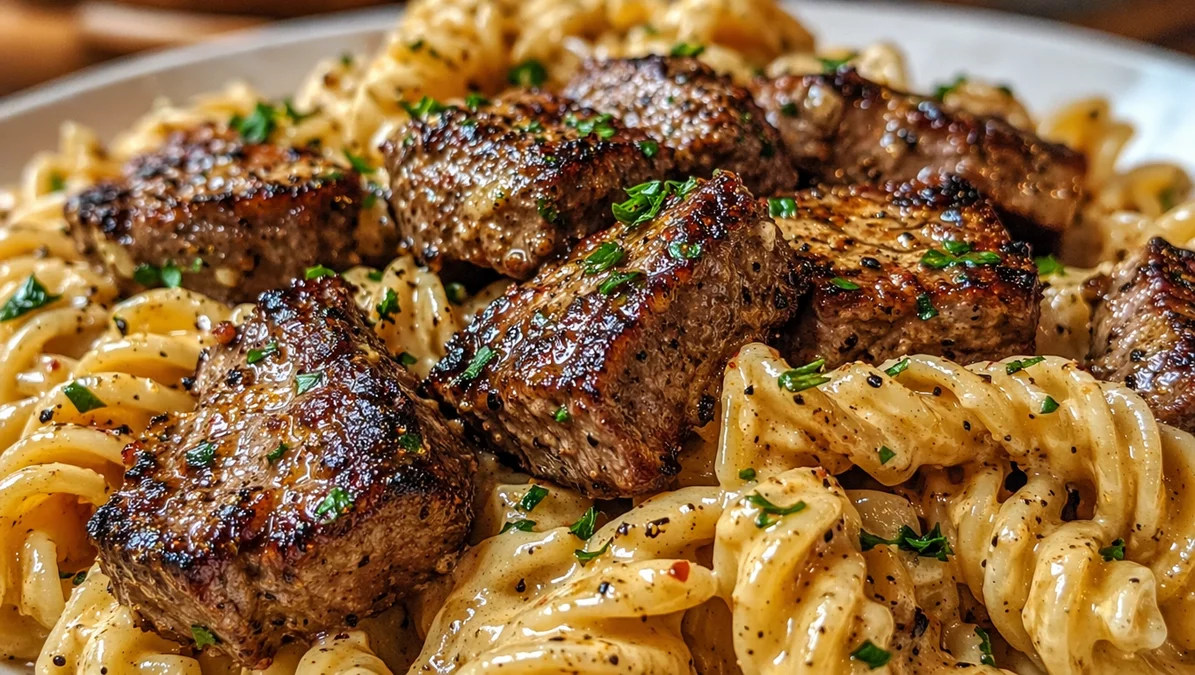
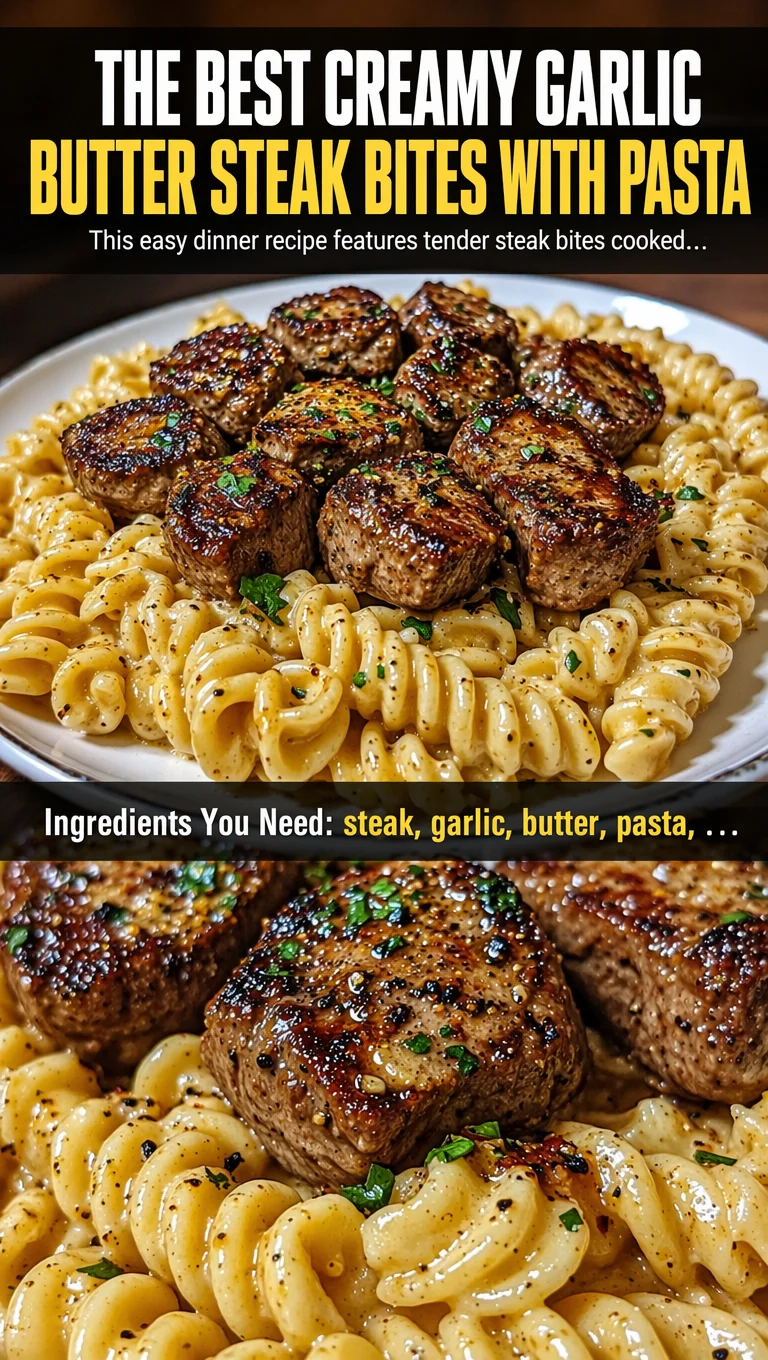
Tender steak bites in garlic butter over pasta with a spicy Cajun alfredo sauce. This easy 30-minute dinner is rich, creamy, and perfect for weeknights.
Ingredients
Instructions
Start by bringing a large pot of salted water to a rolling boil. Add the pasta and cook according to package directions until al dente (typically 8-10 minutes). Reserve about 1 cup of pasta cooking water before draining, as the starchy water will help thicken the sauce later. Drain the pasta and set aside. While the pasta cooks, pat the steak cubes dry with paper towels. Moisture is the enemy of a good sear; removing excess moisture ensures a deep brown crust. Season the steak generously with salt, pepper, and half of the Cajun seasoning. Toss to coat evenly.
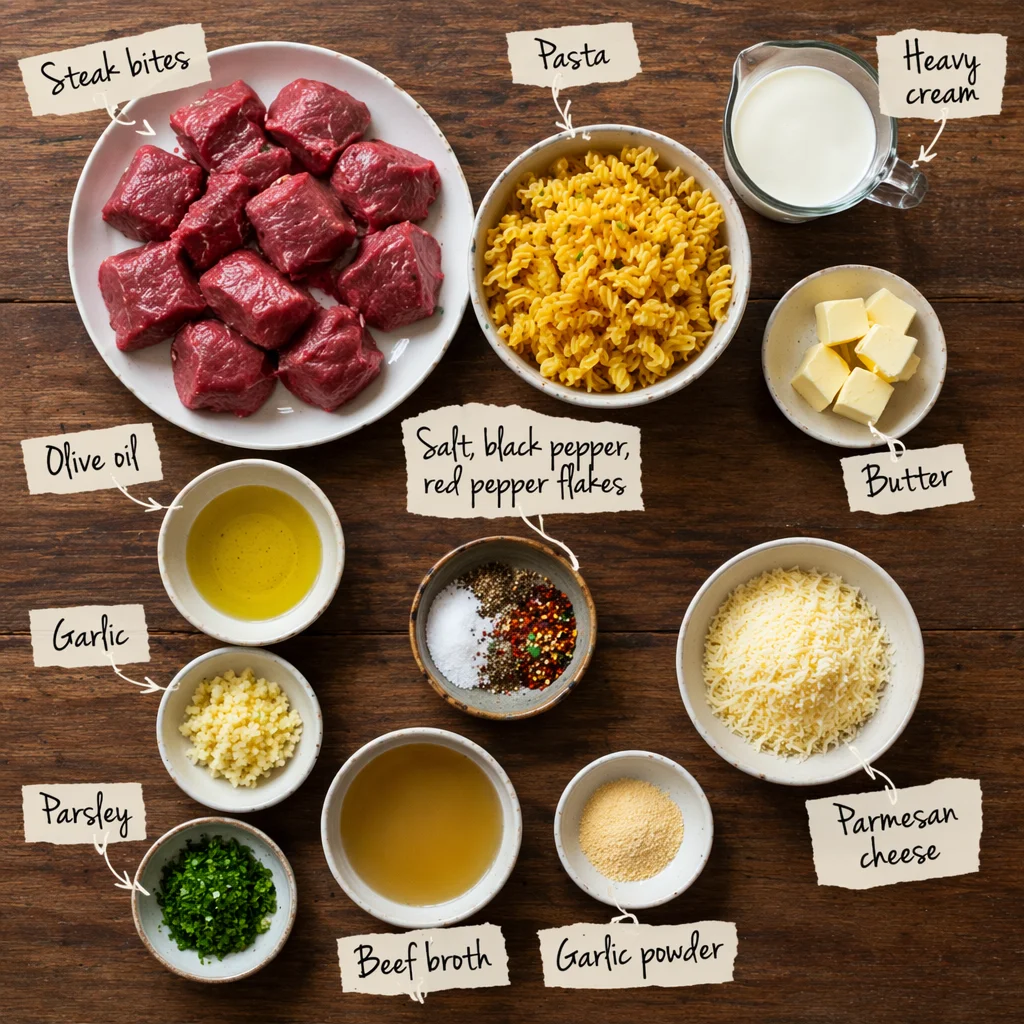
Heat a large skillet over medium-high heat. Add 2 tablespoons of butter and let it melt until it sizzles and foams. Carefully add the steak bites in a single layer without overcrowding the pan. If necessary, work in batches to maintain a high temperature. Sear the steak for 2-3 minutes per side until a deep golden-brown crust forms. The internal temperature should reach 130°F (54°C) for medium-rare. Use tongs to flip each piece. Once cooked, transfer the steak to a plate and tent loosely with foil to keep warm.
Reduce the heat to medium. Add the remaining 1 tablespoon of butter to the same skillet. Once melted, add the minced garlic and sauté for about 30 seconds until fragrant, stirring constantly to prevent burning. The garlic should become golden and aromatic. Sprinkle in the remaining Cajun seasoning and stir for another 10 seconds to bloom the spices in the fat.
Pour in the heavy cream, scraping the bottom of the skillet with a wooden spoon to deglaze and incorporate any browned bits (fond). These bits are packed with flavor. Bring the cream to a gentle simmer, then reduce heat to low. Whisk in the grated Parmesan cheese until fully melted and the sauce is smooth. If the sauce is too thick, add reserved pasta water a tablespoon at a time until desired consistency is reached. Taste and adjust seasoning with salt and pepper.
Add the cooked pasta and the seared steak bites (along with any accumulated juices) to the skillet. Toss everything together gently using tongs, ensuring the pasta and steak are evenly coated in the creamy Cajun sauce. Let it cook for 1-2 minutes over low heat to allow the flavors to meld. Garnish with fresh chopped parsley and serve immediately.
For best results
- Choose the right steak: For tender steak bites, opt for sirloin, ribeye, or tenderloin. These cuts have enough marbling to stay juicy during quick searing. Avoid lean cuts like round steak, which can become tough. Cut the steak into uniform 1-inch cubes for even cooking. Let the steak come to room temperature for 15 minutes before cooking to promote even searing.
- Master the sear: High heat is crucial. Use a heavy-bottomed skillet like cast iron or stainless steel to retain heat. Pat the steak extremely dry; any moisture will steam the meat instead of searing. Do not move the steak while searing; let it form a crust undisturbed. If the pan is too crowded, the temperature drops, so cook in batches if needed.
- Bloom the spices: Toasting the Cajun seasoning in butter for a few seconds before adding cream intensifies its flavor. This technique, called blooming, releases essential oils from the spices, making the sauce more aromatic and complex. Be careful not to burn the garlic; it should be golden, not brown.
- Perfect the sauce consistency: Heavy cream provides richness, but if you prefer a lighter sauce, substitute half-and-half. The sauce will thicken as it simmers; if it becomes too thick, add reserved pasta water gradually. The starch in the water helps emulsify the sauce, giving it a silky texture that clings to the pasta.
- Rest the steak: After searing, let the steak bites rest for a few minutes before adding to the sauce. This allows the juices to redistribute, ensuring each bite stays moist. If you add them immediately, the juices may leak into the sauce, thinning it out.
- Use fresh garlic: Freshly minced garlic provides a pungent, sweet flavor that powdered garlic cannot replicate. Pre-minced jarred garlic often has a bitter taste and lacks the same aromatic quality. For best results, mince your own cloves just before cooking.
Variations
- Chicken version: Substitute the steak with boneless, skinless chicken thighs or breasts. Cut into bite-sized pieces and cook until golden and cooked through (165°F internal temperature). The cooking time may be slightly longer, about 4-5 minutes per side. The creamy Cajun sauce pairs beautifully with chicken.
- Spice level adjustment: For a milder dish, reduce Cajun seasoning to 1 teaspoon or use a mild Cajun blend without cayenne. For extra heat, add 1/2 teaspoon of cayenne pepper or red pepper flakes along with the seasoning. You can also serve with hot sauce on the side.
- Dairy-free option: Replace heavy cream with full-fat coconut milk (canned) and use a dairy-free butter substitute like vegan butter. Omit the Parmesan or use a dairy-free Parmesan alternative. The sauce will have a slight coconut flavor that complements the Cajun spices.
- Pasta swap: Fettuccine is classic, but any pasta shape works. Penne, rigatoni, or farfalle hold the sauce well. For a low-carb option, serve over zucchini noodles (zoodles) or spaghetti squash. Adjust cooking time accordingly.
- Vegetable add-ins: Boost nutrition by adding sautéed bell peppers, onions, or mushrooms. After removing the steak, sauté sliced mushrooms and diced bell peppers in the skillet for 3-4 minutes before adding garlic. Proceed with the sauce. Spinach can be stirred in at the end until wilted.
Nutrition
- Calories685 kcal
- Total Fat42g
- Saturated Fat24g
- Cholesterol175mg
- Sodium890mg
- Total Carbohydrates38g
- Dietary Fiber2g
- Sugars4g
- Protein38g