
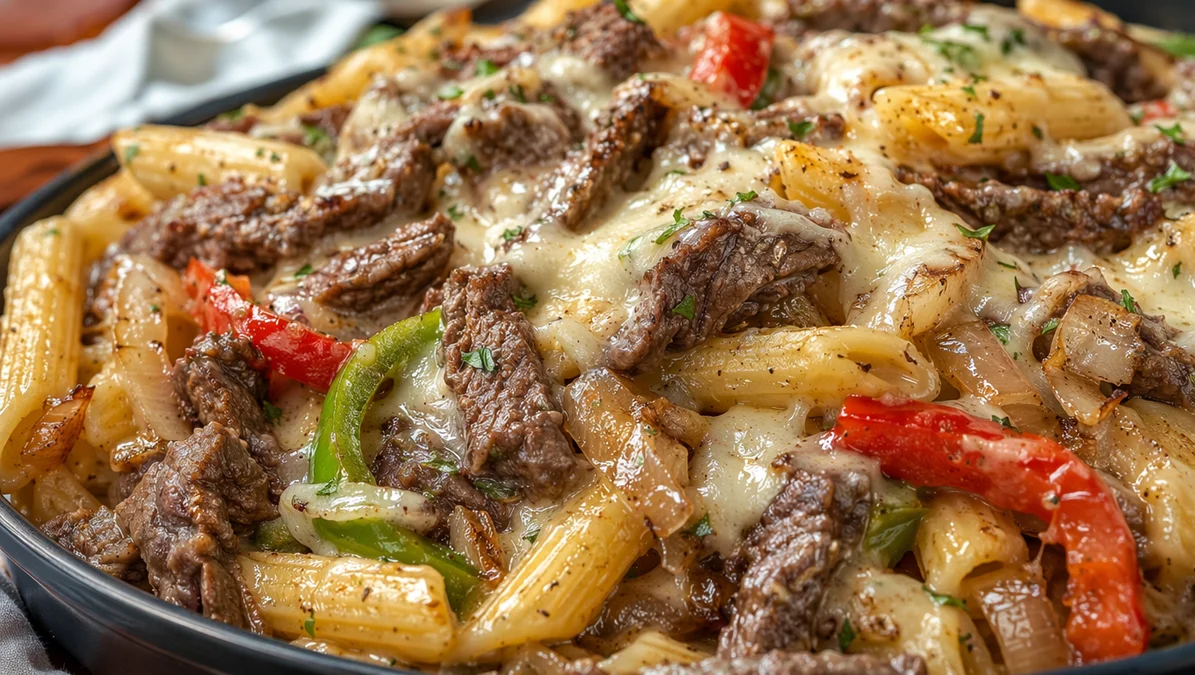
Philly Cheesesteak Pasta is a quick dinner idea that transforms classic cheesesteak flavors into a hearty pasta dish. This easy weeknight dinner features tender beef, caramelized onions, and peppers in…
Ingredients
Instructions
Bring a large pot of salted water to a rolling boil. Add the pasta and cook according to package directions until al dente, usually 10-12 minutes. Reserve about 1 cup of pasta water before draining. The starchy pasta water is liquid gold—it can help loosen the sauce later if it becomes too thick. Drain the pasta and set aside. While the pasta cooks, you can prepare the other components to save time.
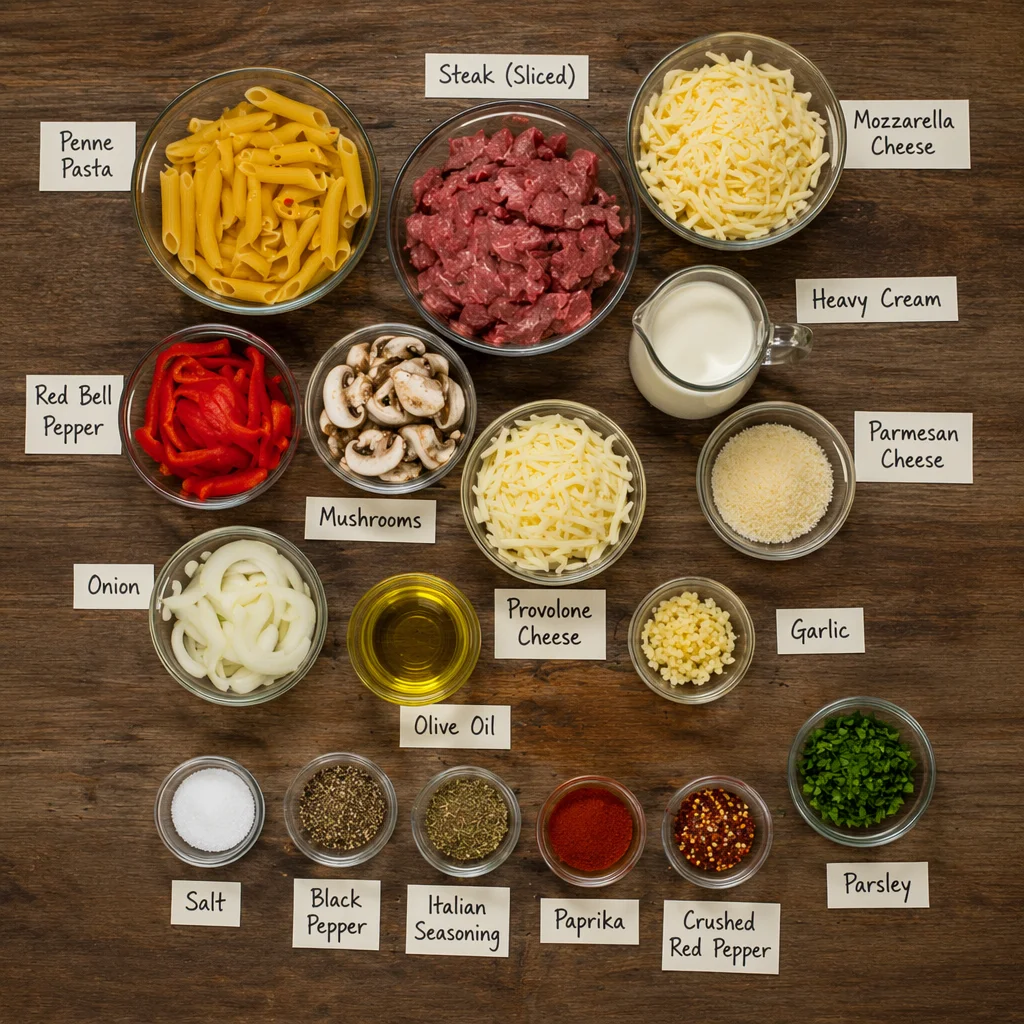
While the pasta boils, season the thinly sliced steak with salt and pepper. In a large skillet or Dutch oven, heat 1 tablespoon of olive oil over high heat until shimmering. Add the steak in a single layer (work in batches if needed to avoid overcrowding). Sear for 1-2 minutes per side until nicely browned but still tender. Transfer the cooked steak to a plate and set aside. Overcrowding the pan would steam the meat instead of searing it, so be patient and give each piece room to develop that deep, savory crust.
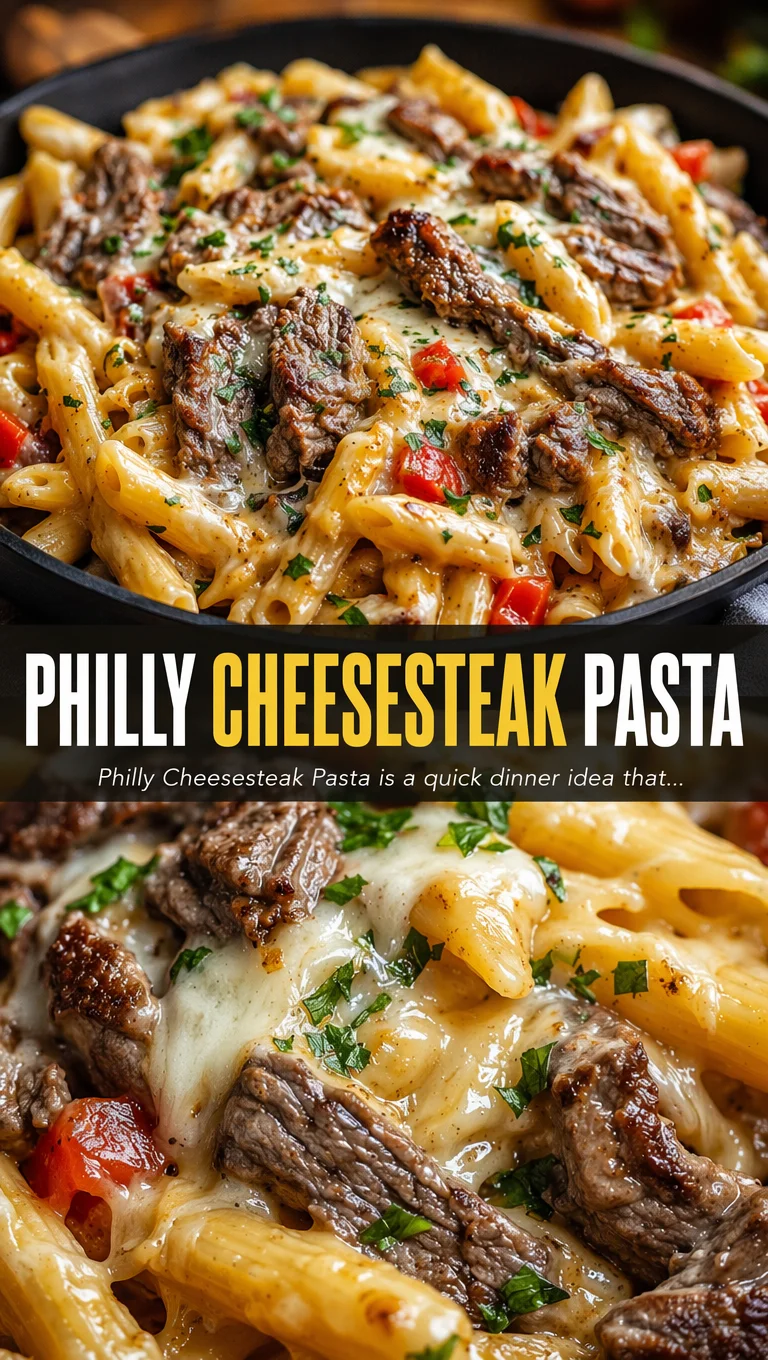
Reduce the heat to medium-high and add the remaining 1 tablespoon olive oil. Add the sliced onion and bell peppers. Sauté for 5-7 minutes, stirring occasionally, until the vegetables are softened and beginning to caramelize. The onions should turn translucent and develop sweet, golden edges. Add the minced garlic and cook for another 30 seconds until fragrant. The aroma of garlic blooming in the oil is your cue to move on to the next step.
Push the vegetables to one side of the skillet and add the butter. Once melted, sprinkle the flour over the butter and whisk continuously for 1 minute to form a roux. This cooks out the raw flour taste and creates a smooth base for the sauce. Gradually pour in the milk and beef broth while whisking constantly to prevent lumps. Bring the mixture to a gentle simmer, then reduce the heat to low. The sauce will thicken as it heats—look for a consistency that coats the back of a spoon.
Add the softened cream cheese and shredded provolone to the sauce. Stir until fully melted and smooth. The cream cheese adds a velvety richness, while provolone delivers that classic Philly cheesesteak tang. Season with salt, pepper, and smoked paprika if using. Taste and adjust seasoning—the cheese sauce should be boldly flavored, as it will coat the pasta and beef.
Return the cooked steak and any accumulated juices to the skillet along with the drained pasta. Toss everything together until evenly coated in the cheese sauce. If the sauce is too thick, add a splash of the reserved pasta water to reach your desired consistency. The starchy water not only thins the sauce but also helps it cling beautifully to every noodle.
Serve immediately in warmed bowls, garnished with fresh chopped parsley for a pop of color and freshness. For an extra indulgent touch, top with additional shredded provolone and broil for 2-3 minutes until bubbly and golden. This final step creates a glorious cheese crust that will have everyone reaching for seconds.
For best results
- For the most tender beef, choose ribeye or sirloin and slice it very thinly against the grain. Partially freezing the steak for 20-30 minutes makes slicing a breeze—you'll get paper-thin slices that cook in seconds and stay juicy. If you're on a budget, flank steak or even pre-sliced stir-fry beef works well; just avoid tough cuts like chuck or round.
- Don't skip the step of reserving pasta water. The starch in that water is a natural thickener and emulsifier that can rescue a sauce that's too thick or help it coat the pasta evenly. Add it a tablespoon at a time until the sauce flows like heavy cream. It's a secret weapon used by Italian grandmothers and professional chefs alike.
- To maximize flavor, use low-sodium beef broth so you can control the saltiness. If you only have regular broth, reduce the added salt by half. The cheese and cream cheese also contribute salt, so always taste before adding more. A pinch of smoked paprika or a dash of Worcestershire sauce can elevate the savory notes without extra sodium.
- For a truly authentic Philly cheesesteak experience, use provolone cheese—it melts beautifully and has that signature tang. However, you can substitute with mozzarella for a milder, stretchier melt, or use white American cheese for a creamier, more nostalgic sauce. Avoid pre-shredded cheese as it contains anti-caking agents that can make the sauce grainy.
- This dish is best enjoyed fresh, but leftovers can be stored in an airtight container in the refrigerator for up to 3 days. To reheat, add a splash of milk or water and warm gently on the stovetop or in the microwave, stirring occasionally. The pasta may absorb some sauce, so don't be shy about adding a little liquid to revive it.
- If you're meal-prepping, cook the pasta al dente and undercook it slightly—it will finish cooking when you reheat it with the sauce. Store the sauce and pasta separately to prevent sogginess. When ready to eat, simply reheat the sauce, toss with the pasta, and enjoy a quick, satisfying meal.
Variations
- Chicken Philly Cheesesteak Pasta: Swap the beef for boneless, skinless chicken thighs or breasts. Slice the chicken thinly and cook until no longer pink, about 4-5 minutes. The rest of the recipe remains the same. This version is slightly leaner and pairs wonderfully with the same cheese sauce and veggies.
- Vegetarian Philly Cheesesteak Pasta: Omit the beef entirely and double the vegetables—use portobello mushrooms, zucchini, and extra bell peppers for a hearty, meaty texture. The umami from the mushrooms will satisfy even carnivores. You can also add a can of drained chickpeas for protein. The cheese sauce is already vegetarian-friendly.
- Spicy Philly Cheesesteak Pasta: Add 1-2 chopped jalapeños or serrano peppers along with the onions and bell peppers. For extra heat, stir in 1/2 teaspoon red pepper flakes or a dash of cayenne pepper with the garlic. Top with pickled jalapeños for a tangy kick that cuts through the richness.
- Low-Carb/Keto Version: Replace the pasta with zucchini noodles (zoodles) or cauliflower florets. Sauté the zoodles for 2-3 minutes until just tender, or roast cauliflower until golden. The cheese sauce is naturally low-carb, making this a perfect keto-friendly comfort meal. Use full-fat cream cheese and heavy cream instead of milk for extra richness.
- Philly Cheesesteak Casserole: Turn this into a baked casserole by combining the cooked pasta, beef, and vegetables in a 9×13-inch baking dish. Pour the cheese sauce over the top, sprinkle with extra provolone, and bake at 375°F (190°C) for 15-20 minutes until bubbly and golden. This is perfect for feeding a crowd or meal prep.
Nutrition
- Calories545 kcal
- Total Fat32g
- Saturated Fat16g
- Cholesterol105mg
- Sodium820mg
- Total Carbohydrates38g
- Dietary Fiber3g
- Sugars8g
- Protein35g