
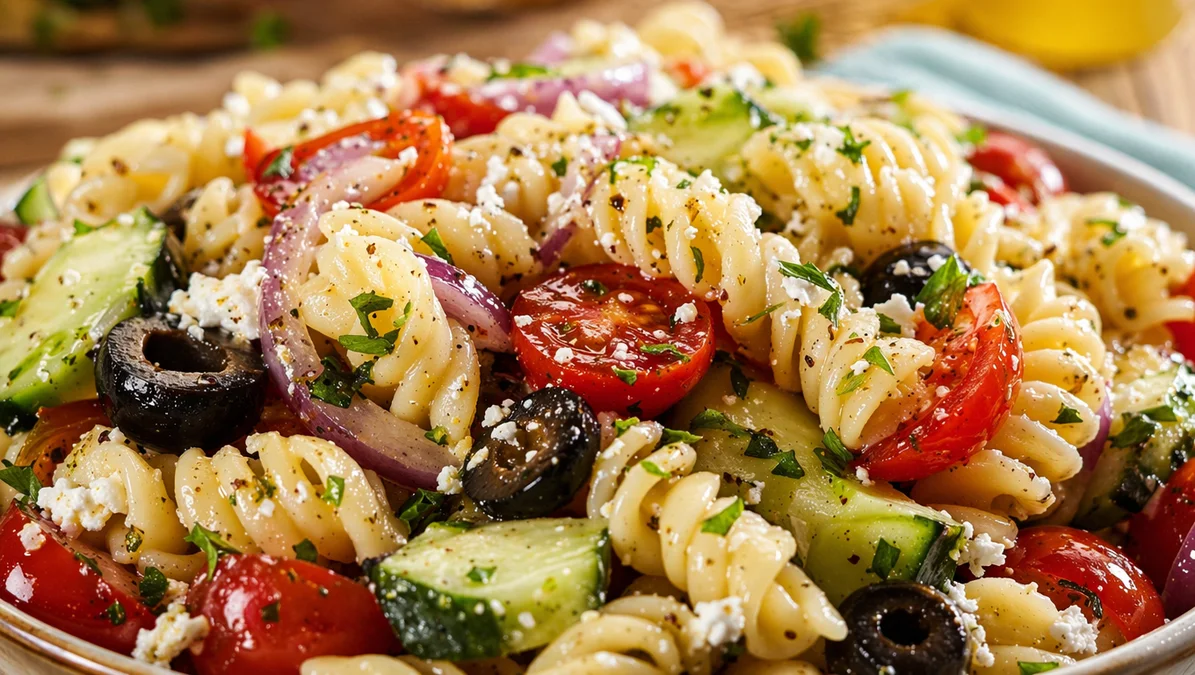
This easy pasta salad recipe is a quick dinner idea perfect for busy nights and summer picnics. With minimal ingredients and a zesty dressing, it's one of the best quick…
Ingredients
Instructions
Bring a large pot of generously salted water (about 1 tablespoon salt per 4 quarts of water) to a rolling boil. The salt is crucial because it seasons the pasta from the inside out, enhancing the overall flavor of the salad. Add the rotini and cook according to package directions until al dente, usually about 8-10 minutes. Al dente means the pasta is tender but still firm to the bite, which is essential for pasta salad because the pasta will continue to absorb dressing and soften slightly as it sits. Overcooked pasta becomes mushy and will not hold up well in the salad. While the pasta cooks, prepare an ice bath by filling a large bowl with cold water and ice cubes. Once the pasta is done, drain it in a colander and immediately plunge it into the ice bath to stop the cooking process. This step is called shocking and it preserves the pasta’s perfect texture. Let it sit in the ice water for about 2 minutes, then drain thoroughly. Toss the cooled pasta with a drizzle of olive oil to prevent sticking and set aside.
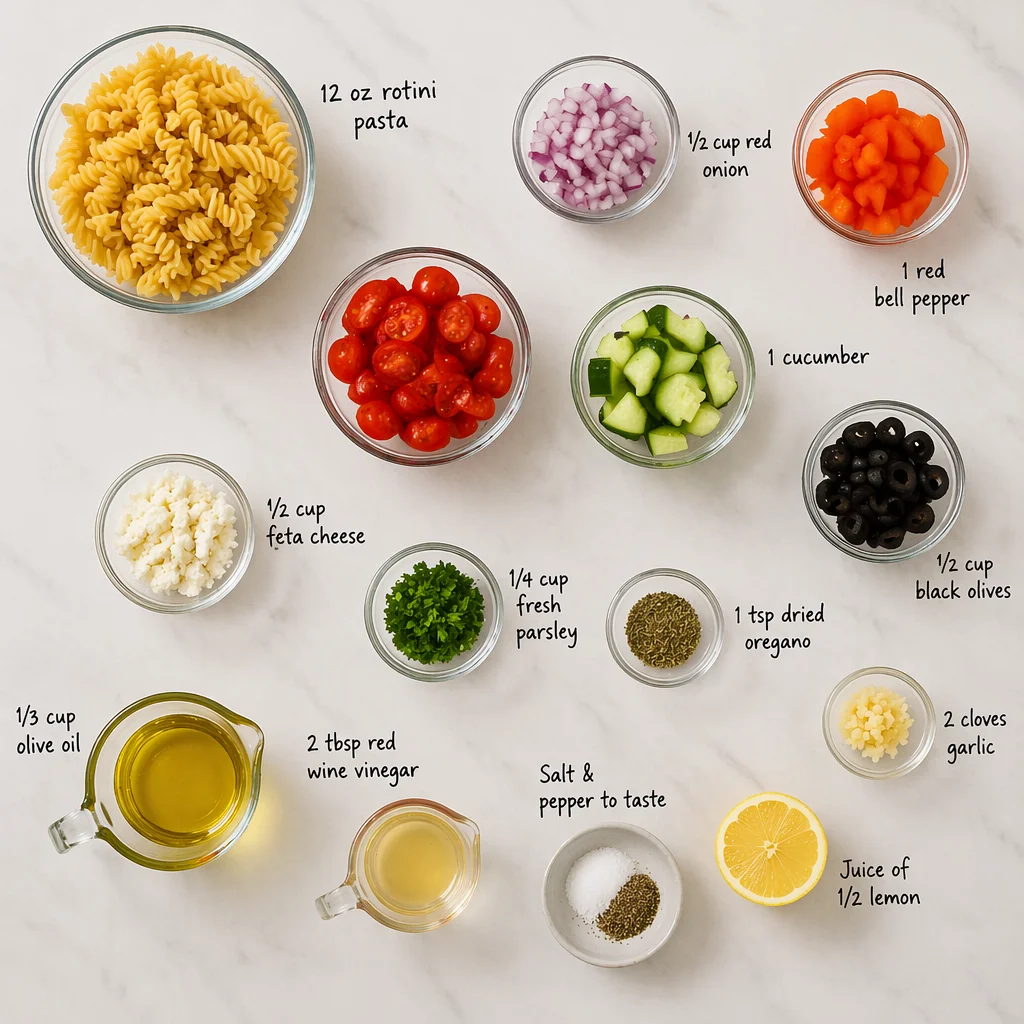
While the pasta cools, prepare the vegetables. Wash the cherry tomatoes and cut each one in half. Halving the tomatoes not only makes them easier to eat but also releases their juices, which will blend beautifully with the dressing. Slice the black olives into rings. If you are using whole pitted olives, simply slice them crosswise. Finely dice the red onion. For a milder onion flavor, you can soak the diced onion in cold water for 10 minutes, then drain before adding to the salad. If you are using cucumber, dice it into small, bite-sized cubes. Peel the cucumber first if the skin is tough or waxed. Chop the fresh parsley leaves finely, discarding the thick stems. Set all the vegetables aside in a large mixing bowl.
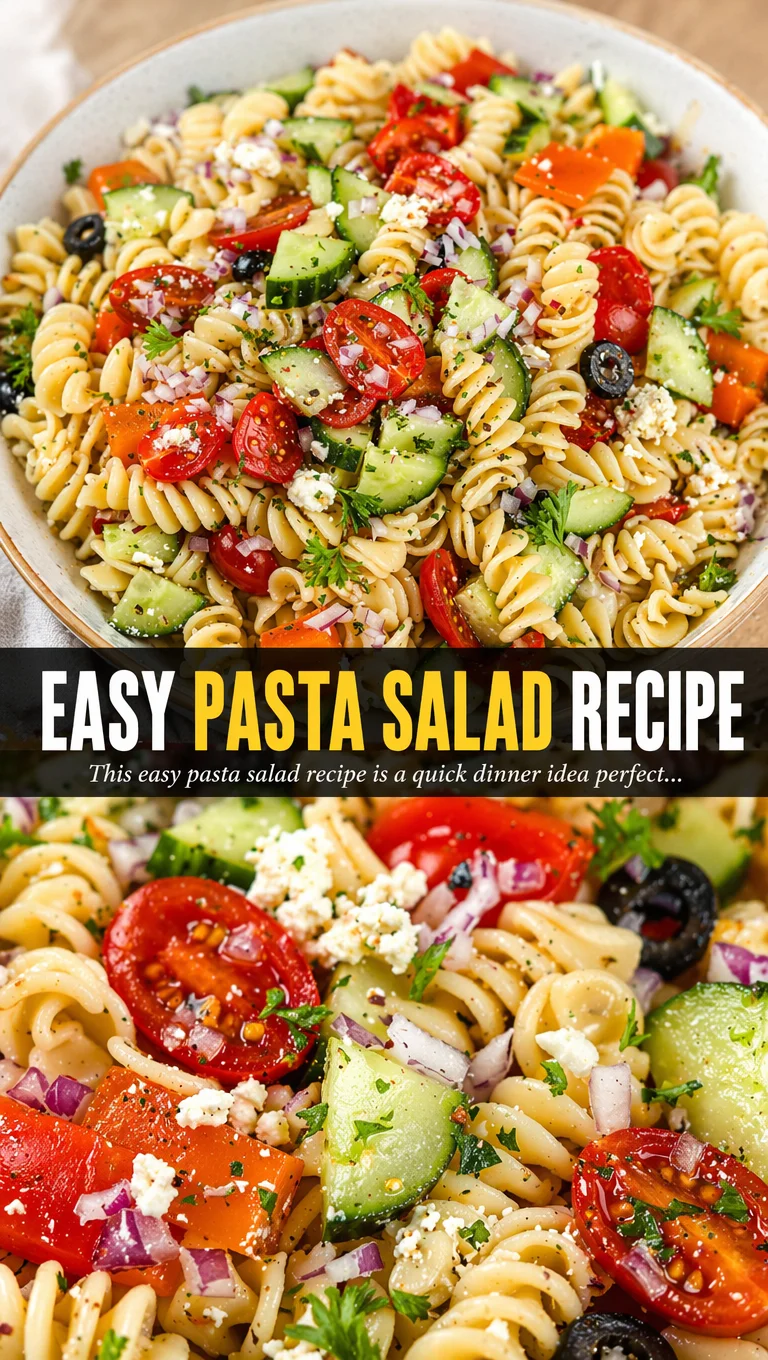
Make the zesty Italian dressing. In a small bowl or a jar with a tight-fitting lid, combine the extra virgin olive oil, red wine vinegar, lemon juice, minced garlic, dried oregano, salt, black pepper, and sugar if using. Whisk vigorously or shake the jar until the dressing is well emulsified and looks slightly creamy. Emulsification means the oil and vinegar are temporarily combined; shaking or whisking creates a temporary emulsion that will coat the pasta evenly. Taste the dressing and adjust the seasoning—it should be tangy and well-seasoned because it will be mellowed by the pasta and vegetables. For best flavor, let the dressing sit for 5-10 minutes to allow the garlic and oregano to infuse.
In the large mixing bowl with the vegetables, add the cooled pasta. Pour the dressing over the top and toss everything together gently but thoroughly, using two large spoons or a spatula. Make sure every piece of pasta and every vegetable is coated with the dressing. The pasta will absorb some of the dressing as it sits, so don’t be shy. If the salad looks dry at this point, you can add a little more olive oil or a splash of vinegar. Cover the bowl with plastic wrap or transfer to an airtight container. Refrigerate for at least 30 minutes to allow the flavors to meld. This resting period is crucial for the best taste; the pasta soaks up the dressing and the vegetables release their juices, creating a harmonious blend. For optimal flavor, make the salad a day ahead—it tastes even better the next day.
Before serving, give the pasta salad a good stir to redistribute the dressing that may have settled at the bottom. Taste and adjust seasoning if needed—you might want a pinch more salt or a squeeze of lemon for brightness. If the salad seems dry after refrigeration, drizzle a little extra olive oil and toss again. Transfer to a serving platter or bowl. If desired, sprinkle with grated Parmesan cheese and a few extra parsley leaves for garnish. Serve chilled or at room temperature. This pasta salad is perfect as a side dish for grilled meats, a standalone lunch, or a potluck contribution. It keeps well in the refrigerator for up to 5 days, making it an excellent make-ahead option.
For best results
- Choosing the right pasta shape is key for pasta salad. Short, sturdy shapes like rotini, fusilli, farfalle, or penne are ideal because they have nooks and crannies that trap dressing and bits of vegetables. Avoid long, thin pastas like spaghetti or angel hair, which tend to clump and are difficult to toss evenly. Tri-color rotini adds visual appeal and a slight flavor variation from the spinach and tomato in the colored pasta, but plain semolina rotini works just as well. Always cook the pasta to al dente, as it will continue to soften slightly when mixed with the dressing.
- To prevent your pasta salad from becoming watery, make sure to drain the pasta very well after shocking it in ice water. Excess water will dilute the dressing and make the salad soggy. After draining, you can spread the pasta on a baking sheet lined with a clean kitchen towel to absorb any remaining moisture. Also, if you are adding cucumber, consider salting the diced cucumber and letting it sit for 10 minutes, then patting it dry to remove excess moisture. This step ensures your salad stays crisp and flavorful.
- The dressing is the soul of this pasta salad. For the best flavor, use a high-quality extra virgin olive oil and a good red wine vinegar. You can also experiment with other vinegars like white balsamic, champagne, or apple cider vinegar. Fresh lemon juice adds brightness that bottled juice cannot match. If you prefer a creamier dressing, you can whisk in 2 tablespoons of mayonnaise or Greek yogurt. The sugar is optional but helps balance the acidity; if your vinegar is particularly tart, a pinch of sugar rounds out the flavors beautifully.
- This salad is highly customizable to what you have on hand. Feel free to add other vegetables like bell peppers (diced), artichoke hearts (quartered), sun-dried tomatoes (chopped), or roasted red peppers. For protein, add diced salami, pepperoni, cooked chicken, chickpeas, or cubed mozzarella. Fresh herbs like basil, dill, or chives can replace or complement the parsley. The key is to keep the total volume of add-ins roughly equal to the pasta so the salad remains balanced.
- Storage is a breeze with this pasta salad. Keep it in an airtight container in the refrigerator for up to 5 days. Do not freeze, as the texture of the vegetables and pasta will suffer. When storing, you might notice that the pasta absorbs some of the dressing over time. To revive the salad, simply add a splash of olive oil and a splash of vinegar, then toss well. If you are making the salad for a picnic or outdoor event, pack it in a cooler and serve within 2 hours of removing from the fridge to ensure food safety.
Variations
- For a Mediterranean twist, replace the black olives with Kalamata olives and add 1/2 cup crumbled feta cheese, 1/4 cup chopped sun-dried tomatoes, and a handful of fresh baby spinach. Use a dressing made with lemon juice, olive oil, dried oregano, and a touch of Dijon mustard. This version pairs beautifully with grilled lamb or chicken souvlaki.
- To make this pasta salad vegan and even more nutritious, omit the Parmesan cheese and add 1 can (15 oz) of drained and rinsed chickpeas for protein and fiber. You can also toss in some toasted pine nuts or walnuts for crunch. For the dressing, use a vegan-friendly sugar and ensure the vinegar is not processed with animal products. This version is hearty enough to be a main dish.
- For a creamy pasta salad, replace the vinaigrette with a creamy dressing made from 1/2 cup mayonnaise, 1/4 cup plain Greek yogurt, 2 tablespoons red wine vinegar, 1 tablespoon lemon juice, 1 teaspoon garlic powder, and salt and pepper to taste. This style is reminiscent of classic American macaroni salad and pairs well with BBQ dishes. Add diced celery and shredded carrot for extra crunch.
- If you prefer a gluten-free option, use gluten-free pasta made from rice, corn, or quinoa. Be careful not to overcook gluten-free pasta as it can become mushy quickly. Follow the package instructions and shock it in ice water immediately. All other ingredients are naturally gluten-free, but always check labels on olives and vinegar to ensure no cross-contamination.
- For a spicy version, add 1/2 teaspoon red pepper flakes or a diced jalapeño (seeds removed) to the dressing. You can also include 1/4 cup chopped pepperoncini or banana peppers for a tangy heat. This variation is great for those who like a little kick and pairs well with grilled sausages or spicy grilled chicken.
Nutrition
- Calories285 kcal
- Total Fat15g
- Saturated Fat2g
- Cholesterol0mg
- Sodium520mg
- Total Carbohydrates32g
- Dietary Fiber2g
- Sugars3g
- Protein6g