
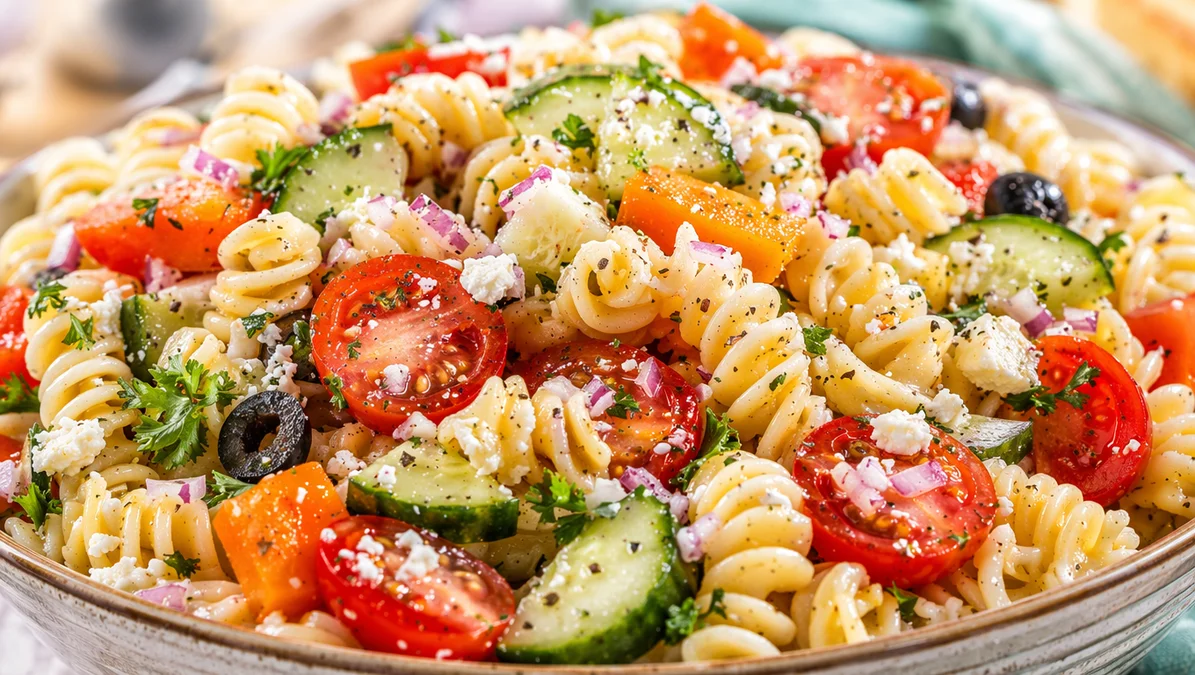
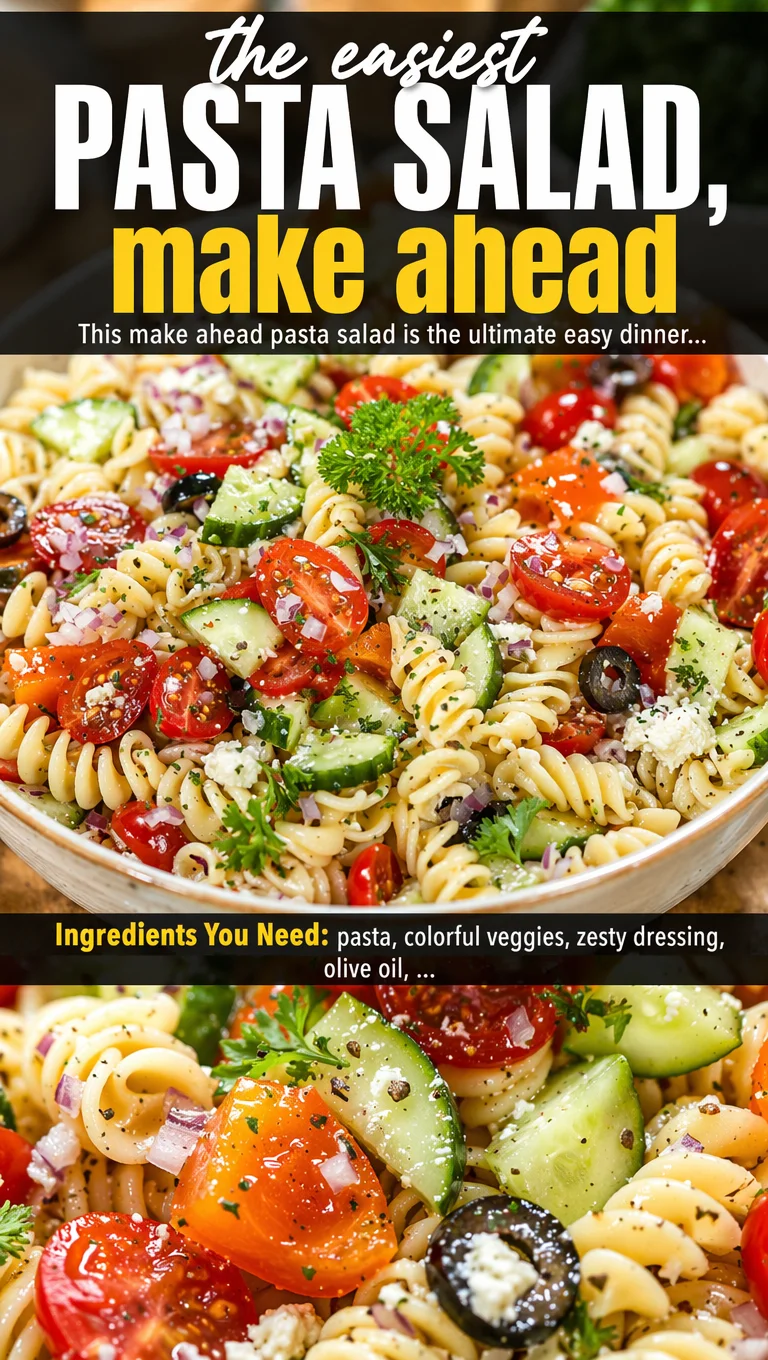
This make ahead pasta salad is the ultimate easy dinner recipe for busy weeknights and summer gatherings. Packed with colorful veggies and a zesty dressing, it's a quick and satisfying…
Ingredients
Instructions
Bring a large pot of salted water to a rolling boil. Use about 1 tablespoon of salt per 4 quarts of water—this is your only chance to season the pasta from within. Add 1 pound of short pasta such as rotini, fusilli, or farfalle. Cook according to package directions until al dente, typically 8-10 minutes. Al dente pasta is essential for a make-ahead salad because it will continue to absorb dressing and soften over time; starting with slightly firm pasta ensures it won’t turn mushy. Stir occasionally to prevent sticking. While the pasta cooks, prepare an ice bath in a large bowl (cold water and ice cubes). Once pasta is done, drain and immediately transfer to the ice bath to stop the cooking process. Swirl for about 30 seconds until cooled, then drain thoroughly. Tossing with a drizzle of olive oil prevents clumping. Set aside.
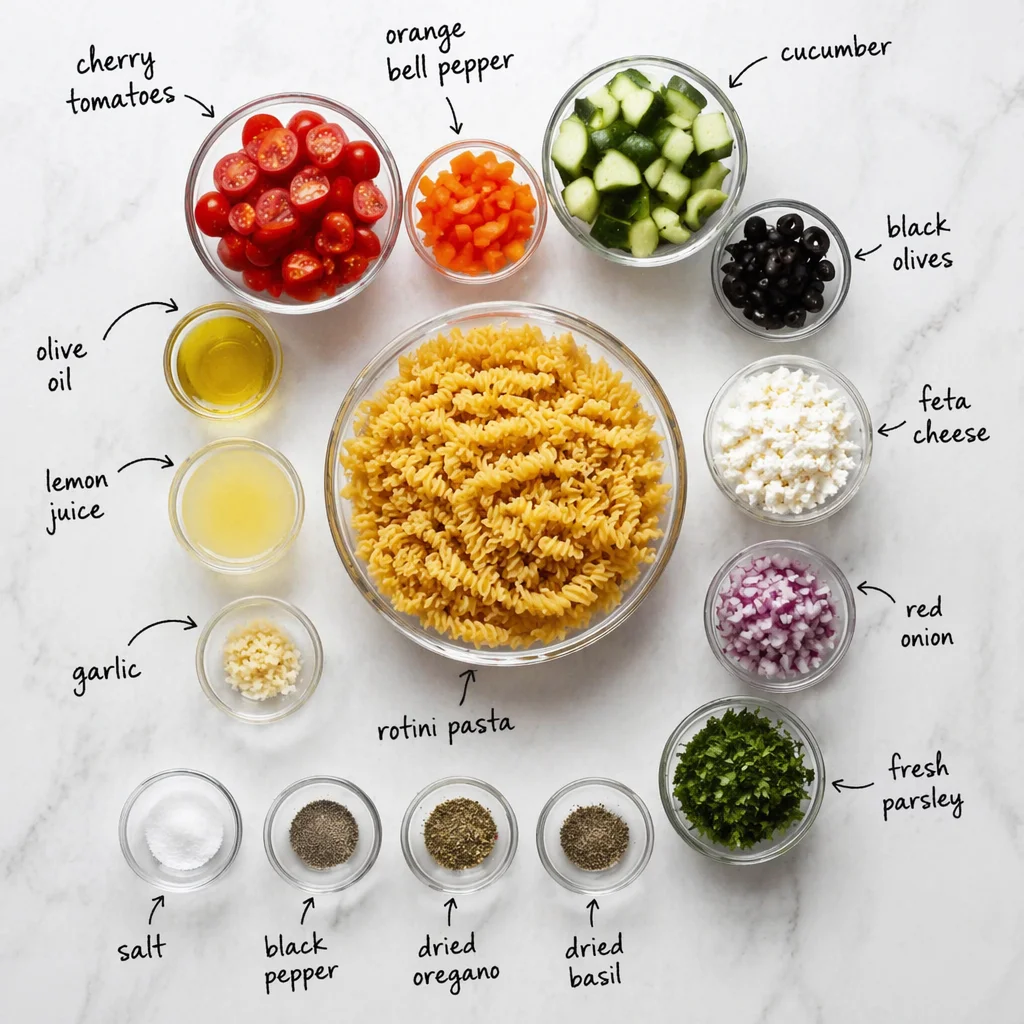
While the pasta cools, prepare the vegetables. Halve 1 cup of cherry tomatoes—choose firm, ripe tomatoes for the best texture and sweetness. Dice 1 medium cucumber into bite-sized pieces; if the cucumber has large seeds, scoop them out with a spoon to prevent excess water from diluting the dressing. Dice 1 bell pepper (any color; red, yellow, or orange add sweetness, green adds a sharper note) into similar-sized pieces. Finely chop 1/2 cup red onion—soak the chopped onion in cold water for 5 minutes if you prefer a milder flavor. Slice 1/2 cup black olives (canned or jarred, drained). Chop 1/4 cup fresh parsley. Place all prepared vegetables in a large mixing bowl.
Make the zesty dressing. In a small bowl or jar, combine 1/2 cup extra-virgin olive oil, 1/4 cup red wine vinegar, 2 tablespoons lemon juice, 1 minced garlic clove, 1 teaspoon dried oregano, 1/2 teaspoon salt, and 1/4 teaspoon black pepper. Whisk vigorously or shake the jar until emulsified. Taste and adjust seasoning—you want a bright, tangy dressing that will coat the pasta and veggies. The acidity from the vinegar and lemon juice not only adds flavor but also helps preserve the salad, making it perfect for make-ahead meals.
Add the cooled pasta to the bowl with the vegetables. Pour the dressing over the top and toss gently but thoroughly using two large spoons or a spatula. Make sure every piece of pasta and every vegetable is coated. If using feta cheese, fold it in now. The salad will look a bit dry at first, but as it sits, the pasta will absorb the dressing and the flavors will meld. Cover the bowl with plastic wrap or transfer to an airtight container. Refrigerate for at least 30 minutes, or up to 24 hours. The longer it rests, the more flavorful it becomes. Before serving, give it a good stir and adjust salt, pepper, or a splash of vinegar if needed.
To serve, transfer the pasta salad to a serving platter or bowl. Garnish with additional fresh parsley or a sprinkle of oregano. This salad is delicious cold or at room temperature. It pairs wonderfully with grilled chicken, fish, or as a standalone light dinner. Store leftovers in an airtight container in the refrigerator for up to 5 days. The pasta will continue to soften, but the flavors will deepen. If the salad seems dry after refrigeration, add a tablespoon of olive oil or a squeeze of lemon before serving.
For best results
- Choose the right pasta shape: Short, sturdy pasta shapes like rotini, fusilli, farfalle, or penne are ideal because their nooks and crannies hold onto the dressing and small vegetable pieces. Avoid long, delicate pasta like spaghetti, which can become clumpy and difficult to toss. For a gluten-free option, use chickpea or lentil pasta; cook it slightly less than al dente as gluten-free pasta tends to soften faster in dressing.
- Salt your pasta water generously: Pasta water should taste like the sea. This is the primary opportunity to season the pasta itself. Undersalted water results in bland pasta that no amount of dressing can fully fix. Use about 1 tablespoon of kosher salt per 4 quarts of water. The salt is absorbed during cooking and enhances the overall flavor of the salad.
- Cool pasta quickly and thoroughly: After draining, immediately plunge the pasta into an ice bath or rinse with cold water. This stops the carryover cooking and prevents the pasta from becoming mushy. Drain very well—excess water will water down the dressing. Toss with a little olive oil to keep the pieces separate. For best results, spread the cooled pasta on a baking sheet to cool completely before mixing.
- Dress the salad while the pasta is still slightly warm: If you plan to serve the salad immediately, tossing warm pasta with the dressing allows it to absorb more flavor. For make-ahead, it's fine to cool completely first. However, always taste and adjust the dressing right before serving—refrigeration dulls flavors, so a final squeeze of lemon or pinch of salt can revive it.
- Let the salad rest for at least 30 minutes: This resting time is crucial for flavor development. The pasta absorbs the dressing, the vegetables release their juices, and the garlic and herbs meld together. For best results, refrigerate overnight. The salad will taste significantly better the next day. Just remember to stir well and add a little extra oil or vinegar if it seems dry.
- Customize the vegetables based on season: In summer, use fresh corn kernels, zucchini, or basil. In fall, add roasted butternut squash or kale. You can also add protein like grilled chicken, chickpeas, or salami to make it a complete meal. The key is to keep the total vegetable volume roughly equal to the pasta volume so the salad stays balanced.
- Storage and food safety: This pasta salad can be stored in the refrigerator for up to 5 days. Because it contains acidic dressing and no mayonnaise, it's safe for picnics and outdoor gatherings. However, if you add dairy like feta or mozzarella, consume within 3 days. Always keep the salad chilled below 40°F (4°C) when serving outdoors, and do not leave it at room temperature for more than 2 hours.
Variations
- Mediterranean Twist: Replace the red wine vinegar with balsamic vinegar and add 1/2 cup of chopped sun-dried tomatoes (rehydrated if dry), 1/2 cup of artichoke hearts (quartered), and 1/4 cup of toasted pine nuts. Swap the parsley for fresh basil. This version pairs beautifully with grilled lamb or chicken and brings a rich, tangy depth to the salad.
- Protein-Packed Version: Add 1 cup of cooked chickpeas (rinsed and drained) or 1 cup of diced grilled chicken breast for a high-protein meal. For a vegetarian protein boost, toss in 1/2 cup of crumbled firm tofu marinated in the dressing. Increase the lemon juice and oregano slightly to complement the added protein. This turns the side dish into a hearty main course.
- Creamy Dressing Option: For those who prefer a creamy pasta salad, replace the olive oil and vinegar with 1/2 cup of Greek yogurt, 2 tablespoons of mayonnaise, 1 tablespoon of lemon juice, and 1 clove of garlic. Add a splash of milk to thin if needed. This version is tangy and rich, similar to a classic creamy pasta salad, but still make-ahead friendly. Note that the salad will be best within 2-3 days due to the dairy.
- Vegan & Gluten-Free Adaptation: Use gluten-free pasta (brown rice, quinoa, or lentil-based) and ensure all other ingredients are plant-based. Replace feta with vegan feta or omit. The dressing is already vegan. This adaptation is perfect for those with dietary restrictions and still delivers on flavor and texture. The chickpea or lentil pasta adds extra protein and fiber.
- Spicy Southwest Style: Add 1/2 cup of black beans (rinsed), 1/2 cup of corn kernels (fresh or thawed frozen), 1 diced jalapeño (seeds removed for less heat), and a teaspoon of cumin to the dressing. Replace the red wine vinegar with lime juice and add a pinch of cayenne. Garnish with fresh cilantro. This version is vibrant, smoky, and slightly spicy—great for taco nights or as a side for grilled meats.
Nutrition
- Calories285 kcal
- Total Fat16g
- Saturated Fat2.5g
- Cholesterol0mg
- Sodium320mg
- Total Carbohydrates32g
- Dietary Fiber3g
- Sugars5g
- Protein6g