
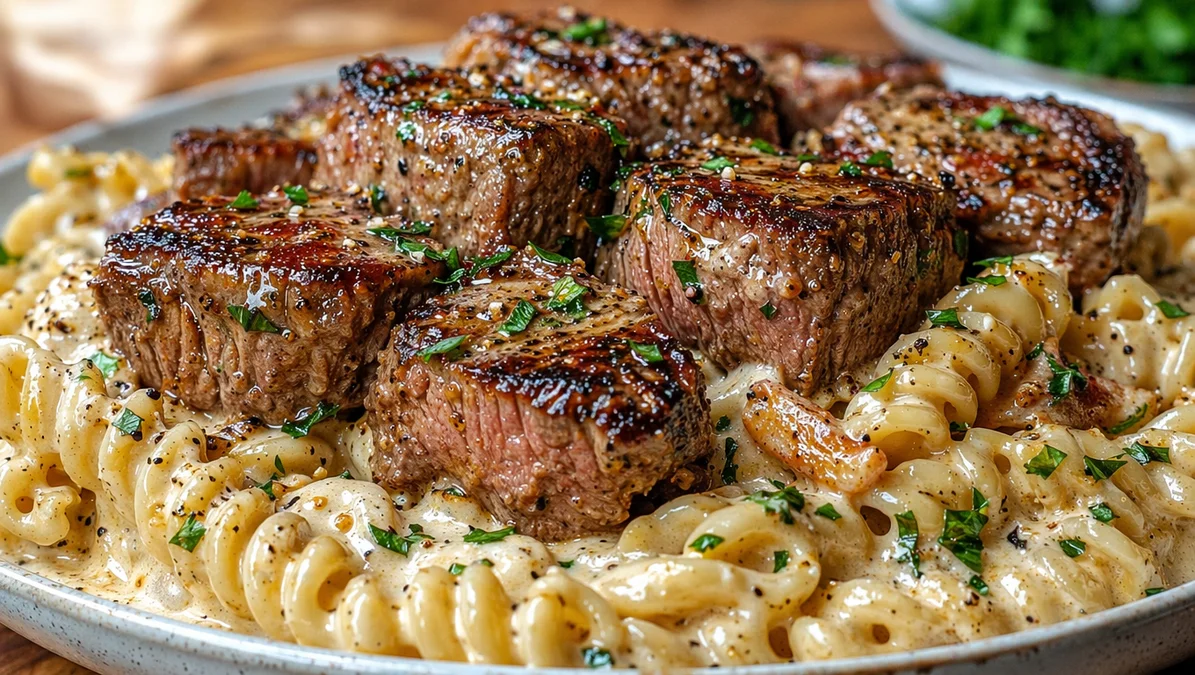
Juicy steak bites meet creamy garlic Alfredo pasta in this quick 30-minute dinner. Perfect for busy weeknights, this easy recipe is packed with flavor and ready in no time.
Ingredients
Instructions
Begin by bringing a large pot of generously salted water to a rolling boil. The water should taste like the sea — this is your only chance to season the pasta from within. Add the fettuccine and cook according to package directions until al dente, typically 8-10 minutes. Reserve about 1/4 cup of the starchy pasta water before draining; this liquid gold will help emulsify your sauce later. Drain the pasta and set aside, tossing with a tiny drizzle of olive oil to prevent sticking.
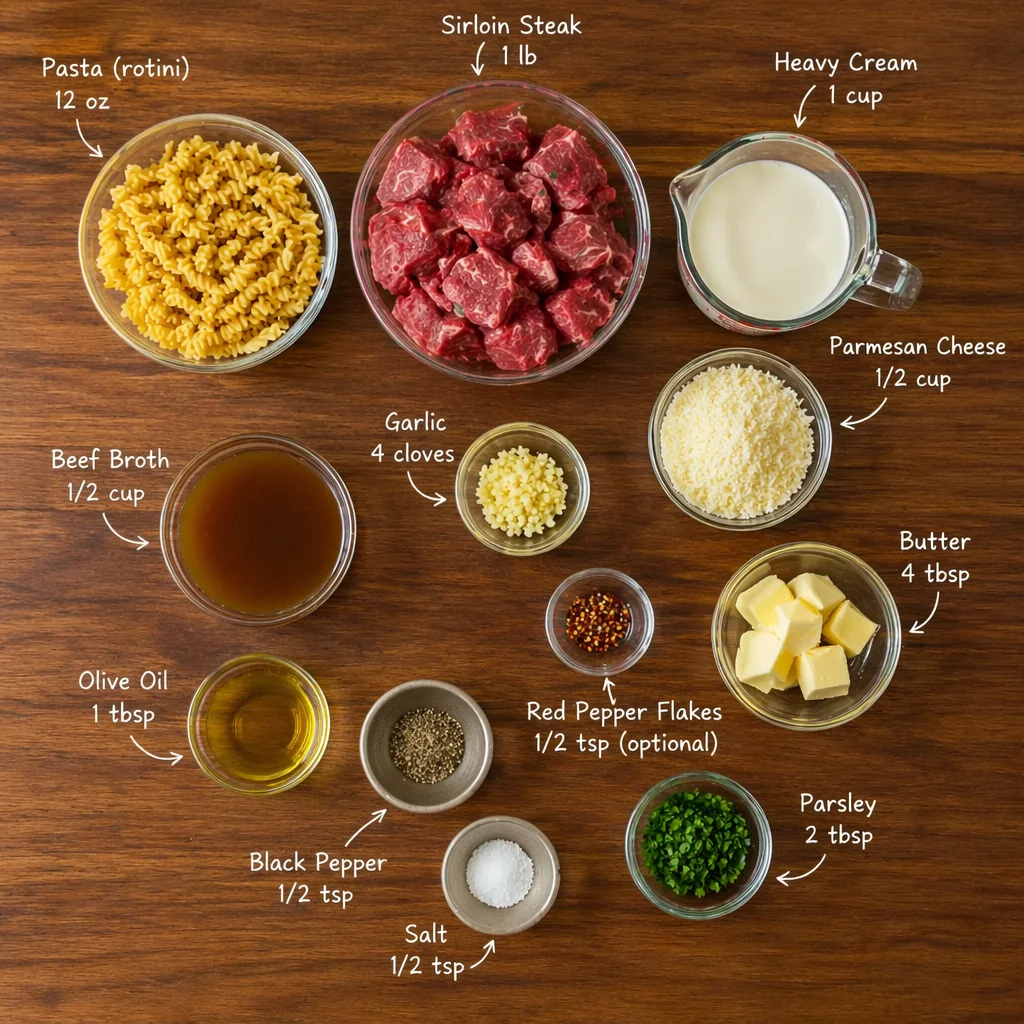
While the pasta cooks, pat the steak cubes dry with paper towels. Moisture is the enemy of a good sear — any surface moisture will steam the meat instead of browning it. Season the cubes generously with salt, black pepper, and Cajun seasoning. Toss to coat evenly. The Cajun seasoning adds a smoky, slightly spicy kick that complements the creamy sauce beautifully. Let the steak rest at room temperature for 5-10 minutes to take the chill off; this promotes even cooking.
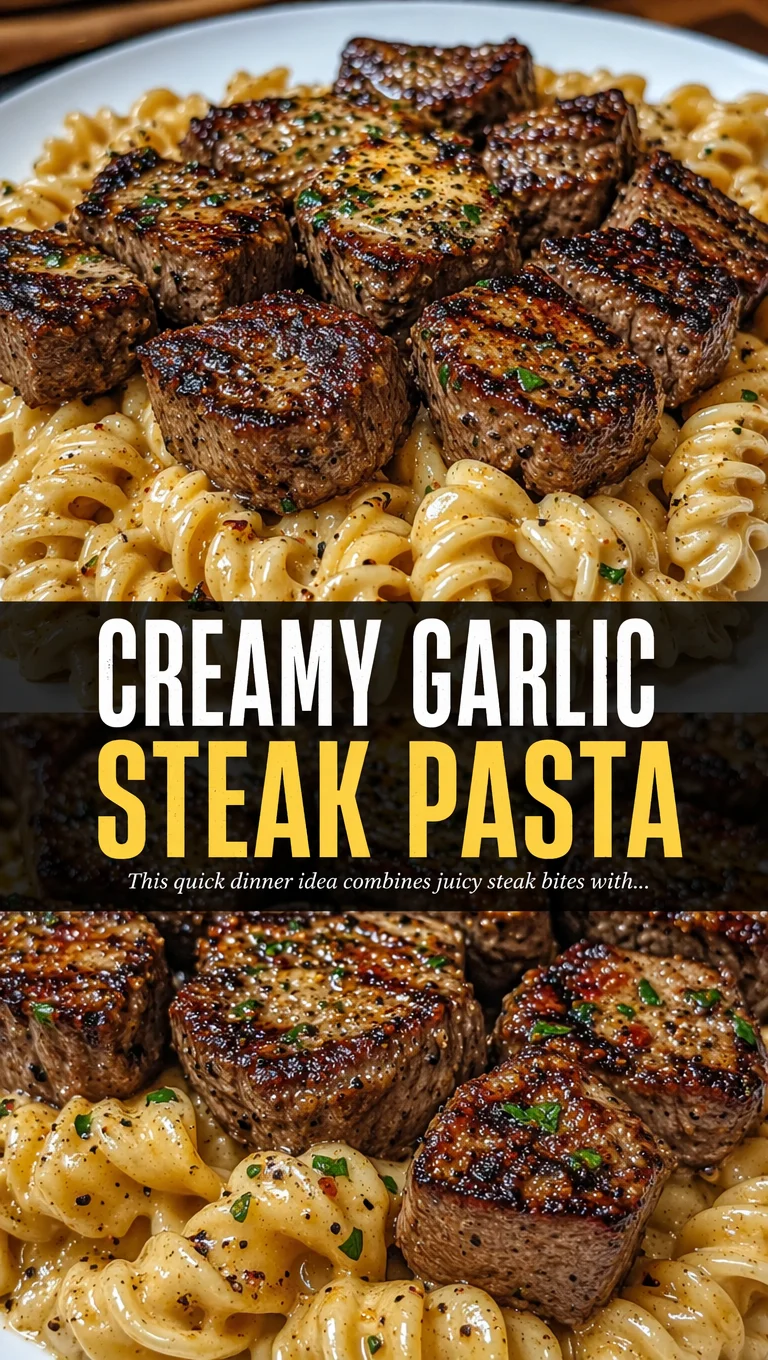
Heat a large, heavy-bottomed skillet (cast iron is ideal) over medium-high heat until it’s smoking hot. Add the olive oil and 1 tablespoon of butter, swirling to coat. Carefully add the steak cubes in a single layer — do not overcrowd the pan, or the temperature will drop and the meat will steam. Sear the steak bites for 2-3 minutes per side, without moving them, until a deep golden-brown crust forms. Use tongs to flip. The internal temperature should reach 130°F (54°C) for medium-rare. Remove the steak from the skillet and set aside on a plate; do not wipe the pan clean — those browned bits are pure flavor.
Reduce the heat to medium-low. Add the remaining 2 tablespoons of butter to the skillet. Once melted, add the minced garlic. Sauté for about 30 seconds, stirring constantly, until fragrant. Be careful not to burn the garlic — it turns bitter quickly. The sizzling sound should be gentle, not aggressive. The aroma should be intoxicating, filling your kitchen with the promise of a luxurious sauce.
Pour in the heavy cream, stirring to scrape up all the browned bits from the bottom of the pan. This deglazing step infuses the sauce with deep, savory flavor. Bring the cream to a gentle simmer, then reduce the heat to low. Stir in the grated Parmesan cheese until fully melted and the sauce is smooth and creamy. If the sauce seems too thick, add a splash of the reserved pasta water to loosen it. Taste and adjust seasoning with salt and pepper. The sauce should coat the back of a spoon — rich, velvety, and luscious.
Add the cooked pasta to the skillet, tossing with tongs to coat every strand in the creamy garlic sauce. Let the pasta soak up the sauce for 1-2 minutes over low heat, allowing the flavors to meld. If the sauce thickens too much, add a little more pasta water. Finally, return the seared steak bites to the pan, gently folding them in. Be careful not to overcook the steak — you just want to warm it through. Serve immediately, garnished with fresh parsley and extra Parmesan if desired. The contrast between the tender, juicy steak and the silky pasta is pure magic.
For best results
- Choosing the right steak is crucial for this dish. Sirloin is a great balance of tenderness and flavor without breaking the bank, but ribeye or New York strip will yield even more buttery, melt-in-your-mouth results. Look for steaks with good marbling — those thin white streaks of fat render during cooking, basting the meat from within and ensuring every bite is juicy. Avoid lean cuts like tenderloin, which can dry out quickly when cut into small pieces.
- Patting the steak dry before seasoning is a step you absolutely cannot skip. Moisture creates steam, and steam prevents browning. The Maillard reaction — that beautiful golden crust — only occurs at temperatures above 300°F (150°C), and water boils at 212°F (100°C). So any surface water will keep the meat below that threshold until it evaporates. Use paper towels to blot the cubes thoroughly, then season immediately.
- Don't skip the pasta water! The starchy water is a secret weapon for perfect pasta sauces. It contains dissolved starches that help emulsify the sauce, creating a silky, cohesive coating that clings to every strand. Add it a tablespoon at a time until the sauce reaches your desired consistency. The salt in the water also seasons the sauce from within, making every bite perfectly balanced.
- For the best sear, use a cast-iron skillet or stainless steel pan. Nonstick pans are not ideal for high-heat searing because they can't reach the temperatures needed for a good crust and may release harmful fumes. Cast iron retains heat beautifully and gives you that restaurant-quality sear. If using stainless steel, be sure to preheat the pan thoroughly — a drop of water should dance across the surface before you add the oil.
- Let the steak rest after searing. When you cook meat, the juices are pushed toward the center. Resting allows them to redistribute evenly throughout the meat, so every bite is moist and flavorful. If you cut into the steak immediately, those juices will run out onto the plate, leaving dry meat behind. A 5-minute rest on a warm plate is sufficient for steak bites.
- Freshly grate your Parmesan cheese from a block. Pre-shredded cheese often contains anti-caking agents like cellulose, which prevent it from melting smoothly. For a silky, lump-free sauce, always grate your own. Use a microplane or the fine side of a box grater. The cheese should melt into the cream almost instantly, creating a cohesive sauce without any grittiness.
Variations
- For a lighter version, substitute the heavy cream with half-and-half or a mixture of milk and a tablespoon of flour (to thicken). The sauce will be less rich but still flavorful. You can also use Greek yogurt, but be careful not to boil it, or it may curdle. Stir it in at the very end off the heat.
- Make it gluten-free by using your favorite gluten-free pasta. Brown rice pasta or chickpea pasta work well. Be sure to cook it al dente and reserve extra pasta water, as gluten-free pasta tends to absorb more liquid. The sauce itself is naturally gluten-free as long as you skip any flour thickeners.
- Add vegetables for a more balanced meal. Sautéed mushrooms, spinach, or sun-dried tomatoes are excellent additions. For mushrooms, cook them in the skillet after removing the steak, adding a little extra butter, until they release their moisture and turn golden. Stir in a handful of fresh spinach at the end of the sauce step and let it wilt before adding the pasta.
- Switch up the protein: chicken breast or thighs, shrimp, or even firm tofu work beautifully. For chicken, cut into bite-sized pieces and cook similarly to the steak, adjusting time as needed. Shrimp only needs 2-3 minutes total. For tofu, press it dry, cube, and pan-fry until crispy before adding to the sauce.
- Experiment with different flavor profiles. Swap the Cajun seasoning for Italian herbs (oregano, basil, thyme) or a pinch of red pepper flakes for heat. You can also add a splash of white wine or chicken broth to the pan after deglazing for extra depth. For a smoky twist, use smoked paprika instead of Cajun seasoning.
- For a dairy-free version, use full-fat coconut cream instead of heavy cream and a dairy-free butter alternative. The coconut flavor will subtly change the profile, but it pairs surprisingly well with garlic and steak. Use nutritional yeast in place of Parmesan for a cheesy flavor without dairy.
Nutrition
- Calories685 kcal
- Total Fat38g
- Saturated Fat20g
- Cholesterol165mg
- Sodium720mg
- Total Carbohydrates48g
- Dietary Fiber2g
- Sugars4g
- Protein42g