
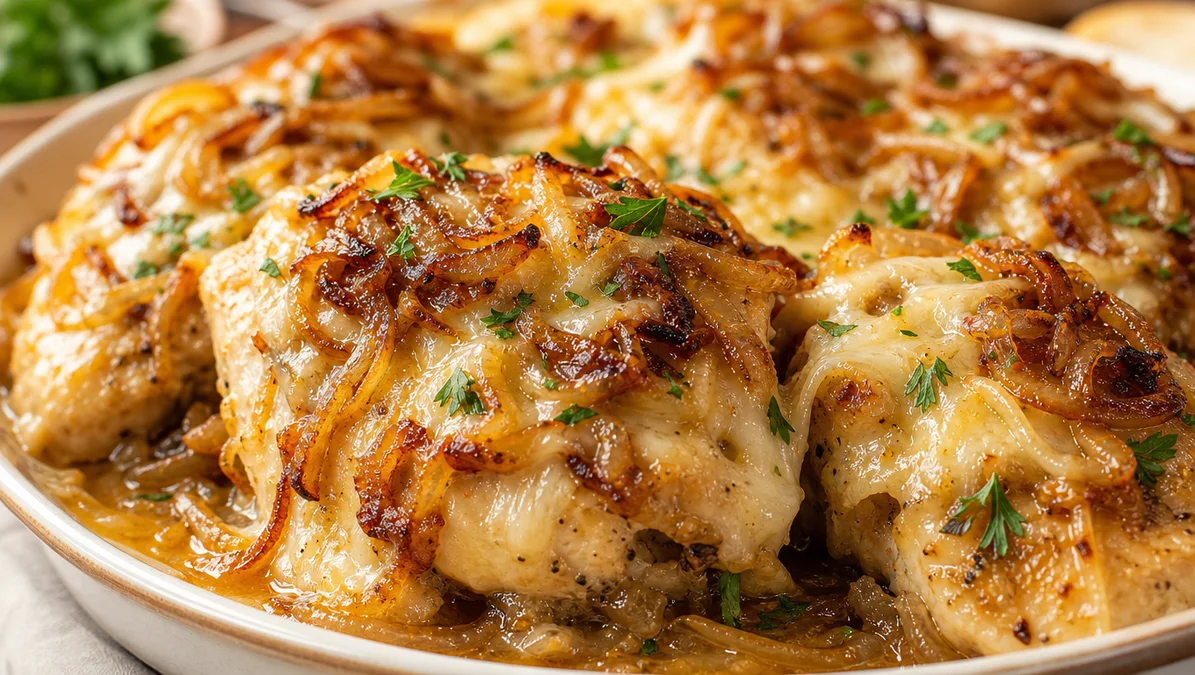
This Caramelized Onion Chicken Dinner delivers rich French onion flavor with juicy chicken, sweet caramelized onions, and melted cheese. An easy weeknight dinner ready in under an hour.
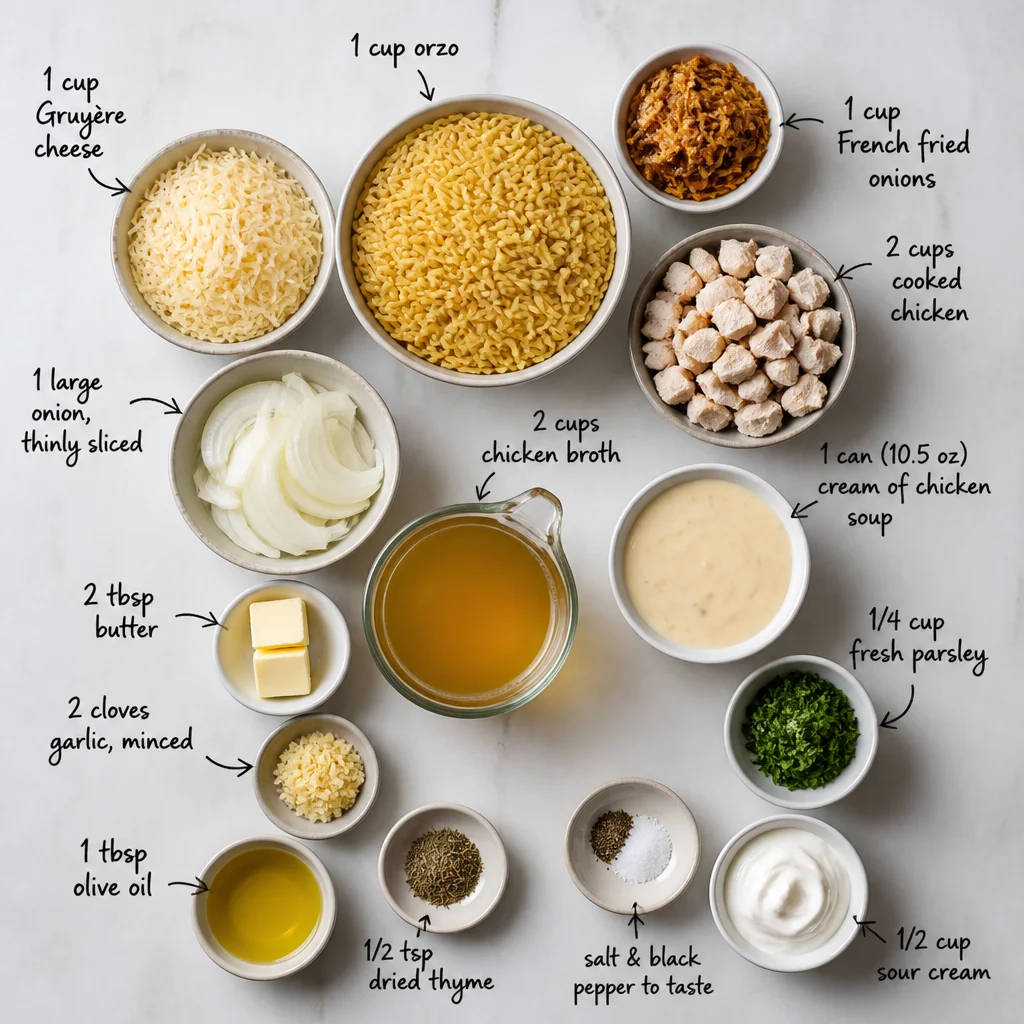
Ingredients
Instructions
Preheat your oven to 375°F (190°C). Season both sides of the chicken breasts with salt, pepper, and garlic powder. This simple seasoning enhances the natural flavor of the chicken and complements the sweet, savory onions. Let the chicken sit at room temperature for about 10 minutes while you prepare the onions—this helps the chicken cook more evenly. Meanwhile, in a large oven-safe skillet (preferably cast iron or stainless steel), heat 1 tablespoon of olive oil over medium-high heat until shimmering. Carefully place the chicken breasts in the skillet and sear for 4–5 minutes per side, until golden brown. The chicken doesn’t need to be cooked through at this point; we’re just building a flavorful crust. Transfer the seared chicken to a plate and set aside. The fond (brown bits) left in the skillet is pure flavor gold—do not discard it.
Reduce the heat to medium and add the remaining 1 tablespoon of olive oil and the butter to the skillet. Once the butter has melted, add the thinly sliced onions. Stir to coat the onions in the fat and scrape up any browned bits from the bottom of the pan—this deglazes the skillet and incorporates all that chicken flavor into the onions. Cook the onions, stirring occasionally, for about 15–20 minutes, until they are deeply caramelized and soft. Patience is key here: if the onions start to brown too quickly, reduce the heat to medium-low. You want them to turn a rich amber color, not burn. The natural sugars in the onions will caramelize, creating a sweet, savory base for the dish. If the skillet looks dry, add a splash of chicken broth or water to prevent sticking.

Once the onions are beautifully caramelized, sprinkle the dry onion soup mix over the onions and stir to combine. This concentrated seasoning amplifies the French onion flavor and adds depth. Add the orzo pasta and stir for about 1 minute, toasting the orzo slightly in the pan. Toasting the pasta brings out a nutty flavor that enhances the overall dish. Pour in the chicken broth and bring the mixture to a gentle simmer. Scrape up any remaining browned bits from the bottom. Let the orzo cook for about 5 minutes, stirring occasionally, until it has absorbed some liquid but is still al dente. The orzo will finish cooking in the oven.
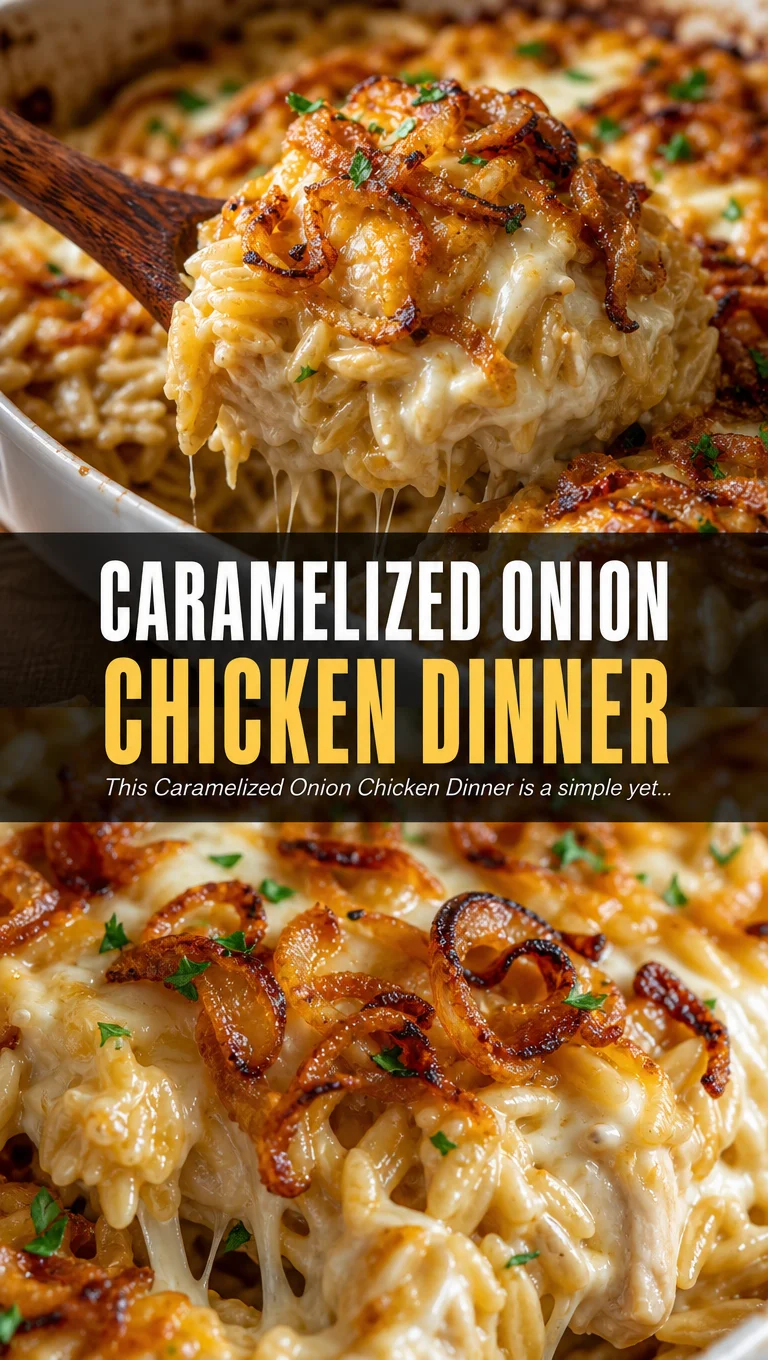
Nestle the seared chicken breasts back into the skillet, placing them on top of the orzo mixture. Spoon some of the caramelized onions over each chicken breast. In a small bowl, combine the shredded Gruyère and mozzarella cheeses. Sprinkle the cheese mixture evenly over the chicken and onions. The cheese will melt into a golden, bubbly crust that mimics the classic French onion soup gratinée. Transfer the skillet to the preheated oven and bake for 20–25 minutes, until the chicken is cooked through (internal temperature reaches 165°F/74°C) and the cheese is melted and lightly browned. If you want extra browning, switch the oven to broil for the last 2–3 minutes, watching carefully to avoid burning.
Remove the skillet from the oven and let it rest for 5 minutes. This resting period allows the juices to redistribute within the chicken, ensuring each bite is moist and tender. Garnish with fresh thyme leaves if desired. Serve the chicken and orzo hot, spooning any pan juices over the top. The orzo will have absorbed the savory broth and onion flavors, creating a risotto-like side dish. This meal is complete on its own, but you can also serve it with a simple green salad or steamed green beans for added freshness.
For best results
- For the deepest caramelized onion flavor, use yellow or sweet onions like Vidalia. They have a higher sugar content that breaks down into sweet, jammy strands. Slice the onions uniformly, about 1/4-inch thick, so they cook evenly. Don't rush the caramelization process—low and slow is the secret. If you're short on time, you can caramelize the onions in advance and refrigerate them for up to 3 days. This makes the recipe even faster on busy weeknights.
- Choose chicken breasts that are similar in size and thickness to ensure even cooking. If some breasts are thicker, pound them to an even 1-inch thickness using a meat mallet or rolling pin. This not only promotes uniform cooking but also tenderizes the meat. Pat the chicken dry with paper towels before seasoning—dry surfaces sear better and develop a beautiful crust.
- The onion soup mix is a shortcut that adds instant umami and French onion flavor. However, it can be high in sodium. To control salt, use low-sodium chicken broth and adjust seasoning at the end. If you prefer a homemade alternative, combine 1 tablespoon dried minced onion, 1 teaspoon onion powder, 1/2 teaspoon garlic powder, 1/2 teaspoon sugar, and 1/4 teaspoon black pepper.
- Gruyère cheese is traditional for French onion dishes because of its nutty, creamy melting qualities. If Gruyère is unavailable or expensive, substitute with Swiss cheese, provolone, or even mozzarella mixed with a little Parmesan for a similar effect. For a sharper flavor, use aged cheddar or Gouda.
- To make this dish gluten-free, substitute the orzo with gluten-free orzo or another small pasta shape, and ensure the onion soup mix is certified gluten-free (many brands are, but check labels). You can also use cooked rice or quinoa instead of orzo for a different texture.
- Store leftovers in an airtight container in the refrigerator for up to 3 days. The orzo will continue to absorb liquid, so when reheating, add a splash of chicken broth or water to restore creaminess. Reheat in a covered skillet over medium-low heat or in the microwave at 50% power. This dish also freezes well for up to 2 months—thaw overnight in the fridge before reheating.
Variations
- For a lower-carb version, omit the orzo and replace it with cauliflower rice or sautéed zucchini noodles. Increase the chicken broth to 1 cup and cook the cauliflower rice directly in the skillet for about 5 minutes before adding the chicken and cheese. This keeps the French onion flavors intact while reducing carbohydrates significantly.
- Make it a creamy dish by stirring in 1/2 cup of heavy cream or crème fraîche into the orzo mixture just before adding the chicken. The cream adds richness and a velvety texture that pairs beautifully with the caramelized onions and cheese. For an even more decadent version, use half-and-half or whole milk.
- Swap the chicken for boneless pork chops or turkey cutlets. Pork chops pair wonderfully with sweet caramelized onions and Gruyère. Adjust cooking time based on thickness: pork chops typically need 15–20 minutes in the oven. For a vegetarian version, use thick slices of portobello mushrooms or cauliflower steaks, and replace chicken broth with vegetable broth.
- Add a splash of white wine or sherry when deglazing the pan after searing the chicken. About 1/4 cup of dry white wine (like Sauvignon Blanc) adds acidity that balances the sweetness of the onions. Let it reduce by half before adding the broth. This is a classic French technique that elevates the dish.
- Incorporate fresh herbs like rosemary or sage along with the thyme. Add a sprig of rosemary to the skillet while baking for an aromatic infusion. Remove the sprig before serving. You can also sprinkle chopped fresh parsley over the finished dish for a pop of color and freshness.
Nutrition
- Calories485 kcal
- Total Fat24g
- Saturated Fat11g
- Cholesterol135mg
- Sodium890mg
- Total Carbohydrates32g
- Dietary Fiber3g
- Sugars8g
- Protein38g