

This Cheesy Orzo Chicken Casserole is a creamy, comforting one-pan meal with tender chicken, perfectly cooked orzo, and a golden melted cheese topping. Easy weeknight dinner ready in under an…
Ingredients
Instructions
Preheat your oven to 375°F (190°C) and position a rack in the center. While the oven heats, begin the caramelized onions: In a large, heavy-bottomed skillet or Dutch oven (at least 12 inches in diameter), heat 2 tablespoons of olive oil over medium heat. Add the thinly sliced onions and ½ teaspoon of salt. Cook, stirring occasionally, for 15–20 minutes until the onions are deeply golden and sweet. The key to perfect caramelization is patience—don’t rush the heat. If the onions start to stick, deglaze with a splash of water. Once done, transfer the onions to a bowl and set aside. The skillet will be used for the next steps.
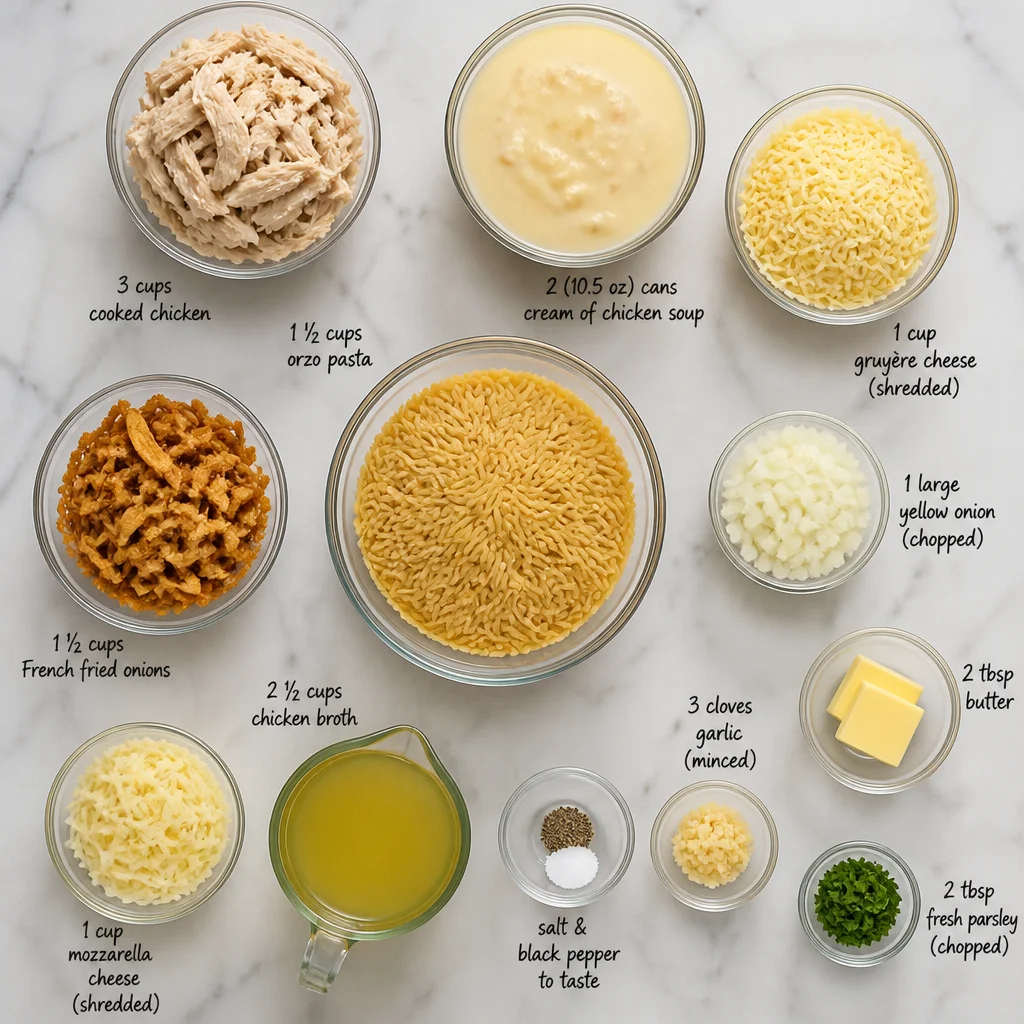
Season the chicken pieces with the remaining ½ teaspoon salt and ¼ teaspoon black pepper. In the same skillet over medium-high heat, add the chicken in a single layer (work in batches if necessary to avoid overcrowding). Cook for 4-5 minutes per side until golden brown and cooked through. The internal temperature should reach 165°F (74°C). Use a meat thermometer to be precise. Overcooking can make the chicken dry, so remove it as soon as it’s done. Transfer the chicken to the bowl with the onions and set aside.

Reduce the heat to medium and add the butter to the skillet. Once melted, sprinkle the flour over the butter and whisk continuously for 1-2 minutes to cook the raw flour taste. This creates a roux that will thicken the sauce beautifully. Gradually pour in the chicken broth while whisking to prevent lumps. Then add the heavy cream and the condensed French onion soup (or the onion soup mix dissolved in 1 cup water). Whisk until smooth and bring to a gentle simmer. The sauce should thicken slightly, enough to coat the back of a spoon.
Stir in the dried orzo pasta and the minced garlic. Return the chicken and caramelized onions to the skillet, along with any accumulated juices. Stir everything together to combine. The orzo will continue to cook in the oven, so it’s fine if it’s still firm at this stage. Taste the sauce and adjust seasoning with the remaining ¼ teaspoon black pepper or more salt if needed. Remember that the cheese will add saltiness, so go easy on the salt.
Transfer the skillet to the preheated oven and bake uncovered for 15 minutes. The orzo will absorb the liquid and become tender, and the sauce will thicken to a creamy consistency. After 15 minutes, remove the skillet from the oven (careful, it’s hot!). Preheat the broiler to high.
Sprinkle the shredded Gruyère cheese and grated Parmesan evenly over the top of the casserole. Place the skillet under the broiler for 2-4 minutes, watching closely, until the cheese is melted, bubbly, and golden brown in spots. The broiler works fast, so don’t walk away. Garnish with fresh thyme sprigs if desired. Let the casserole rest for 5 minutes before serving to allow the sauce to set slightly. Serve warm, scooping from the skillet right at the table for a rustic presentation.
For best results
- Caramelizing the onions properly is the heart of this dish. Don't rush it! Low and slow is the key. If the onions start to brown too quickly or stick, add a splash of water or broth to deglaze the pan. This not only prevents burning but also incorporates those flavorful browned bits into the sauce. The onions should be soft, sweet, and deeply golden, almost jam-like. This process can take up to 25 minutes, but it's worth every second.
- For the best texture, use boneless skinless chicken thighs rather than breasts. Thighs are more forgiving and stay juicy even after baking. If you prefer white meat, reduce the initial cooking time slightly and check for doneness early. Cutting the chicken into uniform bite-sized pieces ensures even cooking. Pat the chicken dry with paper towels before seasoning to get a better sear.
- The roux step is crucial for a silky, thickened sauce without lumps. Whisk constantly while adding the broth. If you do get lumps, don't panic—just whisk vigorously or use an immersion blender to smooth it out. For a gluten-free version, substitute the all-purpose flour with an equal amount of cornstarch mixed with a little cold water to make a slurry, and add it at the end of simmering.
- Feel free to customize the cheese blend. Gruyère is classic for French onion flavor, but Swiss, provolone, or even a sharp cheddar work beautifully. For a more affordable option, use a mix of mozzarella and Parmesan. The Parmesan adds a salty, nutty kick that complements the creamy sauce. Always shred your own cheese from a block—pre-shredded cheese contains anti-caking agents that prevent smooth melting.
- This casserole is a complete meal in one pan, but you can round it out with a simple green salad or steamed vegetables. For extra veggies, stir in a cup of frozen peas or chopped spinach along with the orzo. The residual heat will warm them through perfectly. Leftovers keep well in the refrigerator for up to 4 days and can be reheated in the microwave or oven.
Variations
- Vegetarian Version: Omit the chicken and use vegetable broth instead of chicken broth. Add 2 cups of sliced mushrooms (cremini or shiitake) along with the onions for an earthy umami boost. You can also toss in a can of drained chickpeas or white beans for protein. The cheese and creamy sauce make this hearty enough to satisfy even meat-lovers.
- Lighter Option: Substitute the heavy cream with half-and-half or whole milk mixed with 1 tablespoon of cornstarch to thicken. Use low-fat cheese and reduce the amount by half. For the chicken, use boneless skinless chicken breasts and trim any visible fat. This cuts calories significantly while still delivering creamy comfort.
- Spicy Twist: Add ½ teaspoon of red pepper flakes or a diced jalapeño when cooking the onions. Use pepper Jack cheese instead of Gruyère for a kick. You can also stir in 1 teaspoon of smoked paprika with the flour for a smoky depth. Serve with a dollop of sour cream to balance the heat.
- Herb-Infused: Stir in 1 tablespoon of fresh chopped rosemary or 2 teaspoons of dried herbes de Provence along with the garlic. Top the casserole with a mixture of breadcrumbs and Parmesan before broiling for a crispy crust. Fresh thyme and parsley are excellent garnishes.
Nutrition
- Calories585 kcal
- Total Fat32g
- Saturated Fat16g
- Cholesterol145mg
- Sodium890mg
- Total Carbohydrates38g
- Dietary Fiber2g
- Sugars6g
- Protein35g