
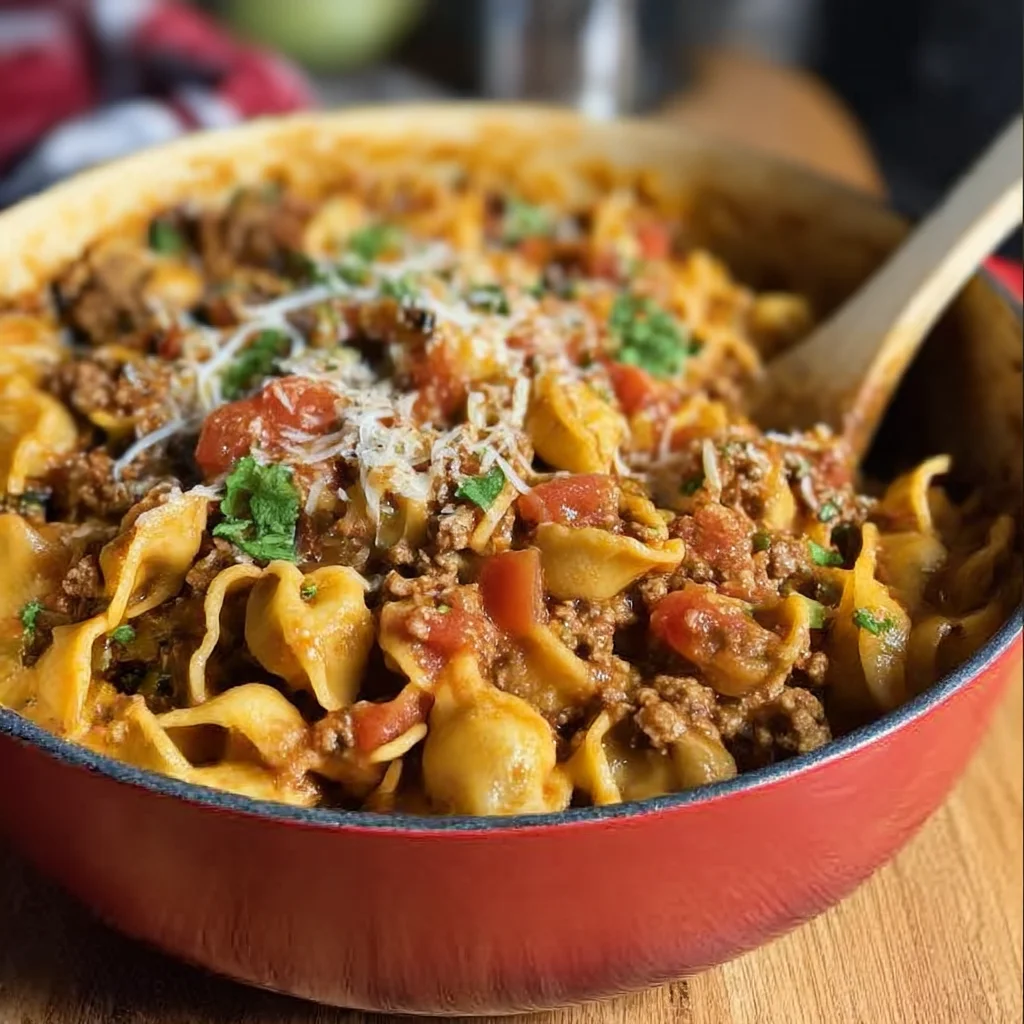
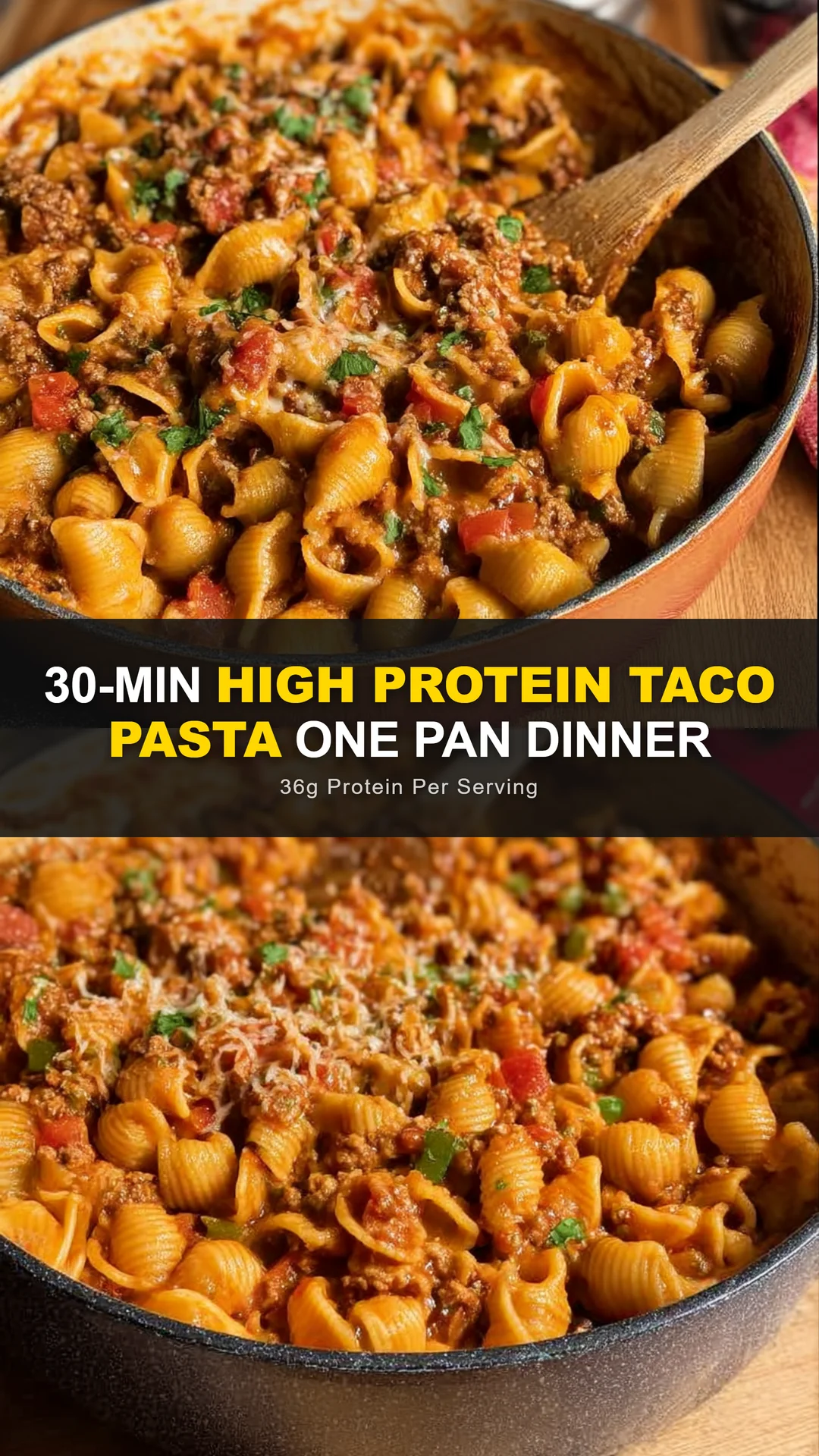
This 30-minute high protein taco pasta is a one pan dinner packing 36g of protein per serving. Quick, cheesy, and perfect for easy weeknight dinners.
Ingredients
Instructions
Start by prepping all your ingredients. Dice the onion into small, even pieces so they cook uniformly and melt into the sauce. Mince the garlic finely to avoid biting into raw chunks. If you haven’t already, cube the cream cheese and set it aside to soften at room temperature—this ensures it melts smoothly without clumps. Measure out the beef broth and open the can of diced tomatoes. Having everything ready will make the cooking process seamless and fast, especially for a 30-minute meal.
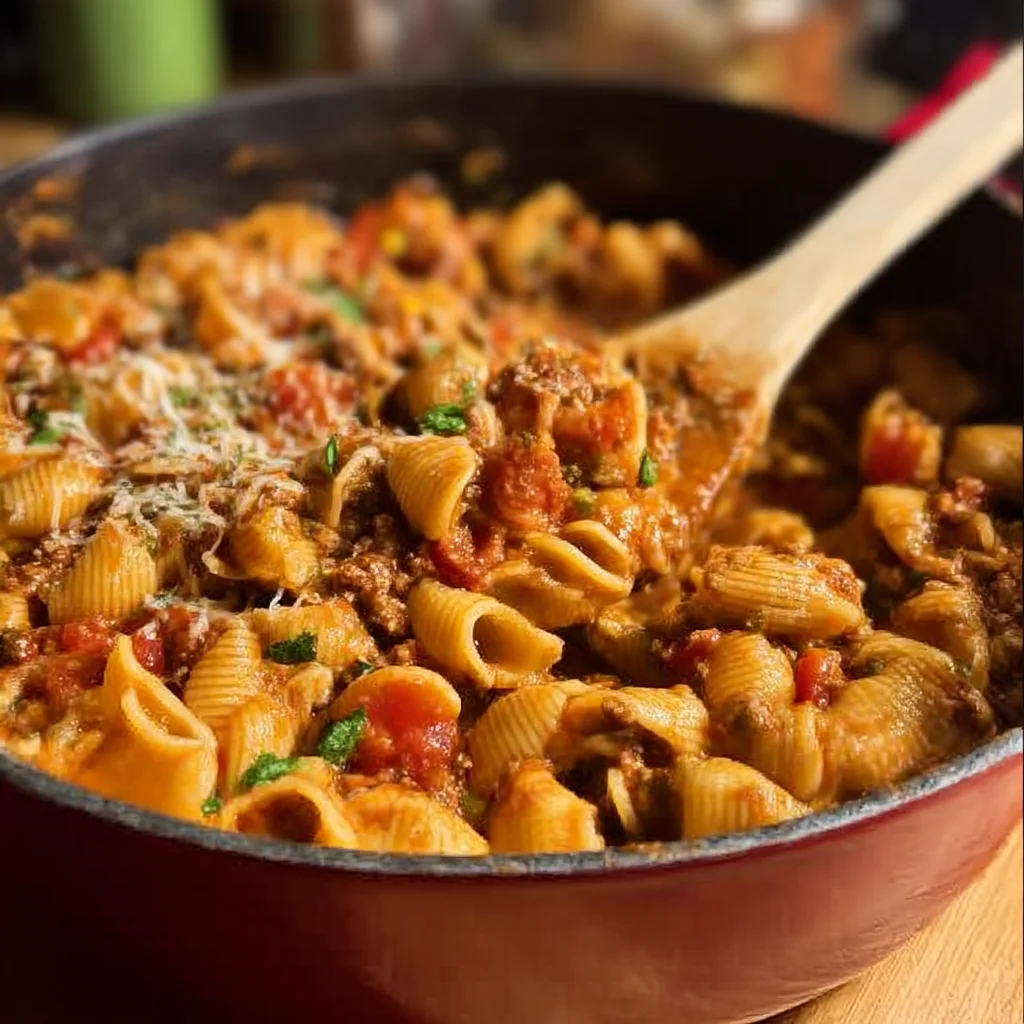
Heat a large, deep skillet or Dutch oven over medium-high heat. Add the olive oil and swirl to coat the bottom. Once the oil shimmers, add the ground beef. Use a wooden spoon or spatula to break the meat into small crumbles. Cook for 5-6 minutes, stirring occasionally, until the beef is browned and no longer pink. If you’re using lean ground beef (93/7), you likely won’t need to drain any fat; if you see more than a tablespoon of rendered fat, tilt the pan and spoon off the excess. This step builds the foundation of flavor—browning means caramelization, which creates savory, meaty notes that taco seasoning will amplify.
Add the diced onion to the skillet with the browned beef. Cook for 2-3 minutes, stirring frequently, until the onion becomes translucent and soft. The moisture from the onion will help deglaze any browned bits stuck to the bottom of the pan, incorporating that flavor into the dish. Add the minced garlic and cook for another 30 seconds until fragrant—be careful not to burn the garlic, as it turns bitter. Sprinkle the taco seasoning evenly over the meat and onion mixture. Stir well to coat everything, then cook for 1 minute to toast the spices and deepen their aroma. You’ll smell the cumin, chili, and garlic intensify.
Pour in the can of diced tomatoes with their juices and the beef broth. Stir to combine, scraping the bottom of the pan to release any remaining fond. Bring the liquid to a boil, then add the uncooked pasta. Stir to ensure the pasta is submerged as much as possible—it’s okay if some pieces stick up slightly; they’ll soften as they cook. Reduce the heat to a gentle simmer (medium-low) and cover the skillet with a lid. Let it cook for 10-12 minutes, stirring once halfway through to prevent the pasta from clumping. The pasta will absorb the liquid and become tender. If the sauce dries out before the pasta is done, add a splash more broth or water.
Once the pasta is al dente (taste a piece—it should be tender but still have a slight bite), remove the lid. Reduce the heat to low. Add the cubed cream cheese, shredded cheddar, and sour cream. Stir continuously for 1-2 minutes until the cream cheese is completely melted and the sauce is smooth, creamy, and coats every piece of pasta. The cheese will thicken the sauce, creating a luxurious, velvety texture. Taste and adjust salt and pepper if needed—remember that taco seasoning and canned tomatoes contain sodium, so go easy on the salt. If the sauce is too thick, stir in a tablespoon of milk or broth until it reaches your desired consistency.
Serve the taco pasta hot, garnished with fresh cilantro, sliced jalapeños, diced avocado, and a squeeze of lime juice if desired. The lime brightens the richness of the cheese and complements the taco flavors. For a finishing touch, you can sprinkle extra shredded cheese and let it melt from the residual heat. This one-pan dinner is best enjoyed immediately, but leftovers can be stored in an airtight container in the refrigerator for up to 4 days. Reheat gently on the stovetop or microwave with a splash of milk to restore creaminess.
For best results
- For maximum protein content, use lean ground beef (93/7) or even ground turkey or chicken. If using ground turkey, add a tablespoon of oil to compensate for the lower fat content—this prevents the meat from drying out and helps the spices bloom. You can also boost protein further by adding a scoop of unflavored collagen peptide powder stirred into the broth before adding pasta; it dissolves without altering taste and adds 10g of protein per tablespoon.
- Don't skip the cream cheese! It's the secret to the velvety, restaurant-quality sauce without heavy cream. Make sure it's at room temperature before adding—cold cream cheese will clump and take longer to melt. If you're dairy-free, you can substitute with a plant-based cream cheese or full-fat canned coconut cream, but the flavor will shift slightly. For a lower-fat option, use Neufchâtel cream cheese (⅓ less fat) or Greek cream cheese.
- The pasta-to-liquid ratio in this recipe is carefully balanced. If you swap the type of pasta, be aware that shapes like penne or rotini cook in about 10-12 minutes, while smaller shapes like ditalini may cook faster (8 minutes). Always check the package directions and adjust the simmering time accordingly. If you use gluten-free pasta, it often absorbs less liquid and can turn mushy, so reduce the broth by ¼ cup and check doneness earlier.
- Homemade taco seasoning is easy and allows you to control salt and heat. Mix 1 tablespoon chili powder, 1 teaspoon cumin, 1 teaspoon smoked paprika, ½ teaspoon garlic powder, ½ teaspoon onion powder, ½ teaspoon oregano, ¼ teaspoon cayenne (optional), and 1 teaspoon cornstarch (optional, for thickening). This batch equals one store-bought packet and has less sodium. Store any leftover blend in an airtight jar for up to 6 months.
- To make this a true one-pan wash-free meal, use a nonstick or well-seasoned cast iron skillet. After cooking, if bits are stuck, deglaze with a splash of broth as soon as you add the tomatoes. Let the dish cool slightly before storing leftovers to avoid condensation making the pasta soggy. Reheat on the stove with a splash of milk or water to bring back the sauce's creaminess.
- For meal prep, cook the pasta separately and undercook it by 1 minute, then combine with the sauce. This prevents the pasta from absorbing all the liquid and becoming mushy when reheated. Store the sauce and pasta together, and reheat portions in the microwave for 2-3 minutes, stirring halfway. The sour cream in the sauce helps keep the pasta from drying out.
- Nutritional boost: Add 2 cups of fresh spinach or chopped kale during the last 2 minutes of cooking with the lid on. The greens will wilt into the sauce, adding vitamins, fiber, and color without affecting the taco taste. You can also stir in a can of drained black beans or corn for extra fiber and texture, but note that this will change the protein count slightly.
Variations
- **Chicken Taco Pasta:** Substitute ground beef with 1 lb boneless skinless chicken thighs or breasts, diced into small cubes. Cook as directed, but ensure chicken reaches an internal temperature of 165°F. For extra flavor, marinate the chicken in lime juice and chili powder for 15 minutes before cooking. The cooking time may vary slightly; check that chicken is cooked through before adding liquids.
- **Vegetarian High-Protein Taco Pasta:** Replace the ground beef with 1 lb of crumbled firm tofu (pressed and dry), or use a plant-based ground meat substitute. For tofu, sauté with a tablespoon of soy sauce and taco seasoning to mimic the umami of meat. Add a can of black beans (rinsed) along with the tomatoes to boost protein and fiber. The rest of the recipe remains the same, making this a satisfying meatless meal with over 25g of protein per serving.
- **Spicy Chipotle Taco Pasta:** Add 1-2 chipotle peppers in adobo sauce (minced) along with the canned tomatoes. This adds a smoky, intense heat that complements the cheese. Reduce the cayenne in the seasoning if using homemade blend. For extra creaminess, swirl in a tablespoon of adobo sauce from the can. Serve with pickled red onions to cut the richness.
- **Mexican Street Corn Taco Pasta:** After stirring in the cheese, fold in 1 cup of charred corn kernels (fresh or frozen) and ¼ cup of crumbled cotija cheese. Garnish with a drizzle of crema (sour cream mixed with lime juice) and a sprinkle of Tajín seasoning. This variation adds a sweet crunch and a tangy, salty finish reminiscent of elote.
- **Low-Carb / Keto Taco Pasta:** Replace the pasta with 2 large zucchinis spiralized into noodles (zoodles) or 1 head of cauliflower chopped into small florets (riced). Cook the zoodles for only 2-3 minutes after adding the cream cheese and cheddar, as they release water. For cauliflower rice, simmer covered for 5 minutes with the broth before adding cheese. This version cuts carbs to about 15g net per serving while keeping the protein high.
- **Loaded Baked Potato Taco Pasta:** Swap the pasta for 4 medium russet potatoes, diced into ½-inch cubes (leave skin on). Boil the cubes in salted water for 5 minutes before adding to the skillet with the broth. Simmer covered for 12-15 minutes until tender. The starches from the potatoes thicken the sauce naturally. Top with sour cream, chives, and extra cheddar. This is a hearty, carb-loaded twist ideal for cold nights.
Nutrition
- Calories560 kcal
- Total Fat28g
- Saturated Fat15g
- Cholesterol105mg
- Sodium820mg
- Total Carbohydrates38g
- Dietary Fiber3g
- Sugars6g
- Protein36g