
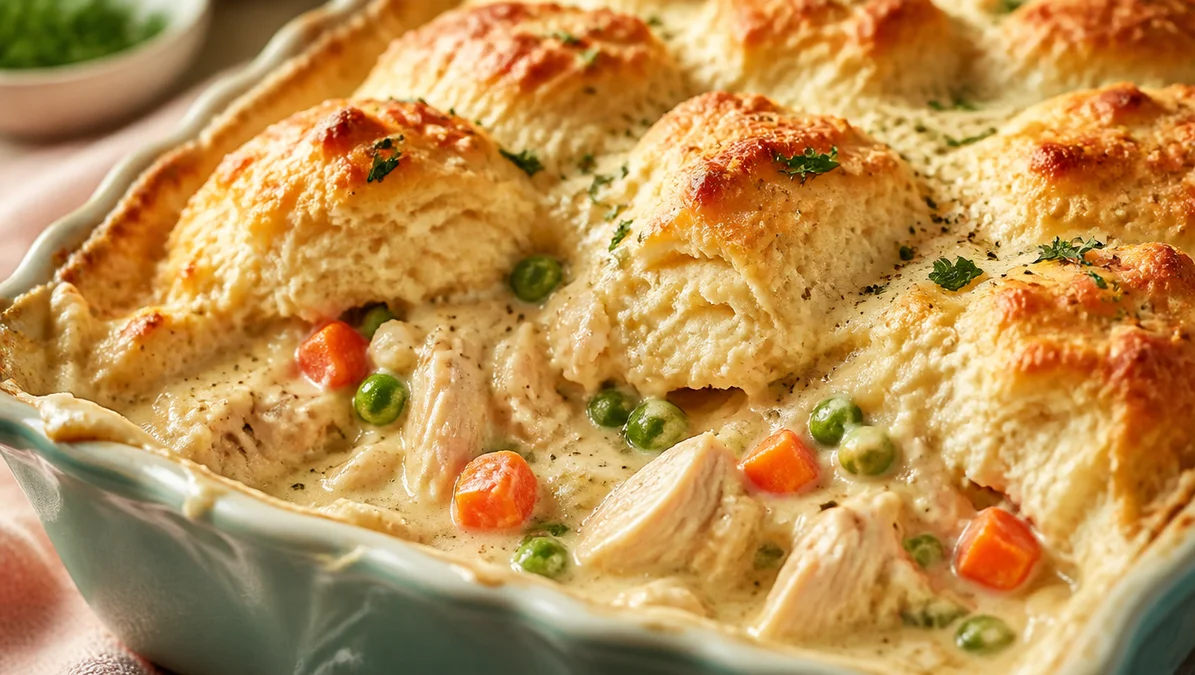
This creamy chicken pot pie casserole delivers all the comforting flavors of the classic dish without the fuss of a double crust. Ready in just 30 minutes, it's a quick…
Ingredients
Instructions
Preheat your oven to 400°F (200°C). While the oven is heating, gather and prep all your ingredients. Dicing the onion and mincing the garlic ahead of time ensures a smooth cooking process. Cut the chicken breasts into uniform 1-inch cubes so they cook evenly. Having everything ready will make the assembly quick and stress-free.
Heat 1 tablespoon of olive oil in a large oven-safe skillet (12-inch) or a Dutch oven over medium-high heat. Once the oil shimmers, add the diced onion and cook for 2-3 minutes until softened and translucent. Stir occasionally to prevent burning. Add the minced garlic and cook for another 30 seconds until fragrant, being careful not to let it brown too much, as burnt garlic can turn bitter.

Add the cubed chicken to the skillet in a single layer. Season with salt, pepper, dried thyme, and dried rosemary. Sear the chicken for 4-5 minutes, turning occasionally, until lightly golden on all sides. The chicken doesn’t need to be fully cooked through at this point, as it will continue cooking in the oven. Use a spatula to scrape up any browned bits from the bottom of the pan—these add deep flavor to the sauce.
Sprinkle the flour evenly over the chicken and onion mixture. Stir constantly for 1-2 minutes to cook the flour and eliminate the raw taste. The mixture will become thick and pasty. This roux is the foundation of your creamy sauce, so make sure the flour is well incorporated and lightly toasted, which gives a nutty flavor and helps thicken the sauce properly.
Slowly pour in the chicken broth while whisking continuously to prevent lumps. Then add the milk and heavy cream, continuing to whisk until the sauce is smooth and starts to thicken, about 2-3 minutes. The sauce should coat the back of a spoon. If it seems too thick, add a splash more broth. Stir in the frozen mixed vegetables (no need to thaw them first) and let the mixture come to a gentle simmer. Taste and adjust seasoning with additional salt and pepper if needed.
Remove the skillet from heat. Arrange the refrigerated buttermilk biscuits on top of the creamy chicken mixture, spacing them evenly. The biscuits will expand during baking, so leave a little room between them. Brush the tops of the biscuits with melted butter for a golden, glossy finish. Place the skillet in the preheated oven and bake for 15-18 minutes, or until the biscuits are puffed and golden brown and the filling is bubbly around the edges. If the biscuits brown too quickly, tent loosely with foil for the last few minutes.
Remove the casserole from the oven and let it rest for 5 minutes before serving. This resting time allows the sauce to set slightly, making it easier to serve. Spoon the creamy chicken pot pie casserole into bowls, making sure each serving gets a biscuit on top. Garnish with fresh parsley if desired. Enjoy the comforting, creamy goodness!
For best results
- For the best texture, use boneless skinless chicken breasts or thighs. Thighs are more forgiving and stay moist, while breasts offer a leaner option. Cut them into uniform cubes to ensure even cooking. If using leftover rotisserie chicken, add it after making the sauce and skip the searing step—just heat through before adding biscuits.
- To make the sauce extra creamy, use whole milk or a mix of milk and heavy cream. Avoid skim milk as it may curdle or yield a thinner sauce. For a dairy-free version, substitute unsweetened almond milk and a dairy-free butter alternative, but note that the sauce may be slightly less thick.
- Don't skip the step of cooking the flour (roux) for at least 1 minute. Raw flour can give an unpleasant pasty taste and texture. The roux should be a light golden color before adding liquid. Whisk constantly when adding broth to avoid lumps.
- If you prefer a thicker filling, let the sauce simmer for an extra minute or two before adding biscuits. Alternatively, mix 1 tablespoon cornstarch with 2 tablespoons cold water to make a slurry and stir it in at the end. For a thinner sauce, add a bit more chicken broth.
- Refrigerated buttermilk biscuits are a time-saver, but you can use homemade biscuit dough or even puff pastry for a flakier topping. If using puff pastry, cut it into squares and bake until golden. Adjust baking time as needed.
- To make this casserole ahead of time, prepare the filling completely (without biscuits) and refrigerate in the skillet for up to 24 hours. When ready to bake, bring to room temperature for 20 minutes, then top with biscuits and bake as directed, adding 5-10 minutes to the baking time since the filling is cold.
- For a crispy biscuit topping, brush the biscuits with melted butter before baking and again halfway through. You can also sprinkle a pinch of flaky sea salt or dried herbs like parsley or chives on top for extra flavor and visual appeal.
Variations
- Vegetarian Version: Replace chicken with 2 cups of diced portobello mushrooms and 1 can (15 oz) of drained chickpeas. Sauté mushrooms until browned before adding flour. Use vegetable broth instead of chicken broth. The mushrooms provide an earthy, meaty texture that mimics chicken.
- Gluten-Free Adaptation: Use a gluten-free all-purpose flour blend (with xanthan gum) for the roux. Check that your chicken broth and biscuits are gluten-free. Many store-bought gluten-free biscuit mixes work well; prepare according to package directions and place on top of the filling before baking.
- Low-Carb / Keto Option: Skip the biscuits entirely and top the casserole with a layer of cauliflower mash or shredded cheese mixed with almond flour. For the filling, use heavy cream and cream cheese instead of milk to keep carbs low. Add extra vegetables like broccoli or spinach.
- Spicy Twist: Add 1/2 teaspoon of red pepper flakes or a diced jalapeño (seeds removed) when sautéing the onion. Use a can of diced tomatoes with green chilies (drained) in place of 1/2 cup of broth. Top with pepper jack cheese under the biscuits for a kick.
- Herb Garden Variation: Stir in 2 tablespoons of fresh chopped parsley, 1 tablespoon fresh dill, and 1 teaspoon fresh lemon zest at the end of cooking. Replace dried thyme with 1 tablespoon fresh thyme leaves. This brightens the dish and adds a garden-fresh flavor.
- Protein Swap: Substitute chicken with cubed turkey breast, cooked shredded pork, or even canned tuna (drained). For seafood, use peeled shrimp (add during the last 3 minutes of simmering) or flaked cooked salmon. Adjust seasoning accordingly.
Nutrition
- Calories425 kcal
- Total Fat22g
- Saturated Fat10g
- Cholesterol85mg
- Sodium920mg
- Total Carbohydrates34g
- Dietary Fiber3g
- Sugars8g
- Protein28g