
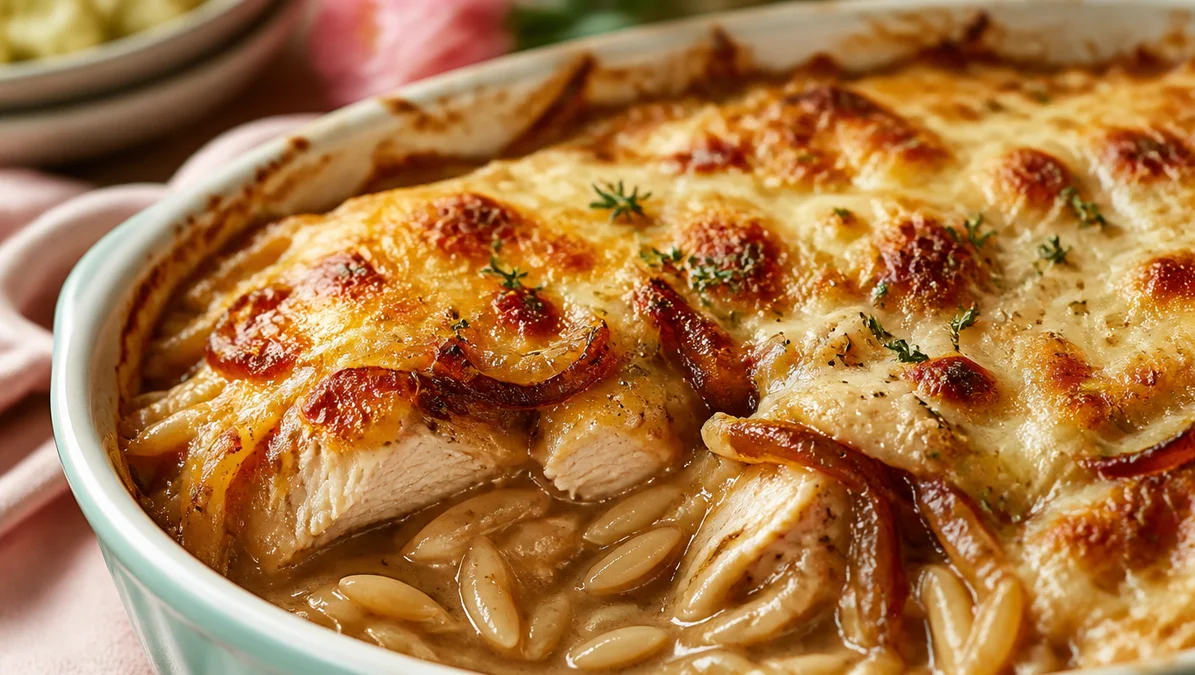
Simplify your dinner routine with this Easy Weeknight French Onion Chicken Bake that delivers classic French onion flavor without the fuss. Juicy chicken bakes with sweet caramelized onions, savory broth,…
Ingredients
Instructions
Preheat your oven to 375°F (190°C) and position a rack in the center. While the oven heats, begin preparing the caramelized onions—the heart of this dish. In a large oven-safe skillet (preferably 12-inch cast iron or stainless steel), melt 2 tablespoons of butter with 1 tablespoon of olive oil over medium heat. Add the thinly sliced sweet onions and a pinch of salt. Cook, stirring occasionally, for 15-20 minutes until the onions become deeply golden, soft, and sweet. The salt helps draw out moisture, accelerating caramelization. If the onions start to brown too quickly, reduce the heat slightly and add a splash of water or broth to deglaze the pan. You’re looking for a rich amber color and a jammy consistency.
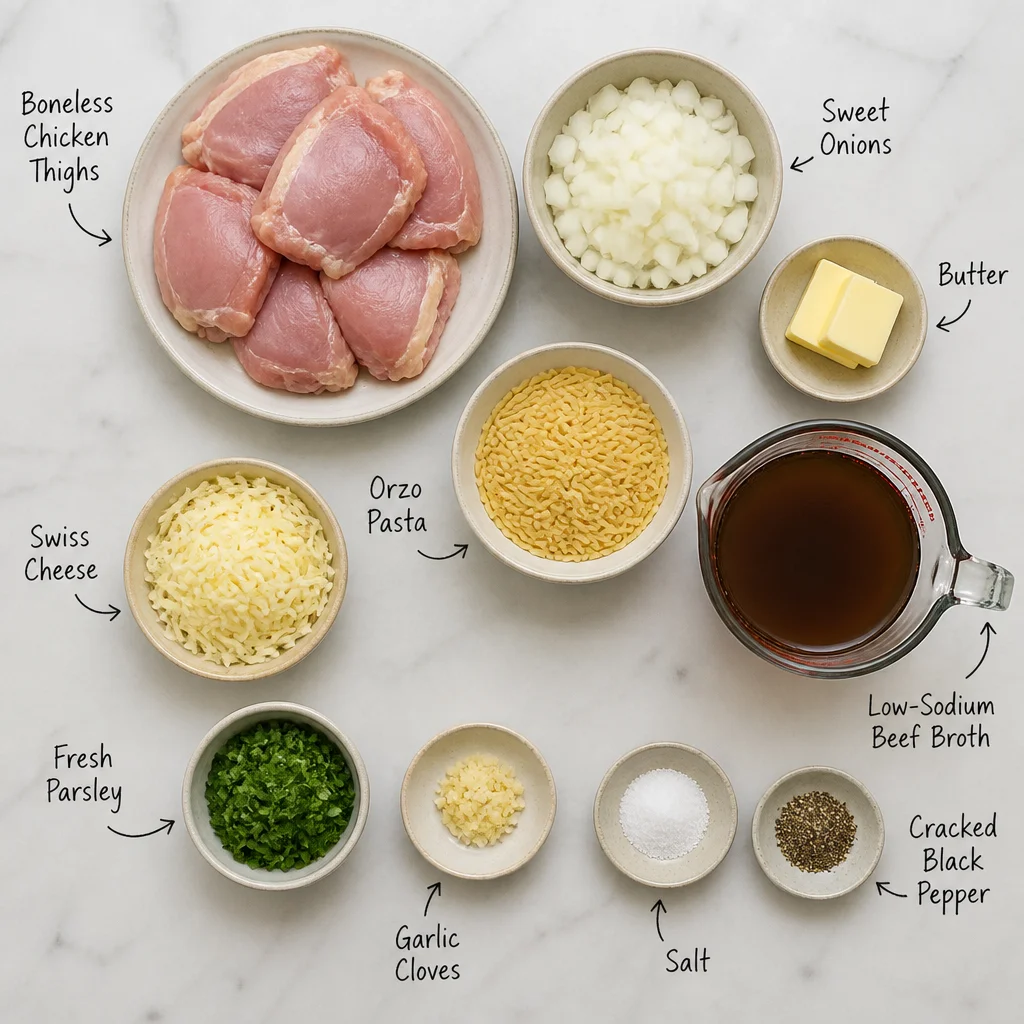
While the onions caramelize, season the chicken thighs on both sides with salt, pepper, and dried thyme. In a separate large non-stick skillet, heat the remaining 1 tablespoon of olive oil over medium-high heat. Sear the chicken for 3-4 minutes per side until golden brown and crispy. Do not crowd the pan; work in batches if necessary. The chicken doesn’t need to be cooked through—it will finish in the oven. This step builds a deep savory crust that adds incredible flavor to the final dish. Transfer the seared chicken to a plate and set aside.

Once the onions are caramelized, add the minced garlic and cook for 1 minute until fragrant. Sprinkle the flour over the onions and stir constantly for 1-2 minutes to cook out the raw flour taste. Slowly pour in the beef broth and white wine (if using), whisking continuously to create a smooth, thickened sauce. Let it simmer for 2-3 minutes until slightly reduced. The sauce should coat the back of a spoon. Taste and adjust seasoning with salt and pepper. For an extra savory kick, stir in a teaspoon of Worcestershire sauce.
Stir the uncooked orzo directly into the onion sauce. The pasta will absorb the flavorful liquid as it bakes, becoming tender and creamy. Nestle the seared chicken thighs into the orzo mixture, pressing them slightly so they are partly submerged. Sprinkle the shredded Swiss cheese and grated Parmesan evenly over the top, covering the chicken and orzo completely. The cheese will form a golden, bubbly crust during baking.
Transfer the skillet to the preheated oven and bake for 20-25 minutes, or until the orzo is tender, the chicken reaches an internal temperature of 165°F (74°C), and the cheese is melted and deeply golden. If you want an extra browned top, switch the oven to broil for the last 2-3 minutes, watching carefully to prevent burning. Remove from the oven and let it rest for 5 minutes—this allows the sauce to thicken further and makes serving easier.
Garnish with freshly chopped parsley for a pop of color and freshness. Serve the French Onion Chicken Bake directly from the skillet, spooning the creamy orzo and caramelized onions over each portion. Pair with a crisp green salad or steamed green beans for a complete meal. Leftovers can be stored in an airtight container in the refrigerator for up to 3 days. To reheat, add a splash of broth and warm in the oven or microwave until heated through.
For best results
- For the deepest flavor, take the time to caramelize the onions properly. Low and slow is key—rushing at high heat will burn the sugars and create bitterness. If you're short on time, you can speed up the process by adding a pinch of baking soda (which raises pH and accelerates browning), but be careful not to add more than 1/4 teaspoon or the onions may turn mushy. The ideal caramelization takes 15-20 minutes over medium heat, stirring every few minutes.
- Choose the right cheese. Swiss cheese (Emmental or Gruyère) is traditional for French onion soup and melts beautifully with a nutty flavor. Gruyère is slightly sharper and more expensive, while Swiss is milder and more budget-friendly. Avoid pre-shredded cheese as it contains anti-caking agents that prevent smooth melting. Grate your own cheese for the best texture and flavor.
- Chicken thighs are preferred over breasts because they remain juicy and tender even after baking. If you must use chicken breasts, reduce the baking time by 5 minutes and check for doneness early to prevent drying out. Boneless skinless thighs are ideal, but bone-in thighs can be used—just increase the baking time by 10 minutes and ensure they reach 165°F internally.
- Toasting the orzo before adding liquid adds a nutty depth. If you have an extra 3 minutes, after caramelizing the onions, push them to the side of the skillet and add the orzo directly to the pan. Toast, stirring frequently, until lightly golden. Then proceed with adding broth. This step enhances the overall flavor profile.
- Make it a one-pan meal by adding vegetables. Sliced mushrooms, bell peppers, or zucchini can be added along with the onions. For a heartier version, stir in a cup of frozen peas during the last 5 minutes of baking. This adds color and nutrients without extra effort.
- If you don't have an oven-safe skillet, transfer the onion-orzo mixture to a greased 9×13-inch baking dish before adding the chicken and cheese. This works perfectly and allows you to use any skillet for the stovetop steps.
Variations
- Low-Carb/Keto Version: Replace orzo with cauliflower rice or omit the pasta entirely. Increase the broth to 1 1/2 cups and add 1/2 cup of heavy cream for richness. The chicken and onions will still provide a satisfying meal. Use full-fat cheese and ensure the broth is low-carb.
- Vegetarian Option: Swap chicken for 1 1/2 cups of sliced mushrooms (cremini or portobello) and 1 can of drained chickpeas. Sear the mushrooms until golden, then proceed with the recipe. Use vegetable broth instead of beef broth. The umami from mushrooms mimics the savory depth of chicken.
- Gluten-Free Adaptation: Use gluten-free orzo (made from rice or quinoa) or substitute with 1 cup of cooked rice stirred in at the end. Replace the all-purpose flour with 1 tablespoon of cornstarch mixed with 2 tablespoons of cold water to thicken the sauce. Ensure all other ingredients are certified gluten-free.
- Creamy French Onion Chicken Bake: For an extra luscious texture, stir in 1/2 cup of heavy cream or crème fraîche along with the broth. This creates a richer, more decadent sauce that pairs beautifully with the caramelized onions and cheese.
- Spicy Twist: Add 1/2 teaspoon of red pepper flakes or a diced jalapeño when cooking the onions. Use pepper Jack cheese instead of Swiss for a kick of heat that contrasts with the sweet onions.
Nutrition
- Calories485 kcal
- Total Fat24g
- Saturated Fat11g
- Cholesterol145mg
- Sodium620mg
- Total Carbohydrates32g
- Dietary Fiber3g
- Sugars8g
- Protein35g