
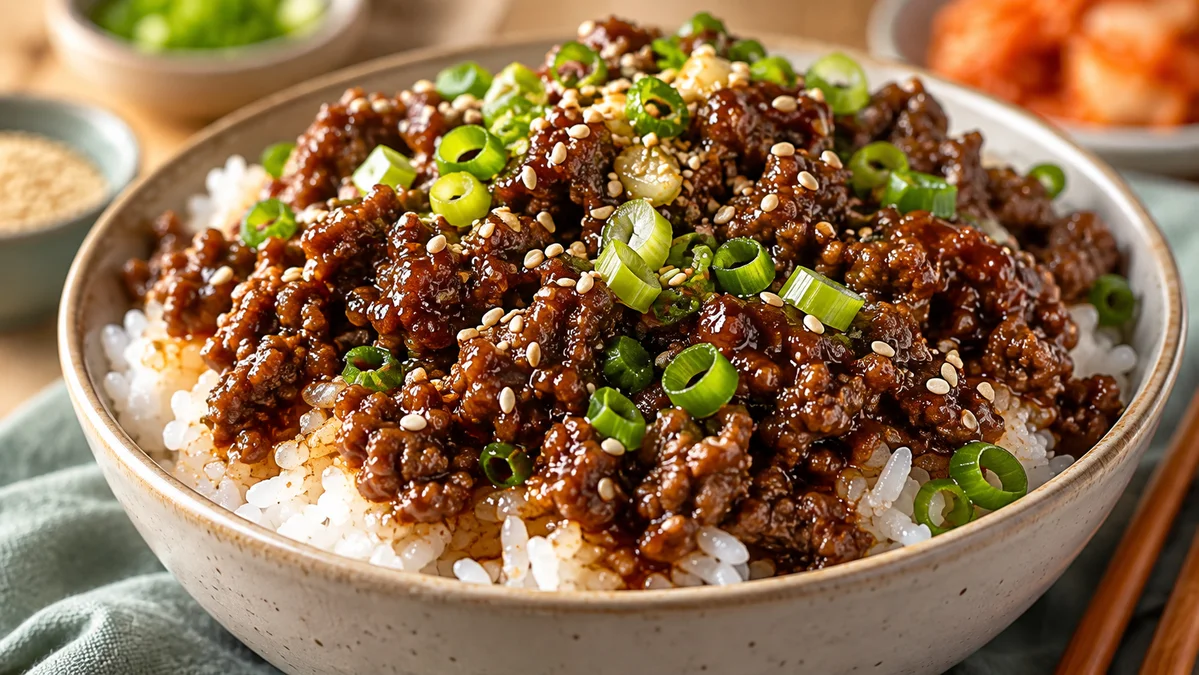
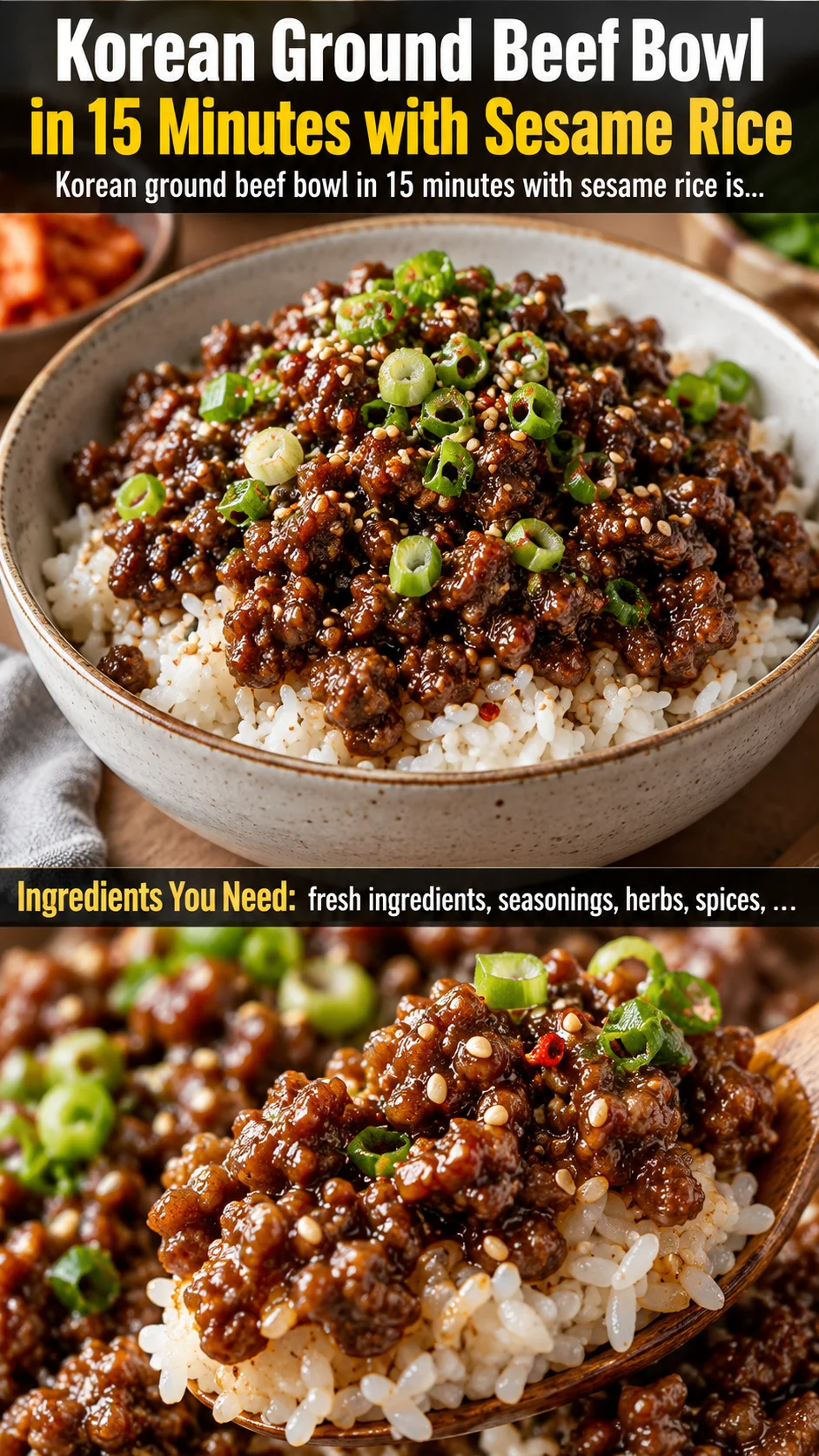
Make this Korean ground beef bowl in 15 minutes with sesame rice! Savory, sweet, spicy beef over fluffy rice—an easy high-protein dinner for busy weeknights.
Ingredients
Instructions
Begin by prepping like a line cook: set out every ingredient, measure the soy sauce, brown sugar, rice vinegar, gochujang, red pepper flakes, and black pepper into a small bowl, and mince the garlic and ginger. Slice the green onions and toast the sesame seeds in a dry skillet over medium heat for 1 to 2 minutes, just until they smell nutty and start to pop; immediately slide them onto a plate so they do not burn. If you are cooking rice from scratch, start it now so the grains are hot, fluffy, and slightly sticky when the beef is ready. If you are using leftover rice, sprinkle it with a teaspoon of water, cover it, and microwave for 90 seconds to steam it back to life. This step is where 15-minute dinners are won or lost: having everything within arm’s reach means the beef will sear instead of steam, and the sauce will reduce into a glossy lacquer rather than turning soupy. The beef should be cold from the fridge but not frozen, because cold meat browns more evenly and releases less water at the start.
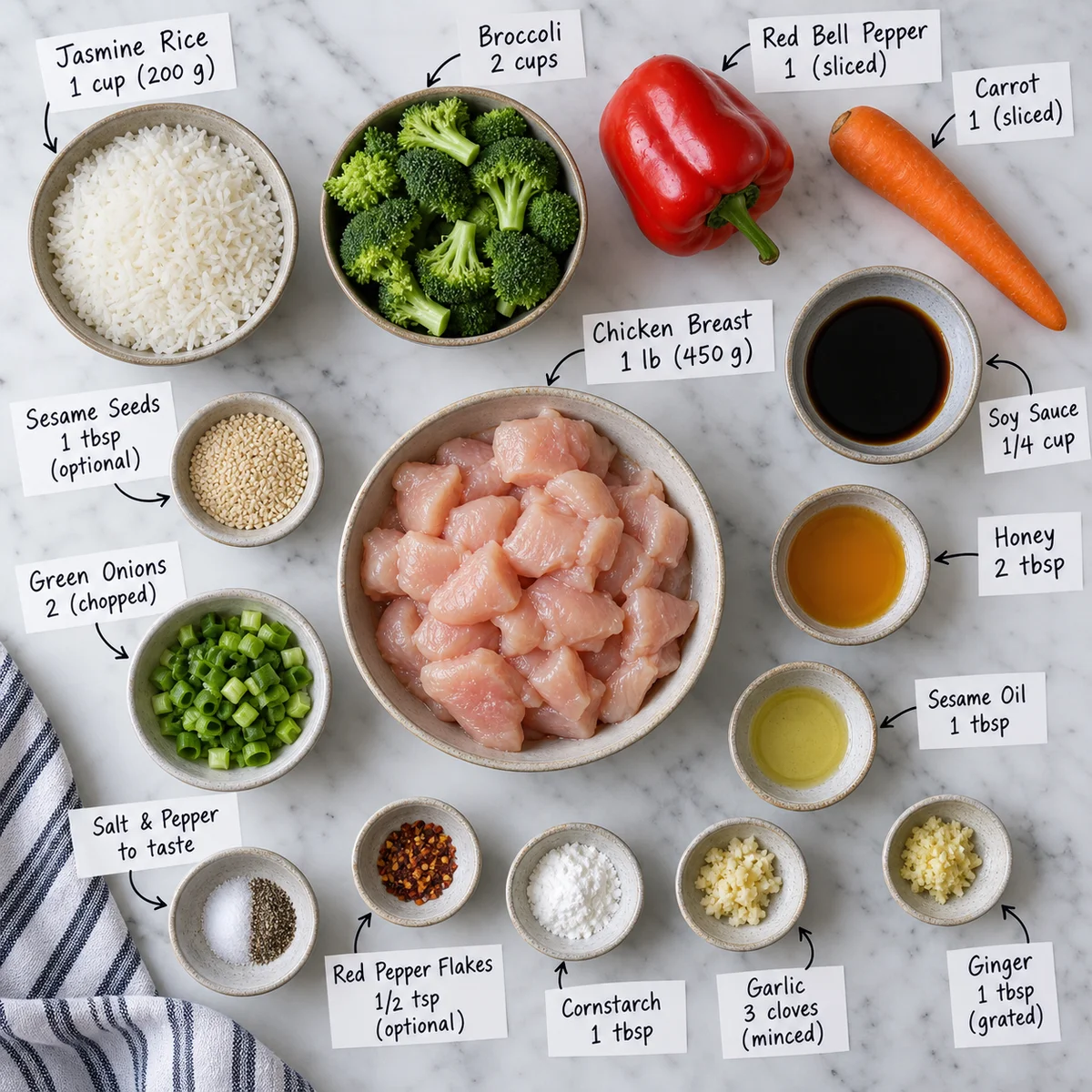
Make the sesame rice while the skillet heats. In a medium bowl, combine the hot cooked short-grain rice with 1 teaspoon toasted sesame oil, 1/4 teaspoon kosher salt, and 1 teaspoon toasted sesame seeds. Use a rice paddle or silicone spatula to fold gently, fluffing rather than stirring, so the grains stay separate and seasoned evenly. Taste a small spoonful: it should be faintly salty, aromatic, and nutty, with a subtle sheen from the sesame oil. Short-grain rice is ideal here because its plump, sticky texture clings to the saucy beef, but jasmine or basmati work beautifully if that is what you have. If the rice seems dry, add a splash of hot water and cover for 2 minutes; if it is too wet, spread it on a plate for a minute to let excess steam escape. Keep the rice covered and warm while you cook the beef, because a hot base is essential for a bowl that eats like a restaurant meal.
Whisk the sauce in a small bowl or liquid measuring cup: low-sodium soy sauce, brown sugar, rice vinegar, gochujang if using, red pepper flakes, and black pepper. Stir until the sugar dissolves and the gochujang breaks down into a smooth, deep-red slurry. The sauce should taste bold, salty, and slightly sweet with a gentle burn at the back of the throat; if it tastes flat, add a few more drops of rice vinegar, and if it tastes too salty, add a pinch more brown sugar. Do not add the cornstarch yet—it goes in later as a slurry so the sauce thickens at the right moment and never turns gluey. Let the sauce sit while you brown the beef; this gives the aromatics in the gochujang and pepper flakes a chance to bloom into the liquid. If you are sensitive to heat, start with half the gochujang and red pepper flakes, then adjust after the beef has simmered.
Heat a large 12-inch skillet or wok over medium-high heat for 2 minutes, then add the ground beef in an even layer. Press it gently with a spatula and let it sit undisturbed for 2 to 3 minutes so a deep brown crust can form; this browning is where the savory, caramelized flavor comes from. Break the beef into small, bite-size crumbles and continue cooking for 3 to 4 minutes, stirring occasionally, until no pink remains and the fat has rendered. If your beef is very lean, add 1 teaspoon of toasted sesame oil to the pan before browning to prevent sticking and to build flavor. Spoon off excess fat if there is more than 2 tablespoons pooling in the pan, but leave a little behind—it carries flavor and helps the sauce cling. The beef should look deeply browned, smell rich and roasted, and sound like a gentle sizzle, not a violent spatter.
Push the beef to one side of the skillet and add the minced garlic, grated ginger, and the white parts of the green onions to the empty space. Cook for 45 to 60 seconds, stirring constantly, until the garlic and ginger smell fragrant and toasty but have not turned brown; burnt garlic will make the entire sauce bitter. The ginger should look glossy and the garlic should be pale gold. Then stir the aromatics into the beef, coating every crumble. If the pan looks dry, add another teaspoon of sesame oil. This short, high-heat bloom is the difference between a sauce that tastes like soy sauce and one that tastes like Korean takeout. Keep your face back from the pan—the ginger and pepper flakes can release a sharp, spicy steam that will make you cough if you lean in too close.
Pour the sauce mixture over the beef and stir well. Bring it to a lively simmer, then reduce the heat to medium-low and cook for 2 to 3 minutes, stirring occasionally, until the sauce reduces slightly and coats the beef. The mixture should look glossy and dark, like lacquered meat, and the smell should be sweet, salty, and garlicky with a hint of sesame. If the sauce evaporates too quickly, add 2 tablespoons of water; if it looks watery, simmer one extra minute. This is also the moment to taste and adjust: a squeeze of rice vinegar brightens the whole pan, a pinch of brown sugar rounds out the salt, and a dash of soy sauce deepens the savoriness. Remember that the sauce will thicken more as it cools, so pull it off the heat while it still looks a little looser than you want.
Make the cornstarch slurry by whisking the cornstarch with 2 tablespoons of cold water until completely smooth. With the beef simmering over medium-low heat, drizzle in the slurry while stirring constantly. Cook for 30 to 60 seconds, just until the sauce turns glossy and thick enough to cling to the back of a spoon. Do not boil hard after adding the slurry, or the sauce can turn spongy. Turn off the heat and stir in the remaining green onion slices and half of the toasted sesame seeds. The finished beef should be juicy, saucy, and deeply caramelized, with a sheen that catches the light. If the sauce tightens too much, loosen it with a tablespoon of warm water; if it is too thin, simmer for another 30 seconds. This step is quick, so stay at the stove and keep stirring.
To serve, fluff the sesame rice one more time and divide it among four shallow bowls, mounding it slightly to one side. Spoon the glossy Korean ground beef over the rice, making sure each bowl gets plenty of sauce. Top with the remaining toasted sesame seeds, extra green onions, and any optional garnishes: a fried egg with a runny yolk, kimchi, cucumber matchsticks, or shredded carrots. Serve immediately while the rice is hot and the beef is steaming. The ideal bite has fluffy, nutty rice, juicy caramelized beef, a little spicy gochujang heat, and a fresh pop of green onion. Store leftovers in an airtight container in the refrigerator for up to 4 days, but keep the rice and beef separate if possible so the rice does not soak up all the sauce. Reheat gently in a skillet or microwave, adding a splash of water to bring the sauce back to life.
For best results
- Choose the right ground beef for the job. For a 15-minute dinner, 85/15 or 90/10 lean ground beef is the sweet spot: enough fat to brown beautifully and carry flavor, but not so much that the sauce turns greasy. If you use 80/20, spoon off excess fat after browning so the final sauce stays glossy rather than oily. If you use 93/7 or 96/4, add a teaspoon of toasted sesame oil to the pan and be careful not to overcook the beef, because lean meat dries out quickly. Grass-fed beef has a slightly stronger, mineral flavor that works well here, but it also cooks faster, so start checking for doneness at the 3-minute mark. Whatever you choose, let the beef sit in the pan without stirring for the first couple of minutes—that crust is pure flavor.
- Control the salt by starting with low-sodium soy sauce and tasting at the end. Soy sauce brands vary wildly in salinity, and gochujang adds its own salty fermented punch. If you only have regular soy sauce, use 3 tablespoons instead of 1/4 cup and add 2 tablespoons of water to the sauce. If the finished beef tastes too salty, stir in a teaspoon of brown sugar, a squeeze of rice vinegar, and a splash of water; the sweetness and acid will balance the sodium without diluting the flavor. If it tastes flat, add a few drops of fish sauce or a pinch of kosher salt. Remember that the sauce reduces as it simmers, so it will taste saltier after 2 minutes on the heat than it did raw.
- Fresh ginger and garlic make a noticeable difference, but there are smart shortcuts. Fresh garlic cloves should be minced and used within 15 minutes; pre-minced garlic in oil has a flatter, slightly sour taste. Fresh ginger should be peeled with the edge of a spoon—the skin comes off easily and you lose less flesh than with a knife—then grated on a microplane so it melts into the sauce. If you are out of fresh ginger, use 1/2 teaspoon of ground ginger, but add it with the sauce rather than blooming it in the pan, because ground ginger burns easily. Garlic paste from a tube works in a pinch, but reduce the amount by half because it is more concentrated. Frozen ginger cubes are a great budget-friendly freezer staple for 15-minute dinners.
- The sesame rice is simple but easy to get wrong. Use short-grain or sushi rice for the stickiest, most comforting bowl, and rinse it until the water runs clear before cooking so the grains do not turn gummy. If you are starting with hot cooked rice, season it gently—sesame oil is potent, and too much will make the rice taste like salad dressing. Toasting the sesame seeds in a dry pan for 1 to 2 minutes unlocks a deeper, nuttier flavor, but they go from toasted to burnt in seconds, so keep them moving and pour them out immediately. A tiny pinch of sugar in the rice can enhance the nutty sesame flavor, but it is optional. For the best texture, serve the rice within 10 minutes of seasoning, while it is still steamy and fluffy.
- Make-ahead and storage secrets: this recipe is a meal-prep dream, but store the beef and rice separately. The beef actually tastes better the next day as the garlic, ginger, and gochujang mingle, but the rice will absorb the sauce and become mushy if stored together. Cool the beef completely, then refrigerate in an airtight container for up to 4 days, or freeze for up to 3 months. Reheat in a skillet over medium-low heat with a tablespoon of water, or microwave in 30-second bursts, stirring between each, until steaming. The rice should be refreshed with a splash of water and a damp paper towel over the bowl in the microwave. If you are packing lunch, add a handful of fresh spinach or cucumber at the bottom of the container so it stays crisp.
- Heat control is everything in a 15-minute stir-fry. Medium-high heat browns the beef and blooms the aromatics, but once the sauce goes in, reduce to medium-low. Sugar burns quickly, and a burnt sauce will ruin the whole pan. If your stove runs hot, start at medium and preheat the skillet for a full 2 minutes before adding the beef. If the pan starts smoking, pull it off the heat for 30 seconds, then continue. A heavy-bottomed skillet or carbon steel wok gives the best sear, but a nonstick pan works if you keep the heat moderate. The goal is a steady sizzle, not a roaring fire. And always add the cornstarch slurry at the end, off a hard boil, so the sauce thickens into a silky glaze instead of a starchy paste.
Variations
- Ground turkey or chicken version: Swap the beef for 1 pound of ground turkey or ground chicken. Because poultry is leaner, add 1 tablespoon of toasted sesame oil to the skillet before browning, and cook until the meat is no longer pink but still juicy. The sauce can remain exactly the same, though you may want an extra teaspoon of brown sugar to round out the leaner flavor. Ground chicken tends to release more liquid, so drain it before adding the aromatics. For a lighter bowl, serve over cauliflower rice or half rice and half shredded cabbage. This version is still high in protein and comes together in the same 15 minutes.
- Plant-based and vegetarian: Replace the beef with 1 pound of crumbled extra-firm tofu, tempeh, or plant-based ground. Press the tofu for 10 minutes, crumble it, and brown it in sesame oil until golden and crisp before adding the sauce. For tempeh, steam it for 5 minutes first to remove bitterness, then crumble and brown. Use tamari or coconut aminos instead of soy sauce for a gluten-free bowl, and check that your gochujang is vegan—some brands contain fish sauce or honey. Add a tablespoon of tomato paste or mushroom powder to build the savory depth that ground beef usually provides. The final dish should be just as glossy and craveable, with a meaty texture from the browned tofu.
- Extra-spicy gochujang version: For heat lovers, increase the gochujang to 2 tablespoons and add 1 teaspoon of gochugaru (Korean red pepper flakes) along with the garlic and ginger. You can also add a diced jalapeño or Fresno chile to the skillet with the aromatics. To keep the heat balanced, serve with cooling cucumber spears, a dollop of sour cream or Greek yogurt, and extra sesame rice. A fried egg on top helps mellow the burn with its rich yolk. If you want a smoky heat, add 1/2 teaspoon of smoked paprika. Taste the sauce before it goes into the pan—remember that gochujang varies in spiciness by brand, so start conservatively and adjust upward.
- Low-carb cauliflower rice bowl: Swap the sesame rice for 4 cups of riced cauliflower sautéed in 1 teaspoon of toasted sesame oil with a pinch of salt. Cook the cauliflower over medium-high heat for 4 to 5 minutes, until tender but not mushy, then stir in the sesame seeds and green onions. The beef sauce is naturally low in carbs once you omit the brown sugar—use 1 tablespoon of sugar-free sweetener or 1 teaspoon of honey instead. Serve the beef over the cauliflower rice with extra greens, such as sautéed spinach or bok choy. This version cuts the carbs dramatically while keeping the protein high, making it a great option for keto-friendly or diabetic-friendly meal plans.
- Bibimbap-style loaded bowl: Turn this into a colorful Korean bibimbap-inspired dinner by arranging the sesame rice in a bowl and topping it with the ground beef, sautéed spinach, shredded carrots, bean sprouts, sliced cucumber, and a fried egg. Drizzle with extra gochujang thinned with a little water and sesame oil. For a crispy rice bottom, press the rice into a hot oiled skillet for 3 to 4 minutes before adding the toppings. This variation takes closer to 25 minutes because of the vegetable prep, but it is a stunning way to use up leftover vegetables and makes a beautiful, balanced meal. Serve with kimchi and extra sesame seeds on the side.
Nutrition
- Calories520 kcal
- Total Fat22g
- Saturated Fat7g
- Cholesterol75mg
- Sodium980mg
- Total Carbohydrates52g
- Dietary Fiber2g
- Sugars10g
- Protein30g