
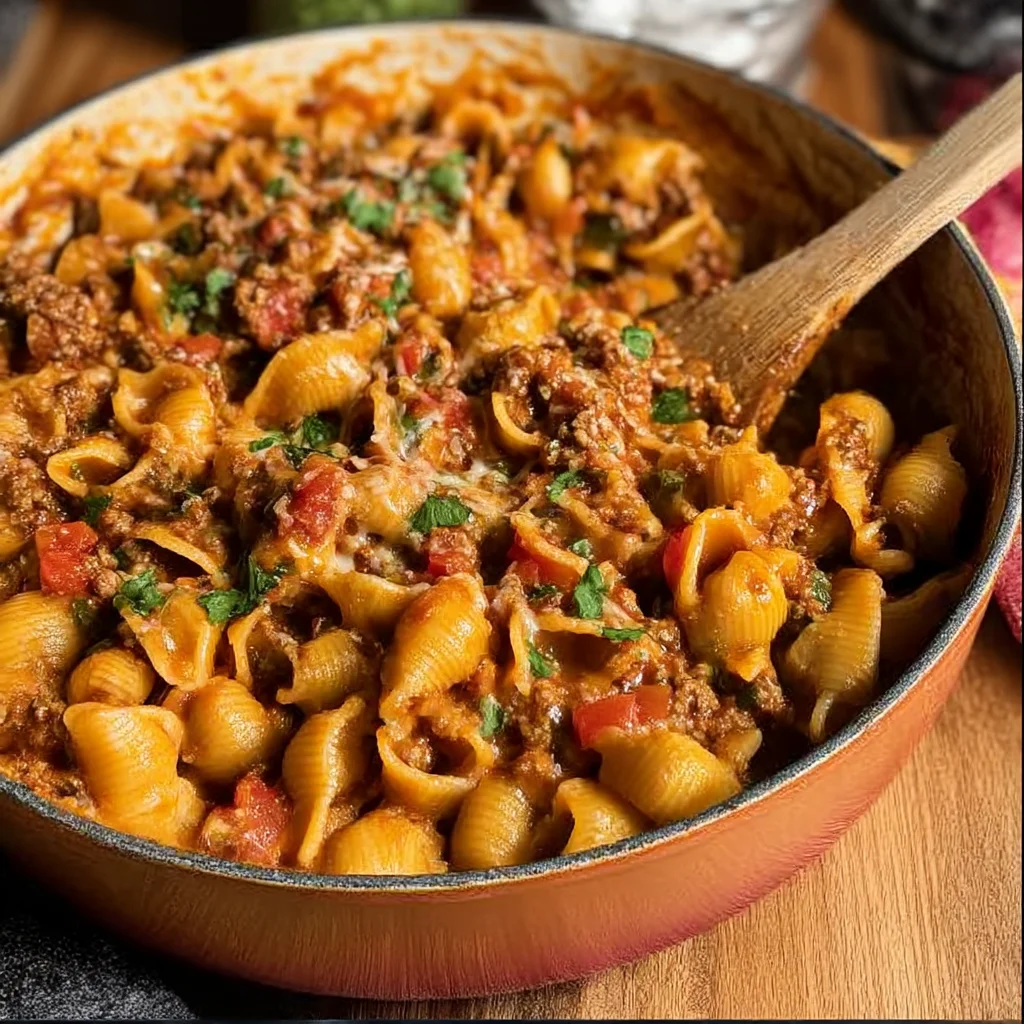
Ready in just 30 minutes, this high protein taco pasta packs 36g of protein per serving. One pan dinner perfect for busy weeknights. Easy, cheesy, and delicious!
Ingredients
Instructions
Begin by prepping all your ingredients. Dice the onion, mince the garlic, and shred the cheeses if you bought blocks. Have the cream cheese out to soften slightly. This mise en place approach ensures a smooth cooking process, especially since this dish comes together in a single pan in under 30 minutes. Using lean ground beef (90/10 or 93/7) reduces excess grease while still providing a rich, beefy flavor and high protein content. The combination of diced tomatoes with green chilies adds a mild heat and tangy acidity that balances the creamy cheese sauce.
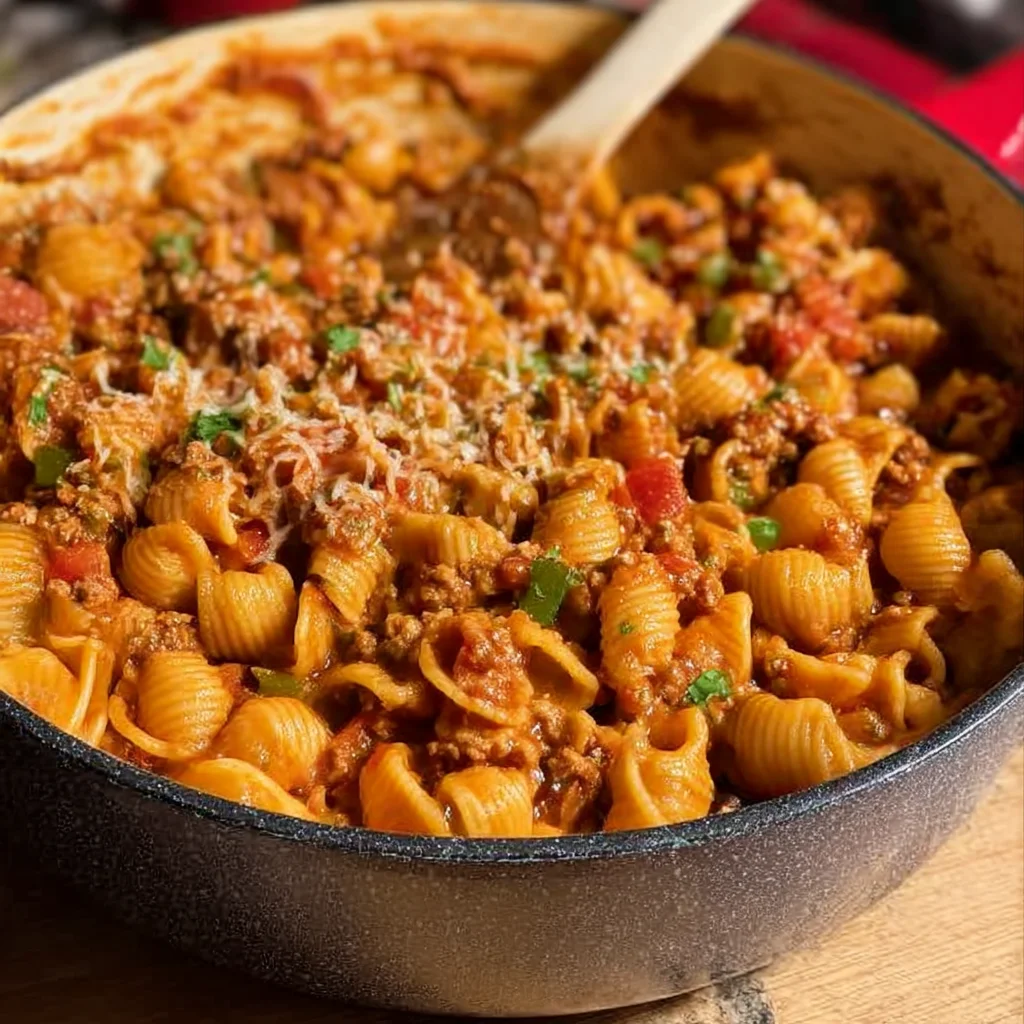
Heat 1 tablespoon of olive oil in a large deep skillet or Dutch oven over medium-high heat. Add the diced onion and sauté for 2-3 minutes until translucent and fragrant. Add the minced garlic and cook for another 30 seconds, stirring constantly, until aromatic. Be careful not to brown the garlic too much as it can turn bitter. The onion and garlic build the aromatic foundation of the dish, adding depth without overpowering the taco flavors.
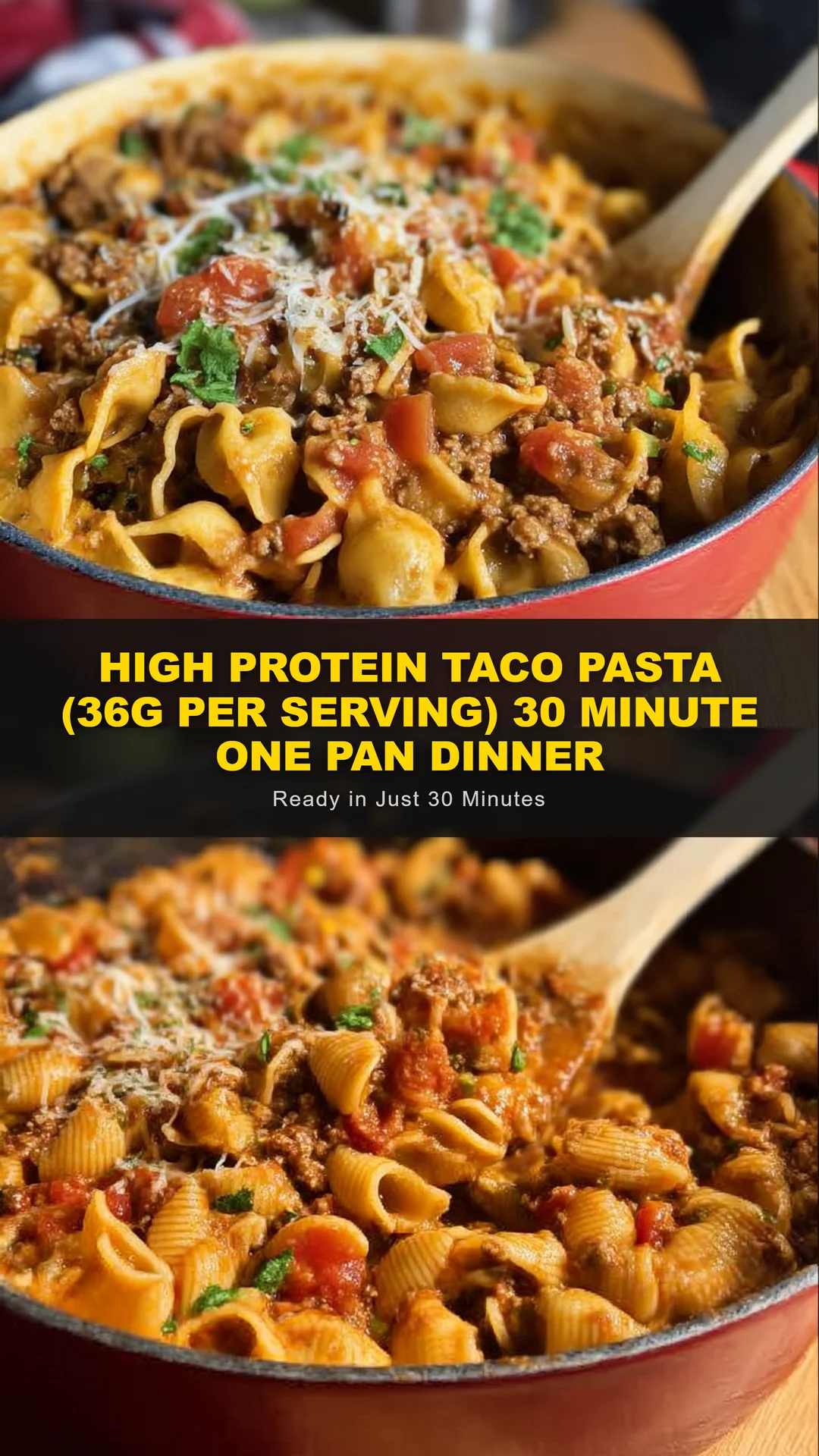
Add the ground beef to the skillet, breaking it apart with a wooden spoon or spatula. Cook for 5-7 minutes, stirring occasionally, until the beef is browned and cooked through. If you’re using a higher-fat blend (like 80/20), drain off excess fat after browning to keep the dish from becoming greasy. For lean beef, there should be minimal fat. The browning process develops umami via the Maillard reaction, which is crucial for a rich meaty taste. You want a nice brown crust on the beef, so avoid overcrowding the pan—cook in batches if necessary.
Sprinkle the taco seasoning over the browned beef and stir to coat evenly. Cook for about 1 minute to toast the spices, which intensifies their flavor. Then pour in the undrained can of diced tomatoes with green chilies, the tomato sauce, and the beef broth. Stir everything together, scraping up any browned bits from the bottom of the pan (this deglazing step incorporates all that flavor into the sauce). The liquid will form the cooking medium for the pasta, so it’s important to have enough to fully cook the pasta without becoming too soupy later.
Bring the sauce to a gentle boil, then stir in the dry pasta. Make sure all the pasta is submerged in the liquid; if not, add a splash more broth or water. Reduce the heat to medium-low, cover the skillet with a tight-fitting lid, and let simmer for about 10-12 minutes, stirring once halfway through. Cooking the pasta directly in the sauce (one-pot method) allows the starch from the pasta to thicken the sauce naturally, creating a creamy, cohesive texture without needing a roux. Check the pasta for doneness—it should be al dente, with a slight bite. If it’s still hard, cook another 2-3 minutes. If the sauce becomes too thick before the pasta is done, add a little extra broth or water.
Remove the lid and reduce the heat to low. Add the softened cream cheese in small dollops, stirring gently until fully melted into the sauce. The cream cheese adds a luscious creaminess and a slight tang that complements the taco spices, while also boosting protein content without adding much saturated fat. Next, add the shredded cheddar and Monterey Jack cheeses, a handful at a time, stirring continually until each addition is fully incorporated. The cheese not only thickens the sauce further but also provides that irresistible stretchy, gooey texture. Season with salt and pepper to taste—remember that taco seasoning and cheese already contain salt, so go easy.
Once the cheese is fully melted and the pasta is coated in a rich, creamy sauce, remove the skillet from heat. Let it rest for 1-2 minutes; the sauce will continue to thicken as it cools slightly. Garnish with fresh chopped cilantro or parsley for a pop of color and freshness. For extra heat and crunch, add sliced jalapeños or green onions. Serve hot directly from the skillet for a rustic, family-style presentation. This one-pan wonder is not only quick but also minimizes cleanup—a true weeknight win.
For best results
- **Pasta Choice Matters**: The type of pasta you use can affect both texture and cooking time. Short, sturdy shapes like shells, rotini, or penne hold up well to one-pot cooking because they have ridges that trap the sauce. Avoid delicate shapes like angel hair or spaghetti, which can overcook and turn mushy. If you need a gluten-free option, use certified gluten-free pasta made from legumes (like chickpea or lentil) for an extra protein boost—just adjust liquid slightly as they absorb differently.
- **Lean Beef vs. Regular**: For a truly high-protein, lower-fat dish, opt for lean ground beef with 90% lean or higher. The protein content remains the same (around 22g per 4 oz serving), but saturated fat is significantly reduced. If you use fattier beef, be sure to drain the excess grease after browning to prevent the final dish from being greasy. Alternatively, ground turkey or chicken (93/7) works wonderfully and still provides that taco flavor with even less saturated fat.
- **Boost Protein Further**: To exceed 36g of protein per serving, consider adding a scoop of unflavored collagen or protein powder to the sauce after stirring in the cheese. Collagen dissolves easily and doesn't alter taste or texture. Or, stir in 1/2 cup of cottage cheese blended until smooth along with the cream cheese for an extra creamy, protein-packed sauce. Another option: top each serving with a fried egg or extra shredded cheese for a protein punch.
- **Make It Dairy-Free**: If you're lactose intolerant or avoiding dairy, you can still enjoy this taco pasta. Substitute the cream cheese with a thick dairy-free alternative (like cashew cream or vegan cream cheese) and use dairy-free shredded cheddar and mozzarella blends. Nutritional yeast adds a cheesy flavor. The texture will be slightly different but equally delicious. Be sure to check that your taco seasoning is dairy-free (some brands contain milk powder).
- **Adjust Spice Level**: The heat of this dish depends on the taco seasoning and the green chilies. For a mild version, use a mild taco seasoning and diced tomatoes without chilies. For extra heat, add a diced jalapeño with the onion, use hot Rotel, and stir in 1/2 teaspoon of cayenne pepper or chipotle powder. You can also serve with hot sauce on the side so everyone can customize their own bowl.
- **Storage and Reheating**: Leftovers keep well in an airtight container in the refrigerator for up to 4 days. The pasta will absorb some sauce overnight, so when reheating, add a splash of milk or broth to restore creaminess. Reheat gently on the stovetop over medium-low heat or in the microwave in 30-second bursts, stirring between intervals. Freezing is possible for up to 3 months, but the texture of the cream cheese may change slightly upon thawing—stir well and add extra liquid when reheating.
Variations
- **Chicken Taco Pasta**: Swap ground beef for ground chicken or turkey (look for 93/7 lean). Chicken pairs beautifully with taco flavors and cooks in the same time. For shredded chicken, use pre-cooked rotisserie chicken, shred it, and stir it in when you add the cheese. This reduces cooking time even further to about 15 minutes total. The protein content remains similar, with slightly less saturated fat.
- **Low-Carb/Keto Version**: Replace the pasta with cauliflower florets or zucchini noodles. For cauliflower, cut into small florets and add with the liquid, cooking until tender (about 8-10 minutes). For zoodles, sauté them separately and serve the taco beef and cheese sauce over top. This dramatically reduces carbs while keeping the protein high. You can also use shirataki noodles if you prefer a pasta-like texture.
- **Vegetarian High-Protein**: Omit the meat and use two cans of black beans or lentils (rinsed and drained). Add them with the tomatoes. The beans provide fiber and protein (about 15g per cup). To boost protein further, crumble extra-firm tofu seasoned with taco seasoning and sauté until golden before adding. Mushrooms also add a meaty texture. The cheese and cream cheese make it rich enough to satisfy even carnivores.
- **Smoky Chipotle Twist**: For a deeper, smokier flavor, use chipotle peppers in adobo sauce. Mince one pepper and add along with the tomato sauce. This adds moderate heat and a wonderful barbecue-like smokiness that complements the beef. You can also use smoked gouda instead of cheddar for a unique cheesy profile. Adjust the liquid slightly as the adobo sauce adds moisture.
- **Loaded Tex-Mex Bake**: After cooking the pasta mixture, transfer it to a baking dish, top with extra cheese, crushed tortilla chips, and drizzle with sour cream sauce. Broil for 2-3 minutes until bubbly and golden. This turns the one-pan meal into a decadent casserole that's great for feeding a crowd. Serve with fresh pico de gallo, avocado slices, and a lime wedge for a full fiesta.
Nutrition
- Calories485 kcal
- Total Fat22g
- Saturated Fat11g
- Cholesterol90mg
- Sodium780mg
- Total Carbohydrates38g
- Dietary Fiber4g
- Sugars7g
- Protein36g